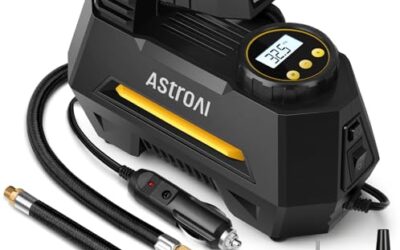
Can a tire inflator seat a tire bead? Sometimes, but only if the tire and rim are suitable and the inflator can deliver enough air quickly enough to push the tire beads against the rim. Many portable 12-volt inflators are meant to add air to an already mounted, seated tire, not to mount a tire or reseat one that has come off the rim.
- A tire bead is the reinforced inner edge of the tire that seals against the wheel rim.
- Seating a bead needs a quick flow of air, not only a high maximum-pressure rating.
- A standard portable inflator may work in some cases, but its ability depends on the tire, rim, starting gap, and pump design.
- Do not use flammable sprays, heat, or improvised pressure vessels to force a bead into place.
- Stop if the bead will not seat promptly or the tire or wheel shows damage. A tire shop has equipment meant for the job.
What it means to seat a tire bead
The bead is the tire’s reinforced inner edge. On a tubeless tire, both beads must sit evenly against matching seats on the rim to hold air. A tire that has lost pressure can still have its beads seated. A tire that has slipped off the rim has a larger gap to close, which makes seating harder.
Adding air to a tire that is already sealed is different from seating a loose bead. Once a tire has a working seal, air enters the tire cavity and raises pressure. With an unseated bead, air can escape through the gap faster than a small pump can replace it.
Can a tire inflator seat a tire bead?
A conventional inflator can seat a bead in limited situations, particularly when the tire remains close to the rim and air loss is small. It may not work when the tire is fully off the bead seats, the gap is wide, or the pump delivers air too slowly. A compressor’s maximum PSI rating alone does not tell you whether it can supply the airflow needed for this job.
Many portable inflators are built for topping up tires, not for mounting tires. Their output, hose, duty cycle, and connection may not suit bead seating. Check the inflator instructions and the tire and wheel instructions. If they do not permit this use, do not treat the pump as suitable just because it can reach the tire’s normal operating pressure.
| Situation | What may work | Reason to stop |
|---|---|---|
| Beads remain seated; tire only needs air | Suitable portable inflator | Visible damage, unusual bulge, or pressure loss that continues |
| One bead has slipped slightly, with no visible damage | Bead-seating equipment used according to its instructions | Bead will not begin sealing, or tire moves unevenly |
| Bead is far from rim, tire is damaged, or wheel is bent | Professional tire service | Do not continue inflating or attempt an improvised fix |
Why airflow matters more than the PSI number
PSI measures pressure. Bead seating also depends on how much air can enter the tire in a short time. A compact pump may reach a high pressure when connected to a sealed tire but still lose the contest against air escaping around a loose bead.
That difference explains why a small inflator may refill a tire after a puncture repair yet fail to seat a tire that has come off its rim. The starting condition changes the job. A wide gap lets air leak out; a close-fitting bead can begin sealing with less airflow.
Duty cycle matters too. Some inflators need cooling breaks after a period of operation. Repeatedly running a pump beyond its instructions can overheat it or damage its motor. Follow the pump’s stated run and rest periods rather than assuming that a short job cannot cause strain.
What to check before trying any inflation
- Identify the tire and wheel: Check whether the tire is tubeless and whether the wheel is cracked, bent, or visibly damaged. A damaged tire or rim needs professional attention.
- Check the bead: Look around both sides of the tire. A bead that is partly off, pinched, torn, or badly displaced is not a routine top-up.
- Read equipment instructions: Check whether the inflator permits the task and note its duty-cycle limits. Check the tire and wheel makers’ instructions as well.
- Use the right pressure reference: For normal vehicle use, use the vehicle placard or owner’s manual for cold tire pressure. The tire sidewall marking is not the vehicle’s routine inflation target.
- Keep people clear: Do not lean over the tire or place hands near the bead while air enters. A bead that seats can move suddenly, and a damaged tire or wheel can fail.
If the tire is fully off the rim, or you cannot tell whether the tire or wheel is damaged, skip the attempt and arrange tire service. Do not drive on a tire that cannot hold air or is not seated correctly.
Why a portable inflator may fail to seat the bead
Air escapes faster than the pump supplies it
A loose bead leaves an opening around the rim. If the inflator cannot supply air fast enough to overcome that leak, pressure does not build inside the tire. More time running the same pump may only heat the inflator without changing the result.
The bead or wheel is not positioned correctly
Dirt, corrosion, damage, or an uneven fit can keep a bead from sealing. A tire that is twisted or trapped against part of the wheel may not move into place as air enters. Do not try to force it with higher pressure or physical leverage unless the tire and wheel instructions specifically allow the method.
The equipment is intended for routine inflation
A compact inflator’s hose and chuck connect to the valve stem. That setup is convenient for adding air to a sealed tire, but it does not automatically make the device a bead-seating tool. A shop’s bead-seating equipment is intended to deliver air in a way that helps a loose bead close against the rim. Use it only with trained handling and the applicable equipment instructions.
Safe decision rule
- If the tire bead is seated: Use a suitable inflator to add air, then check pressure with a gauge.
- If a bead has slipped but the tire and rim appear undamaged: Check the manuals and equipment instructions. Use a suitable bead-seating method only if those instructions allow it.
- If air continues to escape, the bead will not move, or anything looks damaged: Stop. Have a tire professional inspect and seat the tire.
After any tire work, check pressure with a gauge and inspect the bead around the full circumference on both sides. A single pressure reading does not prove that the bead is seated evenly. For gauge selection and reading basics, see our guide to digital tire pressure gauges with memory. If you need an inflator for regular roadside top-ups, our guide to 12V inflators with auto shutoff covers that separate use.
Common mistakes
- Assuming maximum PSI means enough airflow: Pressure rating and air delivery are different measures. A high PSI label does not prove that a pump can seat a loose bead.
- Using a tire’s sidewall pressure as the target: For vehicle use, follow the pressure on the vehicle placard or in the owner’s manual, adjusted for the conditions those instructions specify.
- Running a small pump continuously: Ignoring its duty cycle can overheat or damage the inflator. Stop when its instructions call for a cooling break.
- Using fire, sprays, or improvised pressure devices: These methods can cause a fire, explosion, injury, or equipment damage. They are not safe substitutes for proper tire service equipment.
- Driving before checking the tire: A tire that holds some air may still have an uneven or unseated bead. Inspect the tire and arrange service if its seating is uncertain.
When to get professional help
Get tire service if the bead is fully off the rim, the tire has visible damage, the rim appears bent or cracked, or air keeps escaping despite a suitable attempt. Also stop if the bead seats unevenly, the tire develops a bulge, or the inflator reaches its run-time limit before the tire seals.
A tire shop can inspect the tire and wheel, determine whether either part is damaged, and use equipment intended for mounting or seating. This matters because a tire can hold air briefly while remaining unsafe. Do not rely on a successful pressure reading alone when the bead’s position is uncertain.
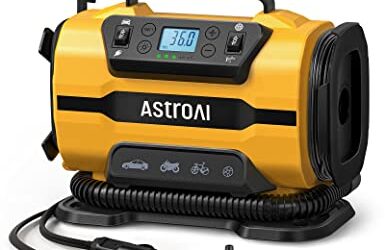
For routine roadside inflation, choose an inflator for your vehicle’s power source and intended use. A 12-volt model may connect through a vehicle outlet or battery clamps, depending on its design; that connector and the vehicle’s electrical limits affect whether it can be used as intended. See our winter tire inflator guide for considerations around cold-weather emergencies.
Gear that can help
If you need tire inflators or tire pressure gauges for this job, these picks already appear in our tire inflators guides. Check the full guide for fit and who should skip each one.

Pros
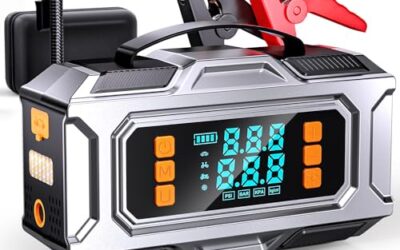
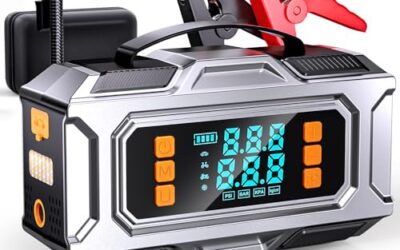
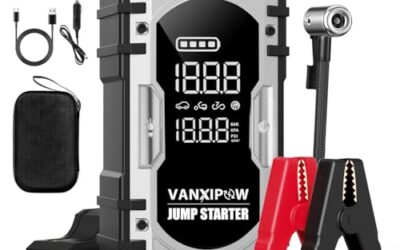
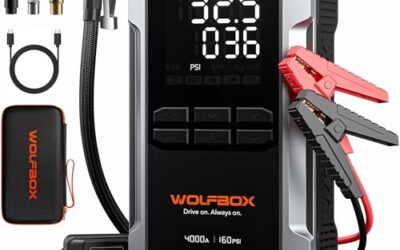
- Combines jump-starting, tire inflation, device charging, and emergency lighting in one unit
- Includes USB-C 65W charging and 160W DC continuous output
- Supports tire inflation for pickup trucks and smaller vehicles
- Provides listed protection features and a 24-month warranty
Cons
- Charging adapter is not included
- Vehicle compatibility is limited to the stated 12V system and engines up to 10L
- Amazon listing shows a 4.3 rating from 0 reviews, so review evidence is unavailable
Specifications
| Color | black and grey |
|---|---|
| Size | 4000A MV24A |
| Dimensions | 2.1653543285 x 5.2755905458 x 9.3700787306 inches |
| Weight | 5.3 pounds |
| Product Group | Automotive Parts and Accessories |
| Binding | Automotive |
Best For / Avoid If
Best for buyers prioritizing
- Combines jump-starting, tire inflation, device charging, and emergency lighting in one unit
- Includes USB-C 65W charging and 160W DC continuous output
- Supports tire inflation for pickup trucks and smaller vehicles
Consider another option if
- Charging adapter is not included
- Vehicle compatibility is limited to the stated 12V system and engines up to 10L
- Amazon listing shows a 4.3 rating from 0 reviews, so review evidence is unavailable
Pros
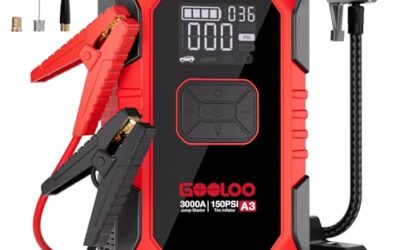
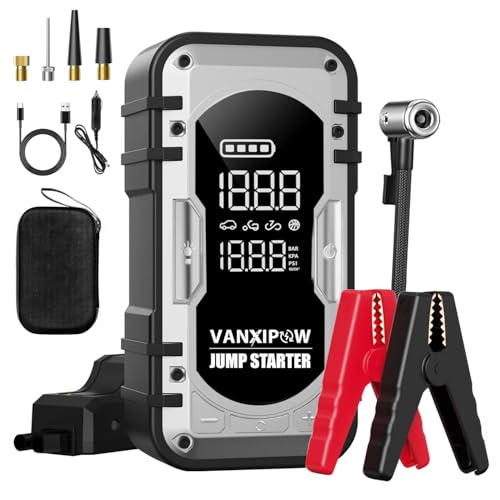
- Combines jump-starting, tire inflation, emergency lighting, and USB charging in one device
- Listed compatibility covers a broad range of 12V vehicles and engines up to 9.0L gas or 8.0L diesel
- Stated weight of 615 grams supports portable use
- LCD screen displays battery level, inflation mode, and real-time tire pressure
Cons
- The air pump should not be used continuously and requires cooling when it becomes seriously hot
- The product has one USB output port
Specifications
| Color | black silver |
|---|---|
| Dimensions | 6.9 x 2.3 x 3.5 Inches |
| Weight | 1.873929227 pounds |
| Product Group | Automotive Parts and Accessories |
Best For / Avoid If
Best for buyers prioritizing
- Combines jump-starting, tire inflation, emergency lighting, and USB charging in one device
- Listed compatibility covers a broad range of 12V vehicles and engines up to 9.0L gas or 8.0L diesel
- Stated weight of 615 grams supports portable use
Consider another option if
- The air pump should not be used continuously and requires cooling when it becomes seriously hot
- The product has one USB output port

Pros
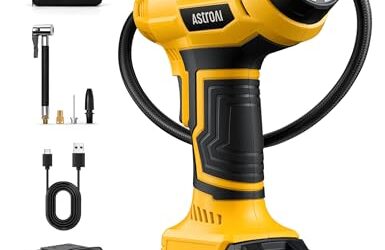
- Wide 0-230 PSI measurement range
- Four selectable pressure units
- Backlit display and integrated flashlight support low-light use
- Ergonomic non-slip grip and sealing nozzle design
Cons
- Product dimensions are 12.6 x 2.2 x 1.4 inches
- Auto-shutoff activates after 30-40 seconds
Specifications
| Color | Black |
|---|---|
| Size | 1 Pack |
| Dimensions | 12.6 x 2.2 x 1.4 inches |
| Weight | 0.5 Pounds |
| Product Group | Automotive Parts and Accessories |
| Binding | Misc. |
Best For / Avoid If
Best for buyers prioritizing
- Wide 0-230 PSI measurement range
- Four selectable pressure units
- Backlit display and integrated flashlight support low-light use
Consider another option if
- Product dimensions are 12.6 x 2.2 x 1.4 inches
- Auto-shutoff activates after 30-40 seconds
Frequently asked questions
Can a 12-volt tire inflator reseat a tire?
Sometimes, when the bead is close to the rim and the pump can supply enough air. Many 12-volt inflators are intended for routine inflation, so they may not seat a loose bead. Check equipment instructions and stop if the tire will not seal promptly.
Can I use a tire inflator if one bead has come off?
Do not assume a portable inflator can handle it. Inspect for tire or rim damage and follow the equipment instructions. A wide gap or damaged bead calls for professional service, not a longer inflation attempt.
Does a higher PSI rating mean an inflator can seat a bead?
No. Maximum pressure does not show how quickly the inflator can supply air. Seating depends on airflow, the size of the gap, tire and rim condition, and equipment design.
Can I drive to a tire shop with an unseated bead?
Do not drive on a tire with an unseated bead or one that cannot hold air. Arrange roadside assistance or another safe way to get the tire and wheel to a professional.
Sources and further reading
- Tire Safety (NHTSA): Guidance on tire condition, inflation, and vehicle tire safety.
- Keeping Your Vehicle in Shape (fueleconomy.gov): Maintenance guidance that includes tire pressure and care.