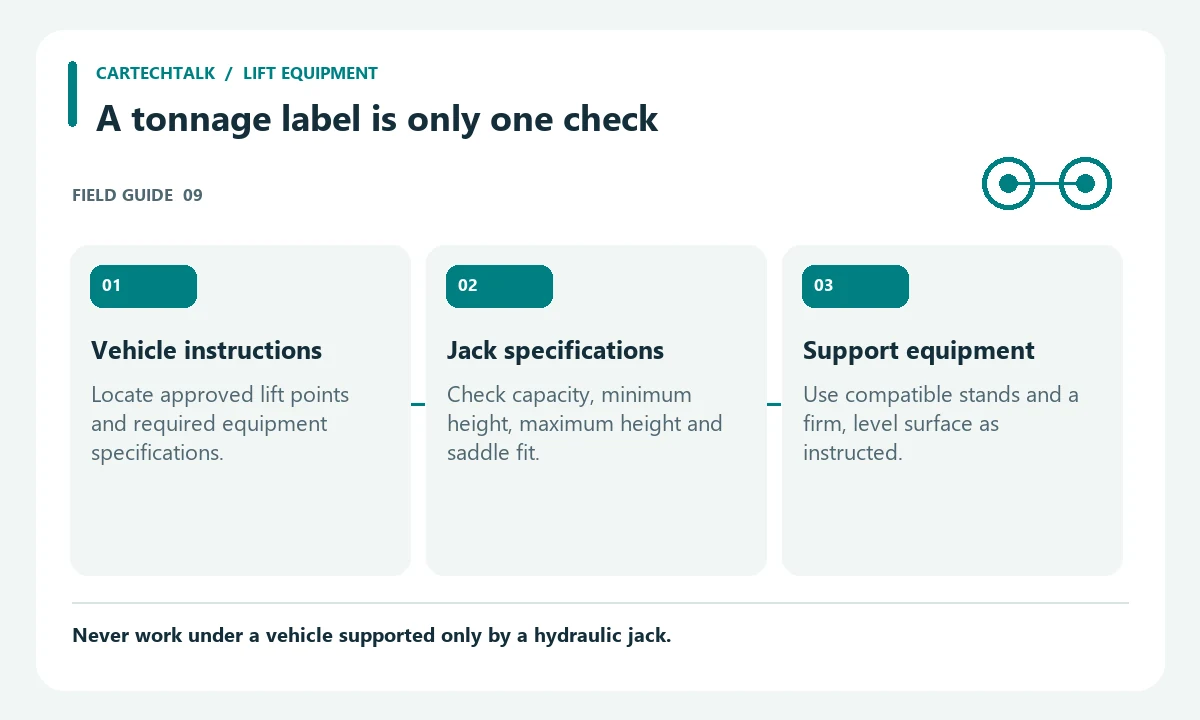
Choose a floor jack by checking the vehicle’s lifting instructions and the jack’s rated load, lift range and saddle compatibility. Tonnage alone cannot establish a safe fit. A jack must reach an approved lifting point and work with suitable support equipment on the surface specified in its manual.
Never work under a vehicle supported only by a hydraulic jack. Use the vehicle and equipment manufacturers’ support procedure. If you cannot identify approved lifting/support points or adequate equipment, have a qualified shop perform the job.
Understand the weight figures
| Term | Meaning | Limit of the number |
|---|---|---|
| Curb weight | The vehicle’s specified unloaded weight under the maker’s definition | Not necessarily its weight with cargo or modifications |
| GVWR | Maximum permitted loaded vehicle weight | Not the exact load at a particular jack point |
| GAWR | Maximum permitted load for the specified axle | Not a substitute for approved lifting instructions |
| Jack rated capacity | The equipment’s specified lifting load limit | Does not describe saddle fit, reach or supporting capability |
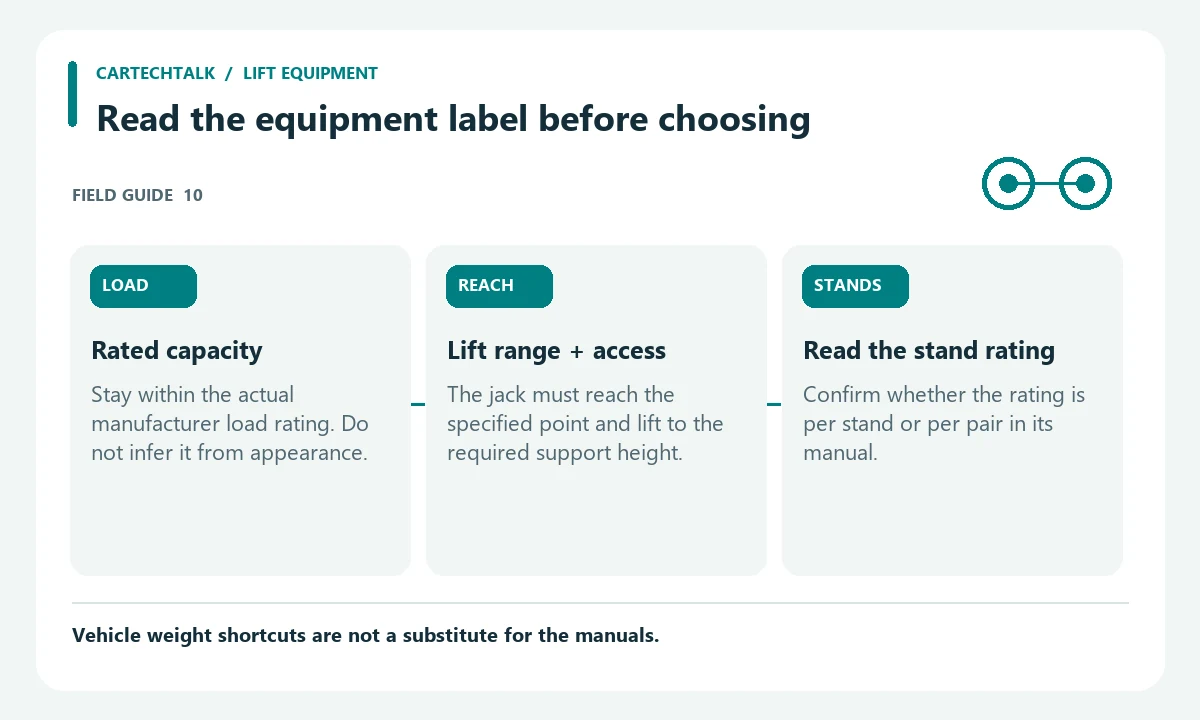
Read the label units carefully: manufacturers may use pounds, kilograms, US tons or metric tonnes. Do not infer capacity from a model name or from how heavy the jack looks. Read the actual product label and manual.
Why half-weight and three-quarters-weight shortcuts are limited
A jack does not necessarily carry half of a vehicle’s weight when one end is raised. Weight distribution, lift location, load, vehicle geometry and the prescribed procedure affect the load. Rules such as multiplying curb weight by 0.75 are shopping shortcuts, not universal safe-lifting calculations.
Do not use a percentage rule to override a required equipment rating, to justify exceeding a load limit or to invent an unapproved central lifting point. If the maker does not provide enough information to establish safe equipment selection, obtain model-specific service guidance.
Check minimum height, maximum height and reach
A low saddle must fit beneath the designated point with the vehicle in its actual condition. A flat tire can reduce clearance. The jack must also reach the point without contacting bodywork or unsafe components and provide sufficient lift for the intended operation. A taller maximum height alone does not prove suitability for a truck or SUV.
Do not stack timber, pucks or improvised extensions to create extra height. Use only adapters expressly permitted for that jack and vehicle application. Protecting a pinch weld and carrying load safely are not the same as adding arbitrary packing under a saddle.
Match the support equipment and surface
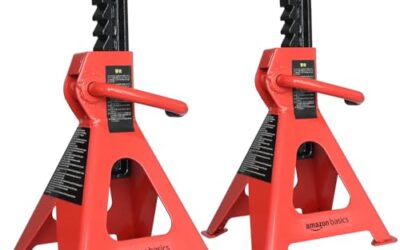
A floor jack lifts; appropriate stands or another prescribed support system hold the vehicle for work. Read how each support product expresses its capacity and height limits. Do not assume that every stand is rated individually or every stand set is rated as a pair.
Use firm, level support conditions specified by the equipment instructions. Soft asphalt, loose ground, slopes and damaged concrete can be unsuitable. Place wheel chocks and configure the vehicle as directed by its manual. Never substitute a generic control arm, crossmember or battery enclosure for a confirmed lift point.
What different jack ratings do and do not tell you
A 2-ton or 3-ton label provides a load-rating starting point, not a list of compatible cars. Two jacks with the same rating can have different lift ranges, saddle shapes, reach and operating restrictions. A higher rating does not automatically make the equipment stable or suitable for every vehicle.
For comparisons, see floor jacks and stands. Verify the actual model specifications rather than relying on a broad sedan/SUV/truck category. If you need maintenance instructions, follow the jack maker’s procedure; bleeding, filling and lubrication methods are model-specific.
If you are still comparing options, see Best Floor Jack For SUVs and Floor Jack Buying Guide.
Frequently asked questions
Can a 2-ton jack lift a 4,000-pound car?
The two numbers alone are not enough to approve the operation. Confirm the actual load, lifting point, procedure, reach and equipment requirements. Never exceed the jack’s rating.
Does ASME PASE wording prove every safety feature?
No. Read the manufacturer’s actual compliance statement and manual. Do not infer a specific overload-test percentage, certification or hydraulic behavior from a marketplace title.
Can a house support jack be used instead?
No. A basement support post or hardwood flooring jack is not an automotive hydraulic floor jack. Parts, pads and wall mounts are also not complete lifting equipment.
Equipment relevant to this guide
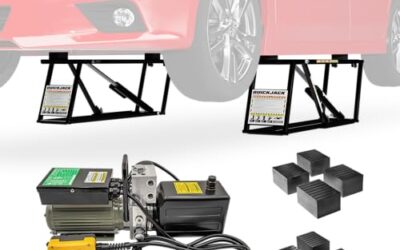
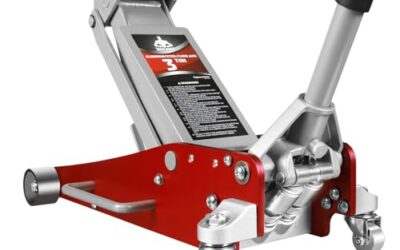
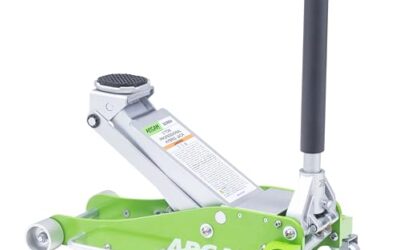
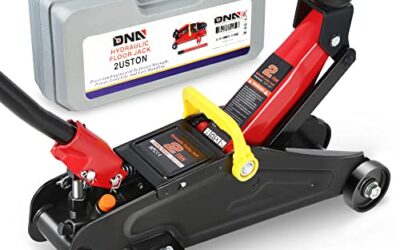
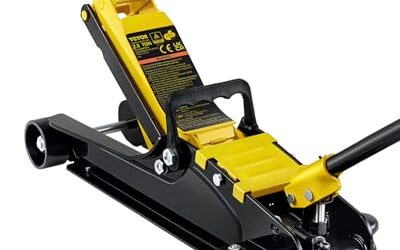
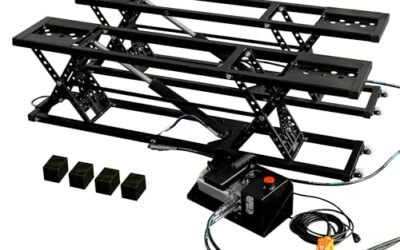
These are automotive hydraulic trolley/floor-jack examples, not house support posts or spare parts. Their presence here does not establish fit for your vehicle. Compare the current model manual, actual load rating, lift range and required support equipment before buying.
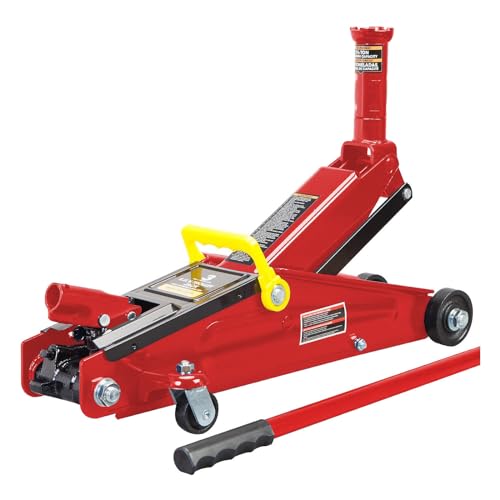
Pros
- High 20-7/8-inch maximum lift height for SUVs and extended-height trucks
- 6,000-pound capacity is listed for cars, trucks, vans, and SUVs
- 360-degree swivel casters support maneuverability
- Includes a limited one-year manufacturer warranty
Cons
- The listed minimum lifting height is 5-7/8 inches, so lower-clearance compatibility is not established
- The manufacturer warranty is limited to one year
- The listing does not include a detailed specifications array
Best For / Avoid If
Best for buyers prioritizing
- High 20-7/8-inch maximum lift height for SUVs and extended-height trucks
- 6,000-pound capacity is listed for cars, trucks, vans, and SUVs
- 360-degree swivel casters support maneuverability
Consider another option if
- The listed minimum lifting height is 5-7/8 inches, so lower-clearance compatibility is not established
- The manufacturer warranty is limited to one year
- The listing does not include a detailed specifications array

Pros
- Supports standard cars, SUVs, minivans, and standard pickup trucks
- Provides a wide lift range for the listed vehicle applications
- Includes overload protection and a rotating saddle
- Meets ANSI/ASME PASE safety standards
Cons
- Not suitable for lifted vehicles, heavy-duty trucks, or RVs
- The 63.8-lb steel construction may be difficult to move
- Single-piston design may require more strokes than the brand's dual-piston model
Specifications
| Color | Multi color |
|---|---|
| Dimensions | 26.4 x 14.2 x 8.3 Inches |
| Weight | 63.9 Pounds |
| Product Group | Automotive Parts and Accessories |
Best For / Avoid If
Best for buyers prioritizing
- Supports standard cars, SUVs, minivans, and standard pickup trucks
- Provides a wide lift range for the listed vehicle applications
- Includes overload protection and a rotating saddle
Consider another option if
- Not suitable for lifted vehicles, heavy-duty trucks, or RVs
- The 63.8-lb steel construction may be difficult to move
- Single-piston design may require more strokes than the brand's dual-piston model
Sources and further reading
- Example manufacturer floor-jack manual: load limits and support instructions
- ASME PASE: portable automotive service equipment
Before choosing a jack for a pickup or SUV
A pickup class or model name does not specify the load at an approved lifting point. Check the exact vehicle configuration, lifting instructions, jack reach and support equipment before choosing a rating. If you are comparing tools, use our floor jack buying guide alongside those requirements; a product shortlist does not replace the vehicle manual.