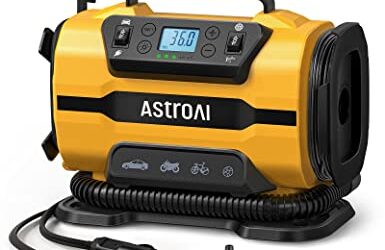
To store a tire inflator in a car, let it cool, keep it dry, and secure it where cargo cannot crush it or it cannot become a hazard. Check the inflator manual for battery, temperature, and storage instructions first, since care differs between corded and battery-powered models.
- Choose a stable cargo-area spot away from pedals, airbags, and moving parts.
- Let the pump and hose cool before packing them.
- Keep cords, hoses, and accessories together without tight bends.
- Follow the manual for battery charge level and temperature limits.
- Check condition and power compatibility before an emergency.
Where should you keep a tire inflator in a car?
Store the inflator in a secure cargo-area compartment or a restrained storage bin. The right spot stays dry, does not block access to vehicle controls or safety equipment, and keeps the unit from sliding during ordinary driving.
A trunk side compartment can work if the inflator fits without force and the compartment does not trap moisture. In an SUV or hatchback, use a cargo organizer or tie-down point when available. Keep the pump out of the way of groceries, tools, and other loose loads that could strike it.
Do not place an inflator in the driver’s footwell, under a seat where it could interfere with seat movement, or near an airbag deployment area. Airbag locations vary by vehicle. Use the owner’s manual for guidance on those areas, especially if you plan to attach or wedge any storage item in place.
A spare-tire well may seem convenient, but it can collect water, and access may be poor when the cargo area is full. Check for moisture before putting electrical equipment there. If the well also stores a spare tire or other heavy items, keep the inflator secured so those items cannot crush it.
- Check the inflator manual. Find storage guidance for temperature, moisture, battery charge, and packing. Battery-powered models can have different care needs from 12-volt corded models.
- Let the unit cool. After use, switch it off and give the pump, hose, and connector time to cool before packing. The required cooling time depends on the model and its instructions. Do not coil a hot hose tightly around the unit.
- Disconnect power as instructed. Unplug a 12-volt plug from the vehicle outlet or disconnect a battery pack only as the manual directs. Avoid pulling a cable by its wire; grip the plug or connector.
- Check for dirt and moisture. Wipe off surface dirt with a suitable dry cloth. Keep water away from electrical connections, battery contacts, controls, and vents. Do not pack a damp inflator into a closed case.
- Pack the hose and cables loosely. Use the supplied case or a compartment that fits without bending the hose sharply. Keep the valve connector, power lead, and any included adapters together so they are ready when needed.
- Secure the packed unit. Place it in a stable compartment or restrained organizer. It should not roll, block a hatch or access panel, or become trapped beneath heavy cargo.
- Check it before relying on it. Look for damaged insulation, cracked housing, loose connectors, a kinked hose, or corrosion. For a rechargeable model, check the battery according to its manual.
Storage needs differ by inflator type
| Inflator type | Storage points | What to check before use |
|---|---|---|
| 12-volt corded | Keep the plug, cable, hose, and pump together. Avoid tight bends and protect the plug from damage. | Check that the vehicle outlet and inflator connector match. Follow both manuals for outlet limits and power use. |
| Rechargeable battery-powered | Follow the battery’s storage and temperature guidance. Store the battery as instructed, whether attached or removed. | Check charge, battery condition, and whether the unit can operate at current temperatures. |
| Compressor with separate accessories | Keep adapters, inflation needles, and other fittings in a closed pouch so they do not get lost or damage the hose. | Check that the correct fitting is available for the item you need to inflate. |
For a 12-volt unit, a plug that fits does not by itself prove the setup is suitable. Vehicle outlet design and allowable load can vary by make, model, and model year. Some outlets switch off with the ignition; others may behave differently. Read the vehicle and inflator instructions rather than assuming the outlet stays powered or supports every compressor.
For a rechargeable inflator, car storage exposes the battery to the cabin’s changing temperatures. Battery chemistry, pack design, and manufacturer limits vary. Do not assume one charge level or temperature range suits every model. Follow its manual, and bring the unit indoors if its instructions call for storage outside conditions found in the parked vehicle.
Heat, cold, and moisture: what matters
A parked vehicle can experience temperature swings, while a closed storage case can hold moisture or trap heat. The safe storage range depends on the inflator and its battery. Check the manual for operating and storage limits; operating limits are not automatically storage limits.
Keep the unit away from standing water, wet floor mats, and containers that might leak. If the inflator gets wet, do not power it on to see whether it still works. Follow the manufacturer’s instructions for inspection or service. Moisture around electrical parts can create a shock or damage risk.
Cold weather can affect battery performance, but the effect and recovery steps depend on the model. Do not heat a cold battery with a flame, heating pad, or direct heater. Use only the warming and charging instructions supplied for that unit. If winter use is part of your plan, see our guide to tire inflators for winter emergencies.
Keep the inflator ready for the right vehicle
Storage is only useful if the inflator can connect to the vehicle and reach the tire. A corded unit may rely on a 12-volt accessory outlet. A battery-powered unit depends on its own charged pack. Connector type, outlet behavior, and the maker’s operating instructions determine what works; vehicle model year can matter.
Before stowing the unit, check that its hose and power lead can reach each tire from a safe position. Do not stretch a cable across traffic or place it where a person could trip. If a corded pump cannot reach a tire, do not use an unapproved extension or adapter. Follow the inflator maker’s directions for an approved setup.
Keep the vehicle’s specified tire pressure in mind. The correct cold pressure is usually on the tire information label or in the owner’s manual, not the maximum pressure molded into the tire sidewall. A stored gauge can help check pressure after inflation. Our article on digital tire pressure gauges with memory explains what memory features can retain.
A preset or automatic shutoff feature does not replace checking the tire pressure with a suitable gauge. Setup and shutoff behavior vary by inflator. Read the instructions for how to set target pressure and whether the unit needs to be monitored. For daily-driver options and feature context, see our guide to 12-volt tire inflators with automatic shutoff.
How often should you check a stored inflator?
Check it during routine vehicle gear inspections, before a long trip, and before seasons when you expect to need it. There is no single check interval that fits every battery and inflator. Follow the manual for battery care and any required inspection schedule.
Look over the housing, hose, connector, cable, and accessories. Check that the case closes and the unit remains secured. For a rechargeable model, check charge as directed and recharge only with an approved charger. For a corded model, inspect the plug and cable for cuts, exposed wire, crushed spots, or heat damage.
If you use the inflator, return it to storage only after it has cooled and dried. Replace missing adapters or damaged parts with items approved for that model. Do not improvise a repair to a pressure hose or electrical lead.
Common mistakes
- Leaving it loose in the trunk. A loose pump can slide or get hit by cargo. Secure it in a compartment or restrained organizer.
- Packing it while hot or wet. Heat can damage nearby items, and moisture can affect electrical parts. Let the unit cool and dry first.
- Wrapping the hose too tightly. Sharp bends can stress the hose or connections. Pack it in a relaxed coil or use its intended storage clips.
- Ignoring battery instructions. Rechargeable packs have model-specific temperature and storage guidance. Follow that guidance instead of using a universal charge rule.
- Assuming every 12-volt outlet is suitable. Outlet limits and behavior vary. Check vehicle and inflator manuals before operating the pump.
- Using sidewall pressure as the target. Use the vehicle’s specified cold tire pressure, not the tire’s sidewall maximum.
- Storing accessories separately. A missing valve adapter can make a pump less useful when needed. Keep included fittings with the unit.
When to get professional help
Stop using the inflator if its battery is swollen, leaking, unusually hot, or physically damaged. Do not charge a damaged battery. Follow the manufacturer’s safety instructions and contact its service department or a qualified battery service provider.
Have a damaged vehicle outlet, melted plug, exposed wire, or repeated blown fuse checked by a qualified technician. Do not install a larger fuse or bypass vehicle protection to make an inflator work. The fault could involve the outlet, wiring, or another circuit issue.
If a tire loses pressure repeatedly, has a visible puncture or sidewall damage, or will not hold air, an inflator is not a repair. Follow the vehicle and tire maker’s guidance and arrange tire inspection or roadside assistance. Do not drive on a tire that appears unsafe.
Gear that can help
If you need tire inflators or tire pressure gauges for this job, these picks already appear in our tire inflators guides. Check the full guide for fit and who should skip each one.

Pros
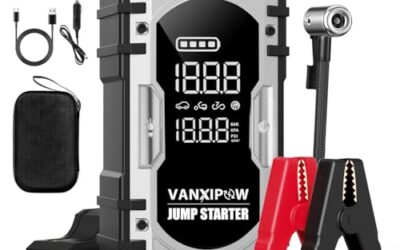
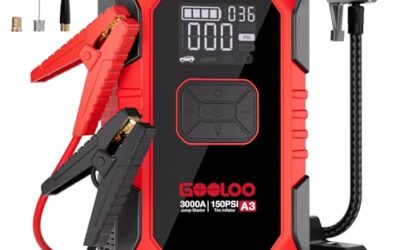
- Combines jump-starting, tire inflation, device charging, and emergency lighting in one unit
- Includes USB-C 65W charging and 160W DC continuous output
- Supports tire inflation for pickup trucks and smaller vehicles
- Provides listed protection features and a 24-month warranty
Cons
- Charging adapter is not included
- Vehicle compatibility is limited to the stated 12V system and engines up to 10L
- Amazon listing shows a 4.3 rating from 0 reviews, so review evidence is unavailable
Specifications
| Color | black and grey |
|---|---|
| Size | 4000A MV24A |
| Dimensions | 2.1653543285 x 5.2755905458 x 9.3700787306 inches |
| Weight | 5.3 pounds |
| Product Group | Automotive Parts and Accessories |
| Binding | Automotive |
Best For / Avoid If
Best for buyers prioritizing
- Combines jump-starting, tire inflation, device charging, and emergency lighting in one unit
- Includes USB-C 65W charging and 160W DC continuous output
- Supports tire inflation for pickup trucks and smaller vehicles
Consider another option if
- Charging adapter is not included
- Vehicle compatibility is limited to the stated 12V system and engines up to 10L
- Amazon listing shows a 4.3 rating from 0 reviews, so review evidence is unavailable
Pros
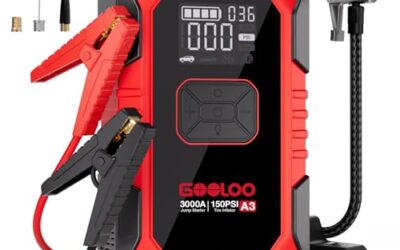
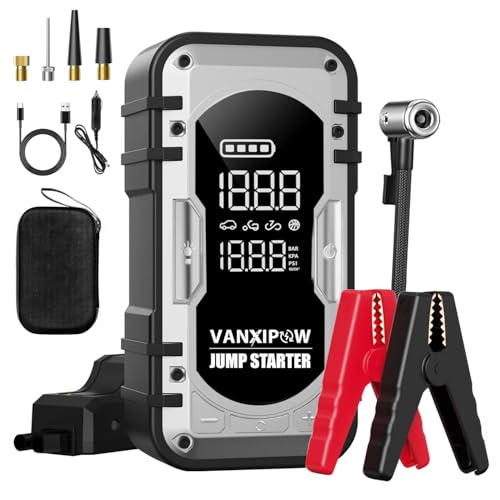
- Combines jump-starting, tire inflation, emergency lighting, and USB charging in one device
- Listed compatibility covers a broad range of 12V vehicles and engines up to 9.0L gas or 8.0L diesel
- Stated weight of 615 grams supports portable use
- LCD screen displays battery level, inflation mode, and real-time tire pressure
Cons
- The air pump should not be used continuously and requires cooling when it becomes seriously hot
- The product has one USB output port
Specifications
| Color | black silver |
|---|---|
| Dimensions | 6.9 x 2.3 x 3.5 Inches |
| Weight | 1.873929227 pounds |
| Product Group | Automotive Parts and Accessories |
Best For / Avoid If
Best for buyers prioritizing
- Combines jump-starting, tire inflation, emergency lighting, and USB charging in one device
- Listed compatibility covers a broad range of 12V vehicles and engines up to 9.0L gas or 8.0L diesel
- Stated weight of 615 grams supports portable use
Consider another option if
- The air pump should not be used continuously and requires cooling when it becomes seriously hot
- The product has one USB output port

Pros
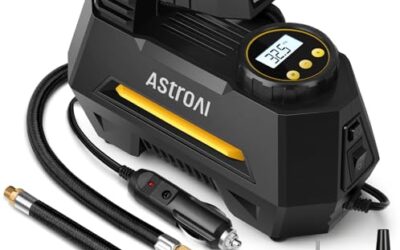
- Wide 0-230 PSI measurement range
- Four selectable pressure units
- Backlit display and integrated flashlight support low-light use
- Ergonomic non-slip grip and sealing nozzle design
Cons
- Product dimensions are 12.6 x 2.2 x 1.4 inches
- Auto-shutoff activates after 30-40 seconds
Specifications
| Color | Black |
|---|---|
| Size | 1 Pack |
| Dimensions | 12.6 x 2.2 x 1.4 inches |
| Weight | 0.5 Pounds |
| Product Group | Automotive Parts and Accessories |
| Binding | Misc. |
Best For / Avoid If
Best for buyers prioritizing
- Wide 0-230 PSI measurement range
- Four selectable pressure units
- Backlit display and integrated flashlight support low-light use
Consider another option if
- Product dimensions are 12.6 x 2.2 x 1.4 inches
- Auto-shutoff activates after 30-40 seconds
Frequently asked questions
Can I leave a tire inflator in my car year-round?
That depends on the inflator’s storage limits and, for battery models, battery instructions. Check the manual for temperature and storage conditions. A corded pump avoids rechargeable-battery storage concerns, but still needs protection from moisture, impact, and cable damage.
Should I keep a battery-powered inflator fully charged?
There is no universal charge rule. Follow the instructions for that battery and model. Those instructions may distinguish long-term storage from keeping the unit ready for regular use.
Can I store an inflator in the spare-tire well?
Yes, if the well stays dry, the unit fits without pressure, and it remains accessible and protected from heavy items. Check for moisture before placing electrical equipment there.
Does a tire inflator replace a pressure gauge?
Not always. Some inflators display pressure, but accuracy and use instructions vary. Check pressure with a suitable gauge and use the vehicle’s recommended cold pressure. See NHTSA’s tire safety information for general tire-care guidance.
Sources and further reading
- Tire Safety (NHTSA): Tire pressure and basic tire-care guidance for drivers.
- Keeping Your Vehicle in Shape (fueleconomy.gov): Routine vehicle maintenance information, including tire care.