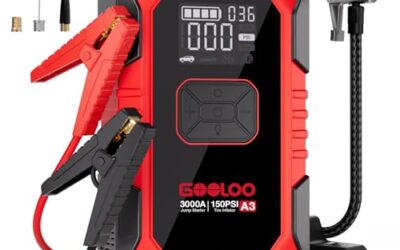
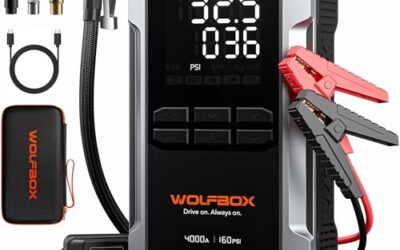
Check spare tire pressure monthly and before long trips, using the pressure specified for that spare by your vehicle’s manual or tire-pressure label. A stored tire can lose air over time, and many vehicles do not monitor spare pressure with the TPMS warning light.
- Check monthly, then again before a long trip or before relying on the spare.
- Measure pressure with a gauge when the tire is cold.
- Use the spare’s specified pressure, which may differ from the regular tires’ pressure.
- Inspect tire condition, valve, and storage area while checking pressure.
- Do not assume a TPMS warning light covers a spare tire.
For most drivers, a monthly check is a useful routine. Check again before a long drive, road trip, or trip where a flat would be especially difficult to manage. If the vehicle manual gives a different inspection schedule, follow that instruction.
Monthly checks matter because spare tires sit unused, often out of sight. Air can escape gradually through the tire and valve, even when the tire looks normal. A tire that appears inflated may still be far below its required pressure.
Do not wait until a flat to inspect the spare. An underinflated spare may not be suitable for use, and a compact temporary spare may have specific speed, distance, and use limits. Read the vehicle manual before relying on it.
What pressure should the spare tire have?
Use the pressure specified for the spare in the owner’s manual or on the vehicle’s tire-information label. The spare may require a different pressure from the four road tires, particularly if it is a compact temporary spare.
Do not use the regular tire pressure as a substitute. Do not treat the maximum pressure molded on a tire sidewall as the vehicle’s recommended pressure. The vehicle’s instructions identify the correct target for that spare and vehicle.
Some vehicles have full-size spares, compact temporary spares, or tire-inflation systems instead of a conventional spare. Equipment can differ by model, trim, and model year. Check the manual for your exact vehicle and the spare type it carries.
How to check spare tire pressure
- Find the correct pressure. Check the vehicle manual or tire-information label for spare-specific instructions. Note whether it gives a separate pressure for a compact spare.
- Let the tire become cold. Check before driving, or after the vehicle has been parked long enough for the tire to cool. Driving heats tires and can affect the reading.
- Access the spare safely. Follow the manual to reach an underfloor, underbody, or interior-mounted spare. Do not crawl under a vehicle supported only by a jack.
- Measure with a tire-pressure gauge. Remove the valve cap, press the gauge squarely onto the valve stem, and read the result. A gauge with a suitable range and accessible chuck can make the check easier.
- Add air or release air as needed. Adjust toward the vehicle-specified pressure, then measure again. Replace the valve cap when finished.
- Inspect the tire and storage hardware. Look for cuts, cracks, bulges, corrosion around the wheel, a damaged valve, or loose retaining hardware. Follow the manual if the spare has a special storage procedure.
A digital gauge can store readings on some models, but memory features vary. See what tire-pressure gauge memory can store if you want to compare that feature. For gauge access issues on dual-rear-wheel trucks, see this guide to gauges for dually tires.
Does TPMS check spare tire pressure?
Not always. A direct TPMS uses pressure sensors at monitored wheels, while some vehicles use other methods to flag pressure changes. Whether the spare is included depends on vehicle design and equipment. Do not assume the dashboard warning light will alert you to a low spare.
Check the owner’s manual for the TPMS scope and any spare-specific instructions. A warning light that stays off is not proof that an unmonitored spare has correct pressure. Manual gauge checks remain the practical way to check a spare that the vehicle does not monitor.
Why spare-tire pressure changes
Air can slowly pass through tire materials and valve components. Temperature changes also affect pressure readings: pressure generally falls as tire temperature falls and rises as it warms. That is why pressure checks should use a cold tire and the vehicle’s stated target.
Storage conditions can complicate inspection. A spare mounted underneath the vehicle may face road dirt, moisture, and physical damage. An interior-mounted spare may be easier to inspect, but it can still lose pressure. Neither storage location removes the need for checks.
If a spare repeatedly loses pressure between monthly checks, look for a damaged valve, puncture, or other leak. Do not keep topping it up without investigating a recurring loss. A tire shop can inspect the tire and wheel for a leak.
Full-size and compact spares need different checks
| Spare type | What to check | Use limits |
|---|---|---|
| Full-size spare | Use the pressure and inspection guidance for that wheel and tire in the vehicle manual. | Do not assume it matches the mounted tires in size, wear, or suitability for extended use. |
| Compact temporary spare | Use its specified pressure, which may differ from regular tires. | Follow the manual’s limits for speed, distance, and operation. |
| Inflation or sealant kit | Check kit condition and instructions instead of looking for a spare tire. | These kits have limits and may not address every puncture or tire failure. |
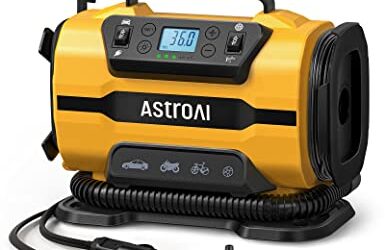
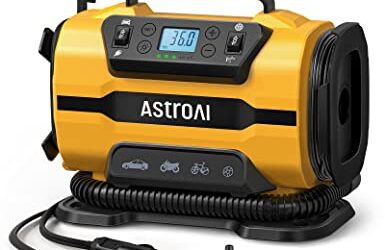
Vehicle equipment can change across model years and trim levels, so do not rely only on a general description of a model. Confirm what your vehicle actually carries and follow its manual. If you need to inflate a tire away from home, this guide to a 12V tire inflator with auto shutoff explains one equipment feature to consider.
Common mistakes
- Checking only when a flat happens. That leaves no time to correct a low spare before an emergency.
- Using the road-tire pressure. A spare can have a separate target, especially a compact spare.
- Using the sidewall maximum as the target. Use the vehicle’s spare-specific instructions instead.
- Trusting TPMS to cover every tire. Some systems do not monitor the spare.
- Checking a warm tire and treating that reading as cold pressure. Heat changes pressure. Check cold and follow the specified target.
- Ignoring age or damage because pressure is correct. Correct pressure does not prove a tire is safe or serviceable.
- Forgetting to return the spare to its holder correctly. Follow the vehicle manual for storage and securing steps.
When to get professional help
Have a tire professional inspect the spare if it loses pressure repeatedly, has visible cracks or bulges, shows a damaged valve, or has been driven on while underinflated. Pressure alone cannot confirm a tire’s internal condition.
Ask a qualified shop to assess a spare with uncertain age, impact damage, or signs of corrosion at the wheel. If you cannot access or secure an underbody spare safely, follow the manual and get help rather than working beneath an improperly supported vehicle.
If the spare is already installed, follow its restrictions and the vehicle manual. A compact temporary spare is not a replacement for normal driving on a full-size road tire.
Gear that can help
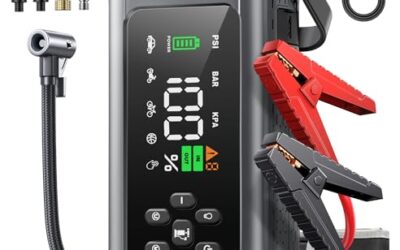
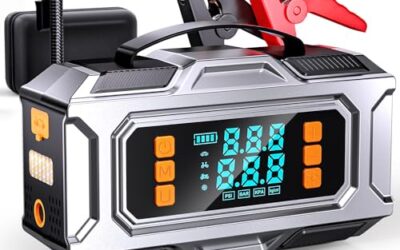
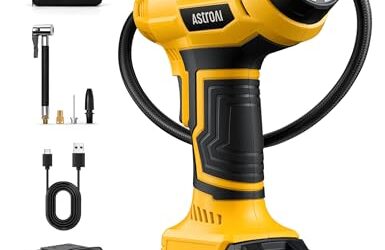
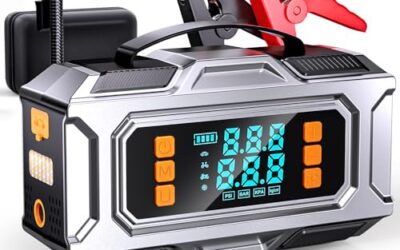
If you need tire inflators or tire pressure gauges for this job, these picks already appear in our tire inflators guides. Check the full guide for fit and who should skip each one.

Specifications
| Color | Light Yellow |
|---|---|
| Size | Standard |
| Dimensions | 11.8 x 10.2 x 6.3 inches |
| Product Group | Automotive Parts and Accessories |
| Binding | Tools & Home Improvement |

Specifications
| Color | 1-gray |
|---|---|
| Size | 6000 (Large Capacity) |
| Dimensions | 6.5 x 2.76 x 2.17 inches |
| Weight | 1.8629061139 Pounds |
| Product Group | Automotive Parts and Accessories |
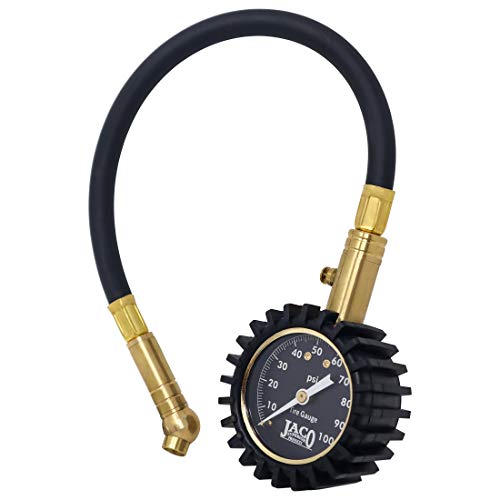
Pros
- No batteries required for pressure readings
- Solid brass construction includes a shock-resistant protective guard
- Lifetime warranty provided by JACO
- Glow dial supports reading visibility in dark conditions
Cons
- 100 PSI maximum scale limits readings above that pressure
- Source data provides no vehicle compatibility details
Specifications
| Weight | 0.35 Pounds |
|---|---|
| Product Group | Automotive Parts and Accessories |
| Binding | Misc. |
Best For / Avoid If
Best for buyers prioritizing
- No batteries required for pressure readings
- Solid brass construction includes a shock-resistant protective guard
- Lifetime warranty provided by JACO
Consider another option if
- 100 PSI maximum scale limits readings above that pressure
- Source data provides no vehicle compatibility details
FAQ
Can a spare tire lose pressure while it is not being used?
Yes. Tires can lose air gradually in storage. Check the spare monthly and before a long trip.
Should I check spare pressure when the tire is warm?
Check it cold when possible. If you must check after driving, follow the vehicle manual for how to interpret or adjust the reading.
Does the spare need the same pressure as the regular tires?
Not necessarily. Use the pressure specified for the spare. A compact temporary spare may have a different target.
Will my TPMS warn me if the spare is low?
It depends on the vehicle’s TPMS design. Check the manual; do not assume the spare is monitored.
What if my vehicle has no spare tire?
Check the manual for its tire-repair kit or other roadside equipment. Inspect that equipment and follow its instructions and limits.
Sources and further reading
- Tire Safety (NHTSA): Guidance on tire safety, pressure, and maintenance.
- Keeping Your Vehicle in Shape (fueleconomy.gov): Maintenance information, including tire-pressure checks.