How temperature changes tire pressure is straightforward: colder air usually lowers pressure inside a tire, while warmer air usually raises it. Check pressure when tires are cold, then inflate to the vehicle maker’s recommended pressure on the driver’s door-jamb label or in the owner’s manual.
- Expect pressure to change with temperature; a common estimate is about 1 PSI for every 10°F change.
- That estimate is a rule of thumb, not an exact prediction for every tire or condition.
- Use the vehicle’s recommended cold pressure, not the maximum pressure printed on the tire sidewall.
- Repeated pressure loss in one tire can point to a leak, even if weather has turned colder.
Why does temperature change tire pressure?
Air inside a tire expands as it warms and contracts as it cools. Because the tire’s volume changes relatively little, a temperature change alters the pressure of the air inside it. A cold snap can make the gauge reading drop, while warmer weather or heat from driving can make it rise.
A widely used estimate is a change of about 1 PSI for each 10°F change in air temperature. Treat this as a planning guide, not a promise. Actual readings depend on the tire’s starting pressure, temperature, driving, sunlight, and measurement conditions. A tire that reads 2 PSI lower after a 20°F temperature drop is plausible, but the gauge reading is what matters.
This relationship describes pressure changes, not a recommended adjustment amount. Do not add a fixed amount for every temperature drop without checking the tires. Measure them and inflate to the vehicle’s specified cold pressure.
Cold mornings and seasonal drops
When outdoor temperatures fall, tires that were correctly inflated in milder weather may read low. The pressure change can show up across all four tires, especially after a sudden weather shift. Check them before driving far, and add air if readings fall below the vehicle’s recommended cold pressure.
Cold-weather checks matter even if the car is parked outside only overnight. A dashboard tire-pressure monitoring system (TPMS) warning may appear after a temperature drop because one or more tires crossed the system’s warning threshold. The threshold and display behavior vary by vehicle.
Warm weather, sunlight, and driving
Warm air can raise tire pressure. Sunlight can also warm one side of a parked vehicle more than the other, so two tires may show different readings even when they began at similar pressures. Driving warms tires too, which can raise pressure above a cold reading.
Do not release air from a warm tire just because its reading is higher than the recommended cold pressure. The vehicle’s specified pressure applies when tires are cold. Let them cool, take a new reading, and adjust only if needed.
How to check and correct tire pressure
- Find the target pressure. Check the driver’s door-jamb label or owner’s manual. Use the pressure for your vehicle and tire setup. The sidewall figure is the tire’s maximum pressure under specified conditions, not the vehicle’s everyday target.
- Check tires cold. Measure before driving, or after the vehicle has been parked long enough for tires to cool. Recent driving, warm pavement, direct sunlight, and a warm garage can affect readings.
- Measure all tires with a gauge. Remove each valve cap and press a suitable tire-pressure gauge onto the valve stem. Check every tire, including the spare if it has a pressure specification and is accessible.
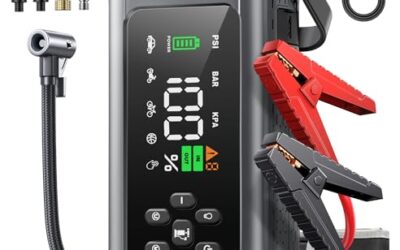
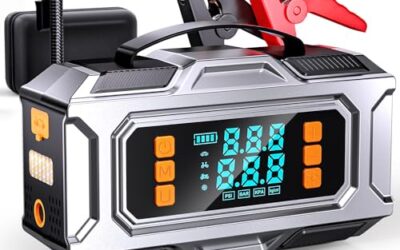
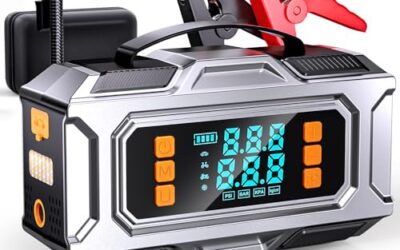
- Add air if a tire is below target. Use an inflator and check pressure again with a gauge. Inflators may differ in gauge accuracy, so a separate gauge can help confirm the reading. For help choosing an inflator, see our guide to 12V tire inflators with automatic shutoff.
- Recheck the reading. Small differences can come from measurement technique or tool accuracy. Repeat the measurement if a reading seems out of line, then fit the valve cap securely.
A TPMS display can be useful for warnings, but it may not show each tire’s exact pressure. Display functions differ across model years and vehicle trims. Use a gauge when you need an actual reading or when the vehicle manual calls for one.
Cold pressure versus pressure after driving
“Cold” pressure means a reading taken before heat from driving has raised tire pressure. It does not mean the tire must be at the same temperature as the outdoor air. A car parked in a heated garage may have warmer tires than a car parked outside, even if both are checked before driving.
If you need to add air while tires are warm, follow the vehicle manual or tire-maker guidance for that situation. Do not lower a warm tire to the cold-pressure number; it may then be underinflated after cooling. Recheck when the tires are cold and set pressure to the vehicle’s specified target.
A pressure gauge with memory can help compare readings over time, but stored readings are useful only when measurement conditions are comparable. See what these tools can store in our digital tire pressure gauge with memory guide.
Temperature-related pressure change or a leak?
Weather is a likely factor when several tires lose a similar amount of pressure after temperatures fall. A leak becomes more likely when one tire repeatedly loses pressure faster than the others, or when pressure keeps dropping after you correct it. A damaged valve, puncture, wheel issue, or bead leak may need inspection.
Check pressure across all tires under similar conditions. Record readings and the date so you can compare them. A single reading cannot prove whether a tire leaks, but a repeated difference in one tire is a reason to investigate rather than keep adding air indefinitely.
TPMS warnings also need context. Some systems warn only after pressure falls below a set point; others show individual readings. A warning light does not identify the cause. Check pressure with a gauge, and consult the owner’s manual for the system’s behavior and reset procedure. Resetting a TPMS does not repair a leak.
Common mistakes
- Using the tire sidewall number as the target. Follow the vehicle label or manual for normal operation. The sidewall maximum is not a substitute for the vehicle’s recommended pressure.
- Checking only one tire. Temperature can affect every tire, and a difference among tires may reveal a separate problem. Check all of them.
- Adjusting pressure based on a warm reading. Heat from driving changes pressure. Use a cold reading for comparison with the vehicle’s cold-pressure specification.
- Assuming a TPMS warning means a sensor failed. Low pressure is a common reason for a warning. Measure the tires before diagnosing the system.
- Ignoring one tire that keeps losing air. Weather can explain broad pressure changes, but it does not rule out a puncture or valve leak.
- Inflating to a seasonal guess. Temperature rules of thumb do not replace a gauge and the vehicle’s pressure specification.
When to get professional help
Get help from a tire shop if one tire keeps losing pressure, you find a nail or other damage, a valve appears damaged, or a tire looks misshapen. Do not remove an embedded object before a tire professional assesses it; removing it can change how quickly air escapes.
If a tire is visibly low, damaged, or losing air quickly, do not treat it as safe for normal driving. Follow the vehicle manual and roadside assistance guidance. A tire professional can inspect for tread punctures, sidewall damage, bead leaks, and wheel problems.
Seek service if the TPMS warning remains after you have checked and corrected pressure, or if the display behaves differently from the owner’s manual description. The issue could involve a sensor or system fault, but diagnosis depends on the vehicle’s model year and TPMS design.
Gear that can help
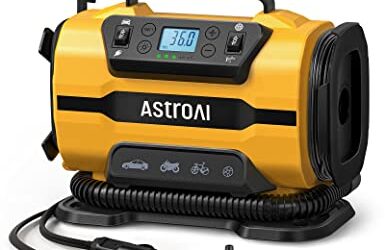
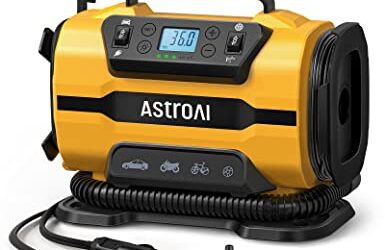
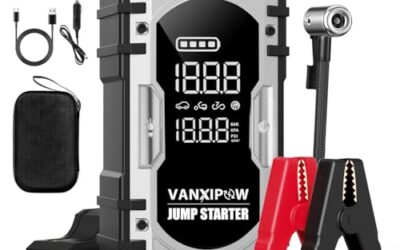
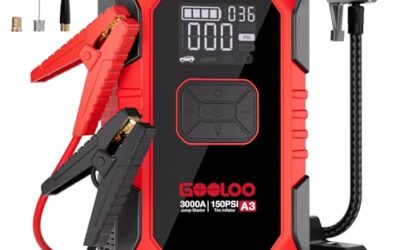
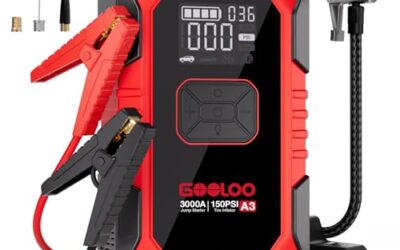
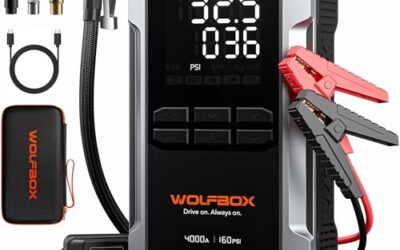
If you need tire inflators or tire pressure gauges for this job, these picks already appear in our tire inflators guides. Check the full guide for fit and who should skip each one.

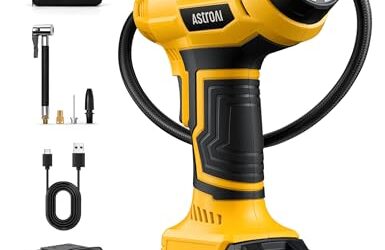
Specifications
| Color | Yellow |
|---|---|
| Size | Large |
| Dimensions | 8.27 x 3.74 x 6.69 Inches |
| Weight | 650 Grams |
| Product Group | Automotive Parts and Accessories |
| Binding | Tools & Home Improvement |

Specifications
| Color | Black, Yellow |
|---|---|
| Size | One Size |
| Dimensions | 10.5 x 7.7 x 2.2 Inches |
| Weight | 6.39 pounds |
| Product Group | Tools |
| Binding | Tools & Hardware |
Pros
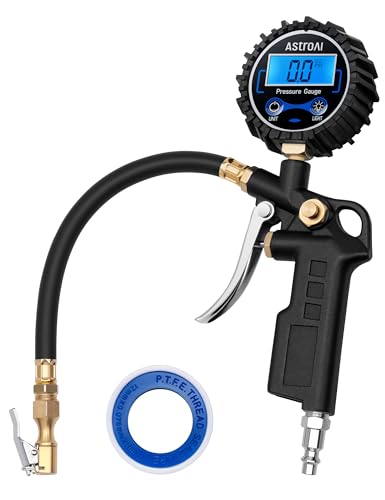
- Wide 3-250 PSI measurement range
- Digital readout provides 0.1 PSI resolution
- Combines a gauge, hose, locking chuck, and bleed valve in one unit
- Compatible with multiple NPT air compressor outputs
- Supports inflation, deflation, and pressure checks
Cons
- Inflation requires connection to an air compressor
Specifications
| Color | Black |
|---|---|
| Size | 1 Pack Standard |
| Dimensions | 4.96 x 1.06 x 1.5 inches |
| Weight | 0.66 pounds |
| Product Group | Automotive Parts and Accessories |
| Binding | Automotive |
Best For / Avoid If
Best for buyers prioritizing
- Wide 3-250 PSI measurement range
- Digital readout provides 0.1 PSI resolution
- Combines a gauge, hose, locking chuck, and bleed valve in one unit
Consider another option if
- Inflation requires connection to an air compressor
Next step: How to Read a Digital Tire Pressure Gauge.
Frequently asked questions
How much does tire pressure change for every 10 degrees?
About 1 PSI per 10°F is a common estimate. It is not exact for all tires or conditions, so use a gauge and the vehicle’s recommended cold pressure.
Should I add air when temperatures drop?
Check pressure first. If a cold tire reads below the vehicle’s recommended pressure, add air until it reaches that target. Do not add a set amount based only on the weather forecast.
Should I let air out when tires warm up?
No. Pressure normally rises as tires warm from driving or warmer conditions. Do not release air based on a warm reading; check again when tires are cold.
Can cold weather trigger the TPMS light?
Yes. Colder temperatures can lower pressure enough to trigger a warning. Check every tire with a gauge, inflate as needed, and consult the owner’s manual if the warning remains.
Does pressure loss always mean a leak?
No. A similar drop across several tires after a temperature change may be weather-related. Continued loss in one tire, especially after inflation, warrants inspection.
Sources and further reading
- Tire Safety (NHTSA): Guidance on tire care, pressure checks, and tire safety.
- Keeping Your Vehicle in Shape (fueleconomy.gov): Maintenance guidance, including checking tire pressure.