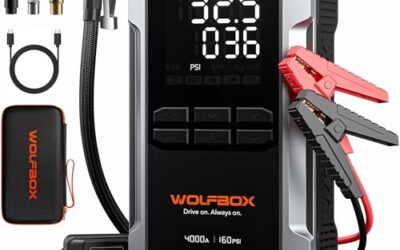
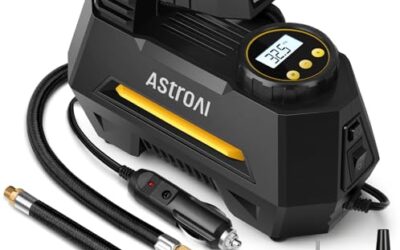
To find recommended tire pressure on a car, check the tire information placard, usually on the driver’s door jamb. Use that vehicle-specific pressure, measured when tires are cold, rather than the maximum pressure printed on the tire sidewall.
- Check the placard on the driver’s door jamb or door edge first.
- Use the owner’s manual if placard is missing, hard to read, or unclear.
- Check all tires when cold, including spare if its pressure is listed.
- Do not use tire sidewall maximum as normal vehicle pressure.
Where to find recommended tire pressure on a car
Most cars list recommended cold tire pressure on a tire and loading information placard. Look along the driver’s door jamb, door edge, or nearby body pillar. The label may show front and rear pressures, tire size, and seating or cargo information.
Placard location varies by vehicle. If it is not on the driver’s side, check the passenger-side door area, glove box, fuel door, or owner’s manual. The manual can also explain how to read the label for your specific model and trim.
Look for pressure in pounds per square inch, shown as PSI. Some labels also show kilopascals, or kPa. Follow the unit shown on your tire gauge, or convert carefully. One PSI is approximately 6.9 kPa, but a gauge with matching units avoids conversion errors.
How to find recommended tire pressure on a car: steps
- Park safely. Stop on a level surface away from traffic. Let tires cool before checking pressure.
- Find the placard. Open driver’s door and inspect door jamb and door edge. Check manual if label is absent or unreadable.
- Read each axle’s value. Front and rear tires can have different recommended pressures. Some vehicles list a separate value for a temporary spare.
- Check the tire size. Compare the size printed on the placard with the size mounted on the car. Different approved tire sizes may have separate pressure guidance in the manual.
- Measure cold pressure. Remove valve cap, press a reliable gauge onto valve stem, and read pressure. Repeat if seal was poor or reading seems inconsistent.
- Add or release air. Adjust tire to vehicle’s cold-pressure target. Recheck with gauge, then replace valve cap.
- Check tire-pressure monitoring system. If warning remains after pressure correction, follow manual instructions. Some vehicles need driving or a reset procedure to update the display.
What “cold tire pressure” means
Cold pressure means pressure measured before driving, or after vehicle has been parked long enough for tires to cool. Driving heats tires and raises pressure. That increase is normal; do not bleed air from a warm tire just to make its gauge match cold-pressure placard value.
Ambient temperature also affects tire pressure. Pressure usually falls as temperature drops and rises as temperature climbs. Check tires after a major weather change, especially before a long trip. For seasonal details, see our cold-weather tire pressure guide.
Placard pressure versus tire sidewall pressure
| Location | What it tells you | How to use it |
|---|---|---|
| Vehicle tire placard | Recommended cold pressure for vehicle’s specified tire setup | Use as normal inflation target, unless vehicle manual gives applicable alternate guidance. |
| Tire sidewall | Maximum permitted inflation pressure for that tire, under its stated conditions | Do not treat as routine vehicle target. Vehicle maker sets recommended pressure for vehicle and tire combination. |
| Gauge or inflator display | Current measured pressure, or target entered into an inflator | Use to check and adjust pressure. Confirm display units and gauge reading. |
The tire sidewall may show a maximum load and pressure. That marking is not a recommendation to inflate every vehicle tire to that number. The vehicle placard accounts for vehicle application and approved tire setup.
What if tires or wheels were changed?
Replacement tires may have a different size, load rating, or construction from original equipment. Start with the vehicle manual and placard, then check guidance for the exact replacement tire and vehicle combination. Do not assume that a different size uses the old target without checking fitment guidance.
Aftermarket wheels or tires can also change fitment requirements. A tire shop can check whether the installed size and load rating suit the vehicle and advise on pressure. This matters for modified cars, trucks carrying heavy loads, and vehicles with nonstandard wheel packages.
For dually trucks, inner and outer valve access can make checking more involved. Read our guide to tire pressure gauges for dually trucks for access considerations.
Does recommended pressure change with passengers or cargo?
Some vehicles specify one pressure for everyday use and another for heavy loads, towing, or high-speed travel. Others do not provide separate settings. Follow the exact instructions on the placard and in the owner’s manual; do not raise pressure based on a general rule.
Check load limits as well as pressure. Proper inflation does not increase a vehicle’s rated carrying capacity. For towing, use the vehicle’s towing and loading instructions, including any tire-pressure guidance for the planned load.
Common mistakes
- Using the sidewall maximum as the target. That number describes the tire’s maximum pressure limit, not usual vehicle pressure.
- Checking only one tire. Tires can lose air at different rates. Measure all four, and check spare if applicable.
- Checking after a long drive. Warm tire pressure rises. Recheck later when tires are cold instead of letting air out based on a warm reading.
- Assuming front and rear targets match. Read each placard entry; some vehicles use different axle pressures.
- Ignoring tire size changes. A nonstandard tire may require professional fitment and pressure guidance.
- Trusting a dashboard warning as an exact reading. Some TPMS systems show pressure per tire; others only warn when pressure is low. Use a gauge when system display lacks detail.
- Forgetting the spare. A spare can lose air while stored. Follow its label and the vehicle manual.
When to get professional help
Ask a tire professional to inspect a tire that repeatedly loses pressure, has visible damage, or cannot hold the placard target. A puncture, damaged valve, bead leak, or wheel issue may cause pressure loss. Do not treat repeated inflation as a repair.
Stop and seek roadside or professional help if tire is visibly flat, badly damaged, or vehicle handling changes. Driving on a severely underinflated tire can cause further damage and loss of control. Follow vehicle instructions for a flat tire or roadside stop.
Get fitment advice if placard is missing, tires differ from listed size, or vehicle has aftermarket wheels. The right pressure depends on vehicle and tire combination, not a universal PSI figure.
Gear that can help
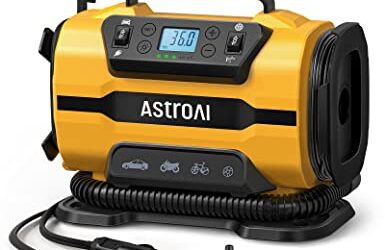
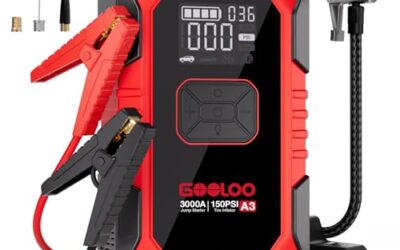
If you need tire inflators or tire pressure gauges for this job, these picks already appear in our tire inflators guides. Check the full guide for fit and who should skip each one.
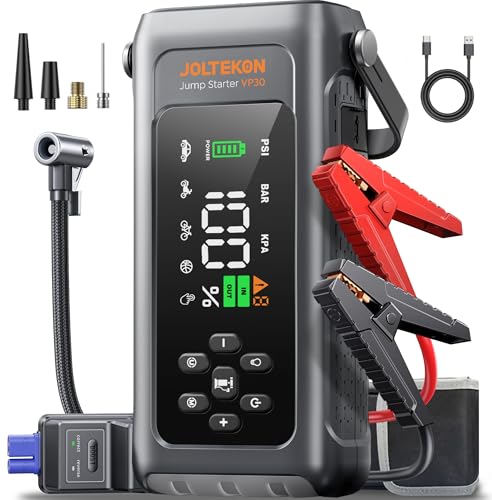
Pros
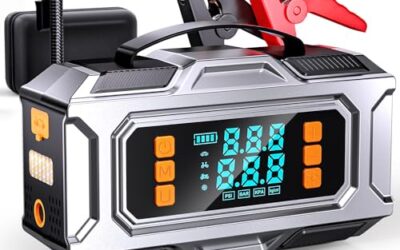
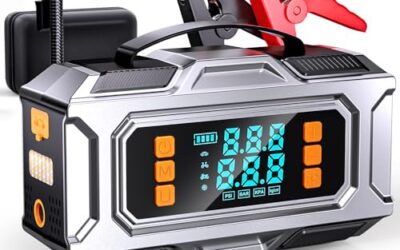
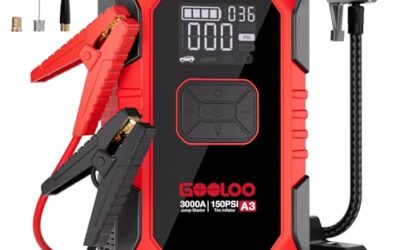
- Combines jump starting, tire inflation, lighting, and portable charging in one device
- Force-start function is specified for completely drained or low-voltage batteries
- Automatic shutoff helps prevent over-inflation
- Operating temperature is listed as -4°F to 140°F
Cons
- The product listing advises charging the unit every 2–3 months during extended storage
- Users are instructed to ensure the battery level exceeds 50% before vehicle startup
Specifications
| Dimensions | 7.88 x 1.97 x 3.78 inches |
|---|---|
| Weight | 2.645547144 pounds |
| Product Group | Automotive Parts and Accessories |
Best For / Avoid If
Best for buyers prioritizing
- Combines jump starting, tire inflation, lighting, and portable charging in one device
- Force-start function is specified for completely drained or low-voltage batteries
- Automatic shutoff helps prevent over-inflation
Consider another option if
- The product listing advises charging the unit every 2–3 months during extended storage
- Users are instructed to ensure the battery level exceeds 50% before vehicle startup
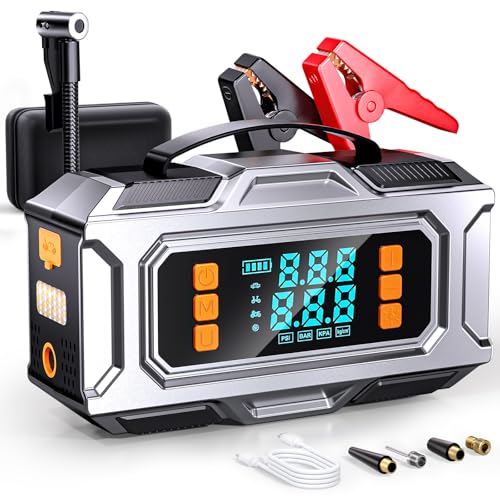
Pros
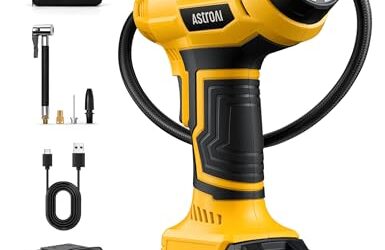
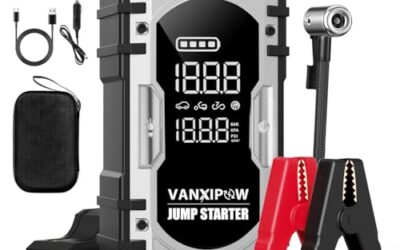
- Combines jump starting, tire inflation, device charging, and 12V accessory power in one unit
- Supports both gas and diesel vehicles within the stated engine-size limits
- Auto-shutoff inflator can be set using PSI, BAR, KPA, or KG/CM² units
- Includes a storage box, USB-C charging cable, air hose, nozzles, and user manual
Cons
- The manufacturer advises waiting two minutes between jump-start attempts and limiting attempts to three consecutively
- The compressor should cool for five minutes after 20 minutes of continuous inflation
- The unit should be recharged every two to three months during storage
Specifications
| Color | Black Silver |
|---|---|
| Dimensions | 4.3 x 7.6 x 2.5 inches |
| Weight | 2.5 Pounds |
| Product Group | Automotive Parts and Accessories |
Best For / Avoid If
Best for buyers prioritizing
- Combines jump starting, tire inflation, device charging, and 12V accessory power in one unit
- Supports both gas and diesel vehicles within the stated engine-size limits
- Auto-shutoff inflator can be set using PSI, BAR, KPA, or KG/CM² units
Consider another option if
- The manufacturer advises waiting two minutes between jump-start attempts and limiting attempts to three consecutively
- The compressor should cool for five minutes after 20 minutes of continuous inflation
- The unit should be recharged every two to three months during storage
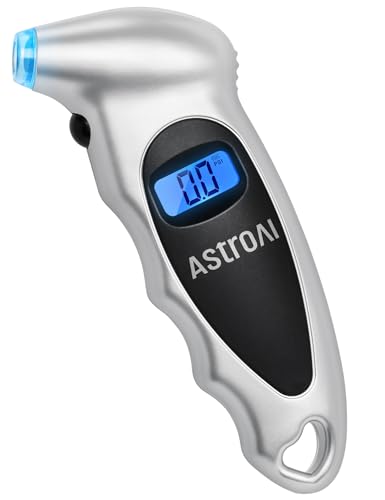
Pros
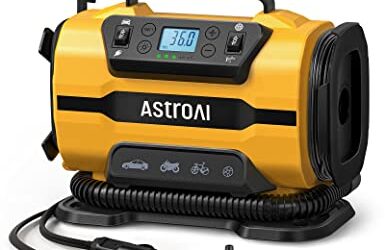
- Stated ±1 PSI accuracy supports routine checks against door-jamb pressure recommendations
- Nozzle light and backlit display remove the need for a separate flashlight during nighttime checks
- Four-unit support suits drivers who work across different pressure scales
- Auto power-down extends battery life between monthly checks
- Broad 0–150 PSI range accommodates everyday vehicles and higher-pressure spare tires
Cons
- Warranty terms and battery replacement guidance are not included in the available product data
Specifications
| Color | Silver |
|---|---|
| Size | Small |
| Dimensions | 5.3149606245 x 2.1653543285 x 1.1023622036 inches |
| Weight | 0.110231131 Pounds |
| Product Group | Automotive Parts and Accessories |
| Binding | Apparel |
Best For / Avoid If
Best for buyers prioritizing
- Stated ±1 PSI accuracy supports routine checks against door-jamb pressure recommendations
- Nozzle light and backlit display remove the need for a separate flashlight during nighttime checks
- Four-unit support suits drivers who work across different pressure scales
Consider another option if
- Warranty terms and battery replacement guidance are not included in the available product data
FAQ
Is recommended tire pressure printed on the tire?
The tire sidewall usually shows maximum pressure and load information. Use vehicle placard or manual for normal recommended cold pressure.
Should I use the pressure shown on the door sticker or dashboard?
Use the door placard or manual as target. Dashboard TPMS reading reports current pressure when supported, not necessarily recommended pressure.
Should I inflate tires to placard pressure when they are warm?
Placard target refers to cold tires. If tires are warm, do not release air solely to match cold target. Check again when tires cool, or follow vehicle manual for temporary adjustment instructions.
Does tire pressure drop in cold weather?
Yes. Cooler air typically lowers tire pressure. Check tires cold after temperature changes and adjust to vehicle’s listed target.
Where can I read more about tire safety?
NHTSA explains tire safety and pressure checks in its tire safety information. For inflator use and shutoff features, see our guide to 12V tire inflators with automatic shutoff.
Sources and further reading
- Tire Safety (NHTSA): Tire safety guidance includes checking inflation and tire condition.
- Keeping Your Vehicle in Shape (fueleconomy.gov): Maintenance guidance includes tire pressure checks.