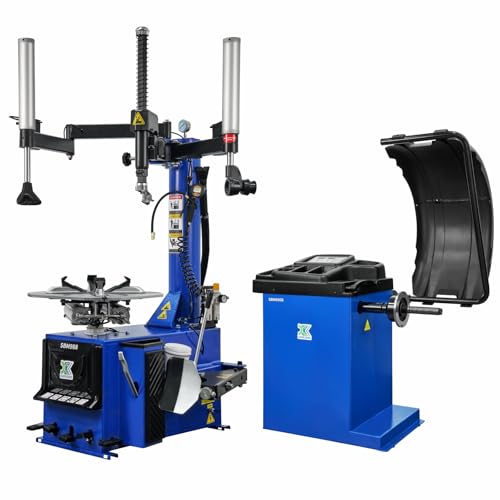
The best wheel balancer for home garage use depends on whether you need a standalone balancer or tire-changing equipment too. For a typical home shop that wants both functions, the XK Tire Changers Machine and Wheel Balancer Combo lists a 110V tire changer, a 10-to-24-inch rim range on its balancer, and a 397-pound machine weight. Its size and mixed voltage details matter, so it suits a dedicated work area better than a small garage.

Pros
- Longer shaft supports more wheel widths.
- Built-in fault diagnosis program.
- Self-calibration program supports double-side calibration.
Specifications
| Dimensions | 39.5 x 29.5 x 35 inches |
|---|---|
| Product Group | Automotive Parts and Accessories |
Best For / Avoid If
Best for buyers prioritizing
- Longer shaft supports more wheel widths.
- Built-in fault diagnosis program.
- Self-calibration program supports double-side calibration.

Pros
- Combines tire changing and wheel balancing equipment in one package.
- Balancer includes dynamic, static, ALU 1–3, and motorcycle modes.
- Both machines list presets for American standard measurements.
- Tire changer lists a 110V power supply.
Cons
- Tire changer requires operating pressure of 6–8 bar.
- Tire changer maximum wheel width is 12.5 inches.
Specifications
| Color | Model: 988+690 |
|---|---|
| Size | Extra large |
| Dimensions | 47 x 39 x 34.6 inches |
| Weight | 840 pounds |
| Product Group | Automotive Parts and Accessories |
Best For / Avoid If
Best for buyers prioritizing
- Combines tire changing and wheel balancing equipment in one package.
- Balancer includes dynamic, static, ALU 1–3, and motorcycle modes.
- Both machines list presets for American standard measurements.
Consider another option if
- Tire changer requires operating pressure of 6–8 bar.
- Tire changer maximum wheel width is 12.5 inches.

Pros
- Independent mechanical arms support tire dismounting and installation.
- Digital display air gun provides real-time tire pressure readings.
- Six balancing modes and OPT function offer multiple balancing options.
- Listed tire compatibility spans 10 to 24 inches.
Cons
- Listed weight is 840 pounds.
Specifications
| Color | Model: New 988+690 |
|---|---|
| Weight | 840 pounds |
| Product Group | Automotive Parts and Accessories |
Best For / Avoid If
Best for buyers prioritizing
- Independent mechanical arms support tire dismounting and installation.
- Digital display air gun provides real-time tire pressure readings.
- Six balancing modes and OPT function offer multiple balancing options.
Consider another option if
- Listed weight is 840 pounds.
Pros
- Includes both tire changing and wheel balancing equipment.
- Independent mechanical arms support work with hard-walled and low-profile tires.
- Protective covers and non-slip claw covers are included for wheel and rim contact points.
- Listed with six balancing modes and an OPT function.
Cons
- Weighs 840 pounds, making it a heavy piece of shop equipment.
- Uses 110V power.
Specifications
| Color | Model: New 988+690S |
|---|---|
| Weight | 840 pounds |
| Product Group | Automotive Parts and Accessories |
Best For / Avoid If
Best for buyers prioritizing
- Includes both tire changing and wheel balancing equipment.
- Independent mechanical arms support work with hard-walled and low-profile tires.
- Protective covers and non-slip claw covers are included for wheel and rim contact points.
Consider another option if
- Weighs 840 pounds, making it a heavy piece of shop equipment.
- Uses 110V power.
Pros
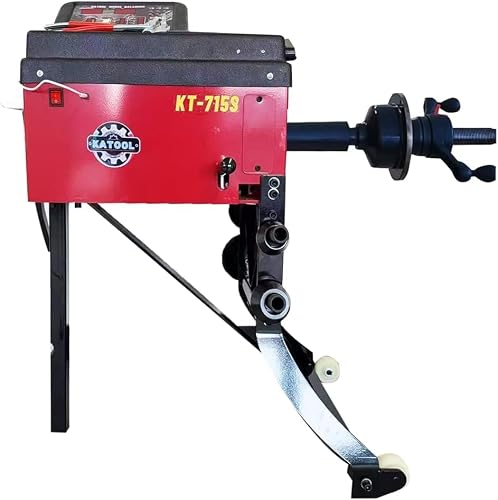
- Supports rim diameters from 10 to 24 inches
- Supports rim widths from 1.5 to 20 inches
- Self-calibration instructions allow use of a wheel that is not balanced
Cons
- Requires flat, solid ground for accurate measurement
- Wheel must be securely locked on the adapter before balancing
- Requires 500 mm of free space around the machine
Specifications
| Product Group | Automotive Parts and Accessories |
|---|
Best For / Avoid If
Best for buyers prioritizing
- Supports rim diameters from 10 to 24 inches
- Supports rim widths from 1.5 to 20 inches
- Self-calibration instructions allow use of a wheel that is not balanced
Consider another option if
- Requires flat, solid ground for accurate measurement
- Wheel must be securely locked on the adapter before balancing
- Requires 500 mm of free space around the machine

Pros
- Automatic measurement inputs wheel distance and diameter values.
- Longer shaft adapter accommodates wider wheels, including SUV and light truck tires.
- Copper-winding motor construction supports heat dissipation.
- Optional wheel guard offers added protection against accidental scratches.
Cons
- Wheel guard is optional, so added guard protection is not standard.
Specifications
| Color | red |
|---|---|
| Product Group | Automotive Parts and Accessories |
Best For / Avoid If
Best for buyers prioritizing
- Automatic measurement inputs wheel distance and diameter values.
- Longer shaft adapter accommodates wider wheels, including SUV and light truck tires.
- Copper-winding motor construction supports heat dissipation.
Consider another option if
- Wheel guard is optional, so added guard protection is not standard.

Pros
- Combines tire changer and wheel balancer in one machine.
- Double assist arms can reduce physical effort during tire handling.
- Protective covers on the jaws and mounting head help prevent rim scratches.
- Balancer has a 3 mm steel chassis with reinforced welds.
Cons
- Changer clamping ranges are limited to 12-inch to 22-inch wheels outside and 14-inch to 24-inch wheels inside.
Specifications
| Color | Blue |
|---|---|
| Product Group | Automotive Parts and Accessories |
Best For / Avoid If
Best for buyers prioritizing
- Combines tire changer and wheel balancer in one machine.
- Double assist arms can reduce physical effort during tire handling.
- Protective covers on the jaws and mounting head help prevent rim scratches.
Consider another option if
- Changer clamping ranges are limited to 12-inch to 22-inch wheels outside and 14-inch to 24-inch wheels inside.
Pros
- USB Type-C power input
- Supports ALU2/ALU3 measurement modes
- Main unit weighs 44 lb
Cons
- Operation requires hand-spinning the wheel 2–3 circles
- Maximum wheel diameter is 22 inches
Specifications
| Dimensions | 30 x 7 x 9 inches |
|---|---|
| Weight | 74.95716908 pounds |
| Product Group | Automotive Parts and Accessories |
| Binding | Automotive |
Best For / Avoid If
Best for buyers prioritizing
- USB Type-C power input
- Supports ALU2/ALU3 measurement modes
- Main unit weighs 44 lb
Consider another option if
- Operation requires hand-spinning the wheel 2–3 circles
- Maximum wheel diameter is 22 inches

Pros
- Supports car, truck, and SUV tires.
- Multiple balance modes accommodate different rims.
- Specified wheel-width range covers 3 to 12 inches.
- Steel body and welded construction are specified.
Cons
- Wheel width is limited to 3-12 inches.
- Rim diameter must be under 30 inches.
- Wheel diameter must be under 880 mm.
Specifications
| Product Group | Automotive Parts and Accessories |
|---|
Best For / Avoid If
Best for buyers prioritizing
- Supports car, truck, and SUV tires.
- Multiple balance modes accommodate different rims.
- Specified wheel-width range covers 3 to 12 inches.
Consider another option if
- Wheel width is limited to 3-12 inches.
- Rim diameter must be under 30 inches.
- Wheel diameter must be under 880 mm.

Pros
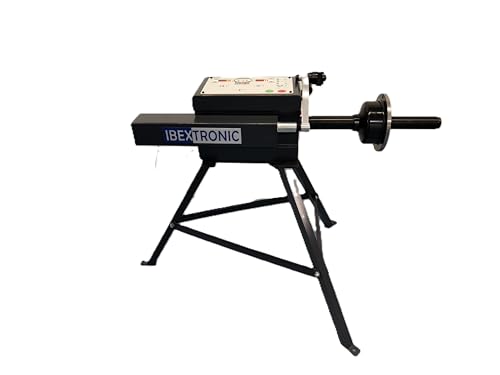
- Extended shaft supports larger rims and custom wheel setups.
- Multiple balancing modes accommodate different rim designs.
- Extended spindle can handle wider wheels without adapters.
Specifications
| Size | 42*30*31 |
|---|---|
| Product Group | Automotive Parts and Accessories |
Best For / Avoid If
Best for buyers prioritizing
- Extended shaft supports larger rims and custom wheel setups.
- Multiple balancing modes accommodate different rim designs.
- Extended spindle can handle wider wheels without adapters.
Which home garage wheel balancer fits your setup?
For a home buyer, first decide whether the job is balancing wheels you remove and mount elsewhere, or handling the full tire-change process. A standalone balancer takes less scope than a tire changer and balancer combo, but the listed standalone machines do not give a power specification in their feature details. The mini unit does specify USB Type-C DC 5V/1A power and hand spinning.
The three picks below have an explicit power detail and a stated home-garage use. The combo machines need space and a suitable electrical setup, while the mini unit limits wheel diameter and requires manual spinning. This article may earn CarTechTalk a commission from qualifying purchases.
| Product | Power detail | Balancing range or stated limit | Best fit |
|---|---|---|---|
| XK Tire Changers Machine and Wheel Balancer Combo | Changer 110V; balancer 110/220V | 10 to 24 inch rim diameter | Home shop needing changer and balancer |
| KATOOL ME 2.0HP Tire Machine Combo Double Assit | 120V, single phase, 2 HP | Longer balancer shaft for wider wheels | Shop needing dual assist arms |
| Portable Mini Wheel Balancer Machine I40 PRO | USB Type-C, DC 5V/1A | Maximum wheel diameter 22 inches | Portable, hand-spun balancing |
Standalone balancers: useful features, power details to resolve
Several standalone options include features that may suit home use, but their listed descriptions do not state an electrical power source. That makes them harder to select against the power requirement in a garage. KATOOL’s KT-B760 has an automatic ruler that enters A and D dimensions and an optional wheel guard. The ME-B610 lists a longer shaft and self-calibration program. The MOTOOL KT-715S is described as portable and lists wheel weights up to 143 pounds, but its instructions require a flat, solid surface and 500 millimeters of clearance around the unit.
Other standalone listings cover different wheel dimensions. The KATOOL KT-B750 states rim diameter below 30 inches, wheel width from 3 to 12 inches, and wheel diameter below 880 millimeters. KATOOL’s ME model with extended shaft emphasizes wider and custom wheels, without a numeric wheel limit in its features. These are potentially useful distinctions, but a shaft description alone does not establish vehicle fitment or electrical compatibility.
Do not treat a feature claim such as self-calibration, sensor design, or low vibration as a substitute for installation instructions, correct wheel centering, and routine calibration. Ask for the applicable power rating and manual if you are considering one of these standalone units. The given feature details do not support a fair power match against the three picks above.
How to choose a balancer for your garage
Match wheel dimensions, not vehicle labels
Rim diameter and wheel width are different measurements. A balancer’s rim-diameter range does not automatically establish fit for every wheel with that diameter: the shaft, cone, mounting method, wheel weight, and usable width also matter. Start with the wheels you expect to service, including the largest diameter and width, then compare those figures with the machine’s stated limits. If the listing gives only a longer shaft without dimensions, get a confirmed limit rather than assuming SUV or truck fit.
Separate balancing from tire changing
A balancer handles wheel balance; a changer removes and installs the tire. A combo makes sense when you need both jobs and have room for heavy shop equipment. If tires arrive already mounted, paying for a changer adds little to your actual work. The mini I40 PRO is the only selected standalone unit with a stated USB power source, but its manual-spin operation and 22-inch cap narrow its role.
Plan space, power, and workflow
Floor space is part of the cost. A 397-pound combo needs a planned location and a safe way to get it there. A 44-pound mini unit is more movable, but still needs stable support during use. MOTOOL’s instructions specifically call for a flat, solid floor and 500 millimeters of free space around its machine; those are model-specific instructions, not a universal rule for every balancer.
For combos, check electrical ratings for both changer and balancer, not only the motor headline. XK lists 110V for the changer and 110/220V for its balancer. KATOOL describes 120V single-phase power while also using 110V in the product name. These details can affect whether the equipment suits the intended outlet and circuit. Follow the manual and a qualified electrician’s advice where needed.
Ownership costs and practical limits
Purchase price is only one part of owning shop equipment. Combos include two machines, occupy more floor area, and require the owner to handle both tire changing and balancing procedures. A standalone balancer avoids buying a changer, but wheels still need to be mounted and demounted elsewhere unless that capability already exists. Consider how often you will use each function before committing garage space.
Balancing depends on accurate wheel centering and the correct dimensions entered into the machine. The MOTOOL instructions explicitly say to secure the wheel on its adapter and place the machine on flat, solid ground to avoid wrong measurements. Its calibration instructions call for a mounted wheel and exact dimension presets. Follow the model’s manual for mounting, calibration, guarding, and operation; do not assume one machine’s procedure applies to another.
Wheel finish also affects the choice. The XK combo describes centering cones and a quick-release wing nut, while KATOOL’s tire changer descriptions discuss protective covers and rim-protection features. These are useful design claims, but care during clamping and mounting remains important. For expensive or delicate wheels, weigh the risk and labor of home service against paying a tire shop equipped for that wheel type.
Who should skip these home garage picks?
Skip all of these machines if you balance tires only once in a long while, lack a stable work area, or cannot confirm the required power and wheel fit. A local tire shop may be the more practical choice when equipment placement, calibration, or tire mounting would become a larger project than the occasional service saves. If you do frequent tire work, choose by your actual wheel dimensions, required functions, available space, and confirmed electrical rating, not by broad claims about professional use.
Verdict
For a dedicated home tire bay, the XK combo is the strongest match in this group when its 397-pound weight and separate power details suit the garage. KATOOL’s combo is the more relevant option for a buyer who values dual assist arms, provided the seller resolves the 110V versus 120V wording. The I40 PRO fits a different buyer: someone who wants a portable, USB-powered balancer, accepts hand spinning, and works within its 22-inch wheel limit. No single choice fits every home garage.
Sources and further reading
- Tire Safety (NHTSA): General tire safety information for vehicle owners.
- Keeping Your Vehicle in Shape (fueleconomy.gov): Vehicle maintenance guidance, including tire care.