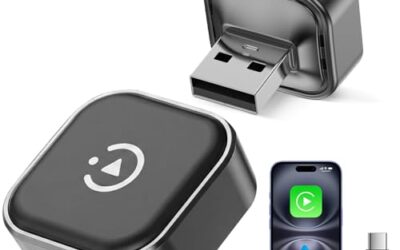
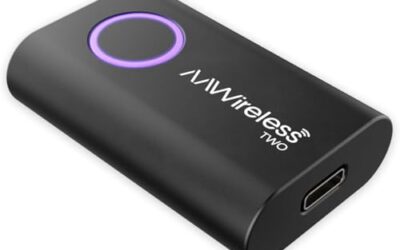
The best head unit for JL Audio C1 650 speakers is a receiver with clean 4-ohm power, adjustable crossover controls, and phone support that fits your vehicle. Apple CarPlay or Android Auto matters more than extreme amplifier power because the C1-650 speakers remain limited by their power handling and installation quality.
JL Audio C1-650 speakers can work with many factory radios and aftermarket receivers. A new head unit may improve source quality, bass control, hands-free calling, and navigation access. It cannot fix weak door mounting, air leaks, damaged wiring, poor speaker polarity, or a factory system that uses unusual amplification.
Key takeaways
- Choose head unit fitment before comparing audio features.
- Look for 4-ohm speaker support and honest RMS power ratings.
- Use high-pass filtering to protect door speakers from deep bass.
- Keep factory steering-wheel, backup-camera, and USB functions with the correct interface.
- Vehicle year, trim, factory amplifier, connector, and phone OS can change installation requirements.
- A separate amplifier helps when you need more volume, but it is not required for normal listening.
What makes a head unit suitable for JL Audio C1 650 speakers?
The C1-650 is a 6.5-inch coaxial speaker intended for common car-door locations. Its nominal impedance is 4 ohms, so the receiver must support a 4-ohm speaker load. Most aftermarket head units do, but wiring two speakers to one channel or adding extra loads can create a problem.
Power rating needs careful reading. Head units often show peak power, while RMS power better describes sustained output. A receiver with roughly 15 to 25 watts RMS per channel can drive door speakers for ordinary listening. More output may provide more headroom, but louder sound still depends on door treatment, speaker sensitivity, cabin noise, and installation.
Do not select a receiver only because its peak number looks large. Peak power does not tell you how loudly the system plays during normal use. It also does not replace an external amplifier when you want strong output at highway volume.
Best head unit for JL Audio C1 650 speakers: feature priorities
| Feature | What it does | Why it matters here |
|---|---|---|
| 4-ohm speaker support | Matches common C1-650 wiring | Helps the receiver operate within its normal load range |
| High-pass filter | Reduces deep bass sent to door speakers | Can limit cone movement and distortion at higher volume |
| 13-band or similar EQ | Adjusts frequency balance | Helps correct bright, dull, or boomy cabin sound |
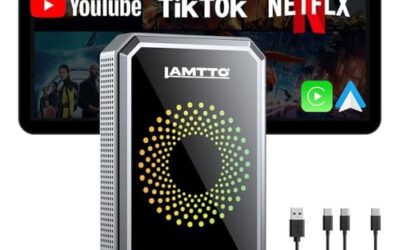
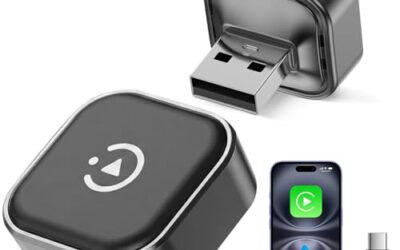
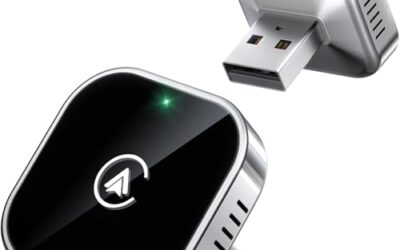
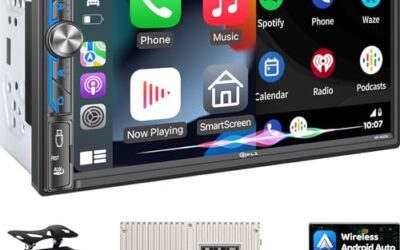
| Apple CarPlay and Android Auto | Displays supported phone apps | Improves navigation, calls, music, and voice control |
| Time alignment | Delays channels for listening position | Can improve center image from driver seat |
| Preamp outputs | Sends audio to external amplifiers | Leaves an upgrade path beyond receiver power |
| Vehicle integration support | Connects factory controls and cameras | Reduces loss of steering-wheel or camera functions |
Choose wired or wireless phone connection
Wired Apple CarPlay and Android Auto
Wired connection usually gives broad phone compatibility and steady operation through a USB cable. It also charges the phone during use. This option suits drivers who want predictable connection and do not mind plugging in.
Phone OS support can change with receiver firmware and phone updates. An older receiver may support one phone platform but lack newer wireless functions. USB cable quality also affects connection stability, especially with phones using USB-C.
Wireless Apple CarPlay and Android Auto
Wireless connection reduces cable use and starts phone integration after the receiver connects. It uses Bluetooth for setup and Wi-Fi for the display and audio link. This can increase battery use, so long trips may still need a charging cable.
Wireless support does not mean every phone behaves the same way. Phone model, OS version, receiver firmware, and wireless interference can affect startup time and stability. A receiver with both wired and wireless modes offers more recovery options.
Match receiver fit to vehicle, not only speaker size
JL Audio C1-650 speakers do not determine dashboard fit. The vehicle controls that decision. A single-DIN opening, double-DIN opening, shallow dash, factory screen, or integrated climate-control panel can require different parts.
Vehicle model-year and trim affect the radio connector, antenna adapter, USB port, backup-camera wiring, and steering-wheel interface. Factory amplifiers create another limit. Some vehicles send low-level signals from the factory radio to a separate amplifier. Others use amplified speaker outputs. The replacement plan must match that system.
Many newer vehicles also place vehicle settings inside the factory radio. Removing it may affect chimes, climate displays, parking sensors, or other menus. A compatible integration module can retain some functions, but coverage differs by vehicle.
Before selecting a receiver, record:
- Vehicle make, model, model-year, and trim
- Current radio size and screen layout
- Factory amplifier presence
- Steering-wheel audio controls
- Backup camera and USB functions
- Factory navigation, satellite radio, or hands-free system
- Phone type and operating system
For speaker power context, see 6.5 speakers for a stock head unit in an F-150. The fitment issues are different, but the discussion helps explain why receiver power alone does not determine system results.
Use sound controls correctly with C1-650 speakers
A high-pass filter is one of the most useful controls for door speakers. Set it to remove the lowest bass when the speakers sound strained or the door panels buzz. The exact setting depends on enclosure behavior, door sealing, listening volume, and whether a subwoofer handles low frequencies.
Start with a moderate filter and adjust by listening for reduced distortion. A setting that is too high makes music thin. A setting that is too low sends more deep bass to speakers that may not reproduce it cleanly at high volume.
Use EQ after setting the filter. Large boosts can consume amplifier headroom and cause clipping. Small cuts often sound cleaner than large boosts. Loudness or bass-enhancement modes can also push the receiver into distortion sooner.
Time alignment can improve stereo imaging from the driver seat. It may make the passenger-side speaker sound closer in time to the driver-side speaker. This feature changes stage position, not speaker power or bass extension.
When a separate amplifier makes sense
The receiver’s internal amplifier suits normal listening in many vehicles. Add an external amplifier when the system needs higher sustained volume, cleaner output at high levels, or more control over speaker channels.
An amplifier does not fix a bad source connection or incorrect wiring. It also needs power wiring, grounding, fuse protection, signal connections, and space. Door speakers need secure mounting and sealed adapter rings before more power becomes useful.
Preamp outputs make future amplification easier. Front and rear outputs support a four-channel amplifier. A subwoofer output helps add a dedicated low-frequency amplifier later. Match amplifier gain to the receiver signal rather than treating gain as a volume control.
Installation checklist
- Identify vehicle model-year, trim, dash opening, factory amplifier, and retained functions.
- Confirm receiver depth and mounting kit fit.
- Use a vehicle-specific harness instead of cutting factory wiring where possible.
- Connect speaker polarity consistently at radio and speaker.
- Use the correct antenna, camera, USB, and steering-wheel interfaces.
- Protect added power wires with the correct fuse near the battery.
- Test each speaker separately before reinstalling trim.
- Set receiver crossover, EQ, balance, fade, and time alignment from neutral settings.
- Update receiver firmware only through the maker’s stated process.
Disconnect the negative battery cable only after checking the vehicle service procedure. Some vehicles can lose learned settings or require a security code after power loss. Never probe airbag wiring while working behind the dash.
Common mistakes
Buying by peak watts
Peak watts create an inflated comparison. RMS output, speaker impedance, clipping behavior, and installation quality matter more during normal use.
Ignoring factory amplification
A factory amplifier may need a dedicated interface or bypass plan. Connecting the wrong signal type can produce low volume, noise, or no sound.
Assuming every 6.5-inch speaker fits
Basket depth, screw pattern, spacer thickness, grille clearance, and window movement can vary. The speaker size alone does not confirm physical fit.
Running full-range bass into door speakers
Deep bass at high volume can increase cone travel and distortion. Use the high-pass filter when the installation has no subwoofer or when the doors rattle.
Using a random USB cable
A damaged or charge-only cable can prevent wired phone integration. Replace the cable before blaming the receiver or phone.
Skipping polarity checks
One reversed speaker can weaken bass because the door speakers work against each other. Test left and right channels before final trim installation.
When to get professional help
Use an experienced installer when the vehicle has a factory amplifier, integrated climate controls, premium audio, a factory camera, or a security-linked radio. Professional help also makes sense when wiring diagrams conflict or the replacement causes warning messages.
Stop work if wires become hot, a fuse blows repeatedly, smoke appears, or a battery cable sparks heavily. Do not bypass a fuse or connect unknown wires to yellow airbag harnesses. Vehicle-specific service information takes priority over generic installation advice.
Related CarPlay and Android Auto guidance
Speaker choice and receiver choice interact. Read 6×9 speakers for a stock head unit to compare what factory-radio power can and cannot do. For larger door-speaker systems, 6×8 component speakers that run off a head unit covers similar power and fit questions.
FAQ
Can a factory head unit power JL Audio C1-650 speakers?
Yes, in many vehicles. The factory receiver must support the speaker load, and the vehicle’s factory amplifier or equalization may affect output. Speaker sensitivity and door installation also shape volume.
Do JL Audio C1-650 speakers need an amplifier?
No. A separate amplifier becomes useful when you need higher sustained volume or plan to add a subwoofer. It cannot correct bad mounting, reversed polarity, or damaged wiring.
Does CarPlay improve speaker sound?
CarPlay improves phone access and control. Sound quality depends on the receiver’s audio path, source settings, amplifier, speakers, and vehicle acoustics.
Should the receiver have a subwoofer output?
Choose one if you may add a subwoofer or external bass amplifier. It is not required for a two-speaker or four-speaker C1-650 system.
What is the best head unit power for C1-650 speakers?
Clean RMS output in the normal aftermarket receiver range is suitable for many installations. Select based on fit, phone support, controls, and integration before chasing the largest power number.

Pros
- Marine coaxial speaker format
- Removable grille and trim ring support personalization
- Listed durability claims include resistance to salt fog and UV exposure standards
- Includes a 3-year warranty
The JL Audio M6-650X-C-3Gw is a 6.5-inch marine coaxial speaker with a gloss white Classic Grille. The listed features describe output and clarity throughout the listening experience, a removable grille and trim ring for personalized painting, and durability for harsh marine conditions. The product is described as exceeding international salt fog and UV exposure standards and includes a 3-year warranty.
Specifications
| Color | White Classic |
|---|---|
| Size | 6.5-inch |
| Product Group | Electronics |
| Binding | Electronics |
Detailed Review
Key features:
- 6.5-inch marine coaxial speaker design
- Gloss white Classic Grille
- Removable grille and trim ring for personalized painting
- Designed to provide output and clarity throughout the listening experience
- Withstands harsh marine conditions
- Exceeds international salt fog and UV exposure standards
Best For / Avoid If
Best for buyers prioritizing
- Marine coaxial speaker format
- Removable grille and trim ring support personalization
- Listed durability claims include resistance to salt fog and UV exposure standards