How to prepare a car for summer storage starts with cleaning, servicing, protecting the battery, and controlling heat and moisture. The right plan changes with storage length, indoor or outdoor parking, vehicle age, battery type, and whether the car uses gasoline, diesel, or a high-voltage battery.
Summer storage can expose a parked vehicle to heat, UV light, humidity, insects, rodents, weak batteries, flat spots, and stale fuel. Prepare the car before parking it, then inspect it carefully before driving again.
Key takeaways
- Wash and dry the vehicle before storage. Dirt and salt can hold moisture against metal and paint.
- Change overdue engine oil and filter before a long storage period.
- Use a battery maintainer only when its voltage, chemistry, connector, and storage location fit your vehicle.
- Inflate tires to the vehicle maker’s cold-pressure specification, not the maximum molded on the sidewall.
- Keep fuel, chargers, and electrical equipment away from heat sources and open flames.
- Never drive after storage without checking tires, brakes, fluids, leaks, rodents, and battery condition.
What to gather before storing the car
Gather the owner’s manual, service records, tire gauge, approved battery charger or maintainer, car wash supplies, microfiber towels, tire valve caps, and a breathable vehicle cover for outdoor storage. A flashlight helps with leaks, nesting material, and corrosion.
Check the vehicle’s model year and power system first. A conventional 12-volt battery, AGM battery, lithium auxiliary battery, hybrid battery, and EV traction battery need different charging instructions. Charger connectors also vary. A maintainer made for flooded lead-acid batteries may not suit an AGM or lithium battery.
Read the battery, charger, and vehicle manuals before connecting anything. Some vehicles have a manufacturer-approved charging point under the hood. Others require connection at battery terminals or a specific ground point. EVs may require a particular state of charge and plugged-in storage routine.
How to prepare a car for summer storage: step-by-step
1. Choose a safe storage location
An enclosed, dry, ventilated garage usually offers better protection than outdoor parking. It reduces UV exposure, rain, tree sap, bird droppings, and temperature swings. A garage can still hold moisture, so check for roof leaks, standing water, and poor airflow.
Outdoor storage needs a cover made for vehicle use. Avoid plastic sheets that trap condensation against paint. Secure a breathable cover so wind does not rub grit across body panels. Do not cover a wet car.
Keep the vehicle away from lawn equipment, heaters, welding areas, and other ignition sources. Gasoline vapors can collect in low areas. Follow local fire rules and the vehicle manual for fuel storage.
2. Wash, dry, and clean the interior
Wash the body, wheel wells, wheels, and underside areas that carry road salt or mud. Dry seams around doors, the trunk, fuel door, hood, and liftgate. Water left in these areas can promote corrosion during storage.
Remove food, drinks, trash, paper, and scented items from the cabin. Vacuum carpet, seats, the trunk, and spare-tire wells. Rodents can use paper and fabric for nesting. Clean spills because heat can make odors and stains worse.
Leave the interior dry before closing the vehicle. Moisture absorbers can help in some storage spaces, but they do not replace leak repairs or ventilation. Do not place loose chemical containers where they can spill or contact trim.
3. Service engine fluids before parking
Change engine oil and the filter if service is due or close to due. Used oil can contain combustion byproducts and moisture. Fresh oil gives internal engine parts cleaner lubricant during storage and startup.
Check coolant level and condition, brake fluid, transmission fluid, power steering fluid where fitted, and windshield washer fluid. Correct leaks before storage. A full coolant reservoir does not prove that the cooling system has correct freeze and corrosion protection.
Inspect hoses, belts, clamps, and seals for cracks, swelling, or damp areas. Replace overdue filters according to the service schedule. Do not open a hot cooling system.
4. Decide how to handle fuel
For gasoline and diesel vehicles, follow the owner’s manual and fuel-system maker guidance. Storage fuel can oxidize and form deposits, especially during long periods. A nearly full tank can reduce air space, but the correct level depends on vehicle instructions and local safety rules.
Fuel stabilizer may slow fuel oxidation. It cannot repair contaminated fuel, a weak fuel system, or water in the tank. Add only a product approved for the fuel type, then run the engine long enough for treated fuel to reach the system if the product directions require it.
Do not add fuel stabilizer to an EV. Hybrid vehicles need model-specific instructions because the gasoline engine may start automatically during maintenance or charging.
5. Protect the 12-volt battery
A parked vehicle still uses electricity for alarms, keyless entry, computers, trackers, and other modules. Parasitic draw can discharge a 12-volt battery during storage. Heat can also shorten battery life.
Choose among three approaches:
| Approach | Works best when | Limits |
|---|---|---|
| Disconnect battery | Storage lasts weeks or months and the vehicle manual permits it | Clock, radio settings, window positions, security systems, and learned settings may reset |
| Use a battery maintainer | Power is available and the charger matches battery chemistry and voltage | Wrong charger type, poor ventilation, or damaged wiring can create a safety hazard |
| Remove and periodically charge battery | Vehicle sits outdoors or no safe electrical outlet exists | Battery removal may affect alarms, memory settings, and some vehicle systems |
Disconnect the negative cable only if the manual allows it and you understand the effects. Some vehicles need a battery registration procedure after replacement or reconnection. A modern car may also need window, steering, throttle, or security-system initialization.
For a battery maintainer, match the device to 12-volt system voltage and battery chemistry. Keep charging equipment dry, inspect cables for damage, and use a protected outlet. Do not place a charger where water, fuel vapors, or engine heat can reach it.
6. Set tire pressure and protect the tires
Check cold tire pressure before parking. Use the pressure on the driver’s door label or owner’s manual. The number molded into the tire sidewall is usually a maximum pressure, not the vehicle’s normal setting.
Long storage can create temporary flat spotting. Proper inflation reduces risk, but it does not remove it. Moving the vehicle slightly at approved intervals can help when the storage location permits safe movement. Do not move a car without checking brake condition, clearance, and insurance requirements.
Do not support a vehicle with a jack alone. If lifting is required, use vehicle-approved lift points and equipment rated for the job. Follow the vehicle and equipment manuals. Many storage situations do not justify lifting the car.
7. Protect paint, rubber, and exposed metal
After washing and drying, inspect paint for chips and exposed metal. Repair needs depend on damage depth and storage conditions. Wax or another paint protectant can reduce contamination, but it cannot stop corrosion from untreated damage.
Clean rubber door seals and apply only a product approved for automotive weatherstripping. Avoid petroleum products unless the seal maker allows them. Treating rubber can reduce sticking, but it does not repair cracked seals.
Close windows, doors, the trunk, and sunroof. Check that drains are clear. Water trapped in a sunroof channel or door can create mold and corrosion during hot weather.
8. Reduce rodent and insect access
Park away from stored grain, pet food, trash, and dense vegetation. Seal garage openings without blocking required ventilation. Inspect under the hood, around the air box, inside the cabin, and near the exhaust for nesting material.
Do not block the exhaust or air intake with material that could be forgotten before startup. If you use a deterrent, follow its label and keep it away from children, pets, wiring, and hot components. Strong smells do not replace physical inspection.
9. Record the vehicle’s condition
Write down mileage, tire pressure, fuel treatment, battery status, service dates, and visible damage. Photograph the exterior, wheels, interior, and dashboard. Store keys, records, and any disconnected battery hardware in a dry place.
Record the date of storage and planned inspection date. For long storage, inspect the car periodically when safe. Look for leaks, tire deflation, moisture, insects, rodents, and battery swelling or damage.
Storage checklist
- Read the owner’s manual for storage, battery, fuel, and charging instructions.
- Choose dry indoor storage or a breathable outdoor cover.
- Wash and dry body, wheels, wheel wells, and door seams.
- Remove food, trash, liquids, and damp materials from the cabin.
- Service overdue oil, filters, coolant, and other fluids.
- Check for leaks, damaged hoses, worn belts, and cracked seals.
- Handle fuel according to vehicle and stabilizer instructions.
- Set cold tire pressure to the door-label or manual value.
- Disconnect or maintain the 12-volt battery using compatible equipment.
- Inspect for rodents and keep ignition sources away from fuel vapors.
- Record condition, mileage, settings, and storage date.
How to restart a car after summer storage
Remove the cover and inspect the roof, hood, underside, tires, brakes, exhaust, air intake, wiring, and engine bay. Look for leaks, chewed wires, nests, corrosion, cracked belts, and fluid loss. Do not start the engine if debris blocks the intake or exhaust.
Check battery voltage or charge state with equipment suited to the battery. Reconnect the battery according to the manual. Some vehicles may show warning lights or need a relearn procedure after power loss.
Check engine oil, coolant, brake fluid, transmission fluid, washer fluid, and fuel condition. Inspect tire pressure and sidewalls. Press the brake pedal before moving. A soft pedal, grinding noise, seized brake, damaged tire, fuel smell, or visible leak requires inspection before driving.
Start the vehicle outdoors, not inside a closed garage. Let systems operate according to the manual. Avoid long idle periods as a substitute for a road test. Begin with a slow test drive in a safe area, then check for warning lights, pulling, vibration, unusual noises, overheating, and brake problems.
Common mistakes
- Covering a wet vehicle and trapping condensation against paint.
- Using a charger for the wrong battery chemistry or voltage.
- Disconnecting a battery without checking security and memory-system effects.
- Setting tire pressure by the sidewall maximum instead of the vehicle label.
- Leaving food, trash, or scented products inside the cabin.
- Adding stabilizer without following its mixing and run-time instructions.
- Starting the engine before checking for nests, chewed wires, and blocked exhaust.
- Assuming a short engine idle fully recharges a weak battery.
- Driving immediately after storage without checking brakes and tires.
When to get professional help
Ask a qualified technician to inspect the vehicle if it has a fuel leak, damaged high-voltage cable, swollen battery, rodent-chewed wiring, seized brakes, contaminated fuel, coolant loss, or warning lights that remain after startup.
Hybrid and EV systems can contain high-voltage components that remain energized after shutdown. Do not open battery packs, cut orange cables, or use ordinary 12-volt procedures on high-voltage equipment. Follow the vehicle maker’s service instructions.
Professional help also makes sense when battery reconnection causes security faults, steering faults, charging faults, or multiple warning messages. Clearing a code does not repair its cause. The fault needs diagnosis before normal driving.
Gear that can help
If you need battery chargers and maintainers or jump starters for this job, these picks already appear in our battery chargers and maintainers guides. Check the full guide for fit and who should skip each one.

Pros
- Supports both lead-acid and lithium-ion battery types
- Works with 6V and 12V batteries
- Provides a Force Mode for batteries with very low voltage
- Includes temperature compensation and automatic maintenance features
Cons
- The listing does not include detailed electrical or physical specifications
- The source listing shows 0 customer reviews
Best For / Avoid If
Best for buyers prioritizing
- Supports both lead-acid and lithium-ion battery types
- Works with 6V and 12V batteries
- Provides a Force Mode for batteries with very low voltage
Consider another option if
- The listing does not include detailed electrical or physical specifications
- The source listing shows 0 customer reviews

Pros
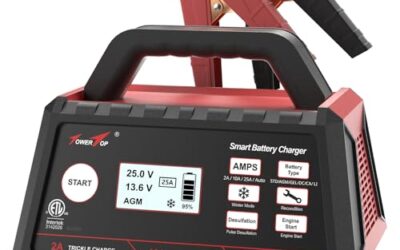
- Combines charging, maintenance, trickle charging, and desulfation functions
- Supports several 12V lead-acid battery types, including AGM and gel cell
- Requires no manual desulfation operation
- Includes multiple safety protections and a programmed 24-hour timer
Cons
- Compatibility is limited in the listing to 12V lead-acid battery types
- The listing does not include a detailed specifications list
Best For / Avoid If
Best for buyers prioritizing
- Combines charging, maintenance, trickle charging, and desulfation functions
- Supports several 12V lead-acid battery types, including AGM and gel cell
- Requires no manual desulfation operation
Consider another option if
- Compatibility is limited in the listing to 12V lead-acid battery types
- The listing does not include a detailed specifications list
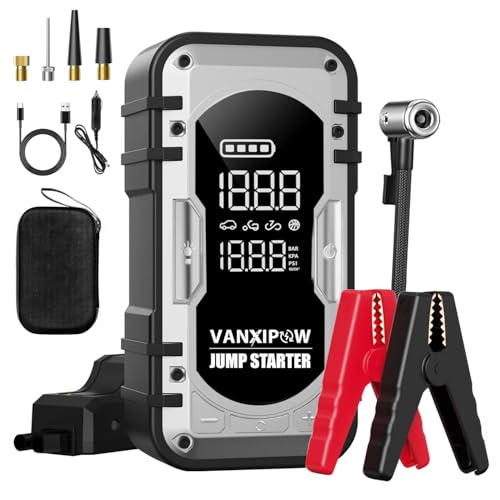
Pros
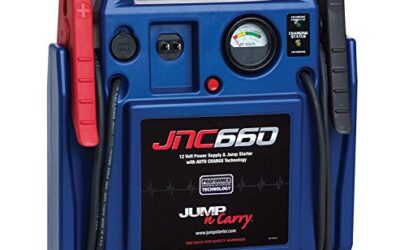
- Combines jump-starting, tire inflation, emergency lighting, and USB charging in one device
- Listed compatibility covers a broad range of 12V vehicles and engines up to 9.0L gas or 8.0L diesel
- Stated weight of 615 grams supports portable use
- LCD screen displays battery level, inflation mode, and real-time tire pressure
Cons
- The air pump should not be used continuously and requires cooling when it becomes seriously hot
- The product has one USB output port
Specifications
| Color | black silver |
|---|---|
| Dimensions | 6.9 x 2.3 x 3.5 Inches |
| Weight | 1.873929227 pounds |
| Product Group | Automotive Parts and Accessories |
Best For / Avoid If
Best for buyers prioritizing
- Combines jump-starting, tire inflation, emergency lighting, and USB charging in one device
- Listed compatibility covers a broad range of 12V vehicles and engines up to 9.0L gas or 8.0L diesel
- Stated weight of 615 grams supports portable use
Consider another option if
- The air pump should not be used continuously and requires cooling when it becomes seriously hot
- The product has one USB output port
FAQ
Should I leave my car full of fuel during summer storage?
Follow the owner’s manual and local safety guidance. A fuller tank can reduce air space, while treated fuel can slow oxidation. Fuel stabilizer cannot fix old or contaminated fuel.
Should I disconnect my car battery for storage?
Sometimes. Disconnection can reduce battery drain, but it may reset vehicle settings or affect alarms and security systems. A compatible battery maintainer may work better where safe electrical power exists.
How often should I start a stored car?
Starting without driving may add moisture and provide little charging benefit. Follow the vehicle maker’s storage guidance. If you start the car, do so outdoors and allow the engine and exhaust system to reach normal operating conditions only when safe.
Should I put my car on jack stands during storage?
Usually not without a clear reason and correct equipment. Tire inflation and approved movement may address storage concerns. Never work under a vehicle supported only by a jack.
Can I store an EV the same way as a gasoline car?
No. EV charging limits, high-voltage battery state of charge, 12-volt support, and app or security settings vary by model year and manufacturer. Use the EV owner’s manual for storage instructions.
Sources and further reading
- Tire Safety (NHTSA): Tire inspection and pressure guidance for stored or driven vehicles.
- Battery Council International: Battery care and safety information for automotive batteries.