How to pack a roadside emergency kit for a family starts with four needs: medical care, vehicle trouble, weather exposure, and communication. Pack supplies for every passenger, place urgent items within reach, and adjust the kit for your vehicle, climate, travel route, and children.
Key takeaways
- Use one small cabin bag and one larger cargo-area bag.
- Pack medical, child, pet, weather, and medication supplies for actual passengers.
- Carry warning gear, a flashlight, work gloves, tire tools, jumper cables, and basic fluids.
- Check battery dates, food dates, medication dates, and phone power every few months.
- Do not work beside moving traffic unless the vehicle sits in a safe location.
How to pack a roadside emergency kit for a family
Start with a written passenger list. Count adults, children, infants, older passengers, pets, and anyone with medical needs. Record allergies, emergency contacts, medications, and important diagnoses on paper. Phone data may become unavailable after a crash, dead battery, damaged phone, or weak cellular signal.
Use two containers. Keep a small cabin bag under a seat or inside a door pocket. Put first-aid items, medications, phone cables, water, snacks, reflective gear, and child supplies there. Store heavy tools, booster cables, a tire inflator, spare fluids, and seasonal clothing in a secured cargo-area container.
Do not place loose tools near pedals, airbags, or a driver’s feet. In a crash, unsecured objects can move through the cabin. A cargo net, closed bin, or factory storage compartment can reduce that risk.
Build the kit around four problems
| Problem | Pack | What it helps you do |
|---|---|---|
| Crash or medical issue | First-aid supplies, gloves, gauze, tape, medicine list, emergency contacts | Provide basic care while waiting for emergency services |
| Vehicle breakdown | Flashlight, warning triangle, work gloves, jumper cables, tire inflator, tire gauge | See the problem, stay visible, and handle limited roadside tasks |
| Weather delay | Blankets, jackets, water, food, rain gear, hand warmers | Keep passengers warm, dry, and hydrated |
| Communication failure | Power bank, charging cables, paper contacts, small battery radio | Keep contact options available when phones lose power or signal |
Pack medical and passenger supplies first
Use a first-aid kit for minor cuts, scrapes, blisters, and burns. Include adhesive bandages in several sizes, sterile gauze, medical tape, antiseptic wipes, disposable gloves, tweezers, and a cold pack. Pack only medicines that passengers already use safely, and follow each label.
Keep prescription medication in its normal container. Add an extra supply only when a doctor or pharmacist approves that plan. Heat can damage some medicines, so do not leave temperature-sensitive products in a parked vehicle. Ask a pharmacist about storage needs.
Families with infants need diapers, wipes, formula or feeding supplies, a bottle, and a change of clothes. Formula handling depends on the product and water source. Pack sealed supplies and follow label directions rather than treating roadside water as safe for preparation.
For children, add familiar snacks, a quiet activity, tissues, spare clothing, and a light blanket. Avoid loose hard objects in the passenger area. A soft pouch works better than a metal box for cabin storage.
Passengers with mobility, hearing, vision, breathing, or sensory needs may need extra supplies. Pack backup batteries for hearing devices, mobility aids, communication cards, or other items used every day. Add pet food, a leash, waste bags, and a collapsible bowl when animals travel regularly.
Pack vehicle tools for your model and power system
Read your vehicle owner’s manual before adding tools. A gasoline vehicle, hybrid, plug-in hybrid, and battery-electric vehicle can have different emergency procedures. High-voltage components in electrified vehicles require trained service. Do not open orange high-voltage cables or attempt repairs beside the road.
Carry a flashlight with fresh batteries and a spare battery set. A headlamp leaves both hands free for safe work. Add reflective vests or reflective bands, warning triangles, and work gloves. Place warning gear where you can reach it without standing in traffic.
A tire pressure gauge helps you compare tire pressure with the door-jamb label or owner’s manual. Vehicle pressure targets can differ by model, year, tire size, load, and axle position. Do not use the maximum pressure molded into a tire sidewall as the vehicle’s normal target. For more detail, see CarTechTalk’s guide to digital tire pressure gauges with memory.
A portable tire inflator can help with a slow leak, but it cannot repair a damaged tire. Check its connector and power needs. Some units use a 12-volt accessory socket, while others use an internal battery. A 12-volt socket may stop working with the ignition off, and a battery-powered unit needs periodic charging.
Pack a vehicle-rated jack and lug wrench only if your vehicle has a safe owner-approved lifting point and a usable spare tire. Many newer vehicles use an inflator and sealant kit instead. Some vehicles have run-flat tires or no spare. Never place any body part under a vehicle supported only by a jack. For lifting safety, follow the owner’s manual and use equipment rated for the vehicle.
Jumper cables can help with some 12-volt starting batteries. They do not replace a suitable jump starter, and they may not apply to every hybrid or EV procedure. Check the manual for connection points and restrictions. Never connect cables by guesswork. A reversed connection can damage vehicle electronics or cause sparks near battery gas.
Battery jump starters need enough charge before travel. Their connector type, operating temperature, and instructions vary. A jump starter for a 12-volt system does not automatically support a high-voltage traction battery. Store clamps so metal contacts cannot touch each other.
Carry a small set of screwdrivers, pliers, adjustable pliers, electrical tape, zip ties, and a utility knife with a protected blade. These tools may help secure a loose panel or cut a seat belt during an emergency. They do not make complex electrical or mechanical repairs safe for an untrained driver.
Pack a quart or suitable container of engine oil only when the vehicle uses oil that matches the owner’s manual. Coolant types vary, and mixing the wrong coolant can create a larger problem. Never remove a hot radiator or coolant reservoir cap. Washer fluid, paper towels, and a small funnel can help with routine top-ups.
Add weather and roadside visibility gear
Pack for the coldest and hottest conditions on your route, not only conditions at home. Cold-weather kits need warm layers, hats, gloves, blankets, hand warmers, and traction material when appropriate. Hot-weather kits need extra drinking water, sun protection, cooling towels, and electrolyte products suitable for passengers.
Water needs depend on passenger count, trip length, heat, health conditions, and access to services. Use sealed containers and rotate them before heat affects taste or packaging. Food should be shelf-stable and safe for passengers with allergies. Choose items that do not require cooking, refrigeration, or a can opener.
Rain gear, a compact umbrella, absorbent towels, and a waterproof document pouch help during storms. Pack a small shovel and traction material in regions with regular snow. A snow brush and ice scraper suit cold climates, while a windshield sunshade suits hot climates.
Warning triangles, reflective clothing, and a bright flashlight help other drivers see a stopped vehicle. Turn on hazard lights when appropriate, but do not rely on them as your only warning. If the vehicle is in a dangerous position, call emergency services and follow dispatcher instructions.
Prepare phones, documents, and emergency contacts
Keep charging cables that match the family’s phones. USB-C, Lightning, and older connectors may differ. A USB power bank must hold charge and must match the cable needs of the devices. Some vehicles limit accessory power when the ignition is off.
Store the power bank outside extreme heat when practical. Lithium-ion batteries can suffer damage from heat, impact, or poor storage. Follow its instructions for charging and use. A small battery radio can help during regional outages, but reception depends on location and local broadcasts.
Keep paper copies of insurance information, roadside assistance details, vehicle identification information, emergency contacts, medication details, and allergy information. Protect documents from water. Do not leave unnecessary sensitive information in a visible vehicle compartment.
Phone features depend on the phone model, operating system, carrier, and service area. Emergency calling may work without normal service in some locations, but this is not universal. Do not assume a phone can share location, send messages, or reach help when coverage is weak.
Choose storage locations that support safe use
Place the first-aid kit, medications, water, phone power, and warning vest in the cabin. Store them where an adult can reach them while seated. Keep tools, spare fluids, blankets, and seasonal gear in the cargo area.
Secure every container. A heavy tool case can injure passengers during sudden braking. Do not block a rear hatch release, emergency exit, visibility area, child-seat attachment point, or spare-tire access.
Label each container with large text. Use separate labels such as “medical,” “child,” “weather,” and “vehicle.” During stress, clear labels save time. Teach older children where water, blankets, and the first-aid pouch are stored. Do not give children access to knives, medicines, chemicals, or jumper cables.
Inspect and refresh the kit
- Check the kit before long trips and at least several times each year.
- Replace expired food, damaged bandages, empty batteries, and used supplies.
- Charge the power bank and jump starter according to their instructions.
- Inspect cables for cracked insulation, corrosion, loose clamps, or bent connectors.
- Check tire pressure, spare-tire condition, inflator operation, and tool fit.
- Update medication lists, emergency contacts, insurance details, and passenger needs.
- Change clothing and weather gear when seasons change.
Vehicle age and model year can change tool fit. A lug wrench that fits one vehicle may not fit another. Tire sealant has an expiration date and may have restrictions for tire pressure monitoring sensors. A 12-volt accessory plug, USB port, and battery terminal do not provide the same power or operating conditions.
Common mistakes
- Keeping every item in the trunk, even when a disabled hatch or locked cargo area blocks access.
- Using a jack on soft ground, a slope, or a location near moving traffic.
- Assuming jumper cables fix a failed battery, alternator, starter, or charging system.
- Treating tire sealant as a permanent repair.
- Leaving medicine, water, power banks, and aerosol products in extreme heat.
- Packing food that passengers cannot eat because of allergies, age, or medical restrictions.
- Carrying a tool without learning its safe use before an emergency.
- Relying on phone navigation when the phone has no power or network coverage.
When to get professional help
Call emergency services after a crash with injuries, fire, smoke, fuel leakage, a blocked travel lane, or immediate danger. Move passengers away from traffic when safe, and follow dispatcher instructions.
Request roadside assistance for a vehicle that cannot reach a safe location, a damaged tire sidewall, a wheel problem, a locked vehicle, or a dead battery when the correct starting procedure is unclear. Ask for a tow when warning lights, overheating, severe vibration, fluid loss, or unusual electrical behavior continues.
Do not work on high-voltage systems, fuel systems, airbags, seat-belt pretensioners, or damaged wiring beside the road. Hybrid and EV service procedures vary by model and year. The owner’s manual and qualified technicians control those procedures.
Gear that can help
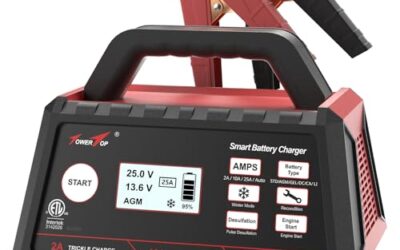
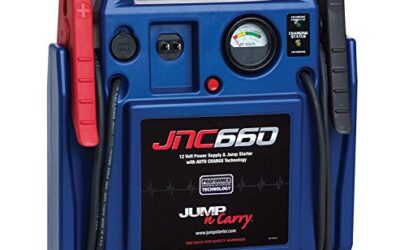
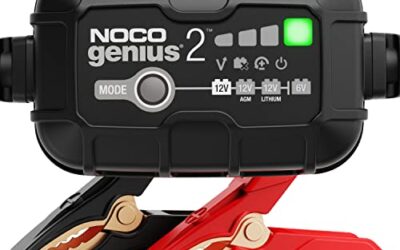
If you need jump starters or tire inflators or fast car chargers for this job, these picks already appear in our jump starters guides. Check the full guide for fit and who should skip each one.

Pros
- Combines jump starting and cordless tire inflation in one portable unit
- Supports up to 150 PSI with automatic shut-off and selectable pressure units
- Includes five air nozzles and five inflation modes
- Provides stated support for more than 1,000 charge cycles
- Backed by an 18-month warranty
Cons
- The stated operating and storage temperature range is -4°F to 140°F, while charging is limited to 14°F to 113°F
- The unit should be recharged at least once every three months during long-term storage
Specifications
| Color | Red |
|---|---|
| Dimensions | 4.96 x 5.87 x 2.3 inches |
| Weight | 3.58 pounds |
| Product Group | Automotive Parts and Accessories |
Best For / Avoid If
Best for buyers prioritizing
- Combines jump starting and cordless tire inflation in one portable unit
- Supports up to 150 PSI with automatic shut-off and selectable pressure units
- Includes five air nozzles and five inflation modes
Consider another option if
- The stated operating and storage temperature range is -4°F to 140°F, while charging is limited to 14°F to 113°F
- The unit should be recharged at least once every three months during long-term storage

Pros
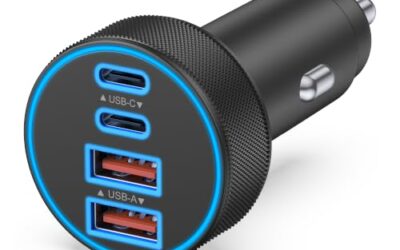
- Combines three charging ports in one car adapter
- Supports PPS, PD, and QC charging protocols
- Includes real-time voltage monitoring through an LED display
- Includes a 240W-rated USB-C to USB-C cable
Specifications
| Color | Black |
|---|---|
| Product Group | Wireless |
Best For / Avoid If
Best for buyers prioritizing
- Combines three charging ports in one car adapter
- Supports PPS, PD, and QC charging protocols
- Includes real-time voltage monitoring through an LED display
Related reading: Best Roadside Emergency Kit Under $75.
FAQ
How large should a family roadside emergency kit be?
Size depends on passengers, trip length, climate, vehicle storage, and medical needs. Use a cabin pouch for urgent supplies and a secured cargo bin for tools and seasonal gear.
Should a family carry a first-aid kit in the car?
Yes, a basic kit can help with minor injuries while passengers wait for help. It cannot replace emergency medical care. Keep medicines in labeled containers and follow storage instructions.
Do families need jumper cables and a jump starter?
Either option may help with some 12-volt systems. Cables need another suitable vehicle, while a jump starter needs charge and correct connection steps. Check the vehicle manual, especially for hybrids and EVs.
Can a tire inflator repair a flat tire?
No. It can add air to a tire that holds air or support a temporary sealant procedure when the vehicle allows it. A punctured sidewall, separated tread, or damaged wheel needs professional service.
How often should a roadside kit be checked?
Inspect it before long trips and several times each year. Refresh food, water, batteries, medicine lists, power banks, seasonal clothing, and any used supplies.
Sources and further reading
- Tire Safety (NHTSA): Tire care, pressure, tread, and roadside safety guidance.
- Battery Council International: General battery information and safe handling resources.
- Check for Recalls (NHTSA): Vehicle recall lookup and safety information.