How to prepare a car for airport parking in winter starts with the battery, tires, fluids, fuel or charge level, and weather protection. Check those systems before departure, remove anything unsafe from the cabin, and plan for the conditions expected while the car sits and when you return.
Airport parking adds one problem that short winter trips do not: the car may sit unused for days or weeks. Cold weather slows battery reactions, lowers tire pressure, thickens some fluids, and can freeze moisture in locks or door seals. A good preparation plan reduces surprises without pretending every vehicle handles cold the same way.
Key takeaways
- Test battery condition before leaving the car for several days.
- Set tire pressure with cold tires and use the pressure on the vehicle placard.
- Leave fuel or battery charge for the drive home and possible delays.
- Protect wiper blades, door seals, locks, and exposed charging equipment from snow and ice.
- Do not leave a gasoline engine running unattended in a parking area.
- Check model-year instructions, EV procedures, and airport parking rules before departure.
Why winter airport parking needs extra preparation
Cold temperatures reduce available 12-volt battery power. A battery that starts the engine in mild weather may struggle after several cold nights, especially if it is older, partly discharged, or exposed to parasitic electrical loads.
Tires also lose pressure as air cools. The change does not mean a tire has a leak, but low pressure can affect handling, range, and TPMS warnings. Use the pressure printed on the driver-door placard or in the owner manual, not the maximum pressure molded into the tire sidewall.
Snow and freezing rain create separate problems. Ice can bond wiper blades to glass, freeze door seals, and block exhaust outlets. Salt and road grit can remain under the vehicle after the drive to the airport. None of these risks requires expensive equipment, but each rewards a short check before leaving.
How to prepare a car for airport parking in winter
1. Check the forecast and parking conditions
Review weather for both departure and return dates. Look for freezing rain, heavy snow, extreme cold, flooding, and strong wind. Airport lots may be uncovered, while garages can have height limits, limited EV charging, or rules against vehicle maintenance.
Choose covered parking only when its height, access, payment, and charging rules fit your vehicle. A garage reduces direct snow and ice exposure, but it does not guarantee a warm or dry space. A covered area may still have freezing temperatures.
2. Inspect and test the 12-volt battery
Start with the 12-volt battery in gasoline vehicles, hybrids, and EVs. A hybrid or EV still uses a 12-volt system for locks, computers, lights, and control functions. High-voltage battery charge does not always rescue a weak 12-volt battery.
Check for slow cranking, dim interior lights, repeated jump starts, swelling, cracked cases, or corrosion around terminals. A battery tester can show voltage and starting performance, but test results depend on battery type, temperature, state of charge, and tester method.
Do not disconnect the battery without checking the owner manual. Some vehicles lose window settings, alarm settings, radio functions, learned values, or battery-monitor calibration. Certain model years also require battery registration after replacement.
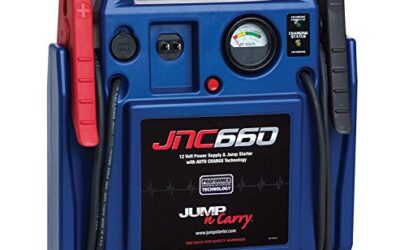
If the battery is weak, fix that before airport parking. A portable jump starter can help after you return, but it does not repair a failing battery. Follow its voltage, connector, polarity, charging, and temperature limits. Keep lithium jump packs within their storage temperature range.
3. Set tire pressure with cold tires
Check all four tires and the spare, if fitted, before driving to the airport. Measure pressure when tires have been parked for several hours and are away from direct heat. Set pressure to the vehicle placard value for the expected load.
Inspect tread, sidewalls, valve stems, and visible damage. Winter tires and all-season tires have different cold-weather behavior, but neither can compensate for a damaged tire or incorrect pressure. TPMS may warn after the temperature drops, so check pressure instead of treating the warning as a sensor problem.
Some vehicles store separate pressure targets for different loads or drive modes. Use the owner manual when the vehicle has selectable tire-pressure settings. Model year, wheel size, tire type, and regional equipment can change the correct procedure.
A compact tire inflator can help after landing, but airport power access varies. A 12-volt inflator may need an active accessory socket, while USB-powered models may not provide enough power for every tire. Read the connector and voltage requirements before relying on one.
For related guidance, see digital tire pressure gauges with memory and the tire pressure gauge guide for dually trucks.
4. Leave enough fuel or battery charge
Gasoline vehicles should have enough fuel for the drive home, traffic delays, detours, and a possible wait for roadside assistance. Avoid parking with the fuel warning light on. Fuel level also matters if you need to run the engine briefly after returning, though idling rules vary by location and parking operator.
Do not store a gasoline vehicle with the engine running. Carbon monoxide can collect in garages and around nearby vehicles. Remote-start systems also need careful use because some vehicles can start inside enclosed spaces.
EV drivers should leave charge for the return trip, cabin heating, traffic, and cold-weather range loss. The exact effect depends on battery size, chemistry, temperature, HVAC use, software, and driving speed. Airport chargers may require a network account, app, payment method, connector type, or compatible firmware.
Check whether your EV uses J1772 AC charging, a North American Charging Standard connector, or another regional connector. A charging adapter may support some functions but not every charging station. Follow the vehicle and charger instructions for outdoor storage, snow, and connector handling.
5. Protect doors, locks, wipers, and glass
Clean dirt from door seals and dry them before parking. A rubber-safe seal treatment may reduce sticking, but use only a product approved for automotive rubber and follow its label. Do not pour hot water over frozen glass or door hardware. Rapid temperature change can crack glass and leave water to refreeze.
Lift wiper arms only if the vehicle manual allows it. Some modern vehicles place wipers under the hood edge, and forcing them upward can damage the arm or linkage. Better protection comes from parking with clean glass and using a proper scraper after return.
Replace worn wiper blades before a winter trip. Do not use wipers to break heavy ice. Clear snow and ice from the roof, hood, lights, mirrors, windows, and license plates before driving away.
6. Wash off salt and inspect the exterior
Rinse heavy salt and road grime from the body, wheel wells, and underbody before leaving the car. Dry door edges and the charging port area. A wash does not stop corrosion, but removing salt reduces the material left against painted and metal surfaces.
Look for loose trim, cracked lights, damaged mirrors, and an open fuel door or charging flap. Photograph existing damage if using a paid airport lot. Keep photos private and avoid storing identifying documents in the vehicle.
7. Remove items that can create risk
Take out medications, firearms, valuable electronics, spare keys, passports, registration documents that are not required, and garage remotes. Do not leave lithium batteries loose in a hot or freezing cabin. Remove food, drinks, aerosols, and anything that can leak or attract pests.
Store the key fob according to the vehicle manual. Some fobs have a sleep or battery-saving setting. Do not place the key inside the vehicle, even if the doors appear locked. Keep a backup key with an authorized person when practical.
8. Prepare for a long sit
Turn off lights, accessories, dash cameras, cabin monitors, and aftermarket trackers unless you know their electrical draw and battery protection behavior. A hardwired dash cam may continue recording in parking mode and drain a 12-volt battery.
Do not overinflate tires to compensate for sitting. Use the placard pressure. The car will not develop flat spots from a normal airport stay, though a tire can lose air from a puncture, valve leak, or temperature change.
Lock the vehicle manually or with the normal remote procedure. Confirm that windows, sunroof, liftgate, fuel door, and charging port are closed. If an alarm system has special transport or valet settings, use the manual instructions.
Airport parking winter checklist
| Check | What to do | Why it matters |
|---|---|---|
| 12-volt battery | Test condition and inspect terminals | Cold weather reduces starting and accessory power |
| Tires | Set cold pressure to the door-placard value | Low pressure affects handling and can trigger TPMS |
| Fuel or charge | Leave reserve for delays and cold-weather losses | The return trip may take longer than planned |
| Wipers and glass | Clean glass and replace worn blades | Ice should not be removed with wipers |
| Doors and seals | Clean and dry rubber seals | Moisture can freeze doors shut |
| Cabin | Remove valuables, food, documents, and loose batteries | Reduces theft, damage, and fire risks |
| Accessories | Disable unknown electrical loads | Parking-mode devices can drain batteries |
What to do after returning to the airport
Inspect the vehicle before starting it. Clear snow and ice from all windows, mirrors, lights, roof, hood, and license plates. Check that the exhaust outlet is clear on gasoline and hybrid vehicles. Never drive with a blocked exhaust outlet.
Look under the vehicle for fluid leaks, damaged parts, or a low tire. Check tire pressure again if the TPMS warning appears. Do not assume a warning will disappear because the weather changes.
For an EV, inspect the charge port and connector before plugging in. Remove loose snow and ice without forcing the connector. Use the charging method approved for that vehicle and station. For a gasoline vehicle, start normally and allow only the warm-up time needed for safe operation and clear visibility.
If the battery is dead, follow the owner manual for jump points and jump-start procedure. Some hybrids and EVs have specific 12-volt jump terminals. Do not connect a jump pack to high-voltage components.
Common mistakes
- Using the tire sidewall pressure: That number is a maximum tire rating, not the vehicle target.
- Leaving a dash camera in parking mode: Battery protection settings differ, and some systems can still drain a battery.
- Pouring hot water on ice: Glass and trim can crack, and refreezing can lock doors or wipers.
- Parking with an almost empty fuel tank: Delays and detours can leave no practical reserve.
- Assuming an EV charger will work: Connector type, network access, payment, station power, and firmware can affect use.
- Disconnecting the battery without a plan: Some vehicles need reset procedures, security codes, or battery registration.
- Leaving a spare key inside: A locked car can still be opened by someone who finds it.
- Using a car cover in a busy open lot: Loose covers can move in wind, hide damage, and conflict with lot rules.
When to get professional help
Use a repair shop or roadside service when the battery repeatedly fails, the vehicle has a charging-system warning, a tire loses pressure, or fluid appears under the car. Get help for damaged glass, frozen doors that will not release safely, a charging connector that will not unlock, or an EV warning involving the high-voltage system.
Ask for a battery and charging-system test when the vehicle has slow cranking, a battery warning, or repeated jump-start needs. A battery replacement may require model-year-specific programming or registration. Hybrid and EV high-voltage work requires trained technicians and the correct safety equipment.
Do not crawl under a vehicle in an airport lot to inspect damage. Do not use a jack on an unknown surface or lift point. Move to a safe location and call roadside service if the vehicle cannot move without risk.
Gear that can help
If you need battery chargers and maintainers or jump starters for this job, these picks already appear in our battery chargers and maintainers guides. Check the full guide for fit and who should skip each one.

Pros
- Adjustable charging current supports different charging needs
- Broad compatibility with listed 12V sealed lead-acid battery types
- Includes dedicated desulfation and repair functions
- Offers engine-start assistance and a winter charging mode
- ETL certification is listed in the listing
Cons
- The repair mode cannot repair completely drained batteries
- Only 12V battery applications are specified
Specifications
| Color | 25A |
|---|---|
| Dimensions | 7.68110235437 x 10.0393700685 x 4.9212598375 inches |
| Product Group | Automotive Parts and Accessories |
| Binding | Electronics |
Best For / Avoid If
Best for buyers prioritizing
- Adjustable charging current supports different charging needs
- Broad compatibility with listed 12V sealed lead-acid battery types
- Includes dedicated desulfation and repair functions
Consider another option if
- The repair mode cannot repair completely drained batteries
- Only 12V battery applications are specified

Pros
- Supports multiple lead-acid battery types, including AGM, Gel, SLA, VRLA, flooded, maintenance-free, and deep-cycle batteries
- Designed for a wide range of vehicles and equipment, including cars, motorcycles, boats, ATVs, tractors, trucks, SUVs, RVs, and lawn mowers
- Includes both battery clamps and integrated eyelet terminals
- Provides automatic maintenance charging with overcharge protection
Cons
- The listing lists support for LiFePO4 batteries specifically, rather than all lithium-ion battery types
- The charger is specified for 6V and 12V batteries only
Specifications
| Color | Black |
|---|---|
| Size | 10A |
| Dimensions | 4.41 x 4.48 x 9.1 inches |
| Weight | 3.99 Pounds |
| Product Group | Automotive Parts and Accessories |
| Binding | Electronics |
Best For / Avoid If
Best for buyers prioritizing
- Supports multiple lead-acid battery types, including AGM, Gel, SLA, VRLA, flooded, maintenance-free, and deep-cycle batteries
- Designed for a wide range of vehicles and equipment, including cars, motorcycles, boats, ATVs, tractors, trucks, SUVs, RVs, and lawn mowers
- Includes both battery clamps and integrated eyelet terminals
Consider another option if
- The listing lists support for LiFePO4 batteries specifically, rather than all lithium-ion battery types
- The charger is specified for 6V and 12V batteries only

Pros
- High 1000-amp peak rating for a compact 2.5-pound jump starter
- Stated compatibility with 12V vehicles and engines up to 6.0L gas or 3.0L diesel
- Built-in spark-proof and reverse-polarity protection
- Adds power-bank and flashlight functionality for emergency use
Cons
- The stated engine compatibility is limited to up to 6.0L gas and 3.0L diesel
- The listed warranty period is one year
Specifications
| Color | Gray |
|---|---|
| Size | 1000 Amps |
| Dimensions | 6.5748031429 x 3.149606296 x 7.7165354252 Inches |
| Weight | 2.4 Pounds |
| Product Group | Automotive Parts and Accessories |
| Binding | Automotive |
Best For / Avoid If
Best for buyers prioritizing
- High 1000-amp peak rating for a compact 2.5-pound jump starter
- Stated compatibility with 12V vehicles and engines up to 6.0L gas or 3.0L diesel
- Built-in spark-proof and reverse-polarity protection
Consider another option if
- The stated engine compatibility is limited to up to 6.0L gas and 3.0L diesel
- The listed warranty period is one year
FAQ
Should I disconnect my car battery before airport parking in winter?
Usually, no. Disconnecting can erase settings and may disable alarms or vehicle features. Use the owner manual first, especially for newer vehicles, hybrids, and EVs. Repair or replace a weak battery instead.
How much fuel should I leave in my car at the airport?
Leave enough for the drive home, traffic, detours, and a roadside delay. The correct amount depends on distance, weather, vehicle fuel economy, and local station access. Avoid leaving the vehicle at the fuel warning level.
Should I fully charge an EV before airport parking?
A high charge level can help with return-trip range, but follow the vehicle manual for long-term parking limits. Leave enough charge for cold weather, cabin heating, traffic, and charger access problems. Some vehicles offer a scheduled charge or storage setting.
Can I leave a car cover on in an airport parking lot?
Check parking rules first. A cover can collect snow, move in wind, hide damage, and obstruct license-plate or vehicle identification checks. In many lots, a clean, locked vehicle without a loose cover creates fewer problems.
What should I do if my car will not start after the trip?
Check for a dead 12-volt battery, low tire, blocked exhaust, warning lights, and visible damage. Follow the manual for jump-start points. Call roadside service when the battery, charging system, EV system, or vehicle condition remains uncertain.
Sources and further reading
- Tire Safety (NHTSA): Tire pressure, inspection, and safe tire-use guidance.
- Battery Council International: Battery education and basic battery-care resources.
- Charging Electric Vehicles at Home (Alternative Fuels Data Center): Charging equipment and EV power information.