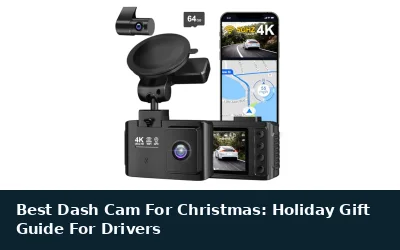
A proper dash cam setup for rideshare drivers requires infrared cabin monitoring, continuous loop recording, and reliable power that will not overheat during back-to-back shifts. For most Uber and Lyft operators needing verified multi-angle defense against passenger disputes and false claims, the 3 Channel Dash Cam, Dash Cam Front Rear Inside offers an optimal balance of 4K forward imaging, 1080p interior infrared coverage, and supercapacitor heat stability. CarTechTalk may earn an affiliate commission from qualifying purchases made through our links, which helps support our independent technical analysis.
Rideshare Camera Setup: Core Evaluation Criteria
Operating a vehicle for commercial passenger transport introduces specific hazards that standard forward-facing cameras fail to address. A driver requires dependable documentation of interior cabin interactions, front-end traffic flow, and rear-end collisions. When selecting hardware for rideshare work, several baseline technical requirements dictate whether a system delivers actionable insurance and platform evidence.
- Channel Configuration: A dual-channel unit covering front and rear leaves the interior undocumented. Three-channel units monitor the front road, cabin interior, and rear bumper. Four-channel systems introduce outward-facing side coverage to capture door dings and side-impact altercations.
- Infrared (IR) Cabin Illumination: Standard optical sensors render interior video completely black once ambient streetlights drop off. Dedicated interior lenses require discrete 850 nm or 940 nm infrared LEDs paired with wide dynamic range (WDR) processing to document passenger behavior without emitting distracting visible light into the driver’s eyes.
- Thermal Architecture: Rideshare vehicles frequently operate for eight to twelve hours continuously. Lithium-ion battery cells expand, degrade, and fail under windshield sun exposure. Supercapacitors provide the thermal tolerance necessary to sustain recording between negative temperatures and severe summer heat.
- Evidence Management and Fast Offloading: In the event of a platform complaint, drivers must upload incident clips rapidly before temporary account deactivation occurs. Dual-band 5GHz or 5.8GHz Wi-Fi drastically cuts video download duration compared to older 2.4GHz connections.
Rideshare Dash Cam Hardware Comparison
| Model | Channels | Front Resolution | Cabin Resolution | GPS Logging | Power Cell Type | Included Storage |
|---|---|---|---|---|---|---|
| 3 Channel Dash Cam, Dash Cam Front Rear Inside | 3-Channel | 4K UHD | 1080p FHD | Built-in | Supercapacitor | 64GB |
| 4K Dual Dash Cam Front and Rear | 2-Channel | 4K UHD | None | Built-in | – | 128GB |
| XYGCACO 4 Channel 360° Dash Cam Front and Rear | 4-Channel | 4K UHD | 1080p FHD | Built-in | – | 64GB |
| 3 Channel Dash Cam Front and Rear Inside | 3-Channel | 1080p FHD | 720p HD | – | – | 64GB |
| 70mai A810 Lite 4K Dash Cam Front and Rear | 2-Channel | 4K UHD | None | Built-in | Supercapacitor | – |
| COOAU D30S 4K Dash Cam with GPS Wi-Fi | 2-Channel | 4K UHD (single) / 2.5K (dual) | 1080p FHD | Built-in | Supercapacitor | – |
| FREEXAR 4K 360° Dash Cam with 128GB Card for Uber | 4-Channel | 4K UHD | 1080p FHD | Built-in | Graphene/Copper Thermal | 128GB |
| Eivikga 3 Channel Dash Cam Front and Rear Inside | 3-Channel | 4K UHD | Documented IR | – | – | – |
| IIWEY N5 4 Channel Dash Cam for Cars | 4-Channel | 2.5K / 1080p | 1080p FHD | No GPS | Supercapacitor | 128GB |
Three-Channel Dash Cams for Balanced Cabin and Road Coverage
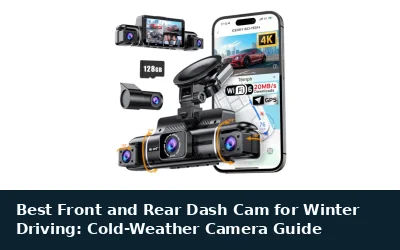
3 Channel Dash Cam, Dash Cam Front Rear Inside
Best for: Rideshare drivers wanting complete front, rear, and interior video protection with high-speed wireless offloading.
Avoid if: You need an ultra-discreet profile that tucks entirely behind small rearview mirrors without an integrated display.
- Channel count: 3 channels (front, interior, rear)
- Front/rear/cabin resolution and frame rate: 4K front, 1080p cabin, 1080p rear. Frame rate not provided.
- Field of view: 170° front, 150° cabin, 160° rear
- GPS: Built-in GPS logging route, location, and speed
- App platforms: Mobile app supported for iOS and Android
- Transfer method: 5.8GHz Wi-Fi (rates up to 12MB/s) and physical card retrieval
- Included card: 64GB microSD card included
- Parking modes: Time-lapse and impact detection (hardwire kit required)
- Power/hardwire requirement: Built-in supercapacitor; powered via included car charger with extra port; hardwire kit required for parking monitor
- Event locking: G-sensor automated clip locking
- Screen: 3.16-inch LCD display
- Mount: Windshield mount (type not specified)
- Required accessories: Dedicated hardwire kit for 24-hour parking surveillance
The Befumly 3 Channel Dash Cam, Dash Cam Front Rear Inside provides an all-in-one platform for passenger transport. The forward lens captures 4K clarity, while the interior cabin unit utilizes infrared night vision and wide dynamic range to keep faces clearly visible in low-light environments. Integrated 5.8GHz Wi-Fi permits transfer rates up to 12MB/s according to manufacturer data, allowing fast offloading of contested ride footage. The internal supercapacitor prevents thermal swelling common in high-heat operational zones. However, running cables for three distinct channels takes time, and the 3.16-inch screen takes up noticeable glass space.
HGLEQ 3 Channel Dash Cam Front and Rear Inside
Best for: Budget-conscious gig workers seeking entry-level cabin and road documentation on a compact footprint.
Avoid if: You drive primarily at highway speeds where reading distant license plates requires 2.5K or 4K forward resolution.
- Channel count: 3 channels (front, interior, rear)
- Front/rear/cabin resolution and frame rate: 1080p front, 720p interior cabin, 720p rear. Frame rate not provided.
- App platforms: Mobile app supported via wireless connection
- Transfer method: 2.4GHz Wi-Fi and direct device playback
- Maximum storage: Supports up to 256GB (U1 or higher microSD)
- Included card: 64GB microSD card pre-installed
- Parking modes: Parking monitoring supported
- Power/hardwire requirement: Type-C power input; hardwire kit required for unattended parking surveillance
- Event locking: Multi-axis G-sensor with selectable High, Medium, and Low sensitivity
- Screen: 2.0-inch LCD screen
- Mount: Windshield mount
- Required accessories: Type-C hardwire kit for parking surveillance
The HGLEQ 3 Channel Dash Cam Front and Rear Inside provides multi-point monitoring at an accessible price. Its cabin camera relies on an 850 nm infrared module to track backseat movements without introducing glare into the rearview mirror. A 2.0-inch screen keeps windshield clutter minimal. The major drawback lies in imaging performance: the cabin and rear channels drop to 720p, which limits facial texture and plate recognition at a distance. Wi-Fi transfer operates strictly on standard 2.4GHz bandwidth, resulting in slower file transfers than 5GHz-equipped alternatives.
Eivikga 3 Channel Dash Cam Front and Rear Inside
Best for: Urban taxi and rideshare operators needing high forward resolution matched with four-LED infrared cabin monitoring.
Avoid if: You drive an extended cargo van, limousine, or large SUV where a 16.4-foot rear cable is too short.
- Channel count: 3 channels (front, interior, rear)
- Front/rear/cabin resolution and frame rate: 4K UHD front; rear and cabin resolution not specified in listing text.
- App platforms: Smart app connectivity
- Transfer method: 5.8GHz Wi-Fi 6 wireless transfer
- Parking modes: 24-hour parking monitor with motion detection and collision trigger
- Power/hardwire requirement: 12V auxiliary power; hardwire kit required for parking mode
- Event locking: G-sensor automated clip locking
- Screen: Integrated display
- Mount: Windshield mount
- Required accessories: Hardwire kit for continuous parking monitoring; microSD card
The Eivikga 3 Channel Dash Cam Front and Rear Inside integrates a 4K forward sensor with 5.8GHz Wi-Fi 6 architecture, streamlining video management directly onto mobile devices without removing cards. Four infrared LEDs point toward the vehicle cabin, providing documentation of interactions in pitch-black conditions. The manufacturer notes the included rear connection cable measures 16.4 feet, which is adequate for compacts and sedans but will not span larger passenger vans or long wheelbases. In addition, the manufacturer does not specify the exact resolution of the secondary sensors.
Four-Channel Dash Cams for Full Perimeter Defense
FREEXAR 4K 360° Dash Cam with 128GB Card for Uber
Best for: Full-time drivers demanding comprehensive 360-degree perimeter documentation alongside active thermal heat management.
Avoid if: You operate on a strict sub-$150 budget and prefer a simple two-cable plug-and-play installation.
- Channel count: 4 channels (front, rear, cabin interior, and side exterior)
- Front/rear/cabin resolution and frame rate: 4K front, 1080p interior, 1080p rear, 1080p side. Frame rate not provided.
- Field of view: True 360° multi-lens coverage
- GPS: Integrated GPS logging speed, time, and positioning
- App platforms: Dedicated free companion app for iOS and Android
- Transfer method: 5.8GHz Wi-Fi (speeds up to 8MB/s)
- Included card: 128GB high-capacity memory card included
- Parking modes: Impact detection mode and time-lapse mode
- Power/hardwire requirement: Upgraded integrated charger with graphene-copper cooling; hardwire kit required for parking surveillance
- Event locking: G-sensor lock, voice command lock, and physical one-press emergency button
- Screen: Integrated LCD
- Mount: Windshield bracket
- Required accessories: Dedicated hardwire kit for parking modes
The FREEXAR D4 targets commercial drivers vulnerable to staged accidents, side collisions, and false interior claims. The forward unit shoots 4K, supported by three distinct 1080p sensors covering the cabin and vehicle flanks. To mitigate heat buildup from four simultaneous video streams, the manufacturer integrates graphene-copper cooling architecture. An included 128GB card gives drivers sufficient initial loop duration. The principal drawback is its $199.99 price point, representing the highest investment among compared options, along with the added interior clutter of mounting four distinct lenses.
XYGCACO 4 Channel 360° Dash Cam Front and Rear
Best for: Drivers seeking four-channel blind spot and cabin protection at an entry-level price point.
Avoid if: You prefer established brand ecosystems with long-standing third-party software validation.
- Channel count: 4 channels (front, rear, left, right)
- Front/rear/cabin resolution and frame rate: 4K front, three 1080p auxiliary lenses. Frame rate not provided.
- Field of view: 360-degree perimeter coverage
- GPS: Built-in dual-band GPS logging
- App platforms: Viidure app for iOS and Android
- Transfer method: 5GHz Wi-Fi
- Included card: 64GB memory card pre-installed
- Parking modes: 24-hour parking mode with front radar proximity detection (3 to 4 meters)
- Power/hardwire requirement: 12V vehicle power; hardwire kit required for parking functions
- Event locking: G-sensor impact lock
- Screen: 3.0-inch IPS screen
- Mount: Windshield suction cup mount
- Required accessories: Dedicated hardwire kit for 24-hour parking mode
The XYGCACO 4 Channel 360° Dash Cam Front and Rear packs multi-lens coverage into an accessible $69.99 package. It features an F1.6 aperture front camera recording in 4K, supplemented by three 1080p lenses covering the interior and vehicle sides. Eight infrared LEDs handle low-light passenger monitoring, and a built-in GPS module logs vehicle velocity and routes through the Viidure app. However, processing four video streams through an entry-level processor raises long-term reliability questions under prolonged sunlight, and the manufacturer relies on a suction cup mount rather than a secure semi-permanent adhesive pad.
IIWEY N5 4 Channel Dash Cam for Cars
Best for: Multi-angle passenger and exterior monitoring in extreme southern or desert climates demanding supercapacitor hardware.
Avoid if: You need embedded GPS telemetry to disprove passenger speeding claims to rideshare platforms.
- Channel count: 4 channels (front, rear, interior, side)
- Front/rear/cabin resolution and frame rate: 2.5K front with three 1080p channels, or quad-1080p mode. Frame rate not provided.
- Field of view: 170° front and rear, 150° side cameras
- GPS: None (manufacturer explicitly notes GPS is not supported)
- App platforms: Compatible with iiwey and viidure mobile apps
- Transfer method: 5GHz Wi-Fi (with auto shut-off after 5 minutes of inactivity)
- Maximum storage: Supports up to 256GB
- Included card: 128GB microSD card included
- Parking modes: 1fps time-lapse mode and impact detection mode
- Power/hardwire requirement: Must run via original cigarette lighter charger; cannot use USB or Type-C direct ports; hardwire kit optional; supercapacitor-powered
- Event locking: G-sensor collision detection
- Screen: 3.0-inch IPS display
- Mount: Windshield adhesive/bracket
- Required accessories: IIWEY hardwire kit (ASIN B0DHJNRPB9) for parking operation
The IIWEY N5 combines four-channel recording with a supercapacitor rated for temperatures ranging from -4°F to 167°F. It records in selectable quad-1080p or 2.5K front configurations, using 150-degree side sensors to document window altercations. A generous 128GB card comes pre-installed. The critical operational limitation is the complete absence of GPS tracking, meaning drivers cannot log hard speed or coordinate data directly onto the video stamp. Additionally, the unit demands strict power delivery: the manufacturer notes it will not boot over standard vehicle USB ports and requires the factory cigarette adapter or proprietary hardwire kit.
Dual-Channel Front and Inside Road Options
COOAU D30S 4K Dash Cam with GPS Wi-Fi
Best for: Solo drivers and night-shift operators prioritizing premium cabin optics and low-light sensor quality over rear-glass wiring.
Avoid if: You frequently transport unruly passengers who may cause rear-end collisions that need dedicated rear-bumper footage.
- Channel count: 2 channels (front and cabin interior)
- Front/rear/cabin resolution and frame rate: 4K at 25fps (single front) or 2.5K front at 30fps + 1080p interior at 30fps
- Field of view: 170° front, 150° interior
- GPS: Built-in GPS logging route, location, and speed
- App platforms: COOAUDash mobile app for iOS and Android
- Transfer method: Built-in Wi-Fi and direct card extraction
- Maximum storage: Supports up to 256GB
- Included card: Not included
- Parking modes: Collision detection, motion detection, and time-lapse mode
- Power/hardwire requirement: Supercapacitor cell; hardwire kit required for engine-off monitoring
- Event locking: Adjustable G-sensor auto-lock
- Screen: Integrated LCD screen
- Mount: Windshield mount
- Required accessories: High-endurance microSD card; hardwire kit for parking monitor
The COOAU D30S uses a single windshield-mounted chassis containing two lenses: one pointed forward and one aimed inward at the cabin. Equipped with an F1.8 aperture and Sony STARVIS 2 chip, it captures interior detail illuminated by four infrared LEDs. Built-in GPS handles real-time speed synchronization. Operating dual lenses on one bracket eliminates the headache of running long coaxial cords to the rear liftgate. The tradeoff is spatial awareness: without an exterior rear camera, you have no direct footage if another vehicle rear-ends you at a traffic stop. Note that memory cards are not included in the standard box.
4K Dual Dash Cam Front and Rear
Best for: Drivers seeking high forward road clarity and rear bumper monitoring without interior passenger surveillance.
Avoid if: You drive for Uber, Lyft, or taxi services where documenting passenger conduct inside the vehicle is essential.
- Channel count: 2 channels (front and rear exterior)
- Front/rear/cabin resolution and frame rate: 4K front, 1080p rear. Frame rate not provided.
- Field of view: Wide-angle road coverage
- GPS: Built-in GPS logging
- App platforms: Mobile app support
- Transfer method: 5.8GHz Wi-Fi
- Included card: 128GB microSD card preloaded
- Parking modes: 24-hour time-lapse monitoring with optional hardwire kit
- Power/hardwire requirement: 12V adapter; hardwire kit required for parking surveillance
- Event locking: G-sensor collision locking
- Screen: Integrated compact display
- Mount: Windshield mount
- Required accessories: Hardwire kit for parking monitoring
The DKGEA 4K Dual Dash Cam Front and Rear pairs a sharp 4K forward-facing sensor with a 1080p rear camera. It includes 5.8GHz Wi-Fi for fast clip offloading, an F1.8 lens with WDR for nighttime glare reduction, and a preloaded 128GB memory card. However, this system entirely lacks an interior cabin lens. While effective for personal commuting, food delivery, or airport staging, it fails to record interior disputes, physical altercations, or passenger damage inside the cabin.
70mai A810 Lite 4K Dash Cam Front and Rear
Best for: Rideshare vehicle owners wanting high forward resolution, remote cloud tracking, and cellular parking alerts.
Avoid if: You need an all-in-one unit with an integrated infrared cabin camera for passenger recording.
- Channel count: 2 channels (front and rear exterior)
- Front/rear/cabin resolution and frame rate: 4K UHD (3840x2160p) front, 1080p rear. Frame rate not provided.
- Field of view: Wide-angle front and rear
- GPS: 3-mode GPS (GPS, GLONASS, BDS)
- App platforms: 70mai mobile application with OTA firmware updates
- Transfer method: 5GHz Wi-Fi 6 (up to 25MB/s) and optional 4G LTE cellular connection
- Included card: Not included
- Parking modes: G-sensor impact detection and continuous time-lapse with low-voltage protection
- Power/hardwire requirement: Supercapacitor; hardwire kit (UP03/UP05/UP06) required for parking surveillance and LTE functions
- Event locking: G-sensor event lock and voice-activated lock
- Screen: Compact credit-card profile with integrated display
- Mount: Windshield adhesive mount
- Required accessories: UP05 4G hardwire kit for remote features; high-endurance microSD card
The 70mai A810 Lite features an F1.55 aperture lens with high dynamic range (HDR) for handling headlight glare on dark roads. Through an optional UP05 hardwire kit, it unlocks 4G LTE remote access, giving drivers real-time vehicle tracking and live parking notifications. Its Wi-Fi 6 interface supports transfers up to 25MB/s. Nevertheless, because it is strictly a front-and-rear two-channel setup, rideshare operators miss cabin recording entirely, making it better suited for fleet tracking or package couriers than passenger platforms.
Rideshare Dash Cam Buying Guide: Practical Hardware Rules
Why Resolution Numbers Do Not Guarantee Readable Plates
Manufacturers often advertise 4K sensors as a universal fix for image clarity. In real-world driving, a 4K label alone does not ensure readable license plates. Lens aperture, dynamic range (HDR/WDR), sensor sensitivity, and motion blur heavily dictate legibility. When oncoming vehicles pass at 45 mph under sodium streetlights, aggressive compression artifacts can obscure alphanumeric characters. Look for systems featuring documented wide apertures (F1.8 or wider) and reliable HDR processing to balance harsh headlight reflection against reflective metal plates.
Memory Card Endurance, File Allocation, and Format Hygiene
A multi-channel camera setup continuously writes high-bitrate video streams to storage. Standard consumer microSD cards intended for digital cameras or action gear fail rapidly under the relentless write-cycle stress of a rideshare shift. Continuous overwriting on a three-channel or four-channel configuration will burn out a standard card’s NAND flash cells within months.
- Select high-endurance cards utilizing TLC or MLC flash memory engineered specifically for automotive dash cams.
- Format the microSD card inside the camera interface once every three to four weeks to clear locked clip allocation tables and eliminate fragmented sectors.
- Check the maximum supported storage capacity before purchasing. Models like the HGLEQ 3-channel, COOAU D30S, and IIWEY N5 support up to 256GB cards, extending the total recording buffer before loop overwriting begins.
Electrical Installation and Vehicle Battery Preservation
Powering a multi-lens camera requires continuous, stable voltage. In most passenger vehicles, the 12V cigarette outlet switches off with the ignition. However, in certain domestic models and European vehicles, the 12V socket remains energized indefinitely, meaning an unmonitored dash cam can drain your starter battery overnight.
For continuous parking monitoring, invest in a dedicated, three-wire hardwire kit connected to your vehicle’s interior fuse box. The kit taps an accessory (switched) fuse, a battery (constant hot) fuse, and a chassis ground. Crucially, verify that the hardwire kit incorporates an automated low-voltage cut-off switch (typically 11.8V to 12.0V) to sever power before the vehicle’s 12V battery drops below starting threshold.
Cabin Recording Notice and Regional Wiretapping Boundaries
Documenting the interior of your vehicle involves state and federal privacy statutes. In many jurisdictions, two-party consent laws dictate that all occupants must be made aware of interior audio recording. A passenger can contest audio recorded without their knowledge.
Commercial rideshare operators should mount visible warning decals on passenger windows stating that video and audio recording are active inside the vehicle. Additionally, register your dash cam directly within the Uber and Lyft driver applications, which alerts riders upon dispatch that their trip will be recorded.
Who Should Skip These Dash Cams?
Drivers who use their vehicles solely for grocery runs, remote commuting, or basic weekend errands do not need the complexity or expense of a three-channel or four-channel setup. Running secondary cables across headliners, down rubber door seals, and into rear liftgates introduces unnecessary installation labor for someone who never carries paying passengers. Commuters are far better served by a standard front-and-rear two-channel camera that remains completely hidden behind the rearview mirror without cluttering the windshield with multi-angle screens and auxiliary wires.
Rideshare Setup Recommendation Summary
For standard rideshare driving, a three-channel camera provides the most practical coverage: forward traffic, cabin interactions, and rear tailgaters. The Befumly 3 Channel Dash Cam, Dash Cam Front Rear Inside remains our primary pick for general Uber and Lyft work due to its 4K forward optics, 1080p infrared cabin lens, and reliable supercapacitor power. Drivers seeking total 360-degree exterior and interior perimeter documentation can step up to the FREEXAR 4K 360° Dash Cam with 128GB Card for Uber, which manages heavy four-channel processing with copper-graphene thermal cooling. Verify your vehicle’s power architecture, install a high-endurance storage card, and place clear audio-recording disclosure decals on your side glass before picking up your next passenger.
Before you buy, it is worth reading Best Dash Cam With Multiple Cameras, Best Front And Rear Dash Cam Cameras and Best Selling Dashboard Dash Cam Cameras.