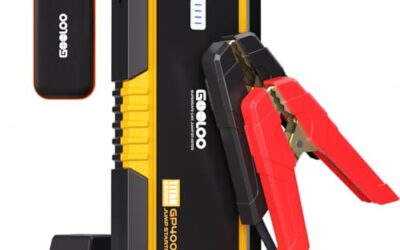
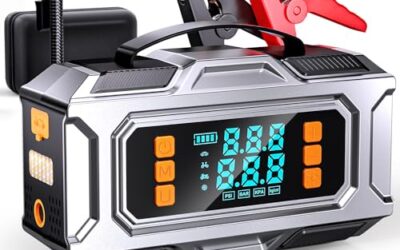
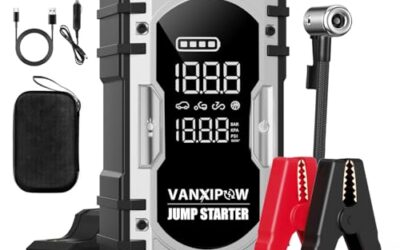
Yes, a diesel car can use a lithium jump starter if the pack matches the vehicle’s voltage and can deliver enough starting current. Check the vehicle manual and the jump starter’s instructions, especially for engines with two batteries, cold-weather starts, or designated jump points.
Key takeaways
- Most passenger cars and light trucks with 12-volt starting systems need a 12-volt jump starter. Never choose by fuel type alone.
- Diesel engines can need substantial cranking power, particularly in cold weather. Match the pack’s rated use to the engine and vehicle, not just its advertised peak number.
- A lithium pack can provide a temporary starting boost. It cannot repair a failed battery, starter, charging system, fuel system, or glow-plug problem.
- Follow the vehicle and pack manuals for connection points, clamp order, operating limits, and any required waiting period.
- A diesel with two batteries or a nonstandard electrical setup may need a specific procedure or professional assistance.
Can a diesel car use a lithium jump starter?
Yes, when the jump starter is made for the vehicle’s starting system and has enough output for that particular diesel. Lithium describes the jump starter’s internal battery chemistry; it does not, by itself, show whether the pack can crank your engine.
Diesel engines use compression ignition and often need strong cranking to start. The required starting power depends on the engine, battery condition, temperature, and vehicle design. That is why a small pack suitable for one car may not be suitable for a larger diesel truck, even when both use 12-volt systems.
Start with the vehicle manual. Check the battery voltage, battery arrangement, approved jump points, and any cautions about jump-starting. Then compare those requirements with the jump starter’s manual. The pack must explicitly support the vehicle’s system and intended engine size or vehicle class.
What determines compatibility?
| Check | What it means for your vehicle | What to do |
|---|---|---|
| System voltage | A 12-volt pack is for compatible 12-volt starting systems. A vehicle with a different system needs equipment and instructions for that voltage. | Read the vehicle manual and battery labels. Do not infer voltage from diesel fuel or vehicle size. |
| Cranking output | The pack must supply enough current for the engine and starting conditions. A rating that suits a small diesel may not suit a larger one. | Use the pack maker’s vehicle or engine guidance. Treat peak-current figures as one specification, not a universal fit guarantee. |
| Battery layout | Some diesel vehicles use two batteries or a more involved starting circuit. Incorrect connection can damage vehicle electronics or the pack. | Follow the vehicle’s specified jump points and procedure. Do not guess which battery or terminal to use. |
| Temperature | Cold can make an already weak starting battery less able to crank. The pack also has operating limits that can vary by model. | Check the pack manual’s temperature limits. Do not use a pack outside them. |
| Vehicle instructions | Model year and electrical design can affect jump points and restrictions, even within one model line. | Use instructions for your vehicle’s year and configuration, not a generic diagram alone. |
A higher number on a package does not settle compatibility by itself. Manufacturers may describe current ratings in different ways, and a headline peak figure does not tell you the full conditions under which a pack can deliver current. Use the maker’s application guidance and the vehicle manual together.
How to decide whether your pack is suitable
- Identify the starting system. Check the owner’s manual and battery labels for voltage. Look for instructions covering a second battery, remote jump terminal, or special procedure.
- Identify your engine and vehicle configuration. Use the exact model year, engine, and trim where relevant. A broad label such as “diesel” does not account for differences in engine size or battery layout.
- Read the jump starter’s application guidance. Check its supported voltage and its stated suitability for diesel engines or the relevant vehicle class. Read its limits and connection instructions, not only its front-label peak rating.
- Check the pack’s condition and charge. Use only a pack that is within its operating limits and has enough charge for the attempt, as its manual directs.
- Stop if instructions conflict or the setup is unclear. For dual-battery systems, damaged wiring, unusual battery locations, or uncertain terminals, ask a qualified technician or roadside service rather than improvising.
For a larger truck or work vehicle, see our guide to truck jump starters for gas and diesel rigs. For low-temperature use, our cold-weather jump starter guide covers the conditions that can affect emergency starting.
Why diesel starts can be harder in cold weather
Cold weather can make the vehicle’s battery less effective at cranking and can raise the effort needed to start an engine. Diesel starting also depends on the vehicle’s starting aids and fuel system working as intended. A jump starter can help with insufficient battery power, but it cannot correct every cold-start problem.
If the engine cranks at a normal speed but does not start, a weak battery may not be the main cause. The fault could involve a starting aid, fuel delivery, or another system. Follow the vehicle manual and avoid repeated long cranking attempts, which can overheat components or drain the batteries. Seek service if the vehicle still will not start after a correctly performed boost.
Safe use: follow both manuals
Jump-starting instructions vary by vehicle and pack. Read both manuals before connecting clamps. Use only the vehicle’s designated battery terminals or jump points, and follow the specified clamp order and removal procedure. Keep clamps from touching each other or unintended metal surfaces.
Do not jump-start a battery that is cracked, leaking, swollen, or visibly damaged. Do not use a pack with damaged clamps or cables. Stop if the pack signals a fault, clamps heat unusually, or you see smoke, sparks beyond those expected in the prescribed connection process, or signs of battery damage. Move away from a damaged battery and get qualified help.
Some vehicles require a specific ground point instead of a direct connection at the battery. Others can be damaged by an incorrect procedure. Do not assume that instructions for a different model year or another vehicle apply. If the manual calls for a particular procedure or prohibits jump-starting, follow that guidance.
What a lithium jump starter can and cannot do
A charged, compatible jump starter can supply temporary power to help crank an engine when the vehicle battery lacks enough starting power. It does not recharge the vehicle battery like a battery charger, and a successful start does not prove that the battery or charging system is healthy.
If the battery repeatedly goes flat, have the battery and charging system checked. A drained battery can result from battery age or damage, a charging fault, a current draw while parked, or repeated short trips. A jump pack may get the vehicle running, but the underlying cause can remain.
A pack also cannot make an undersized or failing battery suitable for ongoing use. If the engine does not crank, cranks slowly despite a suitable pack, or starts and then stalls, the symptom needs diagnosis. The jump starter is a temporary aid, not a repair.
Common mistakes
- Buying by peak amps alone. A large printed number does not confirm that a pack suits your engine or starting conditions. Check the manufacturer’s vehicle guidance and operating instructions.
- Assuming every diesel needs the same pack. Engine size, battery arrangement, temperature, and vehicle design change the starting demand. Match the exact vehicle, not only the fuel type.
- Ignoring a second battery. Dual-battery systems may have specific jump points or procedures. Do not decide connection locations by appearance.
- Using a 12-volt pack without checking voltage. Confirm the vehicle’s starting-system voltage first. A mismatch can cause damage.
- Treating a successful boost as a battery test. A jump start only shows that the engine started with added power. It does not diagnose battery health or charging performance.
- Repeatedly trying to start a vehicle with another fault. If the engine cranks but does not start, or the pack reports an error, stop and diagnose the cause rather than continuing attempts.
When to get professional help
Call roadside assistance or a qualified technician if the vehicle manual’s jump procedure is unclear, the battery is damaged, or the vehicle has multiple batteries and you cannot identify the correct connection points. Get help if a correctly connected compatible pack cannot crank the engine, if the pack reports a fault, or if the vehicle still will not start after a boost.
Professional diagnosis also makes sense when the battery repeatedly discharges, the charging warning appears, or the engine starts and then stalls. These symptoms can point to faults beyond a low battery. For ongoing battery care, see our battery chargers and testers category for related equipment guides.
Gear that can help
If you need jump starters for this job, these picks already appear in our jump starters guides. Check the full guide for fit and who should skip each one.

Pros
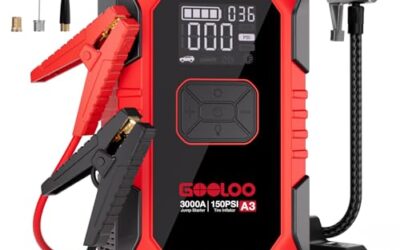
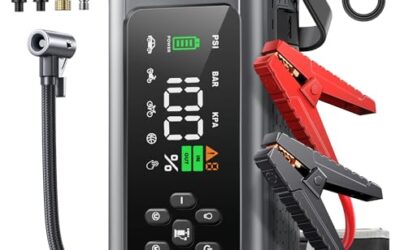
- Combines jump starting and cordless tire inflation in one portable unit
- Supports up to 150 PSI with automatic shut-off and selectable pressure units
- Includes five air nozzles and five inflation modes
- Provides stated support for more than 1,000 charge cycles
- Backed by an 18-month warranty
Cons
- The stated operating and storage temperature range is -4°F to 140°F, while charging is limited to 14°F to 113°F
- The unit should be recharged at least once every three months during long-term storage
Specifications
| Color | Red |
|---|---|
| Dimensions | 4.96 x 5.87 x 2.3 inches |
| Weight | 3.58 pounds |
| Product Group | Automotive Parts and Accessories |
Best For / Avoid If
Best for buyers prioritizing
- Combines jump starting and cordless tire inflation in one portable unit
- Supports up to 150 PSI with automatic shut-off and selectable pressure units
- Includes five air nozzles and five inflation modes
Consider another option if
- The stated operating and storage temperature range is -4°F to 140°F, while charging is limited to 14°F to 113°F
- The unit should be recharged at least once every three months during long-term storage

Pros
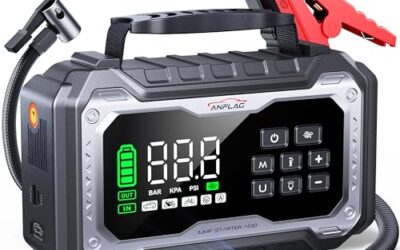
- High 1000-amp peak rating for a compact 2.5-pound jump starter
- Stated compatibility with 12V vehicles and engines up to 6.0L gas or 3.0L diesel
- Built-in spark-proof and reverse-polarity protection
- Adds power-bank and flashlight functionality for emergency use
Cons
- The stated engine compatibility is limited to up to 6.0L gas and 3.0L diesel
- The listed warranty period is one year
Specifications
| Color | Gray |
|---|---|
| Size | 1000 Amps |
| Dimensions | 6.5748031429 x 3.149606296 x 7.7165354252 Inches |
| Weight | 2.4 Pounds |
| Product Group | Automotive Parts and Accessories |
| Binding | Automotive |
Best For / Avoid If
Best for buyers prioritizing
- High 1000-amp peak rating for a compact 2.5-pound jump starter
- Stated compatibility with 12V vehicles and engines up to 6.0L gas or 3.0L diesel
- Built-in spark-proof and reverse-polarity protection
Consider another option if
- The stated engine compatibility is limited to up to 6.0L gas and 3.0L diesel
- The listed warranty period is one year

Pros
- High listed 7000A peak-current output
- Supports the stated range of gas and 12.0L diesel engines
- Includes forced-start functionality for fully drained batteries
- Combines jump-starting, USB charging, and emergency lighting in one portable unit
- Uses metal clamps and lists 14 safety protections
Cons
- The source data does not identify a separate wall charger or its specifications
Best For / Avoid If
Best for buyers prioritizing
- High listed 7000A peak-current output
- Supports the stated range of gas and 12.0L diesel engines
- Includes forced-start functionality for fully drained batteries
Consider another option if
- The source data does not identify a separate wall charger or its specifications
Frequently asked questions
Can a small lithium jump starter start a diesel car?
Sometimes, but size alone does not answer the question. The pack must support the vehicle’s voltage and starting demand under the conditions at hand. Check its application guidance against your exact engine and vehicle manual.
Can I use a 12-volt lithium jump starter on any diesel?
No. Use it only on a compatible 12-volt starting system and follow the vehicle’s instructions. Some vehicles have different electrical arrangements or designated jump points that require a specific procedure.
Will a jump starter fix a diesel that cranks but will not start?
Not necessarily. If cranking speed is adequate, the problem may not be low battery power. Starting aids, fuel delivery, and other faults can prevent a diesel from starting. Stop repeated attempts and arrange diagnosis if the engine still will not start.
Does a jump start recharge the diesel’s battery?
No. It supplies temporary starting power. Once the engine runs, the vehicle’s charging system may replenish the battery, but a jump start does not prove that the battery or charging system works correctly.
Sources and further reading
- Battery Council International: Find battery-related educational resources and information.