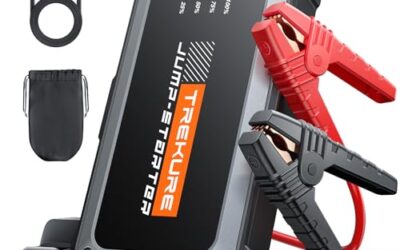
Usually, no: can you leave a jump starter connected after starting? Remove it promptly once the engine runs, following the jump starter and vehicle manuals. A booster pack is for starting, not for charging or keeping a vehicle powered while you drive.
- Keep clamps connected only as long as the jump starter instructions require.
- Turn off the pack if its manual directs you to, then remove clamps in the stated order.
- Do not drive with a portable jump starter or its cables attached.
- If the engine stalls after disconnection, the battery or charging system may need diagnosis.
- Vehicle battery voltage, terminal layout, and designated jump points vary. Use your owner’s manual.
Why you should disconnect a jump starter after the engine starts
A jump starter supplies a brief burst of power to help a compatible battery turn the engine over. Once the engine starts, the pack has done its main job. Leaving it connected longer than needed can expose the pack, clamps, and vehicle electronics to heat, vibration, electrical changes, or accidental short circuits.
Exact risks depend on the jump starter’s design and the vehicle’s electrical system. Many packs have protection features, but those features do not make continued connection a substitute for following the manual. Protection may not cover every fault, damaged cable, incorrect connection, or vehicle-specific setup.
Some jump starters stop delivering power automatically, while others require the user to switch them off. An automatic cutoff does not mean the clamps should stay on indefinitely. Treat the instructions for your exact model as the operating limit.
How to disconnect a jump starter safely
Wait until the engine is running steadily, then use the shutdown and removal procedure in both manuals. If either manual gives a different order or calls for a specific waiting period, follow that instruction. Battery locations and remote jump terminals differ across vehicles, so there is no universal clamp sequence for every setup.
- Keep the vehicle stationary. Set the parking brake and leave the jump starter cables clear of belts, fans, and hot parts.
- Check the jump starter instructions. Switch the pack off or wait for its automatic cutoff as directed.
- Remove clamps in the specified order. Avoid letting either clamp touch the other clamp or metal parts that could create a short.
- Stow the equipment. Keep clamps from contacting each other or loose metal objects in storage.
- Let the vehicle run only if safe. If it starts and runs normally, follow the vehicle manual for next steps. If it stalls, shows a battery warning, or behaves unusually, stop and assess the problem.
If a battery is cracked, leaking, swollen, unusually hot, or smells strongly of sulfur, do not continue handling or jump-starting it. Keep sparks and flames away, and get qualified help. A damaged battery can pose risks beyond a failed start.
Can a jump starter stay connected while you drive?
No. Do not drive with a portable jump starter attached. Movement can pull cables loose, bring them into contact with moving or hot components, or damage the pack and vehicle. The cables can also distract the driver or interfere with safe operation.
A portable booster is not a battery charger or a replacement for the vehicle’s charging system. If the engine needs the pack to remain connected to keep running, that points to a problem requiring diagnosis. Do not use the jump starter as a way to bypass that fault on the road.
What if the engine starts but then stalls?
A start followed by a stall does not identify one failed part. The battery may be weak, the charging system may not be maintaining voltage, or another engine or electrical fault may be present. A jump start alone cannot distinguish these causes.
Turn the vehicle off if it is safe to do so. Check the dashboard for warning lights and note any symptoms, such as dim lights, clicking, or a sudden stall. Do not keep repeating jump attempts if cables or clamps heat up, the battery shows damage, or the vehicle behaves unpredictably. Arrange a battery and charging-system check, or request roadside assistance.
If the vehicle runs normally after the pack comes off, that still does not prove the battery is healthy. A weak or discharged battery can start once and fail again later. For a vehicle that sits unused, see our guide to a jump starter for stored vehicles. For trucks, engine size and battery setup can affect pack fit; our truck jump starter guide covers those selection questions.
Vehicle and jump starter compatibility limits
Match the jump starter to the vehicle’s battery voltage and starting requirements. Many passenger vehicles use 12-volt systems, but do not assume every vehicle does. Heavy-duty trucks, commercial vehicles, hybrids, and other specialized vehicles can have different layouts or procedures. The owner’s manual identifies approved jump points and any precautions for the vehicle’s model year and powertrain.
Some vehicles have a battery in the trunk or under a seat, yet provide separate under-hood jump terminals. Use those terminals when the manual specifies them. Connecting directly to a battery that is not intended as the jump point may bypass monitoring or protection systems.
Jump starters also differ in clamp design, polarity protection, operating limits, and shutdown steps. A pack’s ability to power a phone or accessory through a USB port does not mean it should remain attached to the vehicle battery. Accessory power and jump-start connections serve different purposes.
Common mistakes
- Leaving clamps attached to charge the battery. A jump starter is not automatically a battery charger. Use a charger suited to the battery type and vehicle, following its instructions.
- Driving with the pack connected. Remove it before moving the vehicle.
- Assuming automatic shutoff makes extended connection safe. Cutoff behavior is a protection feature, not permission to ignore the manual.
- Repeating attempts without checking the setup. Recheck polarity, contact, and the vehicle’s approved jump points. Stop if anything heats, smokes, sparks abnormally, or looks damaged.
- Treating a successful start as a repair. A jump start can get an engine running without fixing a failing battery, charging fault, or other cause.
When to get professional help
Call for assistance if the battery is damaged, you cannot identify the correct jump points, or the vehicle’s manual warns against a jump-start procedure you cannot follow. Get the vehicle checked if it repeatedly needs a boost, stalls after the pack is removed, or shows a charging warning while running.
Hybrid and electric vehicles may have a low-voltage battery that supports vehicle controls, but their high-voltage systems require separate precautions. Do not connect a jump starter to high-voltage components. Follow the exact vehicle manual or contact roadside assistance familiar with that model.
For cold-weather planning, our guides to jump starters for winter emergencies and jump starters with tire inflators for winter driving cover related equipment choices.
Gear that can help
If you need jump starters for this job, these picks already appear in our jump starters guides. Check the full guide for fit and who should skip each one.
Pros
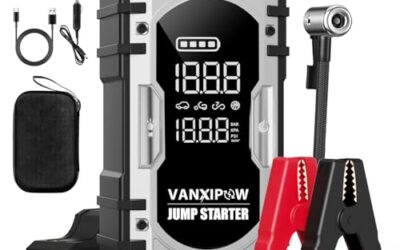
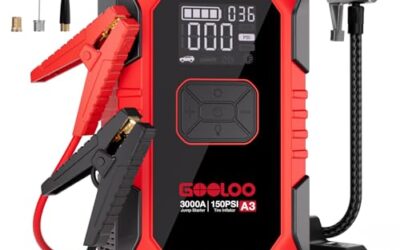
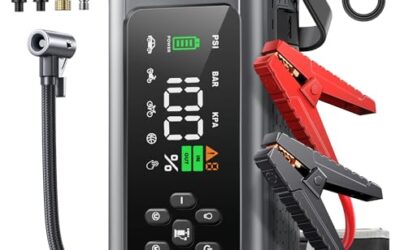
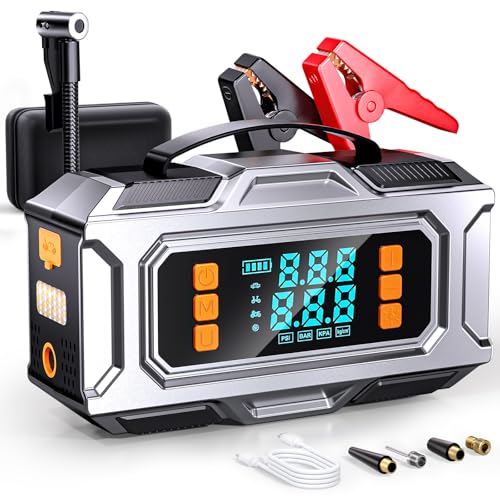
- Combines jump starting, tire inflation, device charging, and 12V accessory power in one unit
- Supports both gas and diesel vehicles within the stated engine-size limits
- Auto-shutoff inflator can be set using PSI, BAR, KPA, or KG/CM² units
- Includes a storage box, USB-C charging cable, air hose, nozzles, and user manual
Cons
- The manufacturer advises waiting two minutes between jump-start attempts and limiting attempts to three consecutively
- The compressor should cool for five minutes after 20 minutes of continuous inflation
- The unit should be recharged every two to three months during storage
Specifications
| Color | Black Silver |
|---|---|
| Dimensions | 4.3 x 7.6 x 2.5 inches |
| Weight | 2.5 Pounds |
| Product Group | Automotive Parts and Accessories |
Best For / Avoid If
Best for buyers prioritizing
- Combines jump starting, tire inflation, device charging, and 12V accessory power in one unit
- Supports both gas and diesel vehicles within the stated engine-size limits
- Auto-shutoff inflator can be set using PSI, BAR, KPA, or KG/CM² units
Consider another option if
- The manufacturer advises waiting two minutes between jump-start attempts and limiting attempts to three consecutively
- The compressor should cool for five minutes after 20 minutes of continuous inflation
- The unit should be recharged every two to three months during storage
Pros
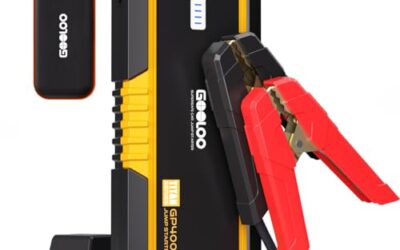
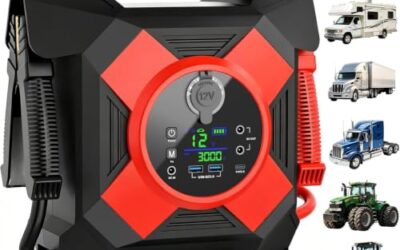
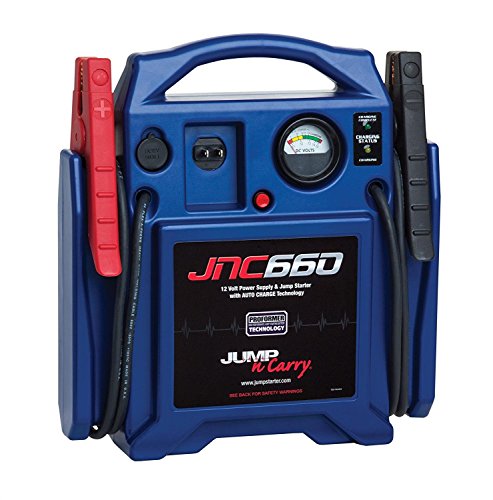
- High 1700-amp peak rating
- Long 46-inch cables with heavy-duty #2 AWG construction
- Built-in voltmeter provides charge-status information
- DC outlet supports powering 12V accessories
Specifications
| Color | Blue |
|---|---|
| Size | One Size |
| Dimensions | 16.3 x 14.1 x 5.1 inches |
| Weight | 18 Pounds |
| Product Group | Automotive Parts and Accessories |
| Binding | Automotive |
Best For / Avoid If
Best for buyers prioritizing
- High 1700-amp peak rating
- Long 46-inch cables with heavy-duty #2 AWG construction
- Built-in voltmeter provides charge-status information
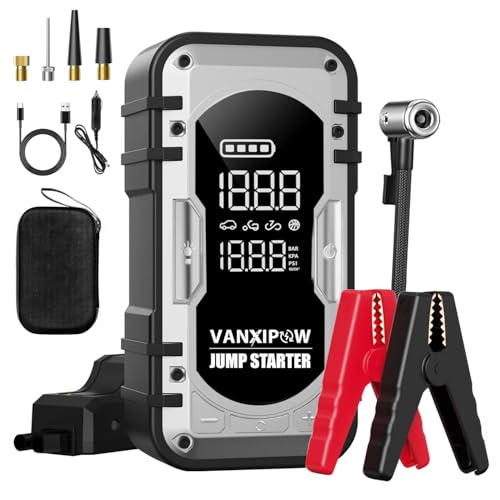
Pros
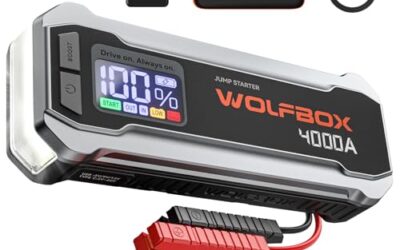
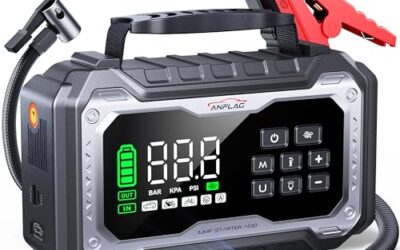
- Combines jump-starting, tire inflation, emergency lighting, and USB charging in one device
- Listed compatibility covers a broad range of 12V vehicles and engines up to 9.0L gas or 8.0L diesel
- Stated weight of 615 grams supports portable use
- LCD screen displays battery level, inflation mode, and real-time tire pressure
Cons
- The air pump should not be used continuously and requires cooling when it becomes seriously hot
- The product has one USB output port
Specifications
| Color | black silver |
|---|---|
| Dimensions | 6.9 x 2.3 x 3.5 Inches |
| Weight | 1.873929227 pounds |
| Product Group | Automotive Parts and Accessories |
Best For / Avoid If
Best for buyers prioritizing
- Combines jump-starting, tire inflation, emergency lighting, and USB charging in one device
- Listed compatibility covers a broad range of 12V vehicles and engines up to 9.0L gas or 8.0L diesel
- Stated weight of 615 grams supports portable use
Consider another option if
- The air pump should not be used continuously and requires cooling when it becomes seriously hot
- The product has one USB output port
FAQ
How long should I wait before removing a jump starter?
Use the timing and shutdown steps in the jump starter manual. There is no single wait time that applies to every pack and vehicle. Remove the clamps once the required procedure is complete.
Can I leave the jump starter connected if it has reverse-polarity protection?
No. Reverse-polarity protection addresses one type of connection error. It does not make prolonged connection or driving with the pack attached safe.
Will leaving a jump starter connected charge my car battery?
Not unless the device has a separate charging function and its instructions specify that use. A jump-start mode supplies starting assistance; it is not the same as a battery charger.
Should I keep the engine running after removing the jump starter?
Follow the vehicle manual and account for the surroundings. If the engine stalls, warning lights appear, or the vehicle runs poorly, do not assume a longer idle will fix the underlying problem.
Sources and further reading
- Battery Council International: Background on lead-acid batteries and battery care.