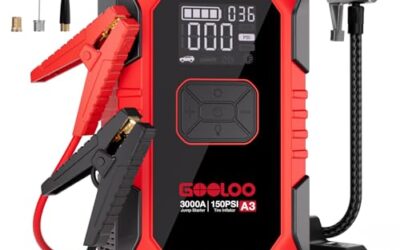
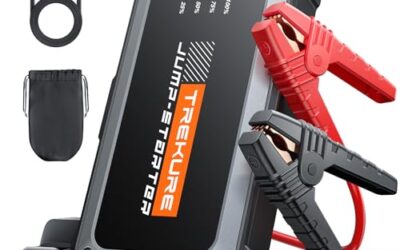
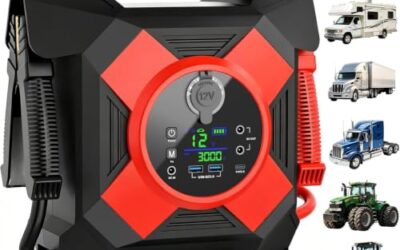
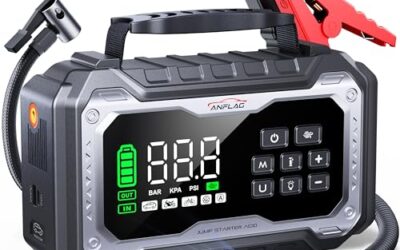
To inspect jump starter clamps before use, switch off the pack and check each clamp, cable, connector, and polarity marking for damage or contamination. Do not connect clamps with cracked insulation, loose parts, exposed wire, severe corrosion, or heat damage; follow the jump starter and vehicle manuals for connection steps.
- Inspect clamps with the jump starter switched off and disconnected from the vehicle.
- Check jaw faces, spring action, pivot, cable entry, insulation, and plug.
- Match red to positive and black to negative only as directed by the vehicle and pack manuals.
- Stop if a clamp or cable is damaged, wet, contaminated, or unusually hot.
Clamp inspection can catch visible damage that may prevent a secure connection or expose conductive parts. It cannot prove that a jump starter works correctly or that a battery is safe to jump. Use the following checks before every use, then follow the instructions for your exact pack and vehicle.
- Switch off and isolate the pack. Turn the jump starter off. Remove its clamp lead from the pack if the design allows it. Keep the jaws apart and away from metal. Do not inspect clamps while they are attached to a battery.
- Check the clamp bodies and handles. Look for cracks, splits, melted areas, deep dents, or loose pieces. The handles should cover conductive parts intended to remain insulated during normal handling. Do not use a clamp with broken housing or exposed metal where the handle should protect it.
- Inspect both jaw faces. Look for heavy corrosion, oily film, dirt, bent teeth, or material that could keep the jaws from gripping. Check that the jaw faces meet as intended when closed. Do not force a bent clamp back into shape; damage can weaken its grip or alignment.
- Check spring and pivot movement. Open each clamp carefully by its insulated handles. It should move without binding, falling apart, or feeling loose at the pivot. A weak or broken spring can let a clamp slip. Keep fingers clear of the jaw edges.
- Follow the cable from clamp to connector. Look for cuts, crushed sections, stiff or swollen insulation, exposed conductor, and damage where cable enters the clamp. Gently flex the cable only enough to see whether visible cracks open. Do not pull hard or bend it sharply.
- Inspect the plug and polarity labels. Check the pack-side connector for bent, burnt, corroded, or loose contacts. Confirm red and positive markings are readable, and black and negative markings are readable. Do not rely on color alone if labels are unclear.
- Check for moisture and residue. Do not use wet clamps or connectors. Keep them away from battery acid, fuel, and other contamination. If residue or corrosion is present, do not scrape or wash the clamps while they are connected to the pack or battery. Follow the manufacturer’s cleaning instructions.
- Review the vehicle instructions before connecting. Confirm the vehicle’s required jump-start points and procedure. Some vehicles specify remote terminals or a particular grounding point. The battery may be difficult to access, or vehicle electronics may require a specific sequence.
What a safe clamp inspection can and cannot tell you
A visual and movement check can reveal obvious physical defects. It cannot measure the pack’s charge, confirm output, diagnose a weak vehicle battery, or prove the clamps can carry current under load. A clamp that looks clean can still have an internal cable break or a failed connection inside its housing.
Do not test clamp operation by touching the jaws together or deliberately making a spark. That can cause a short circuit, burns, or damage to the pack. If the pack reports a clamp fault, follow its troubleshooting instructions rather than bypassing the protection.
If clamps pass inspection but the jump starter will not operate, check the pack’s charge and status indicators as its manual directs. The vehicle battery, connection point, temperature, or pack compatibility may also matter. A failed start does not prove that the clamps are defective.
Clamp and vehicle compatibility limits
Most portable jump starters in this category target 12-volt vehicle systems, but do not assume every pack works with every vehicle. Check the pack’s stated voltage and allowed vehicle types against the vehicle manual. A pack intended for a 12-volt system is not suitable for a different-voltage system just because its clamps fit the terminals.
Vehicle model year and powertrain can change the procedure. A vehicle may use remote jump points, have a battery in a different location, or specify restrictions for its electrical system. Hybrid and electric vehicles can have a 12-volt auxiliary battery, but that does not make their high-voltage traction battery a jump-start point. Use only the procedure approved for the vehicle.
Connector shape also matters. A clamp lead must match the jump starter’s output port and be intended for that pack. Never force a connector or substitute a lead based only on similar appearance. If you need a unit for a larger gas or diesel vehicle, see our guide to truck battery jump starters. Cold-weather use adds another layer: jump starters for winter emergencies covers that use case.
Quick clamp inspection checklist
| Part | Check | Stop using clamps if |
|---|---|---|
| Jaws | Clean faces, aligned teeth, secure grip | Jaws are bent, loose, badly corroded, or cannot close as intended |
| Spring and pivot | Controlled movement and firm return | Spring is broken, movement binds, or pivot feels loose |
| Handles and insulation | Intact covering and secure body | Cracks, melting, exposed conductive parts, or loose housing appear |
| Cable | Intact insulation and secure entry points | Wire is exposed or cable is cut, crushed, swollen, or heat-damaged |
| Connector and labels | Clean contacts and clear polarity marks | Contacts are burnt, bent, loose, or polarity cannot be identified |
Common mistakes
- Inspecting clamps while powered. Turn the pack off first. A loose clamp can touch metal and create a short.
- Assuming color alone proves polarity. Read the symbols and labels on both clamps and vehicle connection points. Stop if markings conflict or are unclear.
- Using damaged clamps because they still grip. A working spring does not make cracked insulation or exposed wire safe.
- Cleaning corrosion with the clamps connected. Disconnect and follow the pack instructions. Do not let metal tools bridge terminals.
- Applying one connection procedure to every vehicle. Battery location, grounding points, model year, and powertrain can change the approved method.
- Replacing a clamp lead with a similar-looking one. Connector fit alone does not establish electrical compatibility with the pack.
When to get professional help
Do not use the jump starter if you see exposed wire, melting, burnt contacts, a cracked clamp body, or a damaged pack connector. Contact the jump starter maker or a qualified repair provider about the correct replacement lead or service. Do not splice a high-current clamp cable unless the manufacturer specifically authorizes that repair and supplies the procedure.
Stop and seek vehicle service if the battery case is cracked, leaking, swollen, unusually hot, or shows other signs of damage. Do not attempt a jump start on a damaged battery. Get help if the vehicle manual prohibits jump starting, the battery terminals are unclear, or a warning appears that you cannot resolve through the manual’s steps.
If a sound-looking clamp slips, becomes hot, or produces smoke during an approved procedure, stop. Do not touch hot parts or continue repeated attempts. Follow the pack’s emergency instructions and arrange qualified assistance.
Gear that can help
If you need jump starters for this job, these picks already appear in our jump starters guides. Check the full guide for fit and who should skip each one.
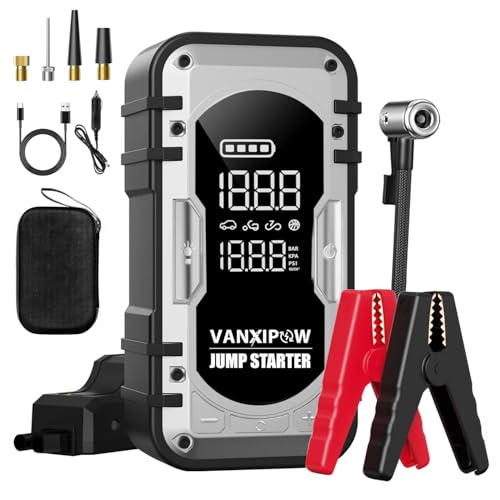
Pros
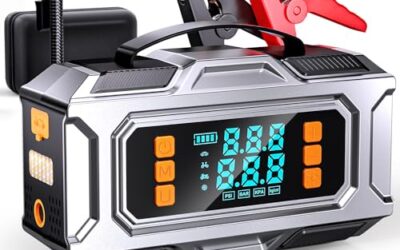
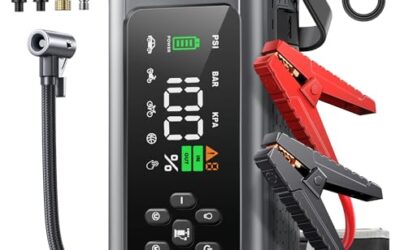
- Combines jump-starting, tire inflation, emergency lighting, and USB charging in one device
- Listed compatibility covers a broad range of 12V vehicles and engines up to 9.0L gas or 8.0L diesel
- Stated weight of 615 grams supports portable use
- LCD screen displays battery level, inflation mode, and real-time tire pressure
Cons
- The air pump should not be used continuously and requires cooling when it becomes seriously hot
- The product has one USB output port
Specifications
| Color | black silver |
|---|---|
| Dimensions | 6.9 x 2.3 x 3.5 Inches |
| Weight | 1.873929227 pounds |
| Product Group | Automotive Parts and Accessories |
Best For / Avoid If
Best for buyers prioritizing
- Combines jump-starting, tire inflation, emergency lighting, and USB charging in one device
- Listed compatibility covers a broad range of 12V vehicles and engines up to 9.0L gas or 8.0L diesel
- Stated weight of 615 grams supports portable use
Consider another option if
- The air pump should not be used continuously and requires cooling when it becomes seriously hot
- The product has one USB output port

Pros
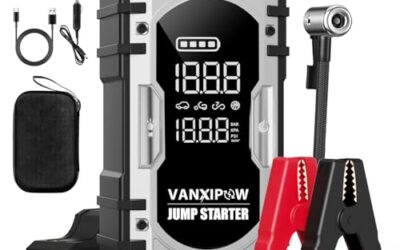
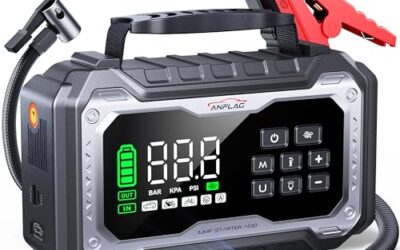
- Combines jump-starting, tire inflation, high-volume air movement, device charging, and emergency lighting in one unit
- Supports a wide stated range of vehicle applications, including gas engines and diesel engines up to 14.0L
- Includes automatic tire-pressure shut-off and five inflation presets
- Comes with jumper cables, an extended air hose, four air nozzles, a USB-A to USB-C cable, instructions, and a carrying case
Cons
- The unit weighs 4.85 lb
- The manufacturer recommends charging the device every 4-5 months if it remains idle
Specifications
| Color | Black |
|---|---|
| Dimensions | 9.1338582584 x 2.7952755877 x 5.4330708606 inches |
| Weight | 2.8439631798 pounds |
| Product Group | Automotive Parts and Accessories |
Best For / Avoid If
Best for buyers prioritizing
- Combines jump-starting, tire inflation, high-volume air movement, device charging, and emergency lighting in one unit
- Supports a wide stated range of vehicle applications, including gas engines and diesel engines up to 14.0L
- Includes automatic tire-pressure shut-off and five inflation presets
Consider another option if
- The unit weighs 4.85 lb
- The manufacturer recommends charging the device every 4-5 months if it remains idle
FAQ
How often should I inspect jump starter clamps?
Inspect them before each use, and check them during routine storage checks. A clamp can be damaged between uses if the cable is crushed, the pack is dropped, or the lead is stored wet.
Can I use clamps with light surface corrosion?
Do not connect clamps if corrosion prevents clean contact or affects the spring, pivot, cable, or connector. Follow the pack’s cleaning instructions. Replace or service clamps if corrosion is deep or returns after cleaning.
Can I replace damaged jump starter clamps?
Use only a replacement lead approved for the exact jump starter model. Similar connectors may have different electrical ratings or wiring. Do not splice or adapt a lead unless the manufacturer gives instructions for that repair.
Do clamp colors tell me where to connect?
Red commonly marks positive and black commonly marks negative, but confirm polarity symbols and use the vehicle manual’s specified connection points. Do not connect based on color alone when markings are missing or unclear.
Sources and further reading
- Battery Council International: Background information on automotive batteries and battery safety.