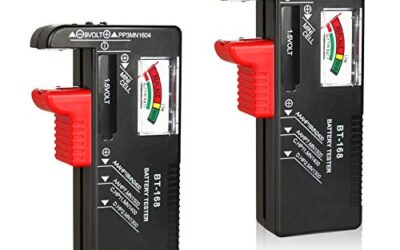
Best Battery Tester For Household Batteries
Top battery testers for household batteries including analog and digital models for AA, AAA, C, D, 9V and button cells.

We independently review automotive electronics and diagnostic tools. When you buy through links on our site, we may earn a commission at no extra cost to you. Learn more ›
Explore 12-volt battery care, charger modes, maintainers and testing methods. These guides distinguish battery chemistry, voltage and vehicle requirements rather than treating every charger as interchangeable.
Top battery testers for household batteries including analog and digital models for AA, AAA, C, D, 9V and button cells.
Dead household cells and weak car batteries cause unnecessary headaches when you cannot quickly verify their remaining charge. A universal diagnostic checker tests everything from standard AA rechargeables to 12V automotive systems so you never discard a good cell.
A car battery voltage dropping overnight often signals a parasitic drain or charging system failure. This issue can leave your vehicle dead in the morning. Learn how to test and address it with basic tools.

A bad battery can cause your car to start slowly or not at all, while a failing alternator may leave you stranded with a dead battery. Learning to identify these issues early helps prevent breakdowns and extends vehicle life.
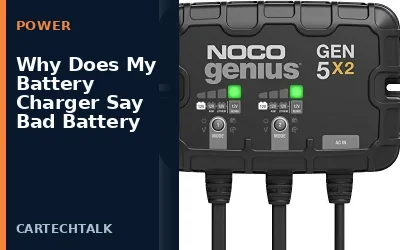
A smart charger flags a bad battery when it cannot raise voltage, hold a charge, or stay within expected current limits. The same message can also appear from a blown fuse, reversed clamps, a weak connection, or a battery that is simply too cold or too deeply discharged.
If your car battery keeps dying but the alternator is good, it's likely the battery is old or there's a parasitic drain. This guide covers causes, diagnostics, and fixes for reliable vehicle starting.
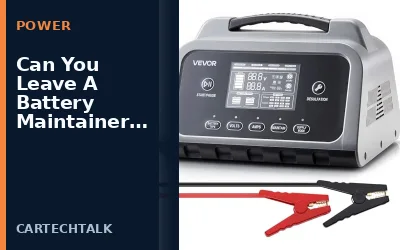
Yes, you can leave a battery maintainer connected to your vehicle's battery to prevent self-discharge. However, it's important to follow safety guidelines and monitor the setup to avoid issues like overcharging or corrosion. This practice is common for vehicles that sit unused for extended periods.
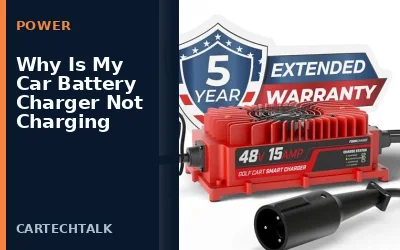
Your car battery charger might not be charging due to a faulty charger, poor connections, voltage incompatibility, or a battery that's too deeply discharged. Identifying the root cause is essential to avoid further damage to your vehicle's battery or electrical system. This guide walks you through a systematic troubleshooting process starting from the simplest checks to more advanced diagnostics.

AGM batteries are absorbed glass mat lead-acid batteries that are completely sealed and maintenance-free, while flooded lead-acid batteries contain liquid electrolyte and require regular maintenance. The key practical difference is that AGM batteries excel in deep-cycle applications and are more efficient at energy storage, but they come at a higher cost and may not be suitable for all vehicles or climates.
The right amp setting for charging a car battery depends on the battery type and capacity, usually 2-10 amps. This guide explains how to select the correct setting safely, step-by-step instructions, and common mistakes to avoid.