The appropriate amp setting for charging a car battery typically ranges from 2 to 10 amps, depending on the battery’s capacity and condition. This ensures the battery charges efficiently and safely without causing damage from overcharging or excessive heat. Always use a charger specifically designed for automotive batteries and refer to the battery manufacturer’s guidelines for the best results.
Key takeaways:
- Match the amp setting to your battery’s amp-hour (Ah) rating for optimal performance.
- Start with lower amps if the battery is low or sulfated to avoid damage.
- Use smart chargers that adjust amps automatically based on battery feedback.
- Always disconnect the battery before charging and ensure proper ventilation.
- Check compatibility with your vehicle’s battery type, such as flooded lead-acid, AGM, or gel.
Understanding the Basics of Car Battery Charging
Car batteries are typically 12-volt lead-acid batteries that store energy through chemical reactions. When charging, the charger supplies electrical current to restore the battery’s charge. The amp setting determines the rate of this current flow. Lower amps mean slower but gentler charging, while higher amps speed up the process but risk overheating if not managed properly.
Most car batteries have a capacity measured in amp-hours (Ah). For example, a 50Ah battery might be charged at 5 amps for about 10 hours to fully charge it. Understanding this helps in selecting the right setting.
Charging follows a two-phase process. In the constant current phase, the charger maintains a steady amp output until the battery reaches a certain voltage threshold. Then it switches to constant voltage, where the amp rate tapers off as the battery fills up. This prevents overcharging and extends battery life.
Factors That Influence the Right Amp Setting
Battery Type and Chemistry
Standard flooded lead-acid batteries can handle higher amps, around 5-10 amps. AGM batteries are more sensitive and often recommended at 3-8 amps to prevent excessive gassing. Gel batteries require even lower settings, typically 2-5 amps, because they are designed for lower current rates.
Each chemistry has different tolerances for charging current. Flooded batteries produce hydrogen gas when overcharged, which is why ventilation is important. AGM and gel are sealed and can be damaged by excessive gas buildup. Lithium-ion batteries, found in some electric vehicles and certain hybrid systems, require even more specialized chargers with very low amp settings, often under 5 amps, due to their different chemistry and built-in battery management systems.
Battery Capacity
Larger batteries, such as those in trucks or SUVs with 100Ah or more, may require 10-20 amps. Smaller batteries in compact cars or motorcycles use 1-5 amps. Always check the label on your battery for the Ah rating and CCA (cold cranking amps). The Ah rating indicates how much charge the battery can hold, so a higher Ah battery needs more total charge, but the amp rate is what determines speed. For instance, a 100Ah battery at 10 amps would take about 10 hours to charge fully.
Vehicle model year can also play a role. Older vehicles with basic lead-acid batteries tolerate a wider range, while newer models with advanced electronics or start-stop systems may have stricter requirements to avoid draining the battery during operation.
State of Charge and Condition
If your battery is deeply discharged, start with a lower amp setting, like 2-4 amps, to avoid stressing the battery. If it’s only partially discharged, you can use a higher setting. Sulfated batteries may need lower amps to prevent further damage. Sulfation occurs when lead sulfate builds up on the plates, reducing capacity, and high amps can exacerbate this. Preconditioning the battery in moderate temperatures before charging improves results, as extreme cold slows the chemical reactions and extreme heat can cause damage.
Charger Capabilities
Some chargers have fixed amps, while others are adjustable. Ensure your charger supports the setting you choose and has a maximum output that matches or exceeds your needs. Many modern chargers are smart and can detect the battery type and adjust accordingly. Compatibility with your vehicle’s voltage is crucial; all standard car batteries are 12V, but some trucks or RVs may use 24V systems that require different chargers.
How to Determine the Ideal Amp Setting for Your Battery
1. Locate the battery’s specifications on the label, including Ah and CCA.
2. Consult the charger’s manual for recommended settings based on battery type.
3. For a general guideline, use 10% of the Ah rating as a starting point. For a 60Ah battery, start at 6 amps.
4. Adjust based on the battery’s condition: lower for weak or old batteries.
5. Test with a multimeter or battery tester after charging to ensure it’s fully charged. A fully charged battery should read between 12.4 and 12.8 volts when off.
6. Consider the vehicle’s electrical system. Modern cars with start-stop technology may have specific requirements for the charger to avoid draining the battery during use.
7. Check for any regional regulations or local power grid standards that might affect charger output.
Step-by-Step Guide to Charging Your Car Battery
- Prepare for safety: Disconnect the negative terminal first, then the positive. Wear safety glasses and gloves. This prevents accidental short circuits and sparks.
- Connect the charger: Attach the charger’s clamps to the battery terminals, matching positive to positive and negative to negative. Ensure the clamps are clean and secure.
- Set the amp setting: Choose the recommended range based on your battery’s specs. Start low if unsure to allow for a controlled charge.
- Plug in the charger: Ensure it’s plugged into a stable power source with the correct voltage, usually 120V in the US.
- Monitor the charging process: Watch for signs of gassing or heat. Smart chargers will stop when complete and may have diagnostic lights.
- Disconnect when finished: Once the battery is fully charged, as indicated by the charger or a voltage reading of around 12.6V or higher, disconnect the clamps. Do not leave the charger connected if not charging.
- Reconnect the battery: Reattach the terminals in the reverse order. Start with positive, then negative.
Common Mistakes When Charging Car Batteries
- Using too high an amp setting: This can cause overheating, electrolyte boiling, and reduced battery life. Overheating can lead to thermal runaway in extreme cases.
- Ignoring the battery type: Using a standard charger on an AGM battery can damage it by causing excessive gassing. AGM batteries are designed for lower current to maintain their sealed structure.
- Charging without disconnecting: This can lead to sparks and damage to the vehicle’s electronics. Always disconnect before charging.
- Not using a smart charger: Traditional chargers may overcharge or undercharge the battery, leading to sulfation or reduced lifespan.
- Charging in extreme temperatures: Cold reduces efficiency, hot can cause damage. Charge in moderate temperatures for best results.
- Assuming all chargers are the same: Chargers for different battery chemistries have different settings and features.
- Overlooking maintenance charging: Failing to use trickle charging for long-term storage can lead to sulfation over time.
When to Seek Professional Help
If your battery doesn’t charge after several hours, shows swelling, leaks, or has error indicators on the charger, it may be faulty. In such cases, consult a professional automotive technician or battery specialist. They can perform a load test and diagnose underlying issues like alternator problems or wiring faults. Never attempt to jump start or charge a damaged battery yourself.
Gear that can help
If you need battery chargers and maintainers or battery testers for this job, these picks already appear in our battery chargers and maintainers guides. Check the full guide for fit and who should skip each one.

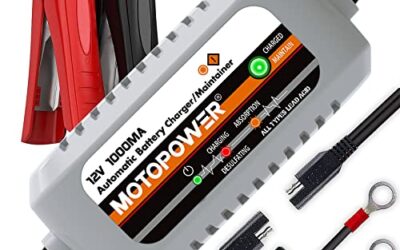
Pros
- Supports multiple lead-acid battery types, including AGM, Gel, SLA, VRLA, flooded, maintenance-free, and deep-cycle batteries
- Designed for a wide range of vehicles and equipment, including cars, motorcycles, boats, ATVs, tractors, trucks, SUVs, RVs, and lawn mowers
- Includes both battery clamps and integrated eyelet terminals
- Provides automatic maintenance charging with overcharge protection
Cons
- The listing lists support for LiFePO4 batteries specifically, rather than all lithium-ion battery types
- The charger is specified for 6V and 12V batteries only
Specifications
| Color | Black |
|---|---|
| Size | 10A |
| Dimensions | 4.41 x 4.48 x 9.1 inches |
| Weight | 3.99 Pounds |
| Product Group | Automotive Parts and Accessories |
| Binding | Electronics |
Best For / Avoid If
Best for buyers prioritizing
- Supports multiple lead-acid battery types, including AGM, Gel, SLA, VRLA, flooded, maintenance-free, and deep-cycle batteries
- Designed for a wide range of vehicles and equipment, including cars, motorcycles, boats, ATVs, tractors, trucks, SUVs, RVs, and lawn mowers
- Includes both battery clamps and integrated eyelet terminals
Consider another option if
- The listing lists support for LiFePO4 batteries specifically, rather than all lithium-ion battery types
- The charger is specified for 6V and 12V batteries only

Pros
- Adjustable charging current supports different charging needs
- Broad compatibility with listed 12V sealed lead-acid battery types
- Includes dedicated desulfation and repair functions
- Offers engine-start assistance and a winter charging mode
- ETL certification is listed in the listing
Cons
- The repair mode cannot repair completely drained batteries
- Only 12V battery applications are specified
Specifications
| Color | 25A |
|---|---|
| Dimensions | 7.68110235437 x 10.0393700685 x 4.9212598375 inches |
| Weight | 5.00008410216 Pounds |
| Product Group | Automotive Parts and Accessories |
| Binding | Electronics |
Best For / Avoid If
Best for buyers prioritizing
- Adjustable charging current supports different charging needs
- Broad compatibility with listed 12V sealed lead-acid battery types
- Includes dedicated desulfation and repair functions
Consider another option if
- The repair mode cannot repair completely drained batteries
- Only 12V battery applications are specified

Pros
- Combines engine-code scanning with a built-in battery diagnostic feature
- Provides live data and freeze frame information for diagnostic reference
- Does not require batteries and uses plug-and-play operation
- Supports most 1996 and newer US cars and listed 2000 and newer EU and Asian vehicles
Cons
- Does not support new energy or hybrid vehicles
- Limited to engine fault codes and does not support ABS, SRS, or transmission systems
- Vehicle compatibility may vary because the source lists general model-year and protocol support rather than a specific vehicle list
Specifications
| Color | Orange |
|---|---|
| Dimensions | 2.95 x 0.9 x 5.35 inches |
| Weight | 0.4 pounds |
| Product Group | Automotive Parts and Accessories |
Best For / Avoid If
Best for buyers prioritizing
- Combines engine-code scanning with a built-in battery diagnostic feature
- Provides live data and freeze frame information for diagnostic reference
- Does not require batteries and uses plug-and-play operation
Consider another option if
- Does not support new energy or hybrid vehicles
- Limited to engine fault codes and does not support ABS, SRS, or transmission systems
- Vehicle compatibility may vary because the source lists general model-year and protocol support rather than a specific vehicle list
FAQ
What is the best amp setting for charging a car battery?
The best amp setting depends on your specific battery, but for most standard car batteries, 5-10 amps is ideal. Always match it to the battery’s Ah rating and type for safe and effective charging.
Can I use a higher amp charger than recommended?
Generally, no, as higher amps can damage the battery. If your charger has a higher max, use it only if it has adjustable settings and you follow the lower recommendation to stay within safe limits.
How long should I charge my car battery?
Charging time varies with amp setting and battery size. At 5 amps for a 50Ah battery, expect 10-12 hours. Smart chargers indicate when it’s done, usually after the constant current phase and then the taper.
What if my car battery is an AGM type?
AGM batteries require lower amp settings, typically 3-8 amps, to prevent gassing and ensure safe charging. Using higher amps can cause internal pressure buildup and potential failure.
Is it safe to charge a car battery with a higher amp setting?
It is not always safe, as it can lead to overheating and reduced lifespan. Stick to recommended settings for safety and longevity of your battery.