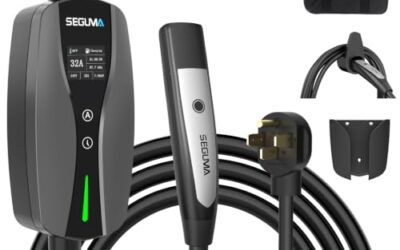
To protect an outdoor EV charger from weather, use charging equipment approved for its installation location, keep its connector and cable in good condition, and follow its installation and care instructions. A cover or shelter can reduce direct exposure, but it cannot correct poor drainage, damaged seals, unsafe wiring, or an unsuitable charger rating.
- Check the charger manual and product label for outdoor-use limits and care instructions.
- Keep the charging connector, cable, and vehicle inlet free of standing water, ice, dirt, and damage.
- Use only covers or shelters that do not block ventilation, trap heat, strain the cable, or interfere with charging.
- Stop using equipment with cracks, exposed conductors, burn marks, repeated faults, or water inside an enclosure.
- Ask a licensed electrician to assess installation, wiring, drainage, or electrical damage.
Check whether your EV charger suits its location
Outdoor protection starts with the charger itself. Read its installation manual and product label to see whether the unit is approved for outdoor use and what conditions it permits. A charger intended only for indoor installation should not be made suitable for outdoors with a homemade box or rain cover.
Look for the manufacturer’s stated environmental limits, including temperature range and any enclosure rating. An IP rating describes resistance to dust and water under defined test conditions. A NEMA enclosure rating uses a different system. Do not treat the two systems as interchangeable, or assume either rating means a charger can be submerged, pressure-washed, or exposed to every storm condition.
Check what each rating applies to. The EVSE unit, connector, cable, and any wall-mounted holster may have different limits. Some chargers also need clear space around vents or specific mounting orientations. Follow the manual for placement, clearances, and cleaning; those instructions can differ by model and revision.
Outdoor charging also depends on the installation, not only the charger enclosure. The circuit, wiring methods, protective devices, mounting, and local requirements must suit the actual site. Do not open the charger or modify wiring to add weather protection. For home charging basics, see the Alternative Fuels Data Center guide to charging electric vehicles at home.
How to protect an outdoor EV charger from weather: numbered steps
- Read the manual before adding anything. Find outdoor-use limits, temperature guidance, cleaning directions, and required clearances. Check whether a manufacturer-approved cover or accessory exists for your exact charger model. A generic cover may block cooling or prevent the unit from operating as intended.
- Choose a suitable mounting location. Keep the unit away from places where roof runoff, sprinkler spray, or pooling water regularly hits it. Avoid locations where snow, ice, or falling debris could strike it. Follow the specified mounting height and orientation rather than changing them to suit a shelter.
- Keep drainage clear. Water should not collect around the charger, conduit, or mounting surface. Check the area after heavy rain. If water ponds near electrical equipment or enters a conduit or enclosure, stop using the charger and contact an electrician.
- Add a shelter only if it fits the installation. A properly positioned roof or canopy can reduce direct sun, rain, and snow exposure. It must not trap heat, block airflow, impede access to controls, or put weight on the charger or cable. A shelter does not replace an outdoor-rated unit or sound installation.
- Store the connector correctly. Use the supplied holster or another accessory approved for the charger. Keep the connector off the ground and pointed or positioned as the manual directs. Do not leave it in a puddle, snowbank, or place where a vehicle can run over it.
- Route the cable to limit damage. Keep it clear of vehicle tires, sharp edges, doors, walkways, and standing water. Use only cable-management hardware that fits the charger and does not bend, pinch, or stretch the cable. Do not wrap a charging cable tightly around a small hook unless the manual allows that storage method.
- Inspect before charging. Look for cracks, cuts, crushed sections, loose mounting, corrosion, dirt, ice, and unusual moisture. Check both connector and vehicle inlet. If either is wet, contaminated, or damaged, follow the vehicle and charger instructions instead of forcing a connection.
- Review the setup after severe weather. Check for shifted equipment, impact damage, loose conduit, water intrusion, and cable damage. If the charger has a fault or warning, use the manual’s troubleshooting guidance. Do not keep resetting it when the same fault returns.
What can a cover or canopy do?
A canopy can limit direct exposure to rain, snow, sun, and debris. It may also make the connector easier to handle during poor weather. Its benefit depends on placement and design: a small roof that directs runoff onto the charger or cable can make exposure worse.
A cover is not a substitute for equipment rated for the site. Nor does a cover make it safe to use a cracked charger, wet connector, or damaged cable. Avoid plastic bags, improvised wraps, and sealed boxes. They can trap heat, collect condensation, interfere with access, or obstruct ventilation. Use an accessory only when its fit and use are allowed by the charger manufacturer.
Do not cover the connector while it is plugged into the vehicle unless the charger and vehicle instructions permit that specific arrangement. Covers can hold moisture against contacts or place stress on the cable. The connector’s normal holster may be the appropriate storage method, but follow the model’s instructions.
Rain, snow, heat, and freezing conditions
Rain and humidity
Outdoor-rated charging equipment is meant for conditions within its stated limits, but that does not make every part waterproof. Keep connectors out of puddles and avoid directing a hose or pressure washer at the unit. Clean only as the manual directs. If water appears inside the enclosure, or the charger trips or faults after exposure, stop using it and seek qualified help.
Snow and ice
Clear snow around the charger and cable without striking the equipment or scraping its insulation. Do not use a flame, heat gun, or aggressive tool to remove ice. If the connector or vehicle inlet is frozen, follow vehicle and charger instructions; forcing the plug can damage parts or leave a poor connection. Keep the cable out of snow where possible, since buried cable can be hard to see and may be driven over.
Sun and hot weather
Direct sun can heat an enclosure and cable. Keep required ventilation space open, and do not wrap the charger in a sun shield that blocks vents. A shade structure may help if it preserves airflow and follows installation clearances. Check the manual’s operating-temperature limits, especially in locations with intense sun or extreme seasonal temperatures.
Cold weather
Cold can make some cables less flexible. Do not sharply bend, tug, or coil a stiff cable. Use the temperature limits and storage instructions for the exact charger. Charging behavior can also depend on the vehicle’s battery and model year, so a cold-weather charging limit or delay may come from the vehicle rather than weather damage to the EVSE.
Weather-protection checks at a glance
| Area | Check | Stop and seek help if |
|---|---|---|
| Charger enclosure | Outdoor-use rating, clear vents, intact case, secure mount | Case is cracked, water is inside, or mounting is loose |
| Connector and holster | Dry, clean, undamaged, stored off the ground | Contacts are damaged, wet inside, or show burn marks |
| Cable | No cuts, crushing, sharp bends, or vehicle traffic | Insulation is split or conductors are visible |
| Site | Drainage, shelter clearance, no runoff directed at equipment | Water pools at electrical equipment or enters conduit |
| Charging behavior | Normal operation without repeated faults or unusual heat | Faults recur, there is a burning smell, or parts feel unusually hot |
Common mistakes
- Assuming “weather-resistant” means waterproof. Ratings apply under defined conditions. They do not make equipment safe for flooding or every cleaning method.
- Wrapping the charger in plastic. A wrap can trap heat and moisture, and may block vents or controls.
- Using a household extension cord. Do not add an extension cord or adapter unless the EVSE and vehicle instructions specifically allow that equipment and configuration.
- Forcing a wet or icy connection. Do not plug in a connector that is damaged, contaminated, or visibly wet inside. Follow the product instructions and seek help when needed.
- Ignoring recurring faults. A reset may clear a temporary display, but it does not repair water intrusion, wiring damage, or a failing component.
- Assuming every charger and vehicle combination behaves alike. Connector type, charging level, vehicle model year, EVSE firmware, and regional electrical requirements can affect compatibility and operation. Follow both vehicle and charger manuals.
When to get professional help
Stop charging and contact a licensed electrician or the charger manufacturer if the enclosure is cracked, water is inside, mounting or conduit has shifted, a cable has exposed conductors, or the charger repeatedly faults after weather exposure. Do not open the enclosure, dry internal parts, replace wiring, or bypass a protective device yourself.
If you see smoke, sparks, hear unusual electrical arcing, or smell burning, keep clear and do not touch the charger, cable, or vehicle. If it is safe to do so, follow the site’s emergency shutoff instructions; otherwise call emergency services. Treat electrical damage as a hazard, not a routine maintenance task.
For a new outdoor installation, or a site with flooding, unusual exposure, or repeated tripping, have a qualified electrician assess the location and circuit. Installation needs vary by equipment, site, and applicable local requirements. The Alternative Fuels Data Center’s EV charging infrastructure guidance offers broader installation context.
Gear that can help
If you need EV chargers for this job, these picks already appear in our EV chargers guides. Check the full guide for fit and who should skip each one.

Pros
- Supports both Level 1 and Level 2 charging
- Includes connections for compatible 120V and 240V outlets
- Provides adjustable current and delayed-charging controls
- Offers J1772 compatibility for listed BEV and PHEV applications
- Includes ETL certification, FCC listing, and a stated two-year warranty
Cons
- Not compatible with Tesla vehicles or NACS connectors
Specifications
| Color | BLACK |
|---|---|
| Size | BLACK,SAE,J1772 |
| Dimensions | 2.2 x 3.03 x 9.17 inches |
| Weight | 7.7 Pounds |
| Product Group | Automotive Parts and Accessories |
Best For / Avoid If
Best for buyers prioritizing
- Supports both Level 1 and Level 2 charging
- Includes connections for compatible 120V and 240V outlets
- Provides adjustable current and delayed-charging controls
Consider another option if
- Not compatible with Tesla vehicles or NACS connectors

Pros
- Supports SAE-J1772 electric vehicles and plug-in hybrids
- Offers adjustable charging current for different charging requirements
- Includes a long 25-foot cable and delay timer
- Provides multiple listed electrical safety protections
Cons
- Tesla adapter is sold separately
- The product is recommended for use only in a dry environment with a properly grounded outlet
Specifications
| Size | 25FT |
|---|---|
| Product Group | Automotive Parts and Accessories |
Best For / Avoid If
Best for buyers prioritizing
- Supports SAE-J1772 electric vehicles and plug-in hybrids
- Offers adjustable charging current for different charging requirements
- Includes a long 25-foot cable and delay timer
Consider another option if
- Tesla adapter is sold separately
- The product is recommended for use only in a dry environment with a properly grounded outlet

Pros
- Supports charging up to 40A and 9.6 kW
- Long 25-foot cable provides extended reach
- Compatible with listed PHEV and BEV models using a J1772 connection
- IP67 rating and stated operating temperature range support outdoor use
Cons
- Requires a 240V NEMA 14-50 outlet
- Tesla vehicles require a separate NACS adapter
Specifications
| Color | Black |
|---|---|
| Size | 40A 25FT |
| Dimensions | 144 x 134 x 47 Inches |
| Weight | 13.2 Pounds |
| Product Group | Automotive Parts and Accessories |
| Binding | Automotive |
Best For / Avoid If
Best for buyers prioritizing
- Supports charging up to 40A and 9.6 kW
- Long 25-foot cable provides extended reach
- Compatible with listed PHEV and BEV models using a J1772 connection
Consider another option if
- Requires a 240V NEMA 14-50 outlet
- Tesla vehicles require a separate NACS adapter
Before you buy, it is worth reading Portable EV Charger Buying Guide, How To Check Public EV Charger Availability Before You Go and How to Inspect an EV Charging Cable Safely.
FAQ
Can I leave an outdoor EV charger in the rain?
Only if the charger and its installation are approved for outdoor use and the conditions remain within their stated limits. Keep the connector stored as directed, and do not charge with damaged equipment or a wet vehicle inlet.
Should I cover my EV charger while it is charging?
Only use a cover if the charger instructions allow it and it does not block ventilation, controls, or cable movement. An improvised cover can trap heat or moisture.
Can I use a weatherproof box around an EV charger?
Not as a general fix. A box can restrict cooling, block access, or change how water drains. Use an enclosure only when the charger manufacturer and installation plan permit that specific arrangement.
What should I do if my EV charger gets wet inside?
Stop using it. Do not open or dry the enclosure yourself. Contact the manufacturer or a licensed electrician for assessment before charging again.
Sources and further reading
- Charging Electric Vehicles at Home (Alternative Fuels Data Center): Overview of home EV charging and installation considerations.
- Procurement and Installation for EV Charging Infrastructure (Alternative Fuels Data Center): Guidance on planning and installing charging infrastructure.