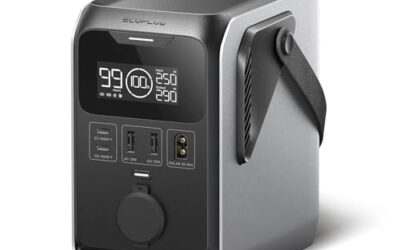
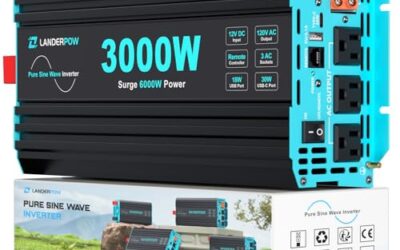
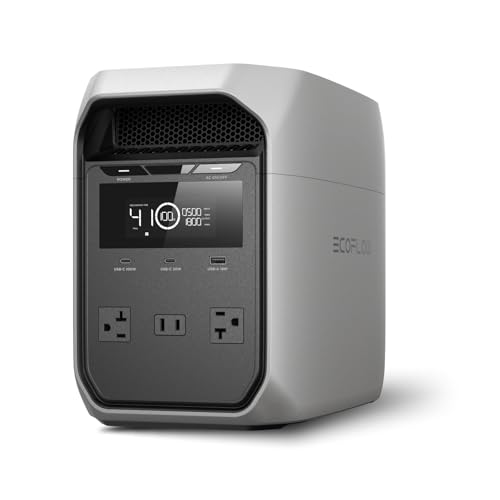
The best portable power station for home backup for most households here is the EF ECOFLOW Portable Power Station Delta 3 Classic, with 1,024Wh capacity and 1,800W AC output for selected appliances and electronics. Its sub-10ms transfer claim also suits a router or computer that needs battery backup, though one kilowatt-hour is not whole-home power.

Pros
- Compact and portable design for camping, road trips, RV use, and blackout backup
- Multiple output types can charge devices through AC and DC connections
- Pure sine wave AC output is provided through two 110V outlets
- Built-in protection includes overload, over-discharge, overcharge, overheating, and short-circuit safeguards
Cons
- Designed for devices below 300W and may not support electric grills, induction cookers, microwaves, refrigerators, or heaters
- Solar panel is sold separately
- The source recommends periodic battery recharging and storage at 40% to 70% charge in a dry environment
Specifications
| Color | Green |
|---|---|
| Size | 300W |
| Dimensions | 9 x 5.5 x 7.5 inches |
| Weight | 6.5 Pounds |
| Product Group | Lawn & Patio |
| Binding | Tools & Home Improvement |
Best For / Avoid If
Best for buyers prioritizing
- Compact and portable design for camping, road trips, RV use, and blackout backup
- Multiple output types can charge devices through AC and DC connections
- Pure sine wave AC output is provided through two 110V outlets
Consider another option if
- Designed for devices below 300W and may not support electric grills, induction cookers, microwaves, refrigerators, or heaters
- Solar panel is sold separately
- The source recommends periodic battery recharging and storage at 40% to 70% charge in a dry environment

Pros
- Compact 8.15 x 5.83 x 3.90-inch form factor with a built-in handle
- Multiple output types accommodate AC, USB, and DC devices
- Pure sine wave AC output is listed for the 110V outlets
- Built-in lighting adds lantern and emergency signaling functions
Cons
- Solar panel is not included
- The 300W continuous output limits use with higher-power appliances
- Listed recharge times are up to 6 hours from a wall outlet and 8 hours with a 12V car adapter
Specifications
| Color | Brick Red |
|---|---|
| Dimensions | 8.15 x 3.9 x 5.83 inches |
| Weight | 4.6 Pounds |
| Product Group | Lawn & Patio |
| Binding | Tools & Home Improvement |
Best For / Avoid If
Best for buyers prioritizing
- Compact 8.15 x 5.83 x 3.90-inch form factor with a built-in handle
- Multiple output types accommodate AC, USB, and DC devices
- Pure sine wave AC output is listed for the 110V outlets
Consider another option if
- Solar panel is not included
- The 300W continuous output limits use with higher-power appliances
- Listed recharge times are up to 6 hours from a wall outlet and 8 hours with a 12V car adapter
Pros
- High 1800W output with 3600W surge capacity
- Fast AC and solar recharge options
- Under-10ms UPS switching
- LiFePO4 cells rated for 10+ years of daily use
- App-based monitoring and charging controls
Cons
- 500W solar panel is optional
- Not compatible with DELTA 2 Smart Extra Battery or Delta 3 Series Smart Extra Battery
- weighs 26.7 pounds
Specifications
| Dimensions | 7.9 x 11.1 x 15.7 inches |
|---|---|
| Weight | 26.7 Pounds |
| Product Group | Lawn & Patio |
| Binding | Electronics |
Best For / Avoid If
Best for buyers prioritizing
- High 1800W output with 3600W surge capacity
- Fast AC and solar recharge options
- Under-10ms UPS switching
Consider another option if
- 500W solar panel is optional
- Not compatible with DELTA 2 Smart Extra Battery or Delta 3 Series Smart Extra Battery
- weighs 26.7 pounds
Pros
- LiFePO4 battery chemistry and a stated 3,000-cycle charge-discharge rating
- Multiple output and recharging options for portable and emergency use
- Includes a 5-year warranty and stated 24/7 customer service
Cons
- The solar panel is sold separately
- The 300W continuous output rating limits it to devices within that power range
- The listing list two different sets of dimensions: 9 x 4.7 x 7.8 inches and 9.25 x 5 x 6.81 inches
Specifications
| Color | Black |
|---|---|
| Size | 9"L x 4.7"W x 7.8"H |
| Dimensions | 9 x 4.7 x 7.8 inches |
| Weight | 6.4 pounds |
| Product Group | Lawn & Patio |
| Binding | Sports |
Best For / Avoid If
Best for buyers prioritizing
- LiFePO4 battery chemistry and a stated 3,000-cycle charge-discharge rating
- Multiple output and recharging options for portable and emergency use
- Includes a 5-year warranty and stated 24/7 customer service
Consider another option if
- The solar panel is sold separately
- The 300W continuous output rating limits it to devices within that power range
- The listing list two different sets of dimensions: 9 x 4.7 x 7.8 inches and 9.25 x 5 x 6.81 inches

Pros
- High lifespan 10,000-cycle LFP battery chemistry
- Rapid sub-10ms UPS switchover time
- Low 6W idle power consumption
- Dual-sided outlet layout keeps cables organized
Cons
- No 12V DC car port
- Charging cables omitted from listed box contents
- Solar charging input capped at 400W
Specifications
| Color | Black |
|---|---|
| Dimensions | 8.19 x 11.1 x 12.7 inches |
| Weight | 35.7 Pounds |
| Product Group | Lawn & Patio |
Best For / Avoid If
Best for buyers prioritizing
- High lifespan 10,000-cycle LFP battery chemistry
- Rapid sub-10ms UPS switchover time
- Low 6W idle power consumption
Consider another option if
- No 12V DC car port
- Charging cables omitted from listed box contents
- Solar charging input capped at 400W

Pros
- 1800W rated AC output supports up to 90% of everyday appliances
- 25-pound weight and hidden handle support portable use
- 30dB silent mode supports quieter overnight operation
- 10ms UPS switchover supports router and PC backup
- Includes AC charging cable, solar charging cable, grounding screw, and user manual
Cons
- Vehicle charging up to 6x faster requires BLUETTI Charger 1
- 2700W Power Lifting exceeds its 1800W rated AC output
- 25-pound weight adds carrying load for portable use
Specifications
| Color | Dark Gray |
|---|---|
| Dimensions | 12.6 x 8.5 x 9.8 inches |
| Weight | 25 pounds |
| Product Group | Lawn & Patio |
Best For / Avoid If
Best for buyers prioritizing
- 1800W rated AC output supports up to 90% of everyday appliances
- 25-pound weight and hidden handle support portable use
- 30dB silent mode supports quieter overnight operation
Consider another option if
- Vehicle charging up to 6x faster requires BLUETTI Charger 1
- 2700W Power Lifting exceeds its 1800W rated AC output
- 25-pound weight adds carrying load for portable use
Best portable power stations for home backup
These recommendations cover small electronics, a few household essentials, and longer battery runtime. They are not interchangeable: battery capacity controls how long a load can run, while AC output limits which appliances can start and operate. CarTechTalk may earn a commission from qualifying purchases through product links.
Best for a middle ground: EF ECOFLOW Portable Power Station Delta 3 Classic
The Delta 3 Classic pairs 1,024Wh capacity with 1,800W rated AC output and a claimed 3,600W surge. That combination fits a buyer who needs more than phone and laptop charging and wants to consider appliances such as a refrigerator. The manufacturer says its X-Boost feature can expand output to 2,600W, but that claim is not a substitute for checking an appliance’s rated and startup demands.
Its advertised under-10ms UPS switchover may help keep a computer or router powered through a brief outage. AC charging to 80% is listed at 45 minutes; solar charging is listed at 2.5 hours with an optional 500W panel. Those are manufacturer claims, and real charging conditions and connected loads affect practical use.
The tradeoff is capacity: 1,024Wh can be consumed quickly by high-draw appliances, and the unit cannot serve as a whole-home generator. It also cannot use DELTA 2 Smart Extra Battery or Delta 3 Series Smart Extra Battery. Skip it if your plan depends on those expansion batteries or on powering several large appliances for an extended outage.
Best for larger battery reserve: Anker SOLIX S2000 Portable Power Station, 2,010Wh
With 2,010Wh capacity, this Anker is the strongest fit for people prioritizing stored energy over a lighter carry. Its listed 1,500W continuous output and 3,000W peak output suit selected household essentials, while its eight outlets give a household more connection points. The manufacturer claims up to 35 hours of refrigerator backup, but that figure depends on refrigerator model, use, and room temperature. Treat it as a claim, not a runtime promise for your fridge.
The listing describes a sub-10ms UPS function for home-office equipment and six charging methods, including solar, wall power, generator, alternator charger, and car outlet. It supports up to 400W solar input. These options can help replenish the battery during an outage, but solar recovery depends on panel setup and available sunlight.
This model has no 12V DC port, which rules out devices that require that connection without an appropriate alternative. At 35.7 pounds, it is also less convenient to move than the compact units below. Skip it if you need a 12V output or expect to carry the station frequently.
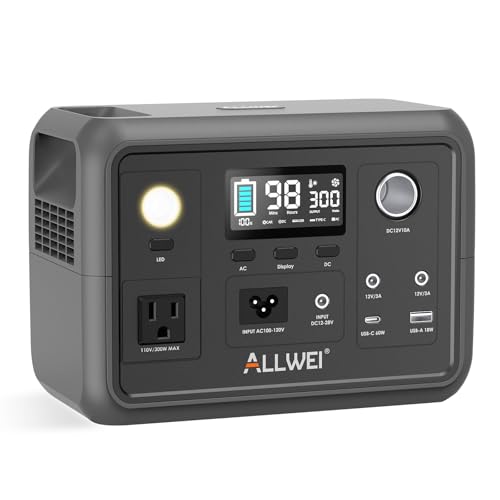
Best compact LFP option: ALLWEI Portable Power Station 300W
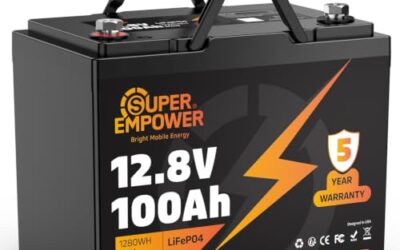
ALLWEI offers 256Wh capacity, 300W continuous AC output, and a listed 600W peak. Its 6.4-pound weight and small body make it easier to relocate between a room and a vehicle than the larger backup units. The listing identifies LiFePO4 cells and claims 3,000 charge-discharge cycles, plus a five-year warranty. Those lifecycle and warranty terms are manufacturer claims; consult the seller’s warranty terms for coverage conditions.
Its 60W USB-C port can charge compatible devices, and the listing describes AC, car, solar, and combined AC-plus-solar charging. A 100W solar panel is said to recharge it in four to five hours. That capacity is better suited to electronics and modest loads than extended refrigerator backup.
One practical limit is the single AC outlet, which constrains how many household plugs can connect directly. Its 300W continuous rating also rules out many heating and cooking appliances. Skip it if you need multiple AC outlets or plan to run equipment above its output rating.
Best low-cost small backup: Portable Power Station 300W MARBERO 237Wh Camping
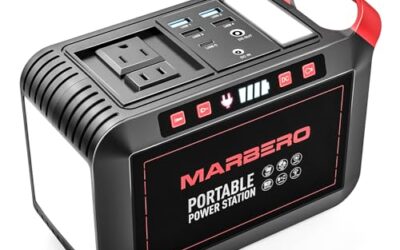
MARBERO’s 237Wh capacity and 300W rated AC output make this a compact pick for keeping phones, laptops, and other small devices available during a short outage. The listing gives a weight of 4.6 pounds, which favors moving it around the home or taking it in a car. It has two AC outlets, USB-A ports, USB-C, and DC output, so compatible devices can charge without relying only on AC sockets.
MARBERO lists a 375W peak, six-hour wall recharge, eight-hour car recharge, and optional solar charging. It also includes two built-in lights, a useful feature during a brief blackout. The 237Wh reserve remains small for appliances: a refrigerator or other motor load may exceed its output or use its energy rapidly.
Skip it if your backup plan centers on a refrigerator, medical device, or other load that needs longer runtime or more output. Check the device’s operating and startup requirements rather than relying on the station’s peak figure alone.
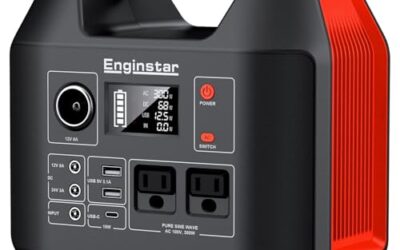
Best small station with two AC outlets: EnginStar Solar Generator
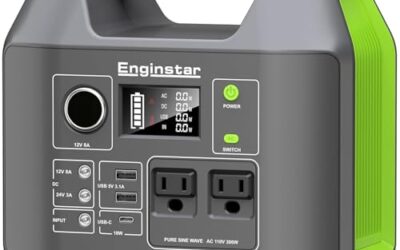
EnginStar lists 296Wh capacity, 300W output, and two pure sine wave AC outlets. The extra AC socket can help charge or run two small devices at once, provided their combined demand stays within the station’s limit. Its other connections include USB, USB-C, and 12V outputs for compatible electronics and vehicle accessories.
The manufacturer lists a seven-hour wall recharge and solar compatibility with 12–25V panels, sold separately. The listed guidance recommends recharging every few months during storage and keeping the battery away from heat and direct sun. That upkeep matters for an emergency unit left idle between outages.
Its 300W ceiling and sub-300Wh battery make it a poor match for large appliances or long outages. The listing itself warns against loads such as microwaves, heaters, and refrigerators. Skip it if those are the devices you need to keep running.
Best light for short outages: BLUETTI Elite 100 V2 Portable Power Station
BLUETTI combines 1,024Wh with 1,800W rated AC output in a 25-pound station. The manufacturer lists 2,700W Power Lifting, but buyers should check whether their specific appliance is suitable for that mode rather than treating it as ordinary continuous output. For compatible loads, the capacity and rated output make this a practical alternative to the Delta 3 Classic.
The listing claims 80% AC charging in about 45 minutes, a 10ms UPS function, and 30dB operation in silent mode. It also describes LiFePO4 cells with more than 4,000 cycles to 80% capacity. These are manufacturer claims, not a promise of a particular service life in every home. App control over Wi-Fi and Bluetooth can help monitor use without standing beside the station.
Its weight is a drawback for frequent carrying, and the available capacity still limits how long high-wattage appliances can run. Skip it if you need a lighter emergency pack or expect multi-day appliance backup without a way to recharge.
How to size a power station for an outage
Start with the devices you intend to power, not the largest capacity number in an advertisement. Write down each device’s watts and expected hours of use. Multiply watts by hours to estimate energy in watt-hours, then add the loads you expect to run at the same time. This is a planning estimate, not a guaranteed runtime: conversion losses, cycling appliances, and operating conditions change actual use.
Next, compare two separate limits. Watt-hours describe stored energy and help estimate duration. Continuous watts describe the load the station can supply at once. Starting current can be higher for appliances with motors, so a refrigerator that runs below a station’s continuous limit may still challenge its startup capacity. Peak ratings are brief surge figures, not equivalent to continuous power.
For example, a 60W device running for five hours uses 300Wh in simple arithmetic. A 237Wh or 256Wh station cannot supply that full amount after conversion losses. A 1,024Wh unit offers more reserve, but the same device still cannot run indefinitely. Use the device label or manual for its power needs, especially for medical equipment.
Which capacity fits your home?
| Capacity class | Models | Practical fit | Main limit |
|---|---|---|---|
| 237–296Wh | MARBERO, EnginStar | Phones, lights, and selected small electronics | Short reserve and 300W output ceiling |
| 256Wh | ALLWEI | Portable charging and modest loads | One AC outlet and 300W continuous output |
| 1,024Wh | EF ECOFLOW, BLUETTI | Selected household essentials and electronics | Runtime remains load-dependent |
| 2,010Wh | Anker | Larger reserve for selected essentials | 1,500W continuous output and no 12V DC port |
Choose the smallest unit that covers your actual outage plan, but leave room for startup demand and energy losses. For a fridge, check both running and starting power from its label or manual. For a CPAP or other medical device, consult its manufacturer about power requirements and backup arrangements. A portable station should not replace prescribed backup procedures.
Charging, transfer, and safe use
Fast wall charging is useful before a forecast outage, but recharge speed alone does not determine backup value. Consider whether the station can recharge from a car, solar panel, or generator in the location where you will use it. Solar panels are sold separately for several listed models, and each station has its own supported input range. Match panel voltage and input limits to the specific unit.
A UPS transfer feature can reduce interruption for connected electronics, but it is not the same as a home transfer switch or a whole-house backup installation. Do not connect a power station to household wiring through a wall outlet. For fixed wiring or circuits, use equipment and installation methods approved for that purpose, with a qualified electrician.
Store and operate the unit according to its manual, including temperature, ventilation, charging, and storage instructions. Keep loads within the station’s continuous rating, and allow for startup surges. If power is needed for critical medical equipment, ask the equipment provider or clinician about an appropriate backup plan.
Who should skip these portable stations?
Do not buy any station in this guide if your goal is to run central air conditioning, electric heat, an entire house, or several high-wattage appliances throughout a long outage. These products have finite battery capacity and outlet limits. Instead, price a properly sized standby generator or a professionally installed home battery system, based on a load calculation and local installation requirements. A portable station can still serve as a separate device-charging backup, but it should not be mistaken for whole-home power.
Before you buy, it is worth reading Best Portable Power Station for Refrigerator, Best Portable Power Station for Car Camping and Best Portable Power Station With LiFePO4 Batteries.
Verdict: match the station to the load
The EF ECOFLOW Portable Power Station Delta 3 Classic is the most balanced choice here for a household seeking 1,024Wh, 1,800W AC output, and a claimed fast UPS transfer. Choose the Anker if extra stored energy matters more than 12V DC output and easy carrying. The BLUETTI offers similar capacity and rated AC output, with a stated silent mode and app control.
For phones, lights, and small electronics, the compact MARBERO, EnginStar, and ALLWEI models cost less to carry and store, but their low capacity limits outage duration. The right pick depends on the wattage, startup demand, and hours required for each device, not on a broad claim that a station can power home essentials.