Before installing an EV charger, ask an electrician what your home can support, what work the installation includes, and which permits and inspections apply. Share your vehicle details and charging goals first, since the right circuit and equipment depend on both the home and the car.
Key takeaways
- Ask for a load assessment, not only a quick look at the panel.
- Match charger output and connector to your vehicle, electrical service, and daily charging needs.
- Get written scope for wiring, permits, inspections, equipment, and added work.
- Ask how the electrician will protect the circuit and test the finished installation.
- Do not open a panel or attempt electrical work yourself. Use a qualified electrician for assessment and installation.
What to ask an electrician before installing an EV charger
Start with questions that establish what the home can support. Then discuss charger fit, installation route, approvals, and price. A useful answer should explain the reason for each recommendation in terms you can compare across bids.
1. Can my electrical service support this charger?
Ask the electrician to assess the home’s electrical load and service capacity. The panel’s breaker spaces alone do not show whether the service can handle a new charging load. The assessment should account for existing household loads and the charging equipment under consideration.
Ask whether the proposed circuit fits the home’s service and panel, and whether any service or panel work may be needed. If the electrician recommends a lower charging rate, ask what limits that choice and how it affects your expected charging routine. A qualified electrician must determine circuit and conductor requirements for the specific installation.
2. What charging rate will my car actually use?
Give the electrician your vehicle’s make, model, and model year, plus any second EV that may use the circuit. Ask what charging rate the vehicle can accept on AC power and whether that rate changes with trim or onboard charging equipment.
A charger’s maximum output does not make every vehicle charge at that speed. The car’s onboard charger, the circuit, and the EVSE all affect the result. EVSE, or electric vehicle supply equipment, is the equipment commonly called a home charger. Ask the electrician to explain the expected charging rate for your vehicle rather than quoting only the charger’s maximum rating.
Tell the electrician how much driving you do and when the car is usually parked. That context helps frame whether a lower output can meet your needs without upgrades. It does not replace vehicle-specific charging limits.
3. Will the connector fit my vehicle?
Ask which connector the proposed EVSE uses and whether it fits your car’s model year and market. Connector types and charging capabilities can vary by vehicle and region. Do not assume that a connector shown in an online listing matches your car.
If you own more than one EV, ask how the setup will serve each one. An adapter may be an option for some combinations, but compatibility depends on the vehicle, charging equipment, and adapter. Ask the vehicle or equipment maker for guidance on any adapter under consideration.
4. Where should the charger go, and what route will wiring take?
Point out where you usually park and where the vehicle’s charge port sits. Ask the electrician to assess reach, cable storage, weather exposure, and the wiring route. A location that works for one parking position may not work for another.
Ask whether the proposed route passes through finished walls, a garage, an exterior wall, or another area that affects labor or repair work. If you may change parking arrangements, ask whether the location still works. The electrician should explain any tradeoff between a shorter installation route and practical cable reach.
5. Which permits and inspections apply?
Ask who will determine local permit requirements, submit applications, arrange inspections, and handle corrections if an inspector requests changes. Requirements vary by location and installation details, so the electrician should check with the relevant local authority rather than rely on a rule from another area.
Ask whether permit and inspection costs are included in the quote. Keep copies of permit records and final inspection results with home records. If you live in a condo, rental, or planned community, ask which property approvals you need before scheduling work. Electrical approval and property permission are separate issues.
6. What does the written quote include?
Request an itemized scope that identifies the charger, circuit work, wiring route, mounting, permit handling, inspection, and cleanup. Ask what could lead to extra work, such as a longer route or a need for panel or service changes. A site visit can help the electrician base the quote on actual conditions.
Ask how the electrician will price a change that appears after work begins, and whether you must approve it first. Compare quotes by scope, not only by total. One bid may include permit handling or more installation work than another.
| Ask about | What a clear answer should cover | Why it matters |
|---|---|---|
| Electrical capacity | Load assessment and any panel or service work | Shows whether the home can support the proposed charging circuit |
| Vehicle fit | Charging rate and connector for your vehicle | Prevents paying for output or equipment your car cannot use |
| Installation route | Charger location, wiring path, and cable reach | Connects the plan to where you actually park |
| Permits and inspection | Who handles applications and required inspection | Clarifies responsibilities and possible added costs |
| Quote and changes | Included work, exclusions, and approval for extra work | Makes bids easier to compare |
7. How will the installation be tested and protected?
Ask what checks the electrician performs before handing over the charger. Ask how the circuit is protected and what documentation you will receive. The electrician should explain how to report a fault and which party handles equipment problems versus wiring problems.
Ask whether the proposed charger needs Wi-Fi or an app for features you expect to use. App support can depend on the charger model, phone operating system, network, and firmware. Basic charging behavior also varies by equipment. Keep any setup instructions and warranty documents with the installation records.
What to prepare before the electrician visits
- Vehicle make, model, model year, and charging connector information from the owner’s manual.
- Your usual parking location and the approximate charger mounting area.
- Your preferred charging schedule and whether other EVs may use the setup.
- Any known electrical service or panel details, without opening covers or handling wiring.
- Property manager or community approval requirements, if applicable.
Photos of the parking area and visible electrical equipment may help explain the job, but they do not replace an on-site assessment. Do not remove a panel cover to gather information.
Common mistakes
- Choosing by maximum output alone. The vehicle, circuit, and EVSE each affect charging speed. Ask what rate the car can use at home.
- Assuming an existing outlet is suitable. Outlet condition, circuit capacity, and charging equipment matter. Have an electrician assess it before regular use.
- Comparing totals without comparing scope. Check whether quotes include permits, inspection, wiring route, and possible panel work.
- Ignoring connector and model-year differences. Verify fit for each vehicle rather than assuming all EVs use the same charging setup.
- Starting work before property approval. A landlord, condo association, or other property authority may have separate requirements.
When to get professional help
Use a qualified electrician to assess service capacity, select circuit requirements, install the EVSE, and address panel or wiring changes. Stop using charging equipment if you notice heat, a burning smell, visible damage, repeated breaker trips, or other signs of an electrical fault. Do not open electrical equipment or keep resetting a breaker to maintain charging. Contact an electrician and follow the equipment maker’s safety instructions.
Gear that can help
If you need EV chargers for this job, these picks already appear in our EV chargers guides. Check the full guide for fit and who should skip each one.

Pros
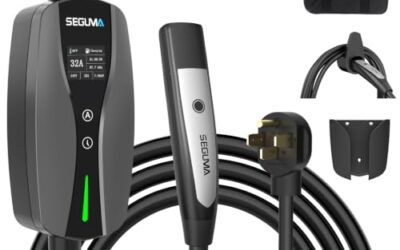
- Dual-voltage operation supports both 120V and 240V outlets
- Long 25-foot cable can reach vehicles in garages, driveways, and outdoor parking areas
- Adjustable current settings help match charging and electrical requirements
- Compatible with most North American J1772 EVs and PHEVs
Cons
- Tesla and other NACS-equipped vehicles require a compatible J1772 adapter
- The maximum 32A and 7.68kW charging specification applies to 240V NEMA 14-50 operation
- Charging controls use onboard buttons, with no Wi-Fi or mobile app specified
Specifications
| Color | black |
|---|---|
| Size | 32A |
| Weight | 10.3 Pounds |
| Product Group | Automotive Parts and Accessories |
| Binding | Tools & Home Improvement |
Best For / Avoid If
Best for buyers prioritizing
- Dual-voltage operation supports both 120V and 240V outlets
- Long 25-foot cable can reach vehicles in garages, driveways, and outdoor parking areas
- Adjustable current settings help match charging and electrical requirements
Consider another option if
- Tesla and other NACS-equipped vehicles require a compatible J1772 adapter
- The maximum 32A and 7.68kW charging specification applies to 240V NEMA 14-50 operation
- Charging controls use onboard buttons, with no Wi-Fi or mobile app specified

Pros
- Supports both Level 1 and Level 2 charging
- Includes connections for compatible 120V and 240V outlets
- Provides adjustable current and delayed-charging controls
- Offers J1772 compatibility for listed BEV and PHEV applications
- Includes ETL certification, FCC listing, and a stated two-year warranty
Cons
- Not compatible with Tesla vehicles or NACS connectors
Specifications
| Color | BLACK |
|---|---|
| Size | BLACK,SAE,J1772 |
| Dimensions | 2.2 x 3.03 x 9.17 inches |
| Weight | 7.7 Pounds |
| Product Group | Automotive Parts and Accessories |
Best For / Avoid If
Best for buyers prioritizing
- Supports both Level 1 and Level 2 charging
- Includes connections for compatible 120V and 240V outlets
- Provides adjustable current and delayed-charging controls
Consider another option if
- Not compatible with Tesla vehicles or NACS connectors

Pros
- Supports SAE-J1772 electric vehicles and plug-in hybrids
- Offers adjustable charging current for different charging requirements
- Includes a long 25-foot cable and delay timer
- Provides multiple listed electrical safety protections
Cons
- Tesla adapter is sold separately
- The product is recommended for use only in a dry environment with a properly grounded outlet
Specifications
| Size | 25FT |
|---|---|
| Product Group | Automotive Parts and Accessories |
Best For / Avoid If
Best for buyers prioritizing
- Supports SAE-J1772 electric vehicles and plug-in hybrids
- Offers adjustable charging current for different charging requirements
- Includes a long 25-foot cable and delay timer
Consider another option if
- Tesla adapter is sold separately
- The product is recommended for use only in a dry environment with a properly grounded outlet
If you are still comparing options, see Portable EV Charger Buying Guide, How to Inspect an EV Charging Cable Safely and How to Troubleshoot Public EV Charging Payment Failures.
FAQ
Do I need a panel upgrade for a home EV charger?
Not always. An electrician must assess service capacity and household loads before deciding whether existing equipment can support the planned circuit. The answer depends on the home and proposed charging setup.
Can I install a home EV charger myself?
Electrical work involves shock and fire risks, and local permit rules vary. Have a qualified electrician assess and install the circuit, and follow local approval requirements.
Should I buy the charger before the electrician visit?
Discuss vehicle fit, connector, charging rate, and installation location first. That conversation can help avoid buying equipment that does not fit your vehicle or electrical plan.
Does a faster charger always reduce charging time?
No. The vehicle’s AC charging limit and the circuit can limit the rate, even if the EVSE supports more output. Ask for the expected rate for your specific vehicle and setup.
Sources and further reading
- Charging Electric Vehicles at Home (Alternative Fuels Data Center): Read about home charging options and related considerations.
- Procurement and Installation for EV Charging Infrastructure (Alternative Fuels Data Center): Review planning and installation considerations for charging infrastructure.
For more coverage, see CarTechTalk’s EV Charging & Automotive Power section.