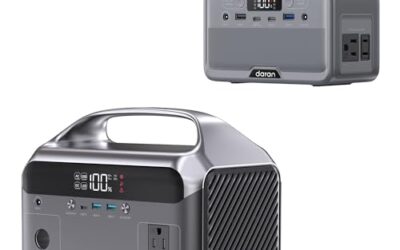
Best portable power station under $300 for most drivers is the BLUETTI Elite 30 V2 because its 600W continuous output gives more room for car fridges, laptops, CPAP machines, and small heating appliances. The Jackery Explorer 300 is lighter and easier to carry, making it the better fit for camping loads centered on phones, cameras, laptops, and other low draw devices.

Pros
- Multiple power outputs support AC, USB-C, USB-A, and 12V car-port devices
- LiFePO4 battery chemistry is rated for more than 4,000 charge cycles
- Portable 7.1-pound design with an integrated handle
- Supports solar charging with compatible Jackery panels
Cons
- Solar panel is not included
- Delivery requires a physical address; orders cannot be delivered to only a PO Box
Specifications
| Color | E300 |
|---|---|
| Size | 9.1"L x 5.2"W x 7.8"H |
| Dimensions | 9.09842518757 x 5.20078739627 x 7.79921259047 Inches |
| Weight | 7.1 Pounds |
| Product Group | Lawn & Patio |
| Binding | Automotive |
Best For / Avoid If
Best for buyers prioritizing
- Multiple power outputs support AC, USB-C, USB-A, and 12V car-port devices
- LiFePO4 battery chemistry is rated for more than 4,000 charge cycles
- Portable 7.1-pound design with an integrated handle
Consider another option if
- Solar panel is not included
- Delivery requires a physical address; orders cannot be delivered to only a PO Box

Pros
- 600W continuous output is specified for lights, speakers, car refrigerators, laptops, CPAP machines, and other devices
- Multiple charging options include AC wall, solar, and car charging
- Compact listed weight of 9.5 pounds
- 10ms UPS switching is listed for backup power applications
Cons
- The 288Wh capacity is smaller than that of higher-capacity portable power stations
Specifications
| Dimensions | 12.4803149479 x 13.385826758 x 9.7244094389 inches |
|---|---|
| Weight | 9.5 pounds |
| Product Group | Lawn & Patio |
Best For / Avoid If
Best for buyers prioritizing
- 600W continuous output is specified for lights, speakers, car refrigerators, laptops, CPAP machines, and other devices
- Multiple charging options include AC wall, solar, and car charging
- Compact listed weight of 9.5 pounds
Consider another option if
- The 288Wh capacity is smaller than that of higher-capacity portable power stations
Best portable power stations under $300 at a glance
| Model | Battery capacity | Continuous output | Weight | Best fit |
|---|---|---|---|---|
| Jackery Explorer 300 | 292Wh | 300W | 7.5 lb | Light camping and mobile electronics |
| BLUETTI Elite 30 V2 | 288Wh | 600W | 9.4 lb | Higher draw devices and home backup |
Both models use lithium iron phosphate battery chemistry according to their product descriptions. Both include car charging, AC charging, and portable battery capacity close to 300Wh. Neither includes a solar panel, so solar recharging requires an additional purchase.
Affiliate disclosure: CarTechTalk may earn a commission from qualifying purchases made through product links. This does not change product selection or editorial conclusions.
Jackery Explorer 300: Best for lighter camping loads
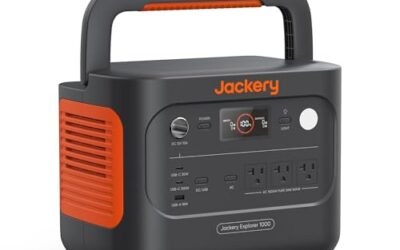
Jackery Explorer 300 weighs 7.5 pounds and stores 292Wh. That weight gives it a clear advantage for camping, tailgating, and road trips where the power station moves between a vehicle and a campsite. Its integrated handle also suits users who carry gear over longer distances.
The unit provides two AC outlets, one 100W USB C Power Delivery port, two USB A ports, and a 120W car port. This layout covers common vehicle and outdoor electronics without requiring a separate USB hub. The USB C port can supply laptops and other compatible devices directly, while the car port can support 12V equipment within its output limit.
Jackery rates the Explorer 300 for 300W continuous output and 600W peak surge output. That makes it a reasonable match for laptops, cameras, drones, lights, and chargers. The 300W continuous limit rules it out for many high draw appliances. A device with a startup surge or running demand above that limit may not operate correctly, even if its plug fits the AC outlet.
The product description lists LiFePO4 chemistry and more than 4,000 charge cycles before the battery reaches 70 percent capacity. That figure is a manufacturer claim, not a promise of identical service life for every owner. Charging habits, storage conditions, temperature, and load affect battery aging.
Solar charging works with Jackery panels. The listing says a 100W solar panel can bring the station to 80 percent in about 2.8 hours, while a 40W panel can reach 80 percent in about 7.5 hours. Solar panels are separate from the power station, so the complete off grid setup costs more than the station alone.
Best for
Choose Jackery Explorer 300 for car camping, photography, drone charging, laptop work, phone charging, and other portable electronics. Its lower weight matters when carrying comfort matters more than appliance capacity.
Skip it if
Skip Jackery Explorer 300 if you need 600W continuous output, want to run a small kettle or toaster, or plan to power several higher draw devices at once. Its 300W rating leaves less headroom than BLUETTI Elite 30 V2.
BLUETTI Elite 30 V2: Best for higher output and emergency backup
BLUETTI Elite 30 V2 supplies 600W continuous output from a 288Wh battery. Its capacity is slightly lower than Jackery Explorer 300, but its output rating is twice as high. That difference matters more than the small capacity gap when a vehicle fridge, laptop setup, CPAP machine, or other equipment draws substantial power.
The listing also describes a 1,500W Power Lifting Mode. BLUETTI says this mode supports selected heating appliances such as a small kettle or toaster. Power Lifting Mode does not turn a 288Wh battery into a larger battery. High wattage drains stored energy faster, and appliance compatibility still depends on the appliance and operating mode.
BLUETTI lists eight charging modes, including AC wall charging, solar charging, and car charging. Its AC input reaches 380W, with a claimed charge time from zero to 80 percent in 45 minutes and a full charge in 70 minutes. The faster wall input helps between trips, though it does not change how long connected devices can run from the stored 288Wh.
The unit includes a 10ms UPS switch. BLUETTI positions this feature for laptops, routers, and CPAP machines during power interruptions. A UPS feature can help keep equipment powered during a brief outage, but users should follow medical equipment instructions for CPAP use and confirm that this type of backup power suits their setup.
BLUETTI also describes standby power of 4.5W, DC power use of 5W, and AC power use of 8W. These figures show why output mode matters during storage or light loads. Turning off unused outputs can reduce avoidable battery drain.
Best for
Choose BLUETTI Elite 30 V2 for emergency backup, car refrigerators, CPAP machines, laptops, speakers, lights, and selected small appliances. Its 600W continuous rating gives drivers more flexibility around camp or during an outage.
Skip it if
Skip BLUETTI Elite 30 V2 if minimum carry weight matters most. At 9.4 pounds, it is 1.9 pounds heavier than Jackery Explorer 300. It also costs more within this group, so light electronics users may gain little from its higher output.
Capacity and output: Which number matters more?
Watt hours describe stored energy. Watts describe how much power connected equipment can draw at one time. A larger watt rating does not automatically mean longer runtime. Runtime depends on device demand, conversion losses, output mode, and battery condition.
These two models make that tradeoff clear. Jackery Explorer 300 stores 292Wh and supplies 300W continuously. BLUETTI Elite 30 V2 stores 288Wh and supplies 600W continuously. Jackery has a slightly larger battery, while BLUETTI can support higher loads.
For a 60W laptop, phone chargers, camera batteries, and small lights, either model offers a suitable starting point based on the listed outputs. For a device near or above 300W, BLUETTI provides more stated headroom. For a heating appliance, check both running demand and startup demand. Power Lifting Mode applies only to compatible loads and can reduce operating time quickly.
Do not treat either station as a full home generator. A battery near 300Wh suits short duration electronics use, modest emergency loads, and mobile equipment. It cannot provide unlimited power for refrigerators, heaters, cooking appliances, or whole home circuits.
Vehicle use: What each station can do
Both units include a car charging cable and a 12V car port. That makes them useful for road trips, camping, and emergency electronics support. They are not replacements for a vehicle battery charger or a jump starter. Their listed functions center on storing and delivering power, not starting an engine.
The car port rating on Jackery Explorer 300 is 120W. This suits compatible 12V accessories within that limit. BLUETTI Elite 30 V2 includes car charging among its charging modes, while its product description emphasizes AC, solar, and higher output operation. Vehicle accessory fit depends on plug type, voltage, and the connected device’s draw.
Drivers needing clean AC power for sensitive electronics may also want to compare a dedicated vehicle inverter. The best pure sine wave inverter for cars serves a different setup because it draws from the vehicle electrical system instead of storing energy in a portable battery.
Power stations also add weight and charging steps. A vehicle inverter may be simpler for short trips when the engine or vehicle battery can support the load. A portable station makes more sense when the engine should remain off or when power must continue away from the vehicle.
Charging and solar ownership costs
Both products include AC and car charging cables. Neither package includes a solar panel. Buyers who expect off grid use should include panel cost, storage space, and setup time in the ownership decision.
Jackery lists solar charging with its own panels and gives separate figures for 100W and 40W panels. BLUETTI lists solar charging and names the PV60L panel as a match. These statements describe manufacturer compatibility and charging claims. Actual solar input varies with panel placement, shade, weather, cable connections, and battery state.
Fast wall charging favors BLUETTI for users who return home between trips. Jackery’s solar figures may appeal to campers who already use Jackery panels or want the lighter station. Neither choice removes the need to plan charging before leaving home.
For shorter road trips, compare these stations with a vehicle inverter and the vehicle’s outlet limits. Our guide to the best power inverter for road trips explains why outlet rating and device demand matter before connecting AC equipment.
Safety and maintenance considerations
Keep the station dry, ventilated, and away from excessive heat. Use the listed charging equipment and follow each manual for storage, charging, and output limits. Do not place a power station where a loose cable can interfere with vehicle controls, pedals, or visibility.
LiFePO4 chemistry supports long cycle life claims, but no battery lasts forever. Store the unit according to its manual, avoid leaving unnecessary outputs active, and inspect cables before use. A damaged cable, swollen battery enclosure, unusual heat, or burning smell requires immediate disconnection and manufacturer support.
CPAP use needs extra care. BLUETTI lists CPAP support and a UPS function, while Jackery’s description also presents the unit as a CPAP battery. Neither statement replaces the CPAP maker’s power requirements or medical guidance. Check the machine’s input needs, humidifier settings, and backup plan before relying on portable power during sleep.
These stations can power devices during an outage, but they do not replace an electrician for home transfer equipment. Never connect a portable station to household wiring through an improvised backfeed cable.
Who should buy something else?
Buy neither model if your main goal is engine starting, whole home backup, electric vehicle charging, or long operation of high draw appliances. Look for a jump starter for engine starting, a larger battery system for extended outages, or equipment built specifically for EV charging.
Buyers who need only phone charging may also find these stations larger and more expensive than necessary. A compact USB battery pack can be easier to carry. Buyers who need a fixed AC setup inside a vehicle may prefer a professionally installed inverter and battery system.
Related reading: Best Portable Power Station for RV Use.
Final verdict
BLUETTI Elite 30 V2 is the stronger pick for most buyers who interpret “portable power station under $300” as a flexible emergency and vehicle power source. Its 600W continuous output, 1,500W Power Lifting Mode, fast wall charging claim, and UPS function give it a wider use range than Jackery Explorer 300.
Jackery Explorer 300 remains the better choice for buyers who carry the station often and run lighter loads. It weighs less, offers a 100W USB C port, and provides a slightly larger 292Wh capacity. Choose it when portability and simple electronics charging matter more than high AC output.
The right purchase depends on the largest device you plan to run, not the brand name alone. Add the wattage of that device, account for startup demand, decide whether solar matters, and choose the lighter Jackery or higher output BLUETTI based on that use.