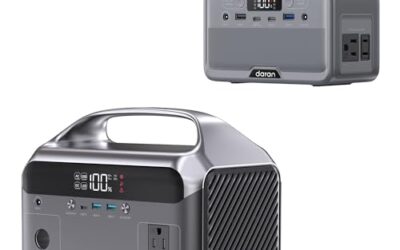
Best portable power station under $500 is Jackery Explorer 1000 v2 Portable Power for most road-trip, camping, and outage users because its 1,070Wh battery, 1,500W AC output, low 23.8-pound weight, and LFP battery cover common mobile-power needs. Anker SOLIX C1000 Gen 2 Portable Power Station is the stronger choice for buyers who need higher AC output, faster wall charging, UPS backup, or solar input.

Pros
- High 1,500W AC output with a 3,000W surge peak
- Multiple AC, USB, and DC charging ports
- LFP battery rated for over 4,000 charge cycles
- App-controlled charging modes and power management
Cons
- Solar panels are not included
- The one-hour charging mode must be enabled in the Jackery App before charging
- Solar charging is compatible only with Jackery solar panels
Specifications
| Color | black |
|---|---|
| Dimensions | 12.87 x 8.82 x 9.72 inches |
| Weight | 23.8 Pounds |
| Product Group | Lawn & Patio |
| Binding | Electronics |
Best For / Avoid If
Best for buyers prioritizing
- High 1,500W AC output with a 3,000W surge peak
- Multiple AC, USB, and DC charging ports
- LFP battery rated for over 4,000 charge cycles
Consider another option if
- Solar panels are not included
- The one-hour charging mode must be enabled in the Jackery App before charging
- Solar charging is compatible only with Jackery solar panels

Pros
- High 2,000W output supports a range of backup, camping, RV, and remote-work equipment
- Fast AC and solar recharge options are specified
- Compact design measures 15.1 x 8.2 x 9.6 inches and weighs 24.9 pounds
- 10 ms UPS backup is specified for supported equipment
Cons
- Solar input is limited to 600W and 60V maximum
- A solar panel is not listed among the included box contents
Specifications
| Color | Gray |
|---|---|
| Dimensions | 15.1 x 8.2 x 9.6 inches |
| Weight | 24.912235606 pounds |
| Product Group | Lawn & Patio |
Best For / Avoid If
Best for buyers prioritizing
- High 2,000W output supports a range of backup, camping, RV, and remote-work equipment
- Fast AC and solar recharge options are specified
- Compact design measures 15.1 x 8.2 x 9.6 inches and weighs 24.9 pounds
Consider another option if
- Solar input is limited to 600W and 60V maximum
- A solar panel is not listed among the included box contents
Best Portable Power Stations Under $500
Both options sit at the top of this budget range. Each uses a roughly 1kWh battery and can power more than phones, lights, and small electronics. The right choice depends less on headline capacity and more on output demand, recharge habits, solar plans, portability, and backup needs.
Prices can change. Product blocks show current commercial details, while this article focuses on listed specifications and practical ownership tradeoffs. CarTechTalk may earn a commission from qualifying purchases through commercial links. That does not change product selection.
| Product | Battery capacity | AC output | Peak output | Battery claim | Solar input |
|---|---|---|---|---|---|
| Jackery Explorer 1000 v2 Portable Power | 1,070Wh | 1,500W | 3,000W | Over 70% capacity after 4,000 cycles | Jackery panels only |
| Anker SOLIX C1000 Gen 2 Portable Power Station | 1,024Wh | 2,000W | 3,000W | At least 80% capacity after 4,000 cycles | 600W, 60V maximum |
Jackery Explorer 1000 v2 Portable Power: Best for Portable Road Power
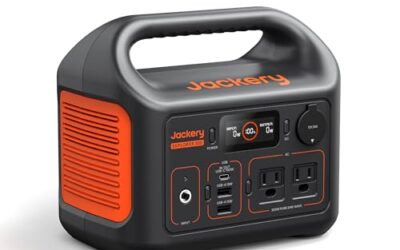
Jackery Explorer 1000 v2 Portable Power fits drivers who carry equipment between a vehicle, campsite, garage, and home. Its 23.8-pound body and foldable handle reduce the burden of moving a battery station around camp or storing it in a vehicle.
The 1,070Wh capacity gives this model slightly more stored energy than Anker’s 1,024Wh option. Capacity does not equal guaranteed runtime. Actual runtime changes with inverter losses, device load, battery condition, and operating conditions. Still, this capacity class suits phones, laptops, lights, small appliances, and selected higher-draw devices.
Its 1,500W AC output supports equipment such as electric pots, refrigerators, and some air conditioners, according to Jackery’s listing. Startup surges and continuous draw matter. A device with a motor or compressor may exceed the station’s usable limit during startup, even when its running wattage looks acceptable. Check equipment ratings before connecting high-draw loads.
Three pure sine wave AC ports support devices that benefit from clean AC power. Two USB-C ports, one USB-A port, and one DC car port cover common vehicle and camping electronics. The 100W USB-C output can charge compatible laptops and other devices without carrying every separate wall adapter.
Jackery lists a lithium iron phosphate battery with more than 70% original capacity after 4,000 cycles. That claim describes battery capacity retention under the manufacturer’s stated conditions. It does not promise identical runtime after years of use.
Normal full charging defaults to 1.7 hours to favor battery health. Emergency charging can reach full charge in one hour, but the Jackery App must activate that mode before each charge. The app also offers a 30 dB quiet overnight mode and an energy-efficiency mode.
One drawback matters for solar users: the Explorer 1000 v2 works only with Jackery solar panels for solar charging. That limits panel choice and may increase ownership cost if existing panels use another connector or brand system. The solar panel is also not included.
Best for: Road trips, camping, emergency electronics, and buyers who value lighter carry weight with slightly higher battery capacity.
Skip it if: You already own non-Jackery solar panels or need more than 1,500W of continuous AC output.
Anker SOLIX C1000 Gen 2: Best for Higher Output and Backup Features
Anker SOLIX C1000 Gen 2 Portable Power Station suits buyers who need more AC headroom from a similarly sized battery. Its 2,000W output exceeds Jackery’s 1,500W rating, while the 3,000W peak rating matches Jackery’s listed peak.
That extra continuous output can matter for demanding tools, kitchen appliances, and selected heating or motor loads. It does not make every appliance compatible. Confirm both running wattage and startup demand, then leave operating margin rather than running at the limit.
The 1,024Wh battery sits close to Jackery’s capacity. Buyers should therefore choose Anker for output, recharge, UPS, or solar features rather than expecting a major runtime difference. A 2,000W load would also drain a battery in this class quickly, especially after conversion losses.
Anker lists HyperFlash charging at 1,600W, with full recharge in 49 minutes when enabled in the Anker app. Fast charging can help after a short outage or between travel stops. The feature requires app activation, so buyers should configure the station before an emergency rather than assume the fastest mode runs automatically.
Solar charging accepts up to 600W and 60V, with a listed 1.8-hour full recharge time. This gives Anker a clearer path for buyers building a solar camping or RV setup. Panel voltage and current still need to remain within the station’s limits. Incorrect solar input can damage equipment.
The station supports up to 10 devices. Its 10 ms UPS function can keep laptops and other compatible equipment running through a short power interruption. UPS behavior depends on connected equipment and setup. It should not be treated as a substitute for a dedicated medical backup system.
Anker’s app includes time-of-use control for managing power use. That function may help remote work or off-grid monitoring, though app-dependent features add setup and phone-control requirements. Keep manual operation in mind if the station must work without a phone.
Anker states that the battery retains at least 80% capacity after 4,000 cycles. That is a stronger retention claim than Jackery’s listed 70% figure, but capacity retention remains a manufacturer claim rather than a guarantee of real-world service life.
The main drawback is portability relative to Jackery. Anker lists the C1000 Gen 2 as 11% lighter than similar models, but the provided specifications do not give its exact weight. Buyers who frequently lift a station into a vehicle should consider Jackery’s stated 23.8-pound weight more useful for planning.
Best for: Buyers who need 2,000W AC output, rapid wall recharge, solar input up to 600W, or UPS support for home-office equipment.
Skip it if: You want a known lightweight carry weight, already own Jackery panels, or do not need its higher output and backup features.
Capacity, Output, and Vehicle Use
Portable power stations do not replace every automotive power tool. They can run selected AC equipment and charge electronics, but they do not automatically provide the correct connection for every vehicle accessory.
AC output works through the station’s inverter. A vehicle accessory built for a 12V socket may need its own compatible connection. The listed Jackery DC car port helps with 12V-style equipment, while the Anker details emphasize AC and USB connectivity. Check connector type, voltage, polarity, and current requirements before using an accessory.
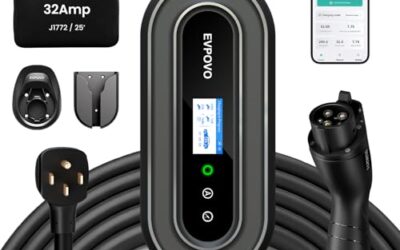
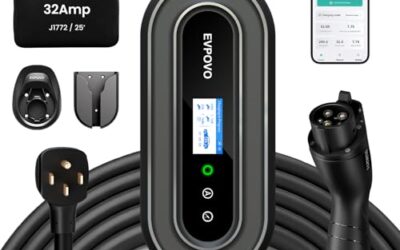
Neither model should be treated as a direct EV traction battery charger. EV charging can draw far more power than a 1kWh-class portable station stores. A station may power a charger only if the charger and vehicle setup fall within the station’s output limits, but usable driving range would be limited. Use a dedicated portable EV charger for EV charging needs. CarTechTalk’s guide to the best portable EV chargers with adjustable amperage covers that separate use case.
For ordinary vehicle electronics, the key question is load duration. Add device wattages, estimate required hours, and keep a margin for inverter losses. A 100W laptop load and a 1,000W heater place very different demands on a battery of this size.
Recharge Choices and Long-Term Ownership
Jackery favors controlled portability. Its lighter stated weight, foldable handle, quiet charging mode, and app controls suit users who move the station often. The Jackery-only solar rule creates a narrower accessory ecosystem.
Anker favors input flexibility and higher output. Its 600W solar limit supports a more substantial solar setup, while its 1,600W fast-charge mode reduces wall-charge downtime. More features also mean more settings to learn and manage through the app.
LFP chemistry is a positive ownership factor in both listings. Charge-cycle claims are useful for comparison, but they do not cover every source of battery aging. Heat, storage charge level, deep discharge, load size, and charging habits affect battery condition. Follow each manufacturer’s manual for storage, ventilation, charging, and operating limits.
Do not store either station where water, excessive heat, crushing force, or loose metal objects can reach it. Keep cables organized, inspect connectors, and stop use if the battery case, cable, or plug shows damage. Portable does not mean weatherproof or safe for uncontrolled outdoor exposure.
Which Portable Power Station Should You Buy?
Choose Jackery Explorer 1000 v2 Portable Power when vehicle weight, slightly higher capacity, and simple camping portability matter most. Its 1,500W AC output covers many ordinary appliances, but higher-demand equipment can exceed its continuous limit. The Jackery solar-panel restriction is the main planning issue.
Choose Anker SOLIX C1000 Gen 2 Portable Power Station when output headroom, rapid recharge, solar expansion, or UPS support matters more than a stated carry weight. Its 2,000W output gives more room for demanding devices, while 600W solar input better suits a planned off-grid setup. App activation remains necessary for its fastest charging mode.
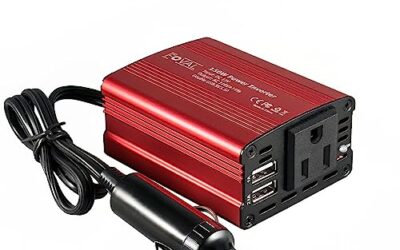
Neither option fits every buyer. Someone seeking long-duration home backup for central air conditioning, electric heating, whole-house appliances, or frequent high-wattage tools should look at a larger power station, a modular battery system, or a professionally installed backup system. Someone needing only phone charging in a car can spend less on a compact battery pack or vehicle inverter.
For most mobile users under this ceiling, Jackery is the easier recommendation because its known low weight and slightly larger battery match common travel needs. Anker becomes the better purchase when its higher output and faster, broader recharge options solve a specific demand.
Related Automotive Power Guides
- Best power inverter for road trips, for vehicle-socket limits and mobile AC power.
- Best pure sine wave inverter for cars, for clean AC power from a vehicle system.
- EV Charging and Automotive Power, for related charging and power equipment.