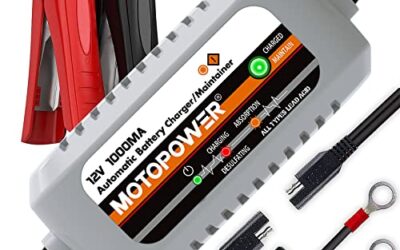
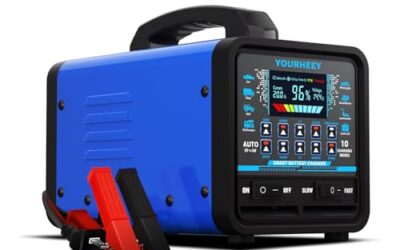
How to charge a car battery without a charger depends on what you mean by “charge”: a jump-start can supply enough power to start the engine, but it does not fully recharge the battery. If you have no charger, use a compatible jump-start method, then arrange a proper recharge or battery test; if you cannot jump-start safely, call roadside assistance.
- A jump-start is for getting the engine running, not for restoring a deeply discharged battery to full charge.
- Driving may add some charge, but the result depends on the battery, vehicle, and driving conditions.
- Never use a household power supply, improvised wiring, or an unregulated solar panel as a battery charger.
- Follow the vehicle and jump-starter instructions, especially for hybrids, vehicles with remote battery terminals, and models with battery-monitoring systems.
How to charge a car battery without a charger: what actually works?
Without a battery charger, there is no reliable way to fully recharge a car battery at home using improvised equipment. A jump from another vehicle or a compatible jump starter may provide enough current to start the engine. Once running, the vehicle’s charging system may replenish some battery charge, but that does not prove the battery is healthy or fully charged.
Your practical choices are to jump-start the vehicle, ask roadside assistance for a jump or battery service, or have the battery removed and charged by a service provider. A portable jump starter is not the same as a charger. It supplies starting power, and its own instructions determine what vehicles and battery types it can support.
If you have access to a charger after the vehicle starts, follow its instructions for the battery type and vehicle connection points. Our guide to recharging a car battery with a charger covers that process.
Choose the safest option for your situation
| Situation | Practical option | What to know |
|---|---|---|
| The battery is low, and the vehicle manual allows a jump-start | Use a compatible jump starter or another vehicle | This may start the engine, but it does not confirm the battery is recharged or serviceable. |
| You are unsure where to connect cables, or the battery is hard to reach | Call roadside assistance or a qualified service provider | Some vehicles use designated jump points rather than direct connections at the battery. |
| The battery is cracked, leaking, swollen, frozen, or unusually hot | Do not jump or charge it; get professional help | A damaged battery can present electrical and chemical hazards. |
| The engine starts, but the battery repeatedly goes flat | Arrange a battery and charging-system diagnosis | A weak battery, charging fault, or electrical drain can cause similar symptoms. |
| The vehicle is a hybrid or electric model | Use the vehicle-specific instructions or call qualified assistance | Its 12-volt system and high-voltage equipment require model-specific precautions. |
How to jump-start a car when you do not have a charger
Use this process only if the owner’s manual permits jump-starting and you have suitable cables or a jump starter. The instructions for your vehicle and equipment take priority. Battery location, terminal markings, and connection order vary by model year and design.
- Check for signs of damage. Do not proceed if the battery case is cracked, leaking, swollen, frozen, or hot. Stop if you see damaged cables or are unsure whether the battery is safe to handle.
- Read both sets of instructions. Check the vehicle manual and the jump-starter or cable directions. Confirm that the equipment is intended for the vehicle’s battery voltage and battery type. Many passenger vehicles use a 12-volt system, but do not assume that applies to every vehicle or connection point.
- Switch off the vehicles and accessories. Park as the manuals direct, set the parking brake, and keep the vehicles from touching if using another vehicle. Keep hands, clothing, and cables clear of moving parts.
- Find the approved connection points. Use the marked positive and negative terminals or remote jump points specified by the vehicle maker. Do not guess based on cable color alone. Some vehicles have a designated ground point away from the battery.
- Connect the cables in the order specified by the manuals. Make sure clamps are secure and cannot touch one another or moving parts. If a connection sparks heavily, a cable becomes hot, or you smell something unusual, stop and move away.
- Start the donor vehicle or activate the jump starter as directed. Do not keep cranking repeatedly. If the vehicle does not start after the equipment’s stated procedure, stop rather than continuing to apply power.
- Disconnect in the instructed order. Keep the clamps from contacting each other. Stow the equipment safely, then follow the vehicle manual for what to do after the engine starts.
If the car starts, avoid treating that as proof the problem is fixed. A battery that was deeply discharged may need a proper recharge and test. If the engine stalls, the warning lights remain on, or the vehicle will not restart, arrange assistance instead of relying on repeated jumps.
Will driving recharge a dead car battery?
Driving can allow a vehicle’s charging system to replenish some battery charge, but it is not a dependable replacement for a charger. How much charge returns depends on the battery’s condition, how depleted it is, the charging system, electrical loads, and the length and type of drive. A short trip may not restore enough power for another start.
Do not keep driving if the battery warning light stays on, the engine runs poorly, or the vehicle shows other signs of a charging-system fault. The problem could involve the alternator or another part of the electrical system. A jump-start only gets the engine running; it does not diagnose why the battery went flat.
Can you use a solar panel or another power source?
A solar battery maintainer or charger may work when its output and controller suit the vehicle battery and the maker’s instructions. A bare solar panel is not a safe substitute for a charger: sunlight changes, and an appropriate controller is needed to manage charging. Panel connection points and battery access also vary by vehicle.
Do not connect a car battery directly to a household power supply, USB adapter, or improvised wiring. These sources are not necessarily designed to regulate the voltage and current a vehicle battery needs. Incorrect connections can damage electronics, overheat wiring, or create a fire or battery hazard. For solar options, see our guide to solar battery chargers, and check that a unit is intended for the vehicle battery application.
Why did the battery go flat?
A discharged battery can result from lights or accessories left on, repeated short trips, cold weather, an aging battery, a charging-system problem, or an electrical drain while parked. These are possibilities, not a diagnosis. If the battery is repeatedly low, a jump-start may only mask the underlying cause.
Notice what happened before the no-start. Did the lights stay on? Did the engine turn slowly, or was there no response? Does the battery lose charge again after a drive? Share these details with a technician, who can assess the battery and charging system. If you need to remove a battery for service, first review the vehicle-specific precautions in our guide to removing a car battery safely.
Common mistakes
- Calling a jump-start a full recharge. A jump can start the engine, but the battery may still need proper charging and testing.
- Assuming any vehicle can donate power. Voltage, battery chemistry, connection points, and procedures vary. Follow the vehicle manuals rather than relying on a generic cable diagram.
- Guessing at the terminals. Reversing polarity or using an unapproved ground point can cause injury or vehicle damage.
- Trying an improvised power source. A household adapter or bare panel does not automatically provide controlled battery charging.
- Repeatedly cranking the engine. Stop if the instructed jump procedure fails. Continued attempts can strain the battery and equipment without fixing the cause.
- Ignoring a repeat failure. A battery that goes flat again may be worn out, undercharged, or affected by a vehicle fault.
- Applying standard instructions to a hybrid or EV. These vehicles can have separate high-voltage and 12-volt systems. Use only the model-specific procedures.
When to get professional help
Call for help if the battery is damaged, frozen, leaking, or hot; you cannot identify the approved jump points; or the vehicle manual does not allow the procedure you planned. Professional assistance is also the safer choice for a hybrid or EV when you are unsure about its 12-volt system.
Arrange a battery and charging-system check if a jump does not work, the vehicle repeatedly needs a jump, the battery warning light remains on, or the engine stops after starting. A weak battery and a charging fault can produce similar symptoms, so replacing a part based only on a no-start is guesswork. For battery-specific background, the Battery Council International offers general information about automotive batteries.
Frequently asked questions
Can I charge a car battery by leaving the engine running?
The vehicle’s charging system may add charge while the engine runs, but idling is not a reliable way to restore a deeply discharged battery. Follow the vehicle maker’s guidance, and have the battery checked if it does not hold charge.
Can I push-start a car with a dead battery?
Push-starting applies only to some vehicles with manual transmissions, and the vehicle maker must permit it. It is not appropriate for many automatic vehicles and may be unsuitable for other designs. Do not attempt it unless your manual gives instructions for your exact model.
Can a jump starter charge my battery overnight?
A jump starter is generally intended to provide starting power, not to act as a battery charger. Use only a device with a charging function that its maker identifies for your battery and vehicle.
How long should I drive after a jump-start?
There is no single drive time that guarantees a full recharge across vehicles and battery conditions. If you need dependable recovery, use a suitable charger or have a service provider charge and test the battery.
Sources and further reading
- Battery Council International (Battery Council International): Find general information about automotive batteries and battery care.