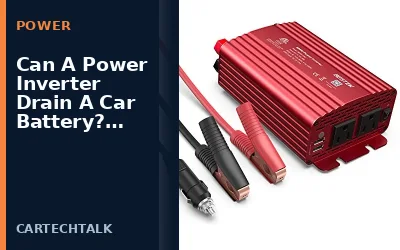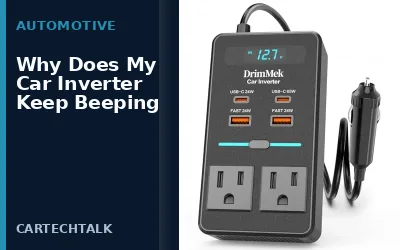

How Does A Power Inverter Work In A Car
A power inverter is a crucial device that transforms the direct current (DC) power from your car’s battery into alternating current (AC) suitable for running standard electrical appliances. This technology is particularly useful for drivers who need to power laptops, medical devices, or other electronics while on the road or during outdoor adventures. By understanding how a power inverter works in a car, you can make informed decisions about its use and ensure compatibility with your vehicle’s electrical system.
Key takeaways
- Power inverters convert 12V DC to 120V AC for use with household devices in vehicles.
- They come in modified sine wave and pure sine wave varieties with different performance characteristics.
- Proper selection based on power needs and waveform type is essential for safety and device compatibility.
- Safety features like fuses and ventilation help prevent overheating and electrical hazards.
What Is A Power Inverter?
A power inverter is an electronic circuit that changes the polarity of the electrical current from direct current to alternating current. In the context of a car, it takes the 12-volt DC from the battery and produces 110-120 volts AC at 60 hertz, mimicking the standard household power supply in the United States.
This conversion is necessary because most consumer electronics are designed for AC power, while car batteries provide DC. Without an inverter, you couldn’t directly plug in your phone charger or laptop into the car’s electrical system.
How Does A Power Inverter Work?
The basic principle of operation in a power inverter involves switching the DC current on and off at a high frequency to create an alternating waveform. This is typically done using transistors or MOSFETs that act as electronic switches.
There are two main methods: the modified sine wave and the pure sine wave. In modified sine wave inverters, the current is switched abruptly, producing a waveform that is not a perfect sine wave but is sufficient for many devices. Pure sine wave inverters use more sophisticated circuitry, often with inductors and capacitors, to produce a smooth sine wave that closely matches utility power.
The frequency is usually set to 60 Hz in North America to match standard appliances. The efficiency of the inverter is important because some energy is lost as heat, so it is recommended to choose models with high efficiency ratings, often above 85 percent.
Types of Power Inverters
Power inverters are classified primarily by their output waveform and the technology used.
Modified Sine Wave Inverters
These are the most common and affordable type. They produce a waveform that is stepped rather than smooth. They are suitable for general-purpose use like charging phones or running lights but may not work well with sensitive electronics such as certain medical devices or audio equipment due to potential interference or damage.
Pure Sine Wave Inverters
These produce a true sine wave output, making them ideal for sensitive electronics. They are more expensive but provide cleaner power and are often required by manufacturers for warranty compliance.
Other Types
Some inverters are designed for specific applications, such as those with built-in USB ports for charging mobile devices or those that can be hardwired into the vehicle’s electrical system for permanent installation.
| Type | Advantages | Disadvantages | Best Applications |
|---|---|---|---|
| Modified Sine Wave | Lower cost, sufficient for basic loads | May damage sensitive equipment, higher harmonic distortion | General electronics, lighting |
| Pure Sine Wave | Compatible with all electronics, clean power | Higher cost, more complex circuitry | Medical devices, computers, audio systems |
Applications of Power Inverters in Cars
Power inverters are widely used in automotive contexts for various reasons. During road trips, they allow passengers to charge laptops or run small fans. In emergency situations, they can power essential medical equipment or lighting. For off-road enthusiasts or campers, they provide a way to use standard appliances in remote locations where grid power is unavailable.
In electric vehicles (EVs) and hybrids, auxiliary inverters might be used for accessories, but the primary inverter is for the propulsion system. However, for aftermarket use, 12V inverters are common in all vehicle types.
Choosing the Right Power Inverter for Your Car
When selecting an inverter, consider several factors. First, the input voltage must match your car’s system, which is typically 12 volts but can be 24 or 48 volts in some heavy-duty vehicles. The output voltage should be 110-120 volts for standard US appliances.
Power rating is critical: look for continuous power rating that exceeds your device’s needs and a surge rating for startup currents. For example, a laptop might need 100 watts continuous, but the inverter should handle 150 watts to account for inefficiencies.
Waveform type depends on your devices. If you have sensitive electronics, opt for pure sine wave. Also, consider features like multiple outlets, USB ports, or remote control switches.
Compatibility limits: Ensure the inverter’s output connectors match your needs, such as standard NEMA plugs for US use. In some regions, voltage and frequency differ, so check local standards. Vehicle model year and electrical system voltage can affect suitability, as older vehicles may have slightly different battery characteristics.
Safety Considerations When Using Power Inverters in Cars
Safety is paramount when using power inverters. Always use an inverter rated for your vehicle’s battery capacity to prevent excessive drain. If the inverter is left on for long periods with the engine off, it can deplete the battery, potentially stranding you.
Install fuses or circuit breakers to protect against short circuits. Ensure good ventilation to dissipate heat, as inverters can get warm during operation. Never place the inverter near flammable materials.
Warning: Do not use inverters to power devices that require more power than the inverter can supply, as this can lead to overheating or failure. In vehicles with airbags or sensitive electronics, be cautious with high-power setups. Always verify that the inverter’s output voltage matches your local standards, as some regions use 220-240 volts.
Common Mistakes to Avoid
One common mistake is using a modified sine wave inverter with sensitive electronics, which can cause malfunctions or damage. Another is underestimating the power requirements, leading to overloads. People also forget to account for the surge capacity needed when starting devices like motors or compressors.
Improper sizing can result in inefficient operation and wasted energy. Additionally, ignoring the need for proper grounding or using cheap no-name brands can lead to unreliable performance or safety issues. It is important to consider the inverter’s efficiency, as lower efficiency means more heat generation and potential battery drain.
When to Seek Professional Help
If your inverter is making unusual noises, smelling like burning, or overheating, stop using it immediately and have it inspected. For complex installations, such as hardwiring into the vehicle’s wiring harness, consult a professional automotive electrician to ensure safety and proper integration.
Professional help is also recommended if you are unsure about compatibility with your specific vehicle model or if modifying the electrical system. This is especially important in electric vehicles where the high-voltage system requires specialized knowledge.
FAQ
How does a power inverter work in a car?
A power inverter works by converting the DC power from the car’s battery into AC power using electronic switches that rapidly alternate the current flow. This produces the alternating waveform needed to run AC-powered devices.
What are the different types of power inverters?
The main types are modified sine wave and pure sine wave inverters. Modified sine wave are cheaper but less compatible with sensitive devices, while pure sine wave provide better quality power.
Can I use a power inverter while the car is off?
Yes, but it will drain the battery. It is best to run the engine or use a battery maintainer to avoid draining the battery completely.
What size power inverter do I need?
Determine the total wattage of your devices and add 20-30 percent for surge and efficiency. Choose an inverter with at least that continuous rating.
Is a pure sine wave inverter necessary?
It depends on your devices. For most electronics like chargers and lights, a modified sine wave is fine, but for medical equipment or high-end audio, pure sine wave is recommended.