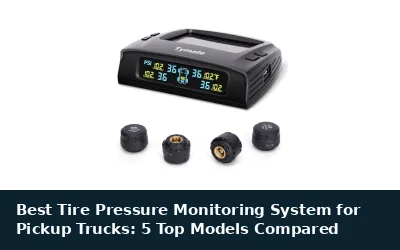
When a tire pressure monitoring system (TPMS) warning light illuminates after a seasonal tire swap, tire rotation, or sensor replacement, resolving it requires communicating with the wheel-mounted sensors. Modern vehicles rely on either direct TPMS sensors transmitting at 315 MHz or 433 MHz, or indirect systems tied to wheel-speed sensors. For vehicles with direct sensors, selecting among the best TPMS tools comes down to understanding the distinction between a dedicated activation trigger and a full-featured diagnostic and programming scanner.
Basic relearn tools simply wake up pre-programmed sensors during a manual relearn sequence so the vehicle’s onboard computer can record their new wheel positions. In contrast, advanced TPMS diagnostic tools connect directly to the vehicle’s onboard diagnostics port (OBD-II), retrieve fault codes, register sensor IDs directly to the electronic control unit (ECU), and write configuration protocols onto blank programmable aftermarket sensors. Below, we evaluate ten distinct tools across both categories to help you choose the right hardware for your garage or workshop.
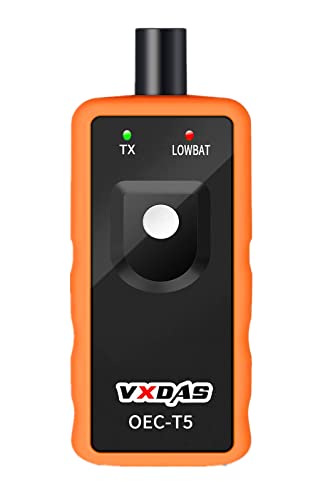
Pros
- Broad stated compatibility across many GM vehicle brands
- Supports both 315 MHz and 433 MHz systems
- Designed for tire sensor replacement, tire changes, and TPMS warning removal
- Small and lightweight form factor
Cons
- Not suitable for heavy trucks with more than four tires
- Not suitable for vehicles with an external TPMS system
- Requires original OEM sensors that are properly programmed and in good condition
Specifications
| Color | EL50448-GM |
|---|---|
| Size | EL50448-GM |
| Dimensions | 1.57086614013 x 6.3779527494 x 2.6771653516 inches |
| Weight | 0.13 Pounds |
| Product Group | Automotive Parts and Accessories |
| Binding | Misc. |
Best For / Avoid If
Best for buyers prioritizing
- Broad stated compatibility across many GM vehicle brands
- Supports both 315 MHz and 433 MHz systems
- Designed for tire sensor replacement, tire changes, and TPMS warning removal
Consider another option if
- Not suitable for heavy trucks with more than four tires
- Not suitable for vehicles with an external TPMS system
- Requires original OEM sensors that are properly programmed and in good condition

Pros
- Supports two common TPMS sensor frequencies
- Offers both sensor programming and diagnostic functions
- Can handle up to eight sensors simultaneously
- Provides multiple sensor data points, including pressure, temperature, and battery status
Cons
- The listing does not list included accessories or warranty information
Specifications
| Dimensions | 3.62 x 7.36 x 11.81 Inches |
|---|---|
| Product Group | Automotive Parts and Accessories |
| Binding | Automotive |
Best For / Avoid If
Best for buyers prioritizing
- Supports two common TPMS sensor frequencies
- Offers both sensor programming and diagnostic functions
- Can handle up to eight sensors simultaneously
Consider another option if
- The listing does not list included accessories or warranty information

Pros
- Supports multiple GM brands, including Chevrolet, GMC, Cadillac, and Buick
- Compact 6.02 x 2.20 x 1.34-inch design weighing 0.2875 pounds
- Simple one-button operating design
- Supports OE/OEM sensors and some aftermarket sensors when their frequency and parameters match
Cons
- Requires a 9V battery, which is not included
- Not compatible with Ford, Toyota, Nissan, Honda, or other non-GM brands
- Not designed for universal TPMS sensors, and some aftermarket sensors may not activate
Specifications
| Size | Without Battery |
|---|---|
| Dimensions | 6.0236220411 x 2.2047244072 x 1.3385826758 Inches |
| Weight | 0.2875 Pounds |
| Product Group | Automotive Parts and Accessories |
| Binding | Automotive |
Best For / Avoid If
Best for buyers prioritizing
- Supports multiple GM brands, including Chevrolet, GMC, Cadillac, and Buick
- Compact 6.02 x 2.20 x 1.34-inch design weighing 0.2875 pounds
- Simple one-button operating design
Consider another option if
- Requires a 9V battery, which is not included
- Not compatible with Ford, Toyota, Nissan, Honda, or other non-GM brands
- Not designed for universal TPMS sensors, and some aftermarket sensors may not activate
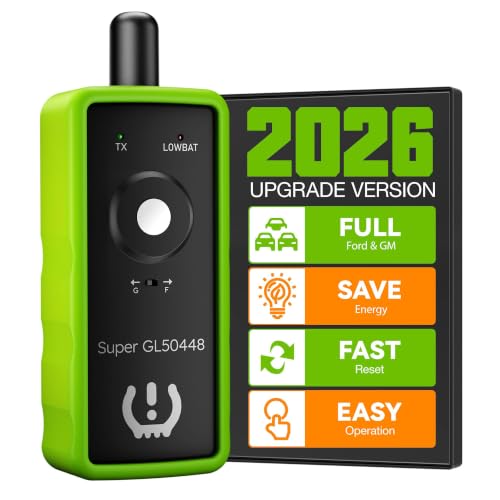
Pros
- Supports both GM and Ford TPMS relearn modes
- Covers 315MHz and 433MHz original TPMS systems
- Useful for several common TPMS maintenance situations
Cons
- 9V battery is required but not included
- Not suitable for heavy trucks with more than four tires
- Not compatible with vehicles using an external TPMS system
Specifications
| Color | Green |
|---|---|
| Size | Plastic Cover |
| Product Group | Automotive Parts and Accessories |
| Binding | Electronics |
Best For / Avoid If
Best for buyers prioritizing
- Supports both GM and Ford TPMS relearn modes
- Covers 315MHz and 433MHz original TPMS systems
- Useful for several common TPMS maintenance situations
Consider another option if
- 9V battery is required but not included
- Not suitable for heavy trucks with more than four tires
- Not compatible with vehicles using an external TPMS system
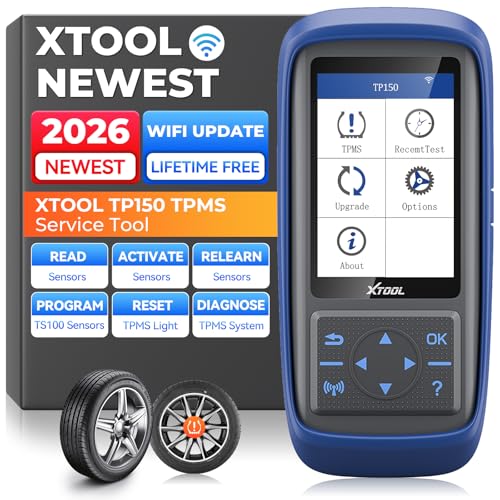
Pros
- Combines TPMS activation, diagnostics, relearn, reset, and sensor programming functions
- Supports dual-frequency 315/433 MHz TPMS systems
- Provides multiple relearn and programming methods
- Includes lifetime free software updates
Cons
- Sensor programming is limited to XTOOL TS100 or pre-programmed sensors
- XTOOL TS100 sensors are not included
- Vehicle compatibility should be checked before purchase
Specifications
| Weight | 1.74 Pounds |
|---|---|
| Product Group | Automotive Parts and Accessories |
| Binding | Unknown Binding |
Best For / Avoid If
Best for buyers prioritizing
- Combines TPMS activation, diagnostics, relearn, reset, and sensor programming functions
- Supports dual-frequency 315/433 MHz TPMS systems
- Provides multiple relearn and programming methods
Consider another option if
- Sensor programming is limited to XTOOL TS100 or pre-programmed sensors
- XTOOL TS100 sensors are not included
- Vehicle compatibility should be checked before purchase

Pros
- Combines TPMS activation, diagnostics, relearn, and Autel MX-Sensor programming
- Includes lifetime free software updates through WiFi or USB, according to the listing
- Offers data review and data printing functions
- Supports multiple languages
Cons
- Can program only Autel MX-Sensors, not other sensor brands
- Vehicle compatibility and available functions vary by make, model, and year
- Device registration is required before use
Specifications
| Dimensions | 8.28 x 0.02 x 1.38 Inches |
|---|---|
| Weight | 9.5 Kilograms |
| Product Group | Automotive Parts and Accessories |
| Binding | Automotive |
Best For / Avoid If
Best for buyers prioritizing
- Combines TPMS activation, diagnostics, relearn, and Autel MX-Sensor programming
- Includes lifetime free software updates through WiFi or USB, according to the listing
- Offers data review and data printing functions
Consider another option if
- Can program only Autel MX-Sensors, not other sensor brands
- Vehicle compatibility and available functions vary by make, model, and year
- Device registration is required before use

Pros
- Combines two tire-maintenance functions in one tool
- Provides multiple selectable pressure units
- Includes a 12-month warranty according to the listing
- Can bleed off extra air when a tire is overinflated
Cons
- The required replaceable 9V battery is not included
- TPMS relearn compatibility is specified for GM vehicles equipped with 315/433 MHz systems
Specifications
| Color | Black |
|---|---|
| Dimensions | 2.755905509 x 6.692913379 x 1.181102361 inches |
| Product Group | Automotive Parts and Accessories |
| Binding | Misc. |
Best For / Avoid If
Best for buyers prioritizing
- Combines two tire-maintenance functions in one tool
- Provides multiple selectable pressure units
- Includes a 12-month warranty according to the listing
Consider another option if
- The required replaceable 9V battery is not included
- TPMS relearn compatibility is specified for GM vehicles equipped with 315/433 MHz systems
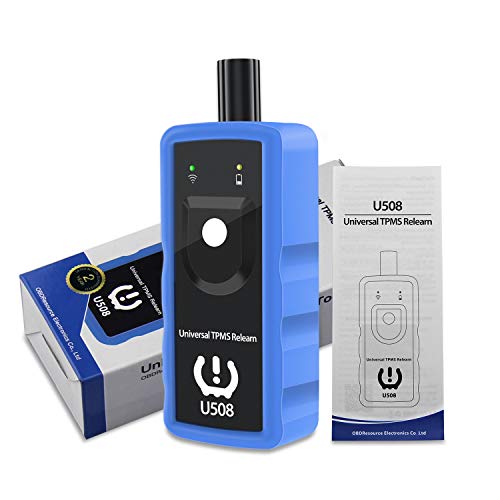
Pros
- Supports both 315 MHz and 433 MHz TPMS systems
- One-button sensor activation process
- Can be used with compatible cars, SUVs and pickups
- Instructions specify a tire-by-tire relearn sequence
Cons
- Vehicle compatibility depends on the exact model year, sensor frequency and stationary relearn support
- Does not program blank or incorrectly programmed sensors
- 9V battery is required but not included
Specifications
| Dimensions | 0.00062992 x 1.574803148 x 2.755905509 Inches |
|---|---|
| Weight | 0.3968320716 pounds |
| Product Group | Automotive Parts and Accessories |
| Binding | Misc. |
Best For / Avoid If
Best for buyers prioritizing
- Supports both 315 MHz and 433 MHz TPMS systems
- One-button sensor activation process
- Can be used with compatible cars, SUVs and pickups
Consider another option if
- Vehicle compatibility depends on the exact model year, sensor frequency and stationary relearn support
- Does not program blank or incorrectly programmed sensors
- 9V battery is required but not included

Pros
- Provides a dedicated TPMS sensor activation function for compatible Ford-family vehicles
- Compact and lightweight design
- One-button activation is specified
- Includes a stated four-wheel relearn sequence: left front, right front, right rear, then left rear
Cons
- Activates sensors but does not program them
- Vehicle and sensor compatibility should be confirmed before purchase
- Not compatible with heavy-duty trucks that have more than four tires
Specifications
| Dimensions | 2.4 x 1.6 x 0.4 Inches |
|---|---|
| Weight | 0.04 Pounds |
| Product Group | Automotive Parts and Accessories |
| Binding | Automotive |
Best For / Avoid If
Best for buyers prioritizing
- Provides a dedicated TPMS sensor activation function for compatible Ford-family vehicles
- Compact and lightweight design
- One-button activation is specified
Consider another option if
- Activates sensors but does not program them
- Vehicle and sensor compatibility should be confirmed before purchase
- Not compatible with heavy-duty trucks that have more than four tires
Before you buy, it is worth reading OBD2 Scanner Buying Guide for Beginners, Best Rated OBD2 Scanner and Best OBD2 Car Scanners.
Quick Verdict
For dedicated DIYers who exclusively need to reset original equipment manufacturer (OEM) sensors after rotating tires on a General Motors or Ford vehicle, compact activation triggers like the VXDAS 2IN1 TPMS Relearn Tool Super GL50448 for GM or single-brand options like the VXDAS TPMS Relearn Tool Only for GM Vehicles and Arozk TPMS19 TPMS Reset Tool Sensor Relearn Reset provide reliable, single-button triggering at a minimal expense. However, these tools cannot write sensor IDs to an ECU or configure blank sensors.
For multi-vehicle households, fleet operators, or technicians needing comprehensive capabilities, the Autel TS508WF TPMS Programming Tool delivers full OBD-II relearns, live diagnostic reading, and wireless updates, alongside proprietary sensor programming. The XTOOL TP150 TPMS Programming Tool provides a durable, button-driven alternative with OBD relearn functionality at a lower price point, while the GEARWRENCH Universal Tire Pressure Monitoring system targets technicians programming batch sets of dedicated branded sensors.
Comparison of Evaluated TPMS Tools
The table below summarizes the key manufacturer-specified parameters across all ten tools. Please verify your vehicle’s specific relearn protocol (stationary relearn, automatic drive relearn, or OBD relearn) and sensor frequency prior to purchasing.
| Tool Name | Tool Type | Supported Makes | Frequencies | Sensor Programming | Power Source | Observed Price |
|---|---|---|---|---|---|---|
| Arozk TPMS19 TPMS Reset Tool Sensor Relearn Reset | Activation / Relearn Trigger | Ford, Lincoln, Mercury | Manufacturer not specified | No | Internal battery | $12.99 |
| VXDAS TPMS Relearn Tool Only for GM Vehicles | Activation / Relearn Trigger | GM (Chevy, Buick, GMC, Cadillac, Opel) | 315 / 433 MHz | No | 9V battery (not included) | $8.97 |
| GEARWRENCH Universal Tire Pressure Monitoring | Diagnostic & Programming Tool | Universal vehicle coverage | 315 / 433 MHz | Yes (GEARWRENCH sensors only) | Internal rechargeable / OBD | $142.37 |
| VXDAS 2IN1 TPMS Relearn Tool Super GL50448 for GM | Activation / Relearn Trigger | GM & Ford series | 315 / 433 MHz | No | 9V battery (not included) | $14.99 |
| 2026 Version EL-50448 GM TPMS Relearn Tool Chevy | Activation / Relearn Trigger | GM (Chevy, Buick, GMC, Cadillac) | Manufacturer not specified | No | 9V battery (not included) | $8.77 |
| Autel TS508WF TPMS Programming Tool | Diagnostic, OBD Relearn & Programming | Universal vehicle coverage | 315 / 433 MHz | Yes (Autel MX-Sensors only) | Internal rechargeable / OBD | $264.00 |
| JDIAG 2IN1 TPMS Relearn Tool Super EL50448 for GM | Activation / Relearn Trigger | GM & Ford series | 315 / 433 MHz | No | 9V battery (not included) | $13.99 |
| XTOOL TP150 TPMS Programming Tool | Diagnostic, OBD Relearn & Programming | Universal vehicle coverage | 315 / 433 MHz | Yes (XTOOL TS100 / Pre-programmed) | Internal rechargeable / OBD | $135.85 |
| TRISCO Tpms Relearn Tool U508 Universal for GM | Activation / Relearn Trigger | GM, Ford, Chrysler, Dodge, Jeep | 315 / 433 MHz | No | 9V battery (not included) | $37.99 |
| VXDAS TPA01 TPMS Relearn Tool for GM | Activation Trigger + Digital Pressure Gauge | GM (Chevy, Buick, GMC, Cadillac, Opel) | 315 / 433 MHz | No | 9V battery (not included) | $28.57 |
How We Chose
Our editorial evaluation examined the manufacturer-published technical specifications, supported communications protocols, operational modes, and documented vehicle platform limitations across all ten featured products. We structured our assessment around four core criteria:
- Functional Category: We separated passive trigger and activation tools from bidirectional diagnostic tools capable of OBD-II communications and sensor configuration.
- Frequency and Sensor Compatibility: Direct TPMS systems in the North American market operate on 315 MHz or 433 MHz carrier frequencies. We verified whether each device supports single or dual frequencies, as well as whether programming capabilities are universal or locked to proprietary blank sensors.
- Relearn Methodology: Relearn requirements vary significantly by vehicle manufacturer. We evaluated whether tools support stationary relearn procedures, require manual vehicle dash sequence activation, or supply direct OBD ECU write-back capability.
- Hardware and Power Architecture: We noted operational power requirements, including standard 9-volt battery operation versus internal lithium rechargeable cells, physical tactile keypads versus screens, and update pathways (such as integrated Wi-Fi).
Compatibility and Buying Advice
Selecting the correct TPMS tool requires matching the tool’s transmission and communication hardware to your vehicle’s designated relearn procedure. Automotive manufacturers use three primary methods to register sensor locations:
1. Stationary (Manual) Relearn
Common on domestic vehicles (General Motors, Ford, and select Chrysler vehicles), this method puts the vehicle’s onboard receiver into a listening state via a dashboard menu sequence or ignition key/brake pedal combination. Once the horn chirps, an RF trigger tool, such as the VXDAS TPMS Relearn Tool Only for GM Vehicles or Arozk TPMS19 TPMS Reset Tool Sensor Relearn Reset, is held against the tire sidewall near the valve stem. The tool sends a 125 kHz wake-up ping, causing the sensor to transmit its 315 MHz or 433 MHz ID to the car. A horn chirp confirms registration before moving to the next wheel in the sequence.
2. OBD-II Relearn
Standard on many Asian (Toyota, Lexus, Honda, Nissan, Subaru) and European platforms, the vehicle computer does not enter a standalone listening mode through dashboard commands. Instead, new sensor identification codes must be written directly into the vehicle’s ECU via the OBD-II diagnostic port. Standalone RF trigger wands cannot service these vehicles; an OBD-capable tool like the Autel TS508WF TPMS Programming Tool or XTOOL TP150 TPMS Programming Tool is required.
3. Automatic Drive Relearn
Many modern European and select domestic vehicles feature internal receivers that automatically detect new sensor IDs after driving above a specified speed (usually 15–20 mph) for 15 to 20 minutes. While trigger tools are not strictly necessary for registration on these vehicles, diagnostic tools are still valuable to verify battery state, internal pressure, and correct sensor transmission before mounting tires to the rim.
How to Choose a TPMS Tool
Before purchasing, assess your service needs across the following technical dimensions:
- Do you need to program blank sensors? If you are installing fresh, unconfigured universal sensors (like Autel 1-Sensors or XTOOL TS100s), you must purchase a compatible diagnostic programmer. Entry-level trigger tools cannot write firmware or protocols onto blank chips.
- Is your fleet single-brand or multi-make? Single-vehicle owners can save money by selecting dedicated OEM-style triggers. If you manage multiple makes, dual-mode tools (VXDAS 2IN1 TPMS Relearn Tool Super GL50448 for GM) or universal diagnostic scanners are required.
- Sensor Frequency: Most domestic passenger vehicles traditionally utilized 315 MHz systems, while newer vehicles and European imports frequently employ 433 MHz. Ensure your selected hardware supports your vehicle’s specific frequency band.
- Battery Maintenance: Passive trigger wands powered by 9V alkaline batteries require fresh cells to produce a sufficiently strong wake-up signal through thick, wire-reinforced tire sidewalls. If a sensor fails to trigger, test the tool with a brand-new 9V cell before assuming the wheel sensor has failed.
Frequently Asked Questions
Can an EL-50448 or TPMS19 tool program a new sensor?
No. Tools like the EL-50448 or TPMS19 are strictly RF activation and relearn triggers. They emit an excitation signal to wake up an already-configured sensor so the vehicle can register its ID. They have no display, diagnostic software, or data-writing hardware to program blank aftermarket sensors.
Why does my car horn fail to chirp when using a relearn tool?
Common causes include: the vehicle was not successfully put into TPMS Learn Mode before triggering; the 9V battery inside the tool is depleted and generating a weak RF signal; the wheel sensor’s internal lithium coin cell is dead (typical lifespan is 5 to 10 years); or the sensor operates on a frequency incompatible with the trigger tool.
Can an Autel or XTOOL programmer configure sensors from other manufacturers?
Generally, no. Advanced TPMS tool manufacturers use proprietary encryption protocols. Manufacturer specifications for the Autel TS508WF TPMS Programming Tool indicate it only programs Autel MX-Sensors, and the XTOOL TP150 TPMS Programming Tool programs XTOOL TS100 sensors. However, both devices can read, trigger, and relearn virtually all OEM and pre-programmed aftermarket sensors.
Do I need a TPMS tool if I only replace one tire?
If you replace a tire while keeping the original, functioning sensor in the same wheel position, a relearn procedure is usually not required. However, if the sensor itself is replaced, or if the wheels are rotated to different corners of the car, a relearn must be performed so the dash cluster displays correct pressure readings for each specific location.
Final Verdict
For DIY owners who simply want to eliminate the TPMS dashboard warning light after tire rotations on GM or Ford vehicles, compact trigger tools like the VXDAS 2IN1 TPMS Relearn Tool Super GL50448 for GM and Arozk TPMS19 TPMS Reset Tool Sensor Relearn Reset offer unmatched simplicity and value. For comprehensive diagnostics, multi-make coverage, OBD-II ECU write-back, and blank sensor programming, investing in a complete scanner like the Autel TS508WF TPMS Programming Tool or XTOOL TP150 TPMS Programming Tool provides the technical breadth needed to service modern automotive systems effectively.