
The best food truck air conditioner for a truck needing a 12V system is the VEVOR Truck Air Conditioner, a 10,000-BTU split unit whose stated power matches that use. For a food truck with compatible rooftop installation and a suitable 110–120V supply, the TOSOT 16000 BTU RV Air Conditioner is a higher-capacity option with a heat pump, Wi-Fi, and remote control.




Pick the power system before the cooling capacity
A food truck’s air conditioner has to fit its electrical setup and physical layout, not just its interior. The products here divide into two practical groups: 12V DC units and rooftop RV-style units described for 110–120V or without a clearly stated voltage in the product name. That distinction should guide the shortlist before you compare BTU figures.
For a truck that needs a 12V DC unit, the VEVOR options are the clearest match in this group. Their product names specify 12V, 10,000 BTU, and a split configuration. AClengda’s 12V split unit is identified as 9,000 BTU. Other product names identify 12V rooftop models, including options from Outequip and QKVCX.
The TOSOT and Arsenda rooftop units are described as 110–120V models. That makes them candidates only where the truck’s power arrangement supports that voltage. Do not assume a battery can run a rooftop AC for a full service shift: the published product details do not establish power draw, battery capacity, or runtime. A qualified installer can help assess the actual electrical system and the manufacturer’s installation requirements.
Food truck air conditioners by use case
Best fit for a 12V split installation
VEVOR Truck Air Conditioner. The product description identifies a 12V, 10,000-BTU mini split unit with 400 cubic meters per hour of airflow. The split format may suit a build where the installer can place the components according to the unit’s requirements rather than using a rooftop opening. Its stated 12V supply makes it a more direct candidate for a truck built around a 12V DC system.
The meaningful drawback is the split configuration: it requires a layout that can accommodate its separate components, rather than a single rooftop installation. Skip it if your build plan calls for a rooftop unit or you cannot provide the required mounting and electrical arrangement. The title also names trucks and work vehicles broadly, so it does not establish fit for a particular food-truck model.
Best rooftop option with heat pump features
TOSOT 16000 BTU RV Air Conditioner. The product description gives this rooftop, non-ducted unit a 16,000-BTU rating and a heat pump, with heating and cooling, Wi-Fi, and remote control. It is aimed at buyers who want a roof-mounted RV-style system and can support its stated electrical needs. The advertised 43 dB figure is a manufacturer claim, not a guarantee of the sound level inside a particular truck.
Its main limitation is the 110–120V supply requirement, which rules it out for a build that only supports 12V DC and lacks an appropriate power source. The premium position also makes it harder to justify if you only need cooling or do not need its controls and heating feature. Skip it if the truck’s roof, power supply, or mounting arrangement is not compatible.
Best higher-capacity choice for a compatible rooftop build
Arsenda 18000 BTU RV Air Conditioner with Heat. This rooftop, non-ducted model is described as an 18,000-BTU unit with a heat pump and a 110–120V supply. Its higher stated BTU rating than the other rooftop choices may appeal to operators comparing capacity, but that number alone cannot establish how well it will cool a particular truck. Interior area, insulation, heat from cooking equipment, ventilation, and door openings all affect the practical result.
The tradeoff is that the 110–120V requirement narrows the trucks it can serve, and a larger BTU figure does not prove it is the right size for every build. Choose either the white or black version based on appearance only after confirming the same electrical and roof requirements. Skip it if the truck is limited to 12V DC or if your installer determines that the roof opening and structure are unsuitable.
Best 12V split alternative with a lower capacity rating
AClengda 12V DC air conditioner. The product name identifies a 9,000-BTU truck split air conditioner intended for RVs, trucks, construction vehicles, campers, and vans. Its stated 12V power and split format make it relevant to a truck build that needs DC operation and has room for split components. It has a lower stated capacity than the 10,000-BTU VEVOR options, which may matter when comparing units for a specific space.
The published product details do not identify the airflow or other installation dimensions, so the capacity figure cannot settle the choice by itself. Skip this option if your build needs a rooftop unit, or if its installation requirements cannot be matched to your truck. Have the installer compare the manufacturer’s full instructions with your available mounting locations and electrical system.
Best 12V rooftop choice with a heating feature
Outequip 12V RV Air Conditioner. Its product name describes a 12V rooftop unit with heating, non-ducted operation, and intended food-truck use. That combination suits a buyer looking specifically for a rooftop format and 12V power, rather than a split unit. The word “low power” is part of the product description, but without a stated draw it cannot tell you what battery or charging capacity the truck needs.
The important limitation is that the listed title does not give a BTU rating, so you cannot compare its stated cooling capacity with the 9,000-, 10,000-, 11,000-, 16,000-, and 18,000-BTU alternatives here. Skip it if you need a capacity figure to plan the system or if the truck cannot accept its rooftop installation.
Best 12V rooftop option with a stated cooling rating
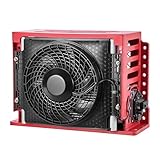
QKVCX 12V Camper RV Air Conditioner. This rooftop unit is described as 11,000 BTU, 12V DC, and cooling only. That makes it a potential fit for a truck seeking a 12V rooftop unit with a stated cooling figure, without paying for a heating feature you do not need.
Cooling only is the clear tradeoff: it is not the choice for an operator who wants heat from the same unit. The product title also does not establish the electrical draw or roof-cutout fit. Skip it if you need heating, a split system, or a confirmed installation match that the product details do not establish.
Other 12V rooftop option with a heater
Outequip 12V 10000 BTU Rooftop Air Conditioner. The product name identifies a 12V rooftop model rated at 10,000 BTU and mentions a heater. That makes it relevant to buyers comparing a stated capacity and rooftop format while staying with 12V DC.
The product name does not describe the heater type or give an electrical draw, so those details should not be assumed from the word “heater.” Skip it if your design calls for a split unit or if you need the heat-pump feature explicitly identified on the TOSOT and Arsenda models. A product title alone is not enough to plan wiring or roof work.
How to choose for a working food truck
Start with the existing power system. If the build is 12V DC, compare the VEVOR split models, AClengda split unit, and 12V rooftop choices. If you can supply 110–120V and want a rooftop unit, the TOSOT and Arsenda models are the matching options described here. This is a compatibility filter, not a promise that any unit can run from a given generator, inverter, or battery bank.
Next, decide between roof mounting and a split setup. Rooftop models need a suitable roof location and a mounting arrangement compatible with the manufacturer’s instructions. A split unit instead needs space and a workable route for its separate components. Food trucks have equipment, vents, and structural features that can limit either layout. An installer should review clearances and structural requirements before cutting or mounting.
Then consider the real heat load. BTU ratings offer a useful comparison point, but the product details here do not provide a sizing calculation for a food truck. Cooking appliances, sunlight, insulation, customer-service openings, and the number of people working inside change the demand. A truck that serves hot food with its window open may need a different solution than a compact prep vehicle that stays closed.
Finally, account for ownership costs beyond the unit. Electrical work, roof modifications, mounting parts, and repairs can add cost, but the amounts depend on the truck and installation. Ask the installer about the unit’s electrical draw, suitable circuit protection, condensate handling, maintenance access, and the effect of operating the AC on other onboard equipment. Do not choose based on BTU alone.
Who should skip these options
Skip every unit in this group if you need a product with a confirmed fit for a particular truck, documented power draw, or a guaranteed runtime from your current battery system. Those details are not established by the product names supplied here. Instead, look for an air conditioner whose manufacturer publishes its full electrical and installation specifications, then have a qualified installer match them to your vehicle and local requirements.
Also avoid treating an RV label as proof of food-truck fit. The TOSOT and Arsenda descriptions mention food trucks, while several other titles describe trucks or food-truck use. That supports considering them for this application, but it does not establish fit for a specific roof, wiring system, or commercial build. The final choice depends on the truck’s actual structure and power capacity.
Verdict: match the unit to the build
For a food truck that needs a stated 12V split system, the VEVOR Truck Air Conditioner is the clearest starting point, with 10,000 BTU listed and a split layout to plan around. Choose the TOSOT 16000 BTU RV Air Conditioner instead when a compatible rooftop installation and 110–120V supply are available, especially if its heat pump and controls suit the job. The Arsenda unit offers the highest stated capacity in this group, but it has the same voltage boundary to consider.
For a 12V rooftop build, compare the Outequip and QKVCX models by the features stated in their names, then request full installation and electrical details before choosing. The right air conditioner is the one your truck can safely power and physically accept, with enough cooling for its actual heat load. See the Food Truck Build Parts category for related build components.