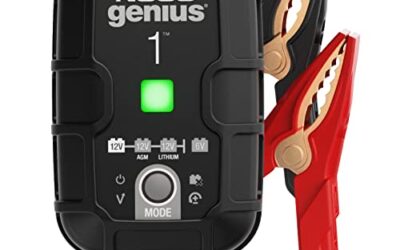
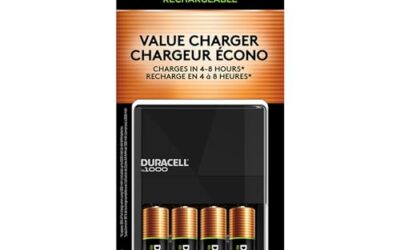
Running a generator to replenish RV house batteries requires matching your charger’s current demand to your generator’s AC output and your battery bank’s chemistry. When dry camping or boondocking, generator runtime is often limited by campground quiet hours and fuel capacity. Relying on an underpowered trickle charger or an inefficient built-in converter can force you to run your generator for ten to twelve hours just to recover a standard 100Ah battery bank. Conversely, pairing a high-amperage, multistage standalone charger with your generator allows you to dump maximum charging current into your battery bank during the bulk charging phase, cutting engine runtime down to just a couple of hours.
Across the 10 power and charging products examined in this evaluation, charging speeds and intended roles vary significantly. Dedicated high-output AC-to-DC chargers provide the high current needed to minimize generator fuel consumption, while low-amperage maintainers, solar trickle panels, and specialized DC-DC equipment serve entirely different off-grid maintenance needs.
Pros
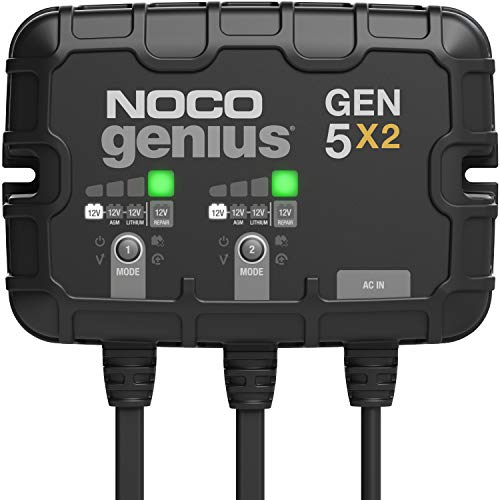
- Independently charges two 12V batteries
- Supports both lead-acid and lithium-ion battery types
- Includes temperature compensation to help prevent overcharging in heat and undercharging in cold
- Provides selectable battery-specific charging modes and a Repair Mode
- Backed by a stated 3-year warranty
Cons
- The 10A total output is divided into 5A per bank
- The listed charging modes are specified for 12V batteries only
Specifications
| Color | Black |
|---|---|
| Size | 10A (5A per Bank) |
| Dimensions | 9.15 x 7.2 x 5.39 Inches |
| Weight | 4.17 pounds |
| Product Group | Automotive Parts and Accessories |
| Binding | Electronics |
Best For / Avoid If
Best for buyers prioritizing
- Independently charges two 12V batteries
- Supports both lead-acid and lithium-ion battery types
- Includes temperature compensation to help prevent overcharging in heat and undercharging in cold
Consider another option if
- The 10A total output is divided into 5A per bank
- The listed charging modes are specified for 12V batteries only

Pros
- Supports both LiFePO4 and multiple lead-acid battery types
- Can charge 12V and 24V batteries
- Automatically switches to trickle/float mode after charging
- Provides real-time charging information on a color screen
Cons
- It is a battery charger and maintainer, not a battery jump starter
- The product cannot activate or charge totally dead batteries
- The listed operating temperature range is 14°F to 82°F
Specifications
| Color | Black |
|---|---|
| Dimensions | 7.88 x 3.74 x 3.55 inches |
| Product Group | Automotive Parts and Accessories |
| Binding | Electronics |
Best For / Avoid If
Best for buyers prioritizing
- Supports both LiFePO4 and multiple lead-acid battery types
- Can charge 12V and 24V batteries
- Automatically switches to trickle/float mode after charging
Consider another option if
- It is a battery charger and maintainer, not a battery jump starter
- The product cannot activate or charge totally dead batteries
- The listed operating temperature range is 14°F to 82°F

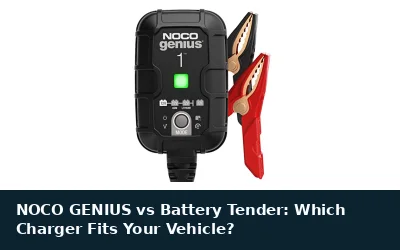
Pros
- Provides both charging and maintenance for 12V batteries
- Includes two accessory cable options
- Offers adaptive charging and a four-step charging program
- Includes a 10-year manufacturer's warranty and lifetime customer support
Cons
- Designed for 12V batteries only
- The 1.25-amp output may not suit every charging need
Specifications
| Color | Black |
|---|---|
| Dimensions | 4.87 x 3.25 x 2.93 Inches |
| Weight | 1.45 Pounds |
| Product Group | Automotive Parts and Accessories |
| Binding | Automotive |
Best For / Avoid If
Best for buyers prioritizing
- Provides both charging and maintenance for 12V batteries
- Includes two accessory cable options
- Offers adaptive charging and a four-step charging program
Consider another option if
- Designed for 12V batteries only
- The 1.25-amp output may not suit every charging need

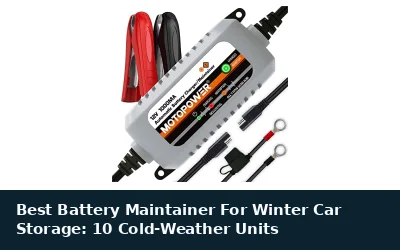
Pros
- Supports a 100–240V input range
- Includes a 6-foot/1.9-meter power cord and LED indicator
- Lists compatibility with multiple generator brands and model families
- Includes several listed electrical protection features
Cons
- Compatibility is limited to the specific generator models supported by the listing
Specifications
| Color | black |
|---|---|
| Dimensions | 3 x 2 x 1 inches |
| Product Group | Electronics |
Best For / Avoid If
Best for buyers prioritizing
- Supports a 100–240V input range
- Includes a 6-foot/1.9-meter power cord and LED indicator
- Lists compatibility with multiple generator brands and model families
Consider another option if
- Compatibility is limited to the specific generator models supported by the listing
Pros
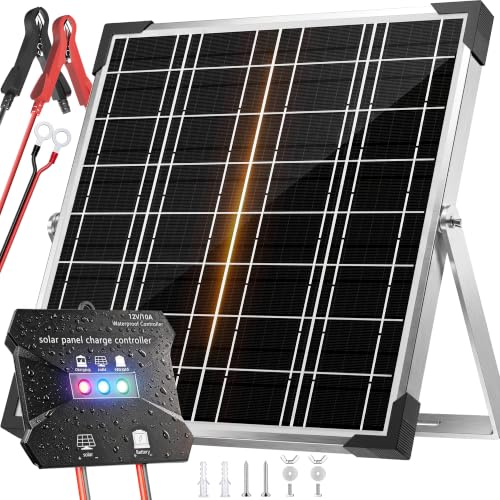
- Broad compatibility with several 12V battery types
- Multiple built-in electrical protection safeguards
- IP67-rated construction for outdoor use
- Pre-drilled mounting holes support installation without tools
Cons
- The listing does not identify the connector type
Specifications
| Color | Silver |
|---|---|
| Size | 20W Smart MPPT |
| Dimensions | 14.9999999847 x 13.5826771515 x 1.6929133841 inches |
| Weight | 4 Pounds |
| Product Group | Lawn & Patio |
| Binding | Unknown Binding |
Best For / Avoid If
Best for buyers prioritizing
- Broad compatibility with several 12V battery types
- Multiple built-in electrical protection safeguards
- IP67-rated construction for outdoor use
Consider another option if
- The listing does not identify the connector type
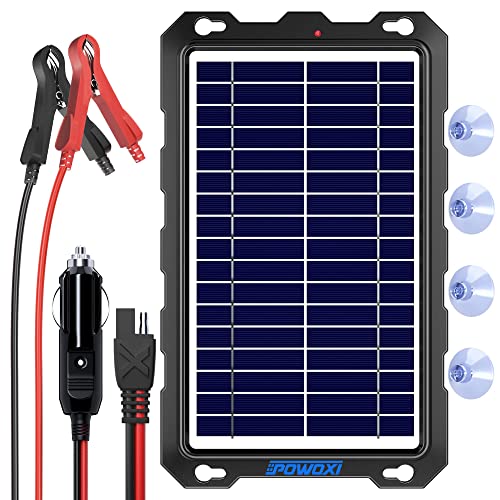
Pros
- Supports two connection methods: vehicle power outlet or direct battery connection
- Includes stated protection against overvoltage, short circuit, and overcharging
- Uses high-transparency, low-iron tempered glass and an ABS+PC frame
- Includes 12-month after-sales service and lifetime technical support
Cons
- The listing section contains no additional details beyond the listed features
- The source listing shows a 4.7 rating from 0 reviews
Specifications
| Color | Solar Powered Battery Chargers 7.5w-B |
|---|---|
| Size | Solar Powered Battery Chargers 7.5w-B |
| Dimensions | 14.76 x 1.89 x 9.06 inches |
| Weight | 2.2 Pounds |
| Product Group | Lawn & Patio |
| Binding | Electronics |
Best For / Avoid If
Best for buyers prioritizing
- Supports two connection methods: vehicle power outlet or direct battery connection
- Includes stated protection against overvoltage, short circuit, and overcharging
- Uses high-transparency, low-iron tempered glass and an ABS+PC frame
Consider another option if
- The listing section contains no additional details beyond the listed features
- The source listing shows a 4.7 rating from 0 reviews

Pros
- High stated 99.9Wh capacity in a portable power-bank design
- Built-in Type-C and Lightning cables are included
- Supports simultaneous charging of multiple devices
- Includes a four-mode emergency and camping flashlight
Specifications
| Color | 99Wh |
|---|---|
| Size | 99Wh |
| Dimensions | 2.84 x 2.6 x 5.87 inches |
| Weight | 1.46 Pounds |
| Product Group | Lawn & Patio |
Best For / Avoid If
Best for buyers prioritizing
- High stated 99.9Wh capacity in a portable power-bank design
- Built-in Type-C and Lightning cables are included
- Supports simultaneous charging of multiple devices

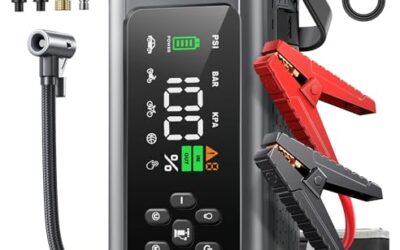
Pros
- High 80A output is specified for 12V LiFePO4 batteries
- 0V activation is designed to wake BMS-protected batteries
- Multiple built-in safeguards are listed
- Aluminum alloy housing, cooling fan, and LED indicators are included
Cons
- The charger is not waterproof
- It is not suitable for marine environments, including boats, ships, yachts, or trolling motors
Specifications
| Color | black |
|---|---|
| Size | 1 Pack |
| Dimensions | 12.992125971 x 5.9448818837 x 3.56299212235 inches |
| Weight | 7.72 Pounds |
| Product Group | Electronics |
Best For / Avoid If
Best for buyers prioritizing
- High 80A output is specified for 12V LiFePO4 batteries
- 0V activation is designed to wake BMS-protected batteries
- Multiple built-in safeguards are listed
Consider another option if
- The charger is not waterproof
- It is not suitable for marine environments, including boats, ships, yachts, or trolling motors
For a closer look at a related choice, see Car Battery Charger Buying Guide, Best Portable Battery Charger For Car Batteries and Best Battery Charger For Lead Batteries.
Quick Verdict
For RV owners running a portable inverter generator to charge 12-volt lithium (LiFePO4) house banks quickly, the LiTime 12V 80A Lithium Battery Charger delivers the highest charging current among the reviewed options. Its 80-amp bulk charge rate can theoretically recharge a depleted 100Ah lithium bank in under an hour and a half, dramatically reducing generator run hours. If you run a smaller generator (such as a 1,000-watt to 2,000-watt inverter generator) or maintain a single 100Ah to 200Ah lithium battery, the E-FAST 12V 30A Lithium Battery Charger provides a balanced 30-amp output with dual connection options including a 50A Anderson plug.
For RVs with mixed battery setups or standard lead-acid and AGM chemistry, the PZ.P 15-Amp 12V/24V Smart Battery Charger offers broad chemistry support and automatic multi-stage charging at 15 amps. For permanent onboard installations across dual-battery banks, the NOCO Genius GEN5X2: 2-Bank provides 5 amps per bank with independent bank mode controls and an IP68 waterproof rating.
How We Chose
Selecting the right equipment to charge RV batteries using a generator requires evaluating documented manufacturer specifications across electrical efficiency, power draw, chemistry algorithms, and form factor. Generator charging introduces distinct operational challenges: generator runtime consumes fuel, produces noise, and emits exhaust. Therefore, a charger intended for generator use must deliver meaningful DC amperage during bulk charging without demanding more AC starting or running wattage than a standard portable generator can supply.
Our editorial evaluation examined:
- Input Power Requirements: We evaluated whether each unit operates from standard 100–240V AC power supplied by a generator’s utility receptacle. Units designed exclusively for solar input, vehicle alternator input, or low-voltage DC-to-DC conversion were categorized by their actual capabilities and separated from primary generator-to-battery charging recommendations.
- Amperage and Bulk Charging Speed: We analyzed continuous DC output current. In generator applications, higher amperage during the constant-current (bulk) phase directly shortens required generator runtimes.
- Battery Chemistry Compatibility: Modern RVs utilize flooded lead-acid, AGM, Gel, or Lithium Iron Phosphate (LiFePO4) chemistries. We reviewed whether charging profiles provide proper absorption voltages and BMS wake-up features (such as 0V activation).
- Thermal Management and Safety Protections: High-amp charging generates substantial internal heat. We confirmed documented cooling mechanisms (internal fans vs. passive heatsinks) and protection circuits against reverse polarity, short circuits, and overvoltage.
Comparison of Evaluated Chargers & Power Units
The following table outlines the manufacturer-stated technical specifications for all 10 evaluated models. Note that pricing reflects observed figures at the time of evaluation and should be confirmed before purchase.
| Model | Brand | Observed Price | Power Source / Input | DC Output Rating | Supported Chemistries |
|---|---|---|---|---|---|
| LiTime 12V 80A Lithium Battery Charger | LiTime | $289.99 | 100–240V AC | 12V, 80A | 12V LiFePO4 |
| E-FAST 12V 30A Lithium Battery Charger | E-FAST | $99.99 | 100–240V AC | 14.6V, 30A | 12V LiFePO4 |
| PZ.P 15-Amp 12V/24V Smart Battery Charger | PZ.P | $29.99 | 100–240V AC | 12V 15A / 24V 8A | LiFePO4, AGM, GEL, SLA, Flooded |
| NOCO Genius GEN5X2: 2-Bank | NOCO | $139.95 | 120V AC | 12V, 10A Total (5A/Bank) | Lead-Acid, AGM, Lithium-ion |
| Battery Tender Plus 12V 1.25 AMP Car & Motorcycle | Battery Tender | $58.95 | 120V AC | 12V, 1.25A | 12V Lead-Acid |
| 705927 Battery Charger Compatible with Generac | Pinkind | $11.99 | 100–240V AC | 12V, 1A | Generator Starter Battery Only |
| BougeRV 600W Alternator Charger for Power | BougeRV | $129.99 | 12V/24V Vehicle Alternator | Up to 60V, 10A (600W) | Portable Power Stations Only |
| PGYOB Portable Power Bank Power Station | PGYOB | $54.99 | USB / Type-C DC | USB 5V–12V (22.5W max) | Internal Lithium (for mobile devices) |
| Voltset Solar Panel Kit 20W 12V | Voltset | $35.99 | Solar Radiation | 12V, MPPT Managed (~1.1A) | LiFePO4, AGM, Gel, Flooded |
| POWOXI 7.5W 12V Solar Battery Charger Trickle | POWOXI | $39.99 | Solar Radiation | 12V Trickle (~0.4A max) | LiFePO4, Lithium-ion, Lead-Acid |
Analysis of Non-Generator & Auxiliary Units
The catalog includes several devices that do not fit the primary use case of charging RV house batteries from an AC generator outlet. It is essential to distinguish these units so buyers do not purchase mismatched equipment:
- 705927 Battery Charger Compatible with Generac: This 12V 1A AC adapter is designed specifically to maintain the small internal electric-starter battery located on Generac, Westinghouse, or Briggs & Stratton generators. It outputs 1 amp through a barrel/plug connector and cannot charge large RV deep-cycle house batteries.
- BougeRV 600W Alternator Charger for Power: This is a vehicle DC-to-DC alternator charger designed strictly to recharge portable power stations from a running truck or motorhome alternator. The manufacturer explicitly states that it is not compatible with standalone LiFePO4 house batteries and cannot charge from a generator’s AC outlet.
- PGYOB Portable Power Bank Power Station: This 99.9Wh pocket power bank features integrated USB-C and Lightning cables for smartphones and laptops. It is not an RV battery charger.
- Voltset Solar Panel Kit 20W 12V and POWOXI 7.5W 12V Solar Battery Charger Trickle: These are low-wattage solar trickle panels designed to maintain batteries under sunlight. They provide silent trickle charging when an RV is parked in outdoor storage, but they cannot connect to a generator or provide the bulk current needed during generator runs.
Compatibility and Buying Advice
Calculating Generator AC Capacity vs. Charger DC Output
When running a standalone charger from a generator, ensure your generator’s inverter can support the charger’s AC power consumption. Charging circuits are not 100% efficient; converting 120V AC into 12V–14.6V DC typically incurs a 15% to 25% efficiency loss.
- An 80-amp charger running at 14.6V outputs approximately 1,168 watts DC. Accounting for power conversion efficiency, the charger may pull 1,350 to 1,500 watts of AC power from your generator. A 2,000-watt inverter generator (rated for 1,600 running watts) will operate near 85% to 90% load.
- A 30-amp charger outputs roughly 438 watts DC and pulls approximately 520 to 550 watts AC, allowing a 2,000-watt generator to run quietly in eco-mode.
- A 15-amp charger pulls roughly 250 to 280 watts AC, presenting virtually no strain even on compact 1,000-watt generators.
Matching Charger Profiles to Battery Chemistry
Never charge lithium iron phosphate (LiFePO4) batteries with a charger locked into a standard flooded lead-acid profile. Traditional lead-acid chargers incorporate desulfation pulses (high-voltage spikes) and equalize cycles exceeding 15.5V that can damage a lithium battery’s BMS. Furthermore, lithium batteries do not require float maintenance; once full, charging voltage should be removed or held strictly at a safe resting threshold. Look for chargers with dedicated LiFePO4 constant-current/constant-voltage (CC/CV) modes and 0V activation features to wake batteries from low-voltage cutoff.
How to Choose the Right Charger for Generator Use
- Determine Your Battery Bank Capacity: For banks under 100Ah, a 15A to 30A charger provides a healthy charge rate without stressing the cells. For battery banks of 200Ah to 400Ah or larger, consider a 30A to 80A charger to keep generator runtimes under 3 hours.
- Check Your Generator’s Continuous Running Watts: Match the continuous wattage draw of the charger to the continuous (running) rating of your generator, leaving at least 20% overhead if you intend to run other RV 120V appliances simultaneously.
- Verify Chemistry Modes: Ensure the charger has explicit switchable settings for your specific chemistry, especially if transitioning from AGM to lithium.
- Select Mounting Style: Choose portable clamp/Anderson connector units if you store the charger when not in use, or hardwired IP68 waterproof units if permanently installing inside an RV utility bay.
Frequently Asked Questions
Can I plug an external battery charger into my generator while it’s connected to my RV?
Yes, but you should disable or isolate your RV’s built-in converter/charger. If your generator is feeding the RV’s main 30A/50A shore power inlet and you plug an external charger into the generator, the built-in converter and external charger might compete or unnecessarily overload your generator’s electrical circuit. Many RVers flip the breaker for the internal converter when running a dedicated high-amp external charger.
Why not just use the RV’s factory built-in converter to charge from the generator?
Many older or entry-level RV converters are basic single-stage or low-amperage (25A–35A) lead-acid units that drop voltage quickly, slowing down charging speeds. Furthermore, stock converters are often mounted far from the battery bank, leading to significant DC voltage drop across long wire runs. A dedicated charger mounted close to the battery bank delivers full rated voltage and maximizes bulk charge current.
What does 0V activation mean on modern lithium chargers?
When a lithium battery discharges past its safe lower limit, its internal Battery Management System (BMS) disconnects the terminals to prevent cell damage, showing zero volts on a multimeter. Standard smart chargers require detected voltage to begin charging and will register a disconnected battery as missing or defective. A charger with 0V activation sends a targeted voltage signal to reset the BMS switch and allow charging to resume.
Final Verdict
To recharge RV batteries efficiently with a generator, your charger must match your battery bank’s chemistry and provide enough continuous amperage to minimize generator noise and fuel use. For large lithium banks, the LiTime 12V 80A Lithium Battery Charger provides high-throughput charging that cuts generator runtimes dramatically. For single or dual 100Ah lithium batteries, the E-FAST 12V 30A Lithium Battery Charger delivers an optimal balance of fast charging and manageable generator load. If you need multi-chemistry support with real-time screen monitoring, the PZ.P 15-Amp 12V/24V Smart Battery Charger provides flexible operation across lead-acid and lithium systems.