How Does A Radar Detector Work
Radar detectors work by detecting the electromagnetic waves emitted by police radar guns. These devices scan for specific frequency bands used by law enforcement to measure vehicle speed. When a match is found, they alert the driver through sounds, lights, or displays.
Understanding how they operate is key to using them safely and legally. This guide explains the technology behind radar detectors, their limitations, and how they fit into vehicle safety technology.
Key Takeaways
- Radar detectors primarily detect police radar signals in X, K, and Ka bands.
- They do not detect LIDAR, which uses laser light.
- Placement in the vehicle affects detection range.
- Always check local laws regarding radar detector use.
- They provide early warning but do not prevent speeding.
What Is a Radar Detector?
A radar detector is an electronic device that uses radio receivers to identify signals from police speed measuring equipment. It is designed to provide early warning to drivers so they can adjust their speed before being ticketed.
The technology has been around for decades and is a common accessory in vehicles for safety and awareness. However, it is important to understand that radar detectors are not foolproof and have specific capabilities and limitations.
How Radar Detectors Detect Signals
Radar detectors detect signals by capturing radio waves in the atmosphere. Police radar guns transmit these waves to measure the speed of vehicles. The detector’s antenna picks up these waves if they are in the correct frequency range.
Once the signal is received, it is sent to the receiver. The receiver amplifies the signal and filters out noise. Then, the signal is mixed with a local oscillator in a process called heterodyning to produce an intermediate frequency. This intermediate frequency is easier to process and determine if it is a police radar signal.
The processor then analyzes the signal characteristics to confirm it is police radar rather than other sources like microwave ovens or other electronic devices. If it matches, the alert system is triggered.
Types of Radar Detectors
Analog Radar Detectors
Analog radar detectors are the simplest type. They use basic circuitry to detect specific bands. When a signal is detected, they sound an alarm. These are less expensive but can have more false alerts from non-police sources.
Digital Radar Detectors
Digital radar detectors use microprocessors and software to analyze signals more accurately. They can distinguish between police radar and other signals, reducing false alerts. Many models offer features like band alerts, mute, and programmable settings.
Radar/Laser Detectors
These combine radar detection with laser detection. They detect both radio frequency radar and laser light from LIDAR units. This dual capability makes them more comprehensive for drivers concerned about all speed measurement methods.
Components of a Radar Detector
The main components include the antenna, which receives the radio waves. The receiver processes the signal. The processor analyzes it. The alert system provides the warning. The power supply connects to the vehicle electrical system.
Some advanced models have GPS integration to know the location of speed traps and provide location-based alerts.
Installation in Vehicles
Installation typically involves connecting the power cord to the vehicle 12-volt cigarette lighter outlet or hardwiring it directly to the battery for constant power. The antenna is mounted on the roof or windshield to maximize signal reception. Proper placement is crucial for optimal performance.
It is important to follow manufacturer instructions for installation to avoid damaging the vehicle or the detector.
Limitations of Radar Detectors
Radar detectors have several limitations. They have a limited detection range, usually between 1/4 mile and 1 mile depending on the model and conditions. They only detect radar in specific bands and do not detect LIDAR, which is becoming more common. They can be affected by vehicle placement, with roof-mounted units being more effective than dashboard ones. They do not detect all types of radar, such as those using different frequencies or pulse modulation.
Additionally, they cannot detect hidden cameras or photo radar systems. The effectiveness can vary based on weather, distance, and the specific radar gun used by police.
Legal Considerations
The legality of radar detectors varies by state and even by city. In some states, they are completely legal, while in others, they are illegal for drivers to own or use. Drivers should always research the laws in their area before purchasing or using a radar detector. Using one illegally can result in fines or other penalties.
Even where legal, radar detectors should be used responsibly. They are meant to alert drivers, not to allow speeding. Drivers must still obey speed limits and use other safety measures.
Common Mistakes
- Using a radar detector without knowing the local laws, leading to potential legal issues.
- Ignoring the alerts and continuing to drive at excessive speeds.
- Placing the detector in a location that does not provide optimal reception, such as behind metal or in a metal case.
- Assuming the detector can detect all speed measurement methods, including LIDAR and hidden cameras.
- Not updating the firmware or software in digital models to ensure they have the latest features.
When to Get Professional Help
If your radar detector is not working properly, such as not alerting or giving false alerts, or if you are having trouble installing it, it is best to seek help from a professional automotive technician or a certified installer. They can diagnose any issues and ensure the detector is properly integrated with your vehicle electrical system.
Also, if you are unsure about the compatibility of a particular model with your vehicle year or model, consulting a professional can provide clarity.
Gear that can help
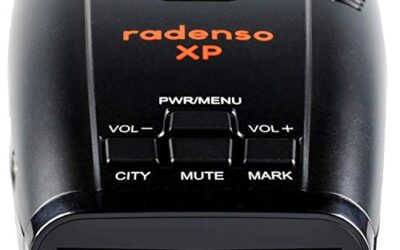
If you need radar detectors for this job, these picks already appear in our radar detectors guides. Check the full guide for fit and who should skip each one.

Pros
- Dual-antenna design provides 360-degree radar directional awareness.
- Built-in GPS can remember and automatically mute specified false alerts.
- Voice alerts communicate threat information without requiring the driver to look at the detector.
- Red-light and speed-camera alerts are supported through a pre-loaded database.
Specifications
| Dimensions | 4.9 x 3.5 x 1.5 inches |
|---|---|
| Product Group | Wireless |
| Binding | Electronics |
Best For / Avoid If
Best for buyers prioritizing
- Dual-antenna design provides 360-degree radar directional awareness.
- Built-in GPS can remember and automatically mute specified false alerts.
- Voice alerts communicate threat information without requiring the driver to look at the detector.

Pros
- Provides directional radar awareness and GPS-enabled location features
- Includes multiple false-alert filtering and connected-alert features
- Includes mounting, power, and travel-case accessories
Cons
- The specifications list the size as "Radar Detector + Dash Cam," while the feature details describe radar-detector functions
Best For / Avoid If
Best for buyers prioritizing
- Provides directional radar awareness and GPS-enabled location features
- Includes multiple false-alert filtering and connected-alert features
- Includes mounting, power, and travel-case accessories
Consider another option if
- The specifications list the size as "Radar Detector + Dash Cam," while the feature details describe radar-detector functions

Pros
- Supports detection of radar, laser, and VG-2 signals
- Front and rear detection helps identify signals from either direction
- False-alert filtering is designed to reduce alerts from collision avoidance systems
- Compact 4.12 x 2.64 x 1.35-inch design weighs 0.63 pounds
Cons
- GPS functionality and app connectivity are not listed in the listing
- The product is specified for detection only
Specifications
| Color | Black |
|---|---|
| Size | Radar Detector |
| Dimensions | 4.12 x 2.64 x 1.35 inches |
| Weight | 0.63 Pounds |
| Product Group | Wireless |
| Binding | Electronics |
Best For / Avoid If
Best for buyers prioritizing
- Supports detection of radar, laser, and VG-2 signals
- Front and rear detection helps identify signals from either direction
- False-alert filtering is designed to reduce alerts from collision avoidance systems
Consider another option if
- GPS functionality and app connectivity are not listed in the listing
- The product is specified for detection only
FAQ
Do radar detectors work on all radar types?
No, radar detectors are limited to detecting X-band, K-band, and Ka-band radar. They do not detect LIDAR, which uses laser light, or other methods like VASCAR.
How do they differ from laser detectors?
Laser detectors specifically target LIDAR signals, while radar detectors target radio frequency radar guns. Many units combine both for comprehensive coverage.
Are they legal in all states?
No, radar detector legality varies by state. Some states allow them, while others prohibit them. Always check your local laws.
Can they detect hidden cameras?
No, radar detectors cannot detect hidden cameras or photo enforcement systems. They only detect radar guns.
What about VASCAR or other methods?
Radar detectors do not detect VASCAR, which is a visual speed measurement method used by some law enforcement agencies.