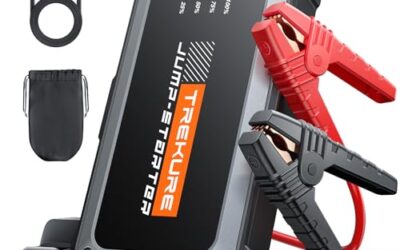
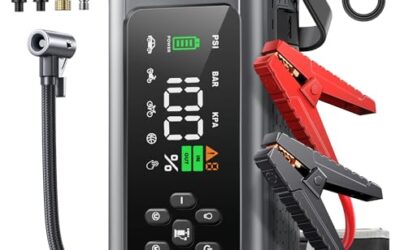
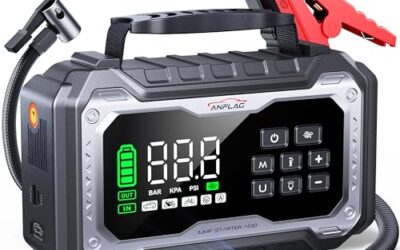
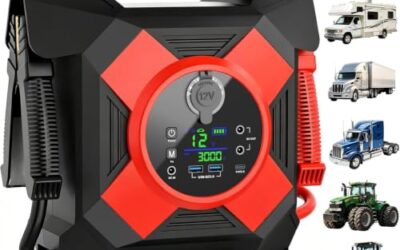
To answer “what size jump starter do i need,” match the unit’s voltage and starting capability to your vehicle, then allow for engine type, cold weather, and battery condition. Most conventional passenger cars use 12-volt systems, but the vehicle manual and jump-start instructions set the rules for your specific model.
- Start with voltage: A 12-volt jump starter suits a vehicle that calls for a 12-volt jump source. Do not assume every vehicle uses that system.
- Check engine type and size: Larger engines and diesels can need more starting power than smaller gasoline engines.
- Read the actual rating: Peak amps alone do not tell the whole story. Compare starting-current ratings and vehicle guidance.
- Plan for conditions: Cold weather and a deeply discharged or aging battery can make starting harder.
- Follow the vehicle’s procedure: Some models have designated jump points or special restrictions.
What size jump starter do I need for my vehicle?
Choose a jump starter that matches your vehicle’s voltage and falls within the engine and starting-current guidance in the vehicle and jump-starter manuals. There is no reliable universal rule that converts engine displacement into one exact amp rating. Manufacturer ratings use different terms and test conditions, so compare like with like rather than relying on a large peak-amp number alone.
For a small gasoline car, a compact 12-volt unit may be suitable if its rated starting capability covers the vehicle. A larger gasoline engine, a diesel, or a vehicle used in very cold conditions can call for a higher-capacity unit. These are selection principles, not guarantees that any one rating will start every vehicle in that category.
Check the vehicle owner’s manual first. Look for battery voltage, jump-start instructions, approved connection points, and any warning against portable jump packs. Then compare those requirements with the unit’s manual. For more context on larger engines, see our guide to jump starters for diesel trucks.
How to read jump-starter ratings
Jump-starter packaging may show peak amps, cranking amps, starting amps, or a list of supported engine sizes. These figures are not interchangeable. Peak amps describe a brief output under the maker’s test conditions; they do not, by themselves, tell you how well the unit will crank your engine. A supported-engine claim is a broad guide, not a promise for every vehicle with that engine type or size.
| Rating or detail | What it tells you | What to check |
|---|---|---|
| Voltage | Whether the unit matches the vehicle’s electrical system. | Vehicle manual and jump-starter manual. Do not connect a 12-volt unit to a system that requires another voltage. |
| Peak amps | A brief maximum output under the maker’s test conditions. | Do not use this number alone to predict starting performance. |
| Cranking or starting rating | A rating more closely tied to delivering current during engine cranking. | Check how the maker defines the rating, then compare it with vehicle guidance. |
| Engine-size guidance | A rough indication of gasoline or diesel engine coverage. | Match the correct fuel type and engine range; cold weather can change the practical result. |
| Battery capacity | How much stored energy the jump pack can hold. | It affects how many attempts may be available, but does not replace suitable starting output. |
A high capacity rating does not automatically mean strong cranking output, and a high peak-amp figure does not guarantee repeated starts. Read the rating definitions in the product manual. A unit’s cables and clamps also need to reach the vehicle’s approved jump points without strain.
Does engine size or fuel type change the answer?
Yes. Engine size and fuel type help narrow the choice, but neither provides a complete answer on its own. A larger engine generally takes more effort to crank than a small one. Diesel engines can place higher demands on a jump starter, especially in cold conditions, so use the diesel rating rather than a gasoline-only claim.
For a truck or SUV, include engine type, engine size, climate, and intended use in the decision. A unit that fits a small gasoline car may not suit a large diesel truck. Our guides to jump starters for SUV drivers and choosing an automotive jump starter cover those vehicle-based tradeoffs.
Hybrid vehicles need special care. A hybrid may have a 12-volt auxiliary battery and a separate high-voltage traction battery. A portable jump starter, where the manufacturer permits one, applies only to the specified low-voltage jump procedure. Never use it on high-voltage components. Follow the exact model-year manual because connection points and procedures vary.
How much extra capacity should I allow?
Allow for the hardest realistic starting conditions you expect, not an imagined universal reserve percentage. If you drive in cold weather, own a diesel, or need to cover more than one vehicle, select a unit whose stated capability covers those conditions. A little headroom can help with real-world variation, but the manual’s limits still govern.
Battery condition matters too. A weak battery may need more help than a healthy one, while a damaged battery can be unsafe to jump. A jump starter is for starting assistance, not a battery repair or a replacement for charging and diagnosis. If a battery repeatedly goes flat, investigate the battery, charging system, and possible electrical drain.
Also consider how often you expect to use the unit. A pack that has enough stored energy for one attempt may not suit repeated starting attempts or several vehicles. Capacity can fall while the unit sits unused, so follow its charging and storage instructions. For battery-care context, see how to store A car battery safely.
Quick decision checklist
- Find the system voltage. Check the vehicle manual and use only a jump source approved for that voltage.
- Identify engine and fuel type. Note gasoline or diesel, engine size, and whether the vehicle is a hybrid.
- Check the vehicle’s jump-start instructions. Find approved jump points and any limits for external jump packs.
- Compare relevant ratings. Use the maker’s starting or cranking guidance and the correct fuel-type coverage. Do not select by peak amps alone.
- Account for use conditions. Consider cold weather, how often you may need a start, and whether the pack must serve other vehicles.
- Check storage and upkeep. Follow the pack’s charging schedule and keep it within its stated storage conditions.
Common mistakes when choosing a jump starter
Buying by peak amps alone
Peak amps can look impressive but do not describe every part of the starting event. Compare rating definitions and engine guidance instead. A large number on the box does not override the vehicle’s voltage or connection requirements.
Assuming one unit fits every vehicle
A pack suitable for one car may not cover a diesel truck, a different voltage system, or a hybrid’s approved jump procedure. If you want one unit for several vehicles, base the choice on the most demanding vehicle and follow each vehicle’s own instructions.
Confusing a dead battery with a failed jump pack
A jump pack may be undercharged, connected at an unapproved point, or outside its operating limits. The vehicle battery may also be damaged, or the fault may lie elsewhere in the starting system. Do not keep repeating attempts when the cause is unclear.
Ignoring storage and temperature
A jump starter left discharged may not be ready when needed. Extreme temperatures can also affect battery performance. Use the storage range and maintenance schedule in the pack manual, and check its charge before relying on it.
Connecting without checking the manual
Vehicles can have special jump points, battery-monitoring systems, or restrictions. The clamp sequence and grounding point are not universal. Follow the instructions for both the vehicle and the jump starter, and stop if you cannot identify the correct connections.
When to get professional help
Stop and seek qualified help if the battery is cracked, swollen, leaking, unusually hot, or has a strong sulfur odor. Do not jump a battery with visible damage. Also stop if cables or clamps heat up, connections spark unexpectedly, or the pack reports a fault.
Get the vehicle checked if a suitable, charged jump starter fails to crank it, the engine starts but quickly stalls, or the battery repeatedly loses charge. Those symptoms can involve the battery, starter, alternator, wiring, or another fault. A jump start may get the vehicle running, but it does not identify or repair the cause.
Frequently asked questions
Is a higher-amp jump starter always better?
Not automatically. It must match the vehicle’s voltage and meet relevant starting guidance. Extra capacity can help with demanding conditions, but a large peak-amp claim alone does not prove suitability.
Can I use a car jump starter on a diesel truck?
Only if the unit’s diesel guidance covers that engine and the truck’s manual permits the procedure. Diesel trucks can need greater starting capability than small gasoline cars, particularly in cold weather.
Will a jump starter charge my car battery?
A jump starter provides short-term power to help crank the engine. It is not a substitute for a battery charger or a diagnosis of a battery that will not hold charge.
Can I use a 12-volt jump starter on a hybrid?
Only when the hybrid’s model-year manual permits it and identifies a compatible low-voltage jump point. Never connect a portable jump starter to high-voltage hybrid components.
Sources and further reading
- Battery Council International: Battery information and educational resources for drivers.