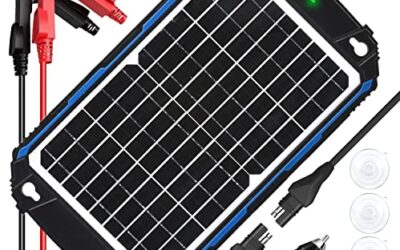
How to store a car battery safely starts with a clean battery, a suitable storage area, and a charging plan. Disconnect the battery only after the vehicle and electrical accessories are off, then store it upright on a stable, nonconductive surface.
Battery type, vehicle voltage, charger mode, temperature, and terminal design can change the correct procedure. Most passenger cars use a 12-volt battery, but some vehicles use different systems or battery chemistries. Check the vehicle manual and battery label before connecting a charger.
Key takeaways
- Store lead-acid batteries upright in a cool, dry, ventilated area.
- Clean dirt and corrosion before storage. Keep moisture away from terminals.
- Charge the battery with a charger made for its chemistry and voltage.
- Use a maintenance charger only when its instructions permit long-term connection.
- Do not store a damaged, leaking, swollen, frozen, or hot battery indoors.
- Disconnect the negative cable first during removal. Reconnect it last.
- Check battery condition before reinstalling it in a vehicle.
What you need before storing a car battery
Gather basic safety equipment and identify the battery before removing it. You may need safety glasses, acid-resistant gloves, a wrench that fits the terminal clamp, a battery cleaning brush, a clean cloth, and a charger or battery maintainer.
Read the battery label for chemistry and voltage. Flooded lead-acid, AGM, gel, lithium, and other battery types need different charging profiles. A charger for a 12-volt lead-acid battery may be unsuitable for a 12-volt lithium battery. A 6-volt battery also requires a matching charger.
Check vehicle instructions for battery removal. Some newer vehicles lose radio settings, window indexing, steering information, alarm settings, or other learned data when power stops. Some vehicles need a battery registration procedure after replacement. Storage may not cause a registration issue, but removal can trigger settings or diagnostic changes.
How to store a car battery safely
1. Choose a suitable storage location
Use a cool, dry, ventilated location away from flames, sparks, heaters, furnaces, and direct sunlight. A garage or workshop can work if it stays dry and has airflow. Keep children, pets, tools, and metal objects away from the battery.
Do not store a lead-acid battery in a bedroom, enclosed cabinet, vehicle passenger area, or other poorly ventilated space. Charging can release hydrogen gas. Hydrogen can ignite when it collects near a spark or flame.
Keep the battery upright. This position helps prevent electrolyte leakage and keeps vent paths in their intended orientation. Do not place tools, chargers, boxes, or other objects on top of it.
2. Turn off the vehicle and inspect the battery
Park on a stable surface. Switch off the ignition, lights, audio system, climate controls, and accessories. Remove the key or keep the key fob away from the vehicle if it can wake electronic systems.
Inspect the case, posts, terminals, vent areas, and hold-down hardware. Stop if the case is cracked, swollen, leaking, badly distorted, or unusually hot. These signs can indicate internal damage or an unsafe charging condition.
A frozen battery can crack when charged. Do not charge a battery that may be frozen. Let it warm gradually in a safe area, then have it assessed if its condition is uncertain.
3. Clean the battery and terminals
Remove loose dirt with a dry or slightly damp cloth. For terminal corrosion, use a battery terminal brush and a cleaning method approved by the battery or vehicle manual. Keep cleaner and water away from battery openings.
Dry the case and terminals fully. Dirt and moisture can create a path for slow electrical discharge across the top of a battery. Corrosion can also increase resistance when the battery returns to service.
4. Disconnect the battery correctly
Disconnect the negative terminal first on a typical negative-ground vehicle. This reduces the chance of a short if the wrench touches the vehicle body while working on the positive terminal. Disconnect the positive terminal after the negative cable is clear.
Some vehicles use battery sensors, auxiliary batteries, quick-release connectors, or unusual terminal layouts. Follow the vehicle manual for those systems. Do not force a clamp, pull on a cable, or use a terminal post as a lifting handle.
Mark cables only if their positions could be confused. Keep removed cables from touching the terminals. Cover exposed positive terminals when the vehicle manual calls for it.
5. Charge the battery before storage
A partially charged lead-acid battery can discharge further during storage. Low charge can allow sulfation and, in cold conditions, freezing. Charge the battery before placing it into long-term storage.
Use the correct charger mode for battery chemistry and voltage. Follow charger instructions for connection order, ventilation, temperature limits, and charge completion. Connect the charger to the battery only after the charger is unplugged, unless its instructions state another sequence.
For a typical negative-ground battery, connect the positive charger lead to the positive terminal. Connect the negative lead to the negative terminal or to an approved vehicle ground point if the charger manual or vehicle manual calls for that method. Plug in the charger after connections are secure.
Do not leave a standard manual charger connected for weeks without supervision. It can overcharge the battery. A smart maintenance charger can reduce that risk by changing its output after charging, but it still needs correct battery type, voltage, ventilation, and connection.
6. Disconnect the charger and place the battery in storage
Follow the charger instructions to confirm charging is complete. Unplug the charger before removing its leads unless the charger says otherwise. Remove the negative lead first, then the positive lead.
Place the battery upright on a stable surface that will not be harmed by acid or electrolyte. A plastic tray can catch minor residue, but it does not make a leaking battery safe. Keep the tray away from heat and ignition sources.
Do not wrap a battery in an airtight cover. A breathable cover can limit dust while allowing ventilation. Leave terminals protected from accidental contact with metal.
7. Check the battery during storage
Storage time, battery age, temperature, battery type, and self-discharge rate affect how often checks are needed. Inspect the case and terminals at regular intervals. Look for swelling, leakage, corrosion, odor, heat, or a damaged cable.
Measure voltage only with a meter and method suitable for the battery. Resting voltage alone does not prove that a battery can start an engine. A battery can show normal voltage and still fail under load.
If the battery needs charging, move it to a ventilated location and use the correct charger mode. Do not charge it near gasoline vapors, solvent fumes, open flames, or spark-producing equipment.
Battery storage conditions by type
| Battery type | Storage concern | Charging choice |
|---|---|---|
| Flooded lead-acid | Ventilation, electrolyte leakage, corrosion, and freezing risk matter. | Use a charger mode made for flooded lead-acid batteries. |
| AGM | It is sealed differently from flooded designs, but it still needs correct voltage control. | Use an AGM setting when the charger provides one. |
| Gel | Incorrect charging voltage can damage the battery. | Use a gel-compatible profile. |
| Lithium | Charging temperature, battery management electronics, and storage charge level can differ by model. | Use only a charger approved for that battery chemistry. |
| 6-volt battery | It cannot use a normal 12-volt charging profile. | Use a charger matched to 6 volts and the battery chemistry. |
Battery labels and manuals control when general advice conflicts. Some lithium batteries have a built-in battery management system and specific storage instructions. Some vehicle systems use multiple batteries, so disconnecting one battery may not remove all electrical hazards.
Should you remove a car battery for storage?
Removal helps when the vehicle will sit for a long period, the battery would face extreme temperatures, or the vehicle has a measurable parasitic drain. It also lets you inspect and charge the battery in a controlled location.
Leaving the battery connected can preserve vehicle memory and alarm settings, but the car may slowly discharge it. A maintenance charger can support a connected battery if the charger, vehicle, outlet, and cable routing are suitable.
Do not run an extension cord through a doorway where it can be crushed or wet. Keep charger cables away from belts, fans, exhaust parts, tires, and door hinges. Follow the charger and vehicle manuals for grounding and connection points.
Cold-weather and hot-weather storage
Cold temperatures slow chemical activity. A fully charged lead-acid battery handles cold storage better than a deeply discharged one. A discharged battery can freeze at temperatures where a charged battery would not.
Heat speeds self-discharge and battery aging. Avoid attics, sheds that become very hot, and locations beside furnaces or water heaters. A stable, moderate indoor temperature is better than repeated hot and cold cycles.
Never warm a frozen battery with a torch, heat gun, space heater, or boiling water. Let it thaw in a safe area. Inspect it for cracks or leaks before any charging attempt.
Common mistakes
- Using the wrong charger mode: Chemistry and voltage must match. Incorrect settings can cause overheating or battery damage.
- Charging in a closed room: Lead-acid charging needs ventilation because gas can collect.
- Storing a dirty battery: Moisture and grime can increase surface discharge and corrosion.
- Leaving a manual charger connected: Long charging periods can overcharge the battery.
- Storing it on a concrete floor without checking condition: Modern cases are not harmed by concrete alone, but the surface can be damp, dirty, or unstable.
- Ignoring vehicle electronics: Some model-year vehicles lose learned settings or need battery registration after power loss.
- Testing only resting voltage: Voltage does not show full starting capacity. Load testing or conductance testing may be needed.
- Covering terminals with metal: A wrench or other conductive object can short the battery.
- Charging a swollen or leaking battery: Physical damage calls for professional handling, not a charger.
When to get professional help
Stop work and seek battery service if the case is cracked, swollen, leaking, hot, frozen, or producing an unusual smell. Get help if corrosion has damaged cables, the terminal post, or the vehicle battery tray.
Professional testing makes sense when the battery repeatedly loses charge, the vehicle has a parasitic drain, or the battery fails after a full charge. A technician can test starting capacity, charging voltage, and key-off current draw.
Ask for help when the vehicle has an auxiliary battery, high-voltage system, battery sensor, unusual ground arrangement, or manufacturer battery registration procedure. Never treat a hybrid or EV high-voltage battery like a removable 12-volt battery. Its service procedures differ by model and can involve serious shock hazards.
How to return a stored battery to service
- Inspect the case, terminals, cables, and storage area.
- Move the battery to a ventilated work area.
- Charge or test it with equipment matched to its chemistry and voltage.
- Clean and dry terminals before installation.
- Install the battery upright and secure it with the vehicle hold-down.
- Connect the positive cable first, then the negative cable on a typical negative-ground vehicle.
- Check vehicle operation, warning lights, clock, radio settings, and window functions.
- Follow vehicle instructions for battery registration or system relearning.
A stored battery that passes a voltage check may still lack enough capacity for reliable starting. If cranking is slow or the vehicle shows charging warnings, stop repeated start attempts and test the battery and charging system.
Gear that can help
If you need battery chargers and maintainers or battery testers for this job, these picks already appear in our battery chargers and maintainers guides. Check the full guide for fit and who should skip each one.

Pros
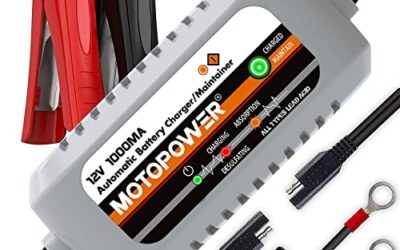
- Supports multiple lead-acid battery types, including AGM, Gel, SLA, VRLA, flooded, maintenance-free, deep-cycle, marine, and powersport batteries
- Compatible with LiFePO4 lithium-ion batteries
- Designed for use with cars, motorcycles, lawn mowers, ATVs, UTVs, tractors, trucks, SUVs, RVs, boats, and other listed vehicles
Cons
- Only 6V and 12V battery support is specified
- Force Mode is required to charge batteries that have reached zero volts
Specifications
| Color | Black |
|---|---|
| Size | 5A |
| Dimensions | 4.61 x 3.43 x 7.95 inches |
| Weight | 1.59 pounds |
| Product Group | Automotive Parts and Accessories |
| Binding | Electronics |
Best For / Avoid If
Best for buyers prioritizing
- Supports multiple lead-acid battery types, including AGM, Gel, SLA, VRLA, flooded, maintenance-free, deep-cycle, marine, and powersport batteries
- Compatible with LiFePO4 lithium-ion batteries
- Designed for use with cars, motorcycles, lawn mowers, ATVs, UTVs, tractors, trucks, SUVs, RVs, boats, and other listed vehicles
Consider another option if
- Only 6V and 12V battery support is specified
- Force Mode is required to charge batteries that have reached zero volts
Pros
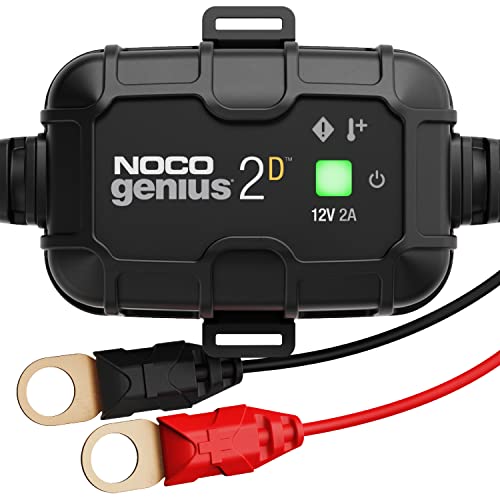
- Compatible with multiple 12V lead-acid battery types.
- Temperature compensation is designed to help prevent overcharging in hot weather and undercharging in cold weather.
- Direct-mount format supports an onboard, under-the-hood charging setup.
- Includes a Force Mode for charging completely discharged batteries down to zero volts.
Cons
- Designed for 12V lead-acid batteries; other battery chemistries are not identified in the listing.
- The 2A charging rate is specified for this model.
- Installation requires securing the mounting bracket with self-tapping screws.
Specifications
| Color | Black |
|---|---|
| Size | 2A |
| Dimensions | 5 x 2.3 x 1.5 inches |
| Weight | 0.73 Pounds |
| Product Group | Automotive Parts and Accessories |
| Binding | Electronics |
Best For / Avoid If
Best for buyers prioritizing
- Compatible with multiple 12V lead-acid battery types.
- Temperature compensation is designed to help prevent overcharging in hot weather and undercharging in cold weather.
- Direct-mount format supports an onboard, under-the-hood charging setup.
Consider another option if
- Designed for 12V lead-acid batteries; other battery chemistries are not identified in the listing.
- The 2A charging rate is specified for this model.
- Installation requires securing the mounting bracket with self-tapping screws.

Pros
- Combines an engine code reader and battery tester in one device
- Provides live data, freeze-frame information, and I/M readiness status
- Supports battery health, cranking, and charging system evaluation
- No app, computer, or setup is required for operation
Cons
- Does not support ABS, SRS, or transmission systems
- Not compatible with EVs
Specifications
| Color | yellow |
|---|---|
| Dimensions | 3.2 x 1.18 x 5 inches |
| Weight | 0.6393405598 pounds |
| Product Group | Automotive Parts and Accessories |
| Binding | Unknown Binding |
Best For / Avoid If
Best for buyers prioritizing
- Combines an engine code reader and battery tester in one device
- Provides live data, freeze-frame information, and I/M readiness status
- Supports battery health, cranking, and charging system evaluation
Consider another option if
- Does not support ABS, SRS, or transmission systems
- Not compatible with EVs
FAQ
Can a car battery sit unused for months?
Yes, if it is charged, stored in a suitable area, and checked during storage. A maintenance charger can help, but its chemistry, voltage, connection, and ventilation settings must match the battery.
Should a car battery be stored on concrete?
Concrete does not damage modern battery cases by itself. A dry, stable surface matters more. Use a tray when leakage could damage the floor, and keep the battery upright.
Can I store a car battery inside my house?
A lead-acid battery is better kept in a dry, ventilated garage or workshop away from living areas. Do not charge or store a leaking, swollen, or damaged battery indoors.
How often should I charge a stored car battery?
No single interval fits every battery. Temperature, age, chemistry, condition, and self-discharge rate change the schedule. Inspect it regularly and follow the battery and charger instructions.
Does disconnecting a battery stop all vehicle power?
No. Some vehicles have auxiliary batteries, capacitors, or high-voltage systems. Follow model-specific service instructions before working on those vehicles.
Sources and further reading
- Battery Council International (Battery Council International): General battery safety and care information for automotive battery users.