For the most common 24 volt boat owner, the Victron Energy Blue Smart IP67 Smart Marine is the strongest starting point because it is explicitly designed for marine use, supports 24 volt charging at 8 amps, and adds Bluetooth monitoring through the VictronConnect app. If your boat uses a 24 volt LiFePO4 battery, choose a dedicated 29.2 volt charger such as the 24V 20A Lithium Battery Charger 29.2V LiFePO4 models instead. The right choice depends first on battery chemistry, then on charging speed, installation style, and whether the charger must remain aboard in a wet environment.
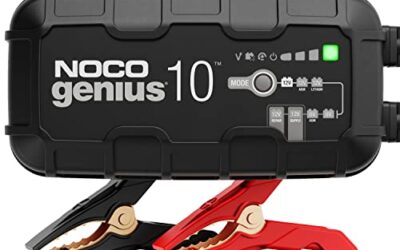
Pros
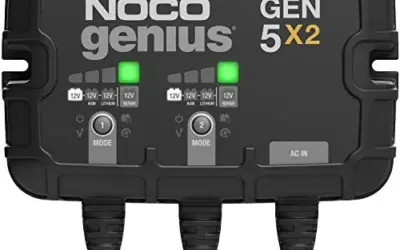
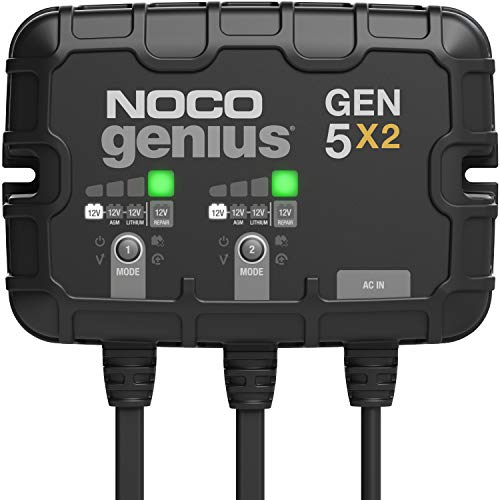
- Independently charges two 12V batteries
- Supports both lead-acid and lithium-ion battery types
- Includes temperature compensation to help prevent overcharging in heat and undercharging in cold
- Provides selectable battery-specific charging modes and a Repair Mode
- Backed by a stated 3-year warranty
Cons
- The 10A total output is divided into 5A per bank
- The listed charging modes are specified for 12V batteries only
Specifications
| Color | Black |
|---|---|
| Size | 10A (5A per Bank) |
| Dimensions | 9.15 x 7.2 x 5.39 Inches |
| Weight | 4.17 pounds |
| Product Group | Automotive Parts and Accessories |
| Binding | Electronics |
Best For / Avoid If
Best for buyers prioritizing
- Independently charges two 12V batteries
- Supports both lead-acid and lithium-ion battery types
- Includes temperature compensation to help prevent overcharging in heat and undercharging in cold
Consider another option if
- The 10A total output is divided into 5A per bank
- The listed charging modes are specified for 12V batteries only

Pros
- Supports multiple battery voltages and battery chemistries
- Provides several charging and maintenance modes
- Includes multiple listed safety protections
- LCD display allows monitoring of charging information
Specifications
| Color | 35-AMP |
|---|---|
| Size | Standard size |
| Dimensions | 3.78 x 6.5 x 2.17 inches |
| Weight | 3.35 pounds |
| Product Group | Automotive Parts and Accessories |
Best For / Avoid If
Best for buyers prioritizing
- Supports multiple battery voltages and battery chemistries
- Provides several charging and maintenance modes
- Includes multiple listed safety protections

Pros
- Supports both LiFePO4 and multiple lead-acid battery types
- Can charge 12V and 24V batteries
- Automatically switches to trickle/float mode after charging
- Provides real-time charging information on a color screen
Cons
- It is a battery charger and maintainer, not a battery jump starter
- The product cannot activate or charge totally dead batteries
- The listed operating temperature range is 14°F to 82°F
Specifications
| Color | Black |
|---|---|
| Dimensions | 7.88 x 3.74 x 3.55 inches |
| Product Group | Automotive Parts and Accessories |
| Binding | Electronics |
Best For / Avoid If
Best for buyers prioritizing
- Supports both LiFePO4 and multiple lead-acid battery types
- Can charge 12V and 24V batteries
- Automatically switches to trickle/float mode after charging
Consider another option if
- It is a battery charger and maintainer, not a battery jump starter
- The product cannot activate or charge totally dead batteries
- The listed operating temperature range is 14°F to 82°F

Pros
- Supports multiple 12V and 24V battery types, including LiFePO4
- Five current settings provide more charging-rate control than a single-output maintainer
- Includes booster and repair modes for emergency assistance and battery recovery
- Aluminum housing and active cooling are specified for high-current operation
Cons
- Booster mode is limited to 12V batteries
- The 16-hour Repair Mode requires a substantially longer charging cycle
Specifications
| Color | Red |
|---|---|
| Dimensions | 8.5 x 4.9 x 7.5 Inches |
| Weight | 3.7 pounds |
| Product Group | Automotive Parts and Accessories |
Best For / Avoid If
Best for buyers prioritizing
- Supports multiple 12V and 24V battery types, including LiFePO4
- Five current settings provide more charging-rate control than a single-output maintainer
- Includes booster and repair modes for emergency assistance and battery recovery
Consider another option if
- Booster mode is limited to 12V batteries
- The 16-hour Repair Mode requires a substantially longer charging cycle

Pros
- Supports charging at up to 20A for compatible 24V LiFePO4 batteries
- Offers sealed outdoor-oriented construction with IP67 housing and IP68 cable ratings
- Provides two battery connection options
- Includes automatic charging control and multiple protection functions
Cons
- Compatibility is specified for 24V (25.6V) LiFePO4 batteries rather than other battery chemistries or voltages
- The listed input voltage is limited to 100-120 Vac
- The charger automatically stops after 15 hours of continuous operation
Specifications
| Size | 24V20A |
|---|---|
| Dimensions | 7.5 x 4.8 x 2.67 inches |
| Product Group | Automotive Parts and Accessories |
Best For / Avoid If
Best for buyers prioritizing
- Supports charging at up to 20A for compatible 24V LiFePO4 batteries
- Offers sealed outdoor-oriented construction with IP67 housing and IP68 cable ratings
- Provides two battery connection options
Consider another option if
- Compatibility is specified for 24V (25.6V) LiFePO4 batteries rather than other battery chemistries or voltages
- The listed input voltage is limited to 100-120 Vac
- The charger automatically stops after 15 hours of continuous operation

Pros
- Supports AGM, GEL, wet/flooded, EFB, calcium, MF, and deep-cycle lead-acid batteries
- Listed for use with cars, trucks, motorcycles, boats, RVs, and lawn mowers
- Includes a winter mode and a stated 3-year warranty
- Can also be used for electrolysis projects and rust removal
Cons
- Repair mode is described for batteries above 3V, so lower-voltage batteries are not covered by the listed claim
- At 12.2 lb, the charger may be less convenient to move than lighter units
Specifications
| Color | Blue |
|---|---|
| Dimensions | 11.4 x 5.8 x 8.6 Inches |
| Weight | 12.4 pounds |
| Product Group | Automotive Parts and Accessories |
Best For / Avoid If
Best for buyers prioritizing
- Supports AGM, GEL, wet/flooded, EFB, calcium, MF, and deep-cycle lead-acid batteries
- Listed for use with cars, trucks, motorcycles, boats, RVs, and lawn mowers
- Includes a winter mode and a stated 3-year warranty
Consider another option if
- Repair mode is described for batteries above 3V, so lower-voltage batteries are not covered by the listed claim
- At 12.2 lb, the charger may be less convenient to move than lighter units

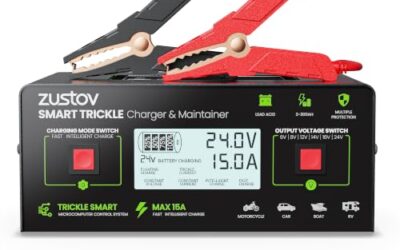
Pros
- 20A output is listed as four times faster than traditional 5A chargers
- Three connector options support different battery connection setups
- The charger is listed with FCC and ETL certification
- A 3-year product service promise is provided for qualifying quality problems
Cons
- The rated input voltage is limited to 100-120V AC
- The charger is designed to stop automatically after 15 hours of continuous operation
Specifications
| Color | black |
|---|---|
| Dimensions | 5 x 8.5 x 2.75 inches |
| Product Group | Electronics |
Best For / Avoid If
Best for buyers prioritizing
- 20A output is listed as four times faster than traditional 5A chargers
- Three connector options support different battery connection setups
- The charger is listed with FCC and ETL certification
Consider another option if
- The rated input voltage is limited to 100-120V AC
- The charger is designed to stop automatically after 15 hours of continuous operation

Pros
- Supports Bluetooth monitoring and configuration through VictronConnect
- Includes a 7-step charging algorithm
- Waterproof, shockproof, and ignition-protected design is specified
Cons
- Detailed specifications are not listed beyond the 24V and 8A rating
Best For / Avoid If
Best for buyers prioritizing
- Supports Bluetooth monitoring and configuration through VictronConnect
- Includes a 7-step charging algorithm
- Waterproof, shockproof, and ignition-protected design is specified
Consider another option if
- Detailed specifications are not listed beyond the 24V and 8A rating

Pros
- Broad compatibility with lithium, LiFePO4, and several lead-acid battery types
- Supports both 12V and 24V batteries with up to 25A charging current
- LCD provides multiple charging-status and parameter readings
- Includes several stated electrical and safety protection functions
Cons
- Will not start a battery or repair a completely lost battery
- The battery voltage must be at least 2V
- A special six-second button procedure is required for some over-discharged 24V batteries, and powerful mode must be deactivated after 5 minutes
Specifications
| Color | gray |
|---|---|
| Size | P25 |
| Dimensions | 3.54 x 1.97 x 6.22 Inches |
| Weight | 1.83 pounds |
| Product Group | Automotive Parts and Accessories |
| Binding | Electronics |
Best For / Avoid If
Best for buyers prioritizing
- Broad compatibility with lithium, LiFePO4, and several lead-acid battery types
- Supports both 12V and 24V batteries with up to 25A charging current
- LCD provides multiple charging-status and parameter readings
Consider another option if
- Will not start a battery or repair a completely lost battery
- The battery voltage must be at least 2V
- A special six-second button procedure is required for some over-discharged 24V batteries, and powerful mode must be deactivated after 5 minutes
Pros
- Supports both 12V and 24V battery systems.
- Includes dedicated charging modes for lithium LiFePO4 and lead-acid batteries.
- Provides real-time charging information through an LCD screen.
- Includes automatic voltage detection and a pulse Repair Mode.
Cons
- Cannot activate a totally dead battery with 0V.
- A low-voltage 24V battery that is recognized as 12V may require manual forced charging mode.
Specifications
| Color | Black |
|---|---|
| Dimensions | 6.6 x 8 x 2.6 inches |
| Product Group | Automotive Parts and Accessories |
Best For / Avoid If
Best for buyers prioritizing
- Supports both 12V and 24V battery systems.
- Includes dedicated charging modes for lithium LiFePO4 and lead-acid batteries.
- Provides real-time charging information through an LCD screen.
Consider another option if
- Cannot activate a totally dead battery with 0V.
- A low-voltage 24V battery that is recognized as 12V may require manual forced charging mode.
Choosing a 24 Volt Boat Battery Charger
A 24 volt label does not identify a single charging profile. A 24 volt lead acid, AGM, or gel bank requires different voltage behavior from a 24 volt LiFePO4 bank. The charger must also match the battery maker’s charging requirements, especially if the battery includes a battery management system.
For lithium iron phosphate batteries, the two KAISAL chargers specify 29.2 volts and 20 amps for 25.6 volt LiFePO4 batteries. That is a more precise match than a general purpose charger that merely lists both 12 volt and 24 volt operation. General purpose models can be useful when a boat contains different battery types, but confirm the selected chemistry mode before connecting one.
Charging current affects charging time, but the battery’s capacity, state of charge, temperature, wiring, and onboard electrical system also matter. A higher advertised amperage is not automatically better for every battery. Small banks may need a lower setting, while a larger deep cycle bank may benefit from a higher output if the battery manufacturer permits it.
| Model | Manufacturer listed 24V support | Boat or marine use listed |
|---|---|---|
| Victron Energy Blue Smart IP67 Smart Marine | Yes | Yes |
| NOCO Genius GEN5X2: 2-Bank | No, 12V banks only | Yes |
| WAVLINK 35-Amp Smart Battery Charger | Yes | Yes |
| Battery Charger 0-25A, 12V&24V LiFePO4 Battery | Yes | Yes |
| Haisito 20-Amp Smart Battery Charger | Yes | Yes |
| PZ.P 15-Amp 12V/24V Smart Battery Charger | Yes | Yes |
| E-FAST 25A Smart Car Battery Charger | Yes | Yes |
| 24V 20A Lithium Battery Charger 29.2V LiFePO4 | Yes | Yes |
| PCHH 12V 24V Car Battery Charger Heavy Duty | Yes | Yes |
| 24V 20A Lithium Battery Charger 29.2V LiFePO4 | Yes | Yes |
Best 24 Volt Boat Chargers by Use Case
Best for connected monitoring: Victron Energy Blue Smart IP67 Smart Marine
The Victron Energy Blue Smart IP67 Smart Marine is the clearest fit for a boat owner who wants a purpose-built 24 volt marine charger with app-based visibility. The manufacturer lists an 8 amp output, Bluetooth connectivity, configurable settings through VictronConnect, and a seven step charging algorithm. Its sealed design is listed as waterproof, shockproof, and ignition protected, which suits permanent or semi-permanent use around a marine environment.
The manufacturer also lists a low-current recovery process for deeply discharged batteries before normal charging resumes. That feature should not be treated as a guarantee that every failed battery can be recovered. Battery condition, chemistry, and the manufacturer’s charging limits still control whether recovery is appropriate.
Drawback: The listed 8 amp output is lower than the 15, 20, and 25 amp options in this group. Avoid if: you need the fastest possible charging for a large 24 volt bank or require a dedicated 29.2 volt LiFePO4 profile.
Best general purpose choice: WAVLINK 35-Amp Smart Battery Charger
The WAVLINK 35-Amp Smart Battery Charger is aimed at owners who need one unit for several battery types and vehicles. The manufacturer lists support for 6 volt and 12 volt lead acid batteries, plus 12 volt and 24 volt lead acid, lithium, and LiFePO4 batteries. It also lists charging, maintain, desulfation, and force modes, along with an LCD showing charging information.
That flexibility is useful for a boat owner who also maintains other equipment. Reverse polarity, over-current, over-voltage, short-circuit, backflow, and spark protection are listed by the manufacturer. Its stated operating range is 4°F to 104°F, though that does not replace following the battery maker’s temperature restrictions.
Avoid if: the charger will stay aboard in an exposed location and you require a clearly documented waterproof onboard design.
Best higher output mixed chemistry option: E-FAST 25A Smart Car Battery Charger
The E-FAST 25A Smart Car Battery Charger is suited to boat owners who want adjustable current and higher output for a larger bank. The manufacturer lists 25 amps for 12 volt batteries and 15 amps for 24 volt batteries, with selectable 2 amp, 8 amp, 20 amp, 25 amp, and automatic modes. It also lists support for AGM, gel, SLA, flooded, EFB, and LiFePO4 batteries.
The adjustable settings are more useful than a single high-output mode when the same charger may serve a smaller auxiliary battery and a larger deep cycle bank. The manufacturer lists a 200 second booster mode, but specifically limits that feature to 12 volt batteries, so it should not be treated as a 24 volt starting aid.
Drawback: The booster feature does not apply to 24 volt batteries. Avoid if: you need a sealed, permanently mounted marine charger rather than a general automotive-style unit with active cooling.
Best dedicated 24 volt LiFePO4 fit: 24V 20A Lithium Battery Charger 29.2V LiFePO4
The KAISAL 24V 20A Lithium Battery Charger 29.2V LiFePO4, ASIN B0FF4RX36B, is the most specifically matched option for a 25.6 volt LiFePO4 boat battery. The manufacturer lists a 29.2 volt charging voltage, 20 amp output, 100 to 120 volt AC input, and three stage charging using pre-charge, constant current, and constant voltage phases.
It is also listed with IP67 waterproof protection, an IP68 cable, a 9.5 foot cable, M8 terminals, and alligator clips. The manufacturer describes a 0 volt wake-up function for batteries whose BMS has disconnected them. That function involves a deeply discharged lithium battery, so read the battery manufacturer’s instructions before using it.
Drawback: This model is designed for 24 volt LiFePO4 batteries, not a mixed bank of lead acid and lithium batteries. Avoid if: your boat uses AGM, flooded, gel, or another chemistry, or if the battery maker does not approve a 29.2 volt charging profile.
Best connector flexibility for LiFePO4: 24V 20A Lithium Battery Charger 29.2V LiFePO4
The second KAISAL 24V 20A Lithium Battery Charger 29.2V LiFePO4, ASIN B0DNSMZBP6, covers the same core lithium application but adds connection choices. The manufacturer lists an SB-50 Anderson plug, M8 terminals, and alligator clips. That can simplify installation where an existing boat harness uses an Anderson-style connector.
The manufacturer also lists 29.2 volt and 20 amp charging, three stage control, a 9 foot cable, eight protection functions, and a 15 hour automatic stop. Its stated efficiency is up to 90 percent. The published information also lists FCC and ETL certification claims from the manufacturer.
Drawback: Like the other KAISAL model, it is a dedicated 25.6 volt LiFePO4 charger rather than a universal 24 volt marine charger. Avoid if: your battery is lead acid or if you do not need the Anderson connector and dedicated lithium profile.
Best budget oriented mixed chemistry option: PZ.P 15-Amp 12V/24V Smart Battery Charger
The PZ.P 15-Amp 12V/24V Smart Battery Charger lists 15 amps for 12 volt batteries and 8 amps for 24 volt batteries. The manufacturer lists support for LiFePO4 and lead acid batteries, including AGM, gel, SLA, and flooded types. It also lists a nine stage process, float maintenance, pulse repair, temperature compensation, and a color display.
Its 24 volt output makes it relevant to a smaller boat bank where moderate charging speed is acceptable. The manufacturer lists an 18 month warranty and a 6.7 foot cable. Keep in mind that the product information says it cannot activate or charge totally dead batteries.
Drawback: The listed 24 volt output is only 8 amps, and the stated operating range is 14°F to 82°F. Avoid if: you need higher current or expect to charge in temperatures outside that stated range.
Best for a visible LCD and 25 amp maximum: Battery Charger 0-25A, 12V&24V LiFePO4 Battery
The RCGCBC Battery Charger 0-25A, 12V&24V LiFePO4 Battery is a general purpose charger for 12 volt and 24 volt lithium, LiFePO4, and lead acid batteries. The manufacturer lists a maximum 25 amp current, automatic voltage detection, selectable battery types, a large LCD, temperature modes, and protection against reverse polarity, overvoltage, overtemperature, and short circuits.
The product information specifically warns that it cannot start a battery or repair a completely lost battery. It also describes a manual activation procedure for a low-voltage 24 volt battery that may be recognized incorrectly. That is a reason to keep the instructions accessible rather than assuming automatic detection will always choose correctly.
Drawback: The manufacturer says an over-discharged 24 volt battery must be at least 2 volts and may require a manual activation procedure. Avoid if: you want a charger that can be left to recover an unknown or severely failed battery without supervision.
Best for adjustable 24 volt output: Haisito 20-Amp Smart Battery Charger
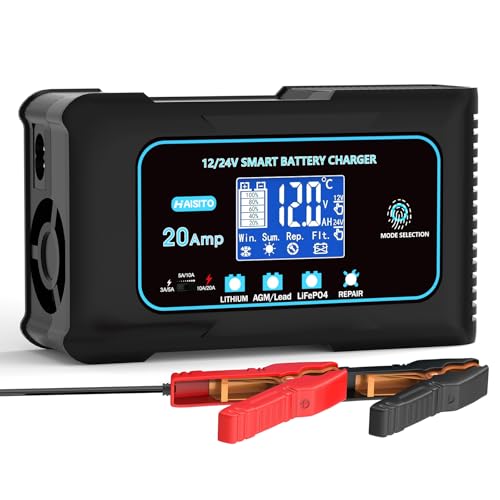
The Haisito 20-Amp Smart Battery Charger lists 20 amps for 12 volt batteries and 10 amps for 24 volt batteries. It supports lead acid, AGM, gel, SLA, lithium, and LiFePO4 batteries, with separate modes for lithium, LiFePO4, and lead acid. The LCD displays current, voltage, temperature, and battery percentage according to the manufacturer.
It also lists automatic 12 volt or 24 volt detection, pulse repair, and a forced charging mode if a low-voltage 24 volt battery is misidentified. Those features may appeal to owners who use one charger across several vehicles and boat batteries.
Avoid if: you plan to mount the charger permanently where spray, condensation, or vibration is expected.
Best heavy duty lead acid option: PCHH 12V 24V Car Battery Charger Heavy Duty
The PCHH 12V 24V Car Battery Charger Heavy Duty is intended for lead acid batteries, including AGM, gel, wet or flooded, EFB, calcium, MF, and deep cycle types. The manufacturer lists automatic 12 volt and 24 volt operation, fast and trickle modes, a repair mode for batteries above 3 volts, winter mode, an LCD, and a three year warranty.
This makes it a possible fit for a lead acid boat bank when charging speed and a large housing matter more than a sealed onboard design. The product information also lists a 12.2 pound weight, so consider where it will be stored and how it will be supported.
Drawback: It is not listed as compatible with lithium or LiFePO4 batteries. Avoid if: your boat uses lithium chemistry or you need a compact charger that can be carried frequently.
Why the NOCO GEN5X2 Is Not a 24 Volt Pick
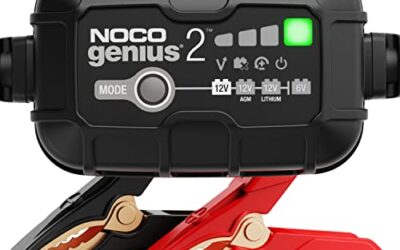
The NOCO Genius GEN5X2: 2-Bank is designed for marine use, but the manufacturer lists two independent 12 volt banks, with 5 amps per bank. Its selectable modes cover 12 volt, 12 volt AGM, 12 volt lithium, and 12 volt repair operation. Two 12 volt batteries in a boat may be connected in series to create a 24 volt system, but a pair of 12 volt charging outputs is not the same as a charger designed for a 24 volt battery bank.
For that reason, it should be considered only for separate 12 volt batteries, not as the charger for the 24 volt bank targeted by this article. Its IP68 onboard design and temperature compensation may be attractive in another installation, but they do not overcome the voltage mismatch.
Who Should Skip These 24 Volt Boat Chargers
Do not buy from this list if your boat has a 36 volt or 48 volt propulsion bank, a battery chemistry not named by the charger manufacturer, or an onboard charging system that requires a specific plug, network connection, or isolation arrangement not documented here. You should also skip a general purpose charger if the battery maker requires a profile that the product does not explicitly provide.
Look instead for a charger specified for your exact nominal voltage, battery chemistry, maximum charging current, connector, and marine installation requirements. For a permanently installed charger, confirm the enclosure rating, cable routing, shore power protection, ventilation, and mounting instructions. A qualified marine electrician can help verify the installation, especially where AC shore power and permanently wired DC conductors are involved.
Next step: Best 12 Volt Marine Battery Charger, Best 24 Volt Battery Charger and Car Battery Charger Buying Guide.
Final Verdict
Choose the Victron Energy Blue Smart IP67 Smart Marine if you want the most balanced 24 volt marine option with Bluetooth monitoring and a sealed design. Pick one of the KAISAL 29.2 volt chargers when the boat uses a 25.6 volt LiFePO4 battery and you want a dedicated lithium charging profile. For mixed chemistry use, the WAVLINK, E-FAST, Haisito, PZ.P, or RCGCBC models offer broader compatibility, but their marine protection, 24 volt output, and recovery behavior differ.
Before ordering, verify the battery label, charging voltage, chemistry mode, required connector, and whether the charger will be protected from spray. That short compatibility check matters more than choosing the highest amp number.