
To identify an AGM car battery, check its label for “AGM,” “Absorbent Glass Mat,” or “VRLA,” then confirm the battery type in the vehicle manual or service information. AGM batteries can look similar to other sealed lead-acid batteries, so case shape, terminal layout, and vehicle age are clues, not proof.
- Start with the battery’s own label, not its appearance.
- AGM means Absorbent Glass Mat, a type of valve-regulated lead-acid battery.
- Do not assume a car has AGM because it has start-stop technology or a sealed-looking battery.
- Use the correct battery setting on a charger, and follow vehicle-specific instructions for replacement or charging.
Read the main label on the battery case. A clear “AGM” or “Absorbent Glass Mat” marking is the most direct visual confirmation. Some labels use “VRLA,” meaning valve-regulated lead-acid. That term describes a sealed lead-acid battery design, but by itself it may not distinguish AGM from other VRLA designs, such as gel batteries. Look for an explicit AGM marking or confirm the battery type through reliable vehicle or battery records.
Labels may also show a brand, model number, group size, capacity, or cold-cranking rating. Those details can help identify a replacement, but they do not all identify battery chemistry. A battery with a familiar group size can be available in more than one construction type. Likewise, a high cold-cranking rating does not prove that a battery is AGM.
If the label is dirty, faded, or hidden by a cover, do not guess from a partial marking. Clean only the accessible case area with the vehicle off, without touching or bridging terminals. If you cannot read the label safely, use the owner’s manual, service records, or a parts counter that can check the vehicle’s exact year, make, model, and equipment.
What AGM means and how it differs from a flooded battery
AGM stands for Absorbent Glass Mat. Thin glass-fiber mats hold the battery’s electrolyte between the lead plates. AGM batteries are a form of lead-acid battery, not a different vehicle voltage system. Most passenger cars using one still have a nominal 12-volt battery.
A conventional flooded lead-acid battery has liquid electrolyte that can move within its cells. Many flooded batteries have removable caps, though some are maintenance-free and do not offer routine access to the cells. AGM batteries are typically sealed and use pressure-regulating valves. “Sealed” does not mean the battery can never release gas; charging faults, damage, or other abnormal conditions can create hazards.
AGM batteries are often used in vehicles with higher electrical demands, including some models with start-stop systems. But those features do not prove which battery is installed. Automakers may use different battery types across trims, model years, and markets. A battery might also have been replaced with a different compatible type, correctly or incorrectly.
Steps to confirm battery type
- Park safely and locate the battery. Turn the vehicle off and follow the owner’s manual for access. Batteries may sit under the hood, in the trunk, or elsewhere. Some vehicles use a remote jump terminal under the hood while the battery itself is in another location.
- Read the battery label. Look for “AGM” or “Absorbent Glass Mat.” Record the brand and full model number if you need to look up the battery’s specifications.
- Check the manual or service information. Find the battery specification for the exact model year and vehicle configuration. A manual may state an approved battery type or replacement requirement.
- Compare records with the installed battery. Service invoices or battery replacement records may show what was fitted. A record can help, but compare it with the battery currently in the car because another replacement may have happened since.
- Ask a qualified parts or service professional if uncertainty remains. Provide the vehicle identification details and the battery model number. Ask whether the installed type matches the vehicle’s required specification.
This order separates identification from replacement decisions. A label tells you what battery is present. Vehicle-specific service information tells you what type the vehicle calls for. Those answers can differ if the wrong battery was installed previously.
AGM identification clues: what they can and cannot tell you
| Clue | What it can tell you | What it cannot prove |
|---|---|---|
| “AGM” or “Absorbent Glass Mat” on label | Direct indication that the battery is AGM. | Whether it is the correct size or specification for your vehicle. |
| “VRLA” on label | The battery is a valve-regulated lead-acid design. | AGM chemistry by itself; other sealed lead-acid designs exist. |
| No removable cell caps | The battery may be sealed or maintenance-free. | That it is AGM. Some non-AGM batteries also lack user-accessible caps. |
| Start-stop system | The vehicle may require a battery suited to frequent engine restarts. | That the installed battery is AGM. Some vehicles use other battery types. |
| Battery group size or terminal layout | Physical fit and connection details may be easier to compare. | Battery chemistry or suitability on its own. |
Why identifying AGM matters for charging and replacement
Battery type affects charging decisions. Some smart chargers offer separate AGM and standard lead-acid settings. Select a setting only when the battery label or reliable vehicle information confirms the type, and follow the charger instructions. A setting intended for another battery chemistry or a special recovery mode can be unsuitable for a vehicle battery.
Before charging a battery in the vehicle, check both the vehicle manual and charger instructions. Vehicle electronics, battery location, temperature, and connection points can change the safe procedure. Do not rely on a generic connection sequence for every model. Stop if the battery is cracked, swollen, leaking, unusually hot, or gives off a strong odor; do not charge or jump it.
Replacement is not only a matter of matching the case. Check battery type, dimensions, terminal position, capacity, and the vehicle’s specified requirements. Some vehicles also require battery registration, coding, or a prescribed replacement procedure so their charging system can account for the new battery. Requirements vary by make, model, and model year. The owner’s manual or service information is the right place to check.
For more on charger types and charging behavior, see NOCO GENIUS vs battery tender Cold-weather charging can also depend on battery and charger limits; this cold-weather battery charger guide explains why voltage profiles and temperature matter.
Common mistakes
- Calling every sealed battery AGM. Sealed case construction does not identify the internal design. Look for an AGM marking or confirm through records.
- Assuming start-stop means AGM. Start-stop systems can use different battery technologies depending on vehicle design and equipment.
- Using the group size as a chemistry label. Group size mainly describes physical dimensions and terminal arrangement. It does not reliably tell you whether a battery is AGM.
- Choosing a charger mode from appearance. Similar-looking batteries may need different charging settings. Read the battery label first.
- Assuming the installed battery is the factory specification. A prior replacement may not match the vehicle’s original requirement. Compare the battery with vehicle service information.
- Opening a sealed battery. Do not pry open an AGM case or try to inspect its internal mats. The case is not intended for that kind of inspection.
When to get professional help
Get help from a qualified technician if the label is unreadable, the battery is difficult to access, or you find signs of swelling, leakage, heat, or damage. Seek vehicle-specific guidance before disconnecting or replacing a battery if the manual warns about electronic settings, high-voltage components, or a required battery registration process.
Ask the technician to identify both the battery currently installed and the type specified for your vehicle. That distinction matters if the wrong battery type or size was fitted earlier. For background on lead-acid battery types and safe handling, consult Battery Council International.
Gear that can help
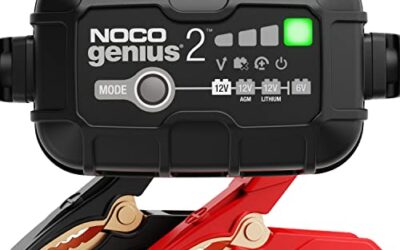
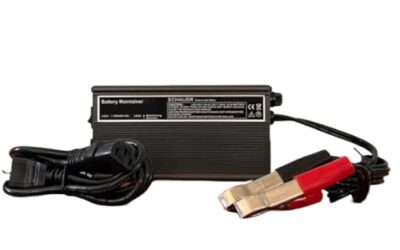
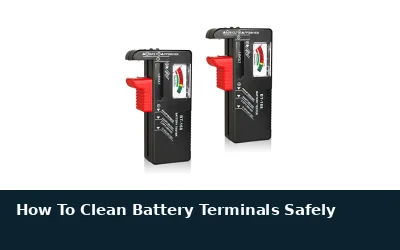
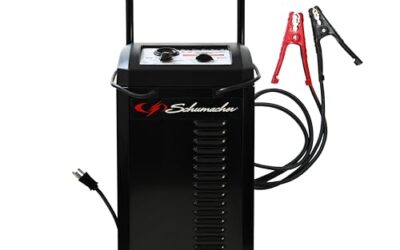
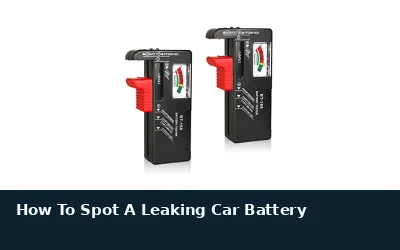
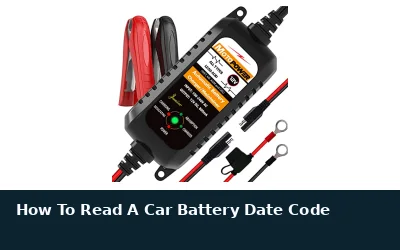
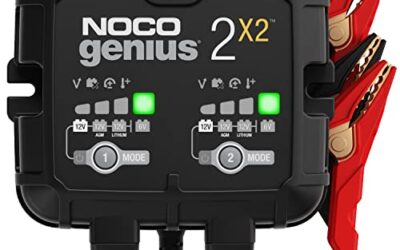
If you need battery chargers and maintainers or battery testers for this job, these picks already appear in our battery chargers and maintainers guides. Check the full guide for fit and who should skip each one.

Pros
- Compatible with flooded, maintenance-free, AGM, Gel, SLA, VRLA, deep-cycle, marine, and powersport batteries
- Supports cars, motorcycles, lawn equipment, ATVs, boats, RVs, tractors, and other listed vehicle types
- Designed for indefinite connection while monitoring the battery to help prevent overcharging
- Includes both battery clamps and integrated eyelet terminals
Cons
- Supports 6V and 12V batteries; other voltage systems are not listed
- Force Mode is required to charge batteries down to 0V
- The listing does not include battery capacity limits
Specifications
| Color | Black |
|---|---|
| Size | 1A |
| Dimensions | 3.5 x 2.3 x 1.3 inches |
| Weight | 0.95 Pounds |
| Product Group | Automotive Parts and Accessories |
| Binding | Automotive |
Best For / Avoid If
Best for buyers prioritizing
- Compatible with flooded, maintenance-free, AGM, Gel, SLA, VRLA, deep-cycle, marine, and powersport batteries
- Supports cars, motorcycles, lawn equipment, ATVs, boats, RVs, tractors, and other listed vehicle types
- Designed for indefinite connection while monitoring the battery to help prevent overcharging
Consider another option if
- Supports 6V and 12V batteries; other voltage systems are not listed
- Force Mode is required to charge batteries down to 0V
- The listing does not include battery capacity limits

Pros
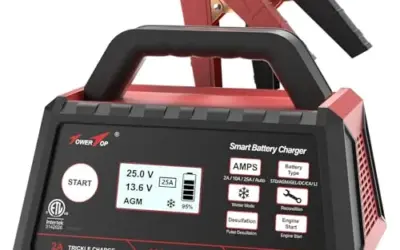
- Adjustable charging current supports different charging needs
- Broad compatibility with listed 12V sealed lead-acid battery types
- Includes dedicated desulfation and repair functions
- Offers engine-start assistance and a winter charging mode
- ETL certification is listed in the listing
Cons
- The repair mode cannot repair completely drained batteries
- Only 12V battery applications are specified
Specifications
| Color | 25A |
|---|---|
| Dimensions | 7.68110235437 x 10.0393700685 x 4.9212598375 inches |
| Product Group | Automotive Parts and Accessories |
| Binding | Electronics |
Best For / Avoid If
Best for buyers prioritizing
- Adjustable charging current supports different charging needs
- Broad compatibility with listed 12V sealed lead-acid battery types
- Includes dedicated desulfation and repair functions
Consider another option if
- The repair mode cannot repair completely drained batteries
- Only 12V battery applications are specified

Pros
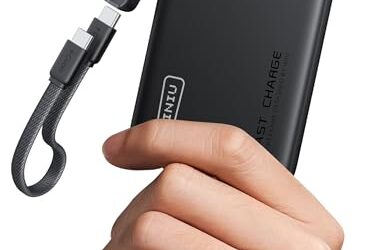
- Combines an OBD2 scanner and battery tester in one tool
- Provides live engine data and emissions-readiness status
- Includes oil reset functionality and access to RepairSolutions2 repair guidance
- Vehicle coverage includes many US, Asian, and European models from 1996 and newer
Cons
- ABS and other diagnostic features may vary by make, model, and year
- Compatibility should be verified with Innova's Coverage Checker before purchase
- Emission-readiness monitors reset after a battery disconnect or code clear and require a complete drive cycle to repopulate
Specifications
| Dimensions | 5.99 x 2.99 x 0.99 inches |
|---|---|
| Product Group | Automotive Parts and Accessories |
| Binding | Automotive |
Best For / Avoid If
Best for buyers prioritizing
- Combines an OBD2 scanner and battery tester in one tool
- Provides live engine data and emissions-readiness status
- Includes oil reset functionality and access to RepairSolutions2 repair guidance
Consider another option if
- ABS and other diagnostic features may vary by make, model, and year
- Compatibility should be verified with Innova's Coverage Checker before purchase
- Emission-readiness monitors reset after a battery disconnect or code clear and require a complete drive cycle to repopulate
FAQ
Can I tell whether a battery is AGM by looking at it?
Not reliably. A sealed case, lack of removable caps, or a particular terminal layout is not proof. Find “AGM” or “Absorbent Glass Mat” on the label, or check the battery model and vehicle records.
Does a 12-volt battery mean it is AGM?
No. AGM and conventional flooded batteries can both be used in 12-volt vehicle systems. Voltage does not identify battery construction.
Can I replace an AGM battery with a regular flooded battery?
Only if the vehicle maker permits that battery type for your exact model and configuration. Battery chemistry can affect charging behavior and vehicle operation, so do not substitute based on physical fit alone.
Does every AGM battery charger work with every AGM battery?
No. Charger output, battery voltage, battery condition, and the vehicle’s charging instructions all matter. Use the charger manual and battery guidance, and avoid charging a damaged battery.