How to spot a leaking car battery starts with checking for wet fluid, white or blue crust, case damage, swelling, and a sulfur smell around the battery. Park safely, switch off the vehicle, keep sparks away, and avoid touching unknown liquid because lead-acid electrolyte can burn skin and damage paint.
You can inspect an accessible 12-volt battery without removing it. Do not handle a leaking, cracked, hot, or swollen battery. A damaged battery needs professional removal or recycling, not charging or jump-starting.
Key takeaways
- Wetness around battery seams, vents, terminals, or tray can indicate electrolyte leakage.
- White, gray, or blue crust may show acid corrosion, but corrosion alone does not prove case leakage.
- Swelling, cracks, heat, hissing, smoke, or strong sulfur odor require immediate caution.
- Do not charge or jump-start a battery with visible damage or active leakage.
- Battery voltage, case type, vehicle model year, and battery chemistry affect diagnosis.
How to spot a leaking car battery safely
1. Park and prepare
Park outside or in a well-ventilated area. Put the transmission in Park or Neutral, set the parking brake, and switch off the ignition and accessories. Remove jewelry and keep cigarettes, flames, tools, and other ignition sources away.
Wear safety glasses and chemical-resistant gloves. Do not lean over the battery. Never place metal tools across both terminals. Short circuits can cause burns, sparks, battery damage, or an explosion.
2. Look for fluid around the case
Inspect the battery top, sides, seams, vent areas, terminals, and battery tray. Electrolyte may appear clear, watery, or slightly tinted. A damp trail from a seam or vent points toward leakage. A wet tray under one side can also indicate a cracked case.
Water from washing, condensation, or an engine-bay spill can look similar. Check whether moisture returns after the area dries. Do not touch it with bare skin, taste it, or wipe it toward painted surfaces.
3. Check for crust and terminal damage
White or gray powder often forms when electrolyte reacts with metal. Blue or green deposits usually involve copper terminal material or cable corrosion. Crust around one terminal may come from a loose connection, overcharging, venting, or a damaged post.
Corrosion does not always mean the plastic case leaks. A battery can corrode at its terminals without visible case damage. A leak becomes more likely when crust appears with wetness, a cracked case, or a low electrolyte level on a serviceable battery.
4. Inspect the case shape
A healthy battery case should hold its normal shape. Bulging sides, a raised top, warped plastic, cracks, or a melted area signal internal damage or excessive heat. Stop inspection if the battery feels hot, hisses, vents vapor, or smells strongly of rotten eggs.
Heat can come from charging faults, a high-resistance connection, a failed battery, or a problem in the vehicle charging system. A swollen battery can rupture. Do not press it, clamp it, open it, or place it on a charger.
5. Check the battery tray and hold-down
A loose battery can move during braking and vibration. Movement can damage the case, terminals, or cables, then cause leakage. A missing or loose hold-down also creates a safety risk in a crash.
Do not tighten or reposition a damaged battery. If the case looks intact and dry, the vehicle manual may show the correct hold-down method. Battery locations vary by model year. Some vehicles place the 12-volt battery in the trunk, under a seat, or beneath the hood.
What battery leakage looks like
| Sign | What it may mean | Safe response |
|---|---|---|
| Wet trail from seam or vent | Electrolyte leakage or spilled fluid | Stop use and arrange professional service |
| White or gray crust | Acid-related corrosion or venting | Inspect from a distance; avoid bare-skin contact |
| Blue or green terminal deposits | Cable or terminal corrosion | Do not assume case leakage; inspect for wetness and cracks |
| Swollen or cracked case | Heat, overcharging, age, or internal failure | Do not charge, jump, or remove without proper protection |
| Rotten-egg odor | Hydrogen sulfide from a failing or overcharged battery | Move away from ignition sources and get help |
| Low fluid in removable-cell battery | Evaporation, overcharging, or leakage | Follow battery and vehicle instructions; replace damaged unit |
Battery types change the inspection
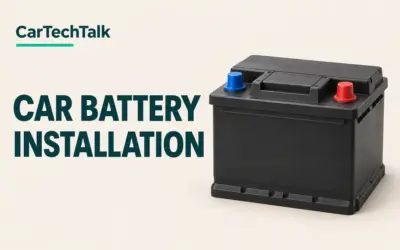
Most gasoline and diesel cars use a 12-volt lead-acid battery. Flooded batteries may have removable caps and liquid electrolyte. Absorbent glass mat, or AGM, batteries hold electrolyte in a mat and usually have a sealed top. They can still vent or leak after damage, overcharging, or case failure.
Enhanced flooded batteries may support start-stop systems. Replacing one with the wrong battery type can cause charging and control problems. Some vehicles need battery registration or battery-management-system programming after replacement. The process depends on vehicle model year and electrical system.
Hybrid and electric vehicles can contain a separate high-voltage traction battery. Its orange cables and battery enclosure are not the same as the 12-volt battery. Do not inspect, disconnect, or open high-voltage components. Follow the vehicle service manual and use qualified EV service.
How to tell acid leakage from harmless moisture
Start with location and repeatability. Moisture that appears only after rain or washing may come from the engine bay, hood, cowl, or battery cover. Moisture that returns at a battery seam, vent, terminal, or tray deserves more concern.
Surface texture provides another clue. Battery corrosion often leaves powder or crust as liquid dries. Clean water usually leaves little residue, though road dirt can confuse the inspection. Do not use household cleaners to identify an unknown liquid.
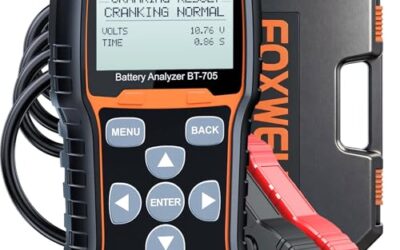
A battery tester can show low state of charge or weak starting performance. It cannot prove that a case is sealed. A digital multimeter can measure voltage, but voltage alone cannot locate a leak or rule out internal damage. Testing a damaged battery adds risk, so visual safety comes first.
What to do after finding a leak
- Switch off the vehicle and keep ignition sources away.
- Do not charge, jump-start, shake, open, or move a leaking battery.
- Keep people and pets away from the battery area.
- Contact an automotive repair shop, roadside provider, or battery recycler for handling instructions.
- Tell the service provider about fluid, swelling, cracks, heat, odor, or smoke.
- Check nearby paint, wiring, brackets, and the battery tray after removal because acid can cause hidden corrosion.
If electrolyte contacts skin, flush the area with plenty of clean running water and seek medical advice. If it reaches the eyes, flush immediately and obtain urgent medical care. Follow local emergency guidance for a major spill or visible smoke.
Do not pour neutralizing chemicals onto a mounted battery. A reaction can create heat and splatter. Do not wash acid into storm drains. Handling and recycling rules vary by location.
Can a leaking battery be repaired?
Consumer repair is not a safe fix for a cracked or leaking automotive battery. Sealing the case, adding fluid, removing caps, or replacing terminals does not restore internal safety. A replacement battery must match the vehicle’s required voltage, physical size, terminal layout, chemistry, capacity, and starting rating.
Charging system diagnosis may also matter. A failed alternator, voltage regulator, wiring fault, or battery-management system can damage a replacement battery. A technician should test charging voltage and parasitic draw after installing the correct battery.
For charging guidance, see NOCO GENIUS vs battery tender. Cold conditions can change charging behavior, so the cold-weather battery charger guide covers voltage profiles and temperature limits.
Common mistakes
- Assuming all crust means a leaking case. Terminal corrosion can come from a loose post, venting, or cable contamination.
- Charging first and inspecting later. Charging a damaged battery can increase heat, gas, and rupture risk.
- Using a spark to test the battery. Hydrogen gas can ignite.
- Cleaning terminals while the battery is swollen. Contact and tool movement can worsen damage.
- Replacing the battery without checking the charging system. An electrical fault can damage the replacement.
- Using a 12-volt inspection method on an EV high-voltage pack. High-voltage systems require trained service.
When to get professional help
Get professional help for any active leak, cracked case, swelling, heat, smoke, hissing, strong sulfur odor, or acid contact. Also seek help when the battery sits in a hard-to-reach location, connects to a battery-management system, or belongs to a hybrid or EV.
Call roadside assistance instead of driving if the battery is hot, smoking, heavily swollen, or leaking onto wiring. A vehicle that still starts can remain unsafe. Driving may spread corrosive fluid and increase the chance of electrical failure.
Battery replacement is not always plug-and-play. Some late-model vehicles need a scan tool to register battery capacity and type. Connector style, battery sensor wiring, model year, and regional configuration can change the correct procedure.
Gear that can help
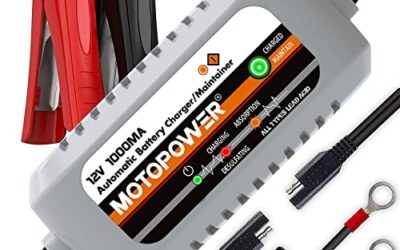
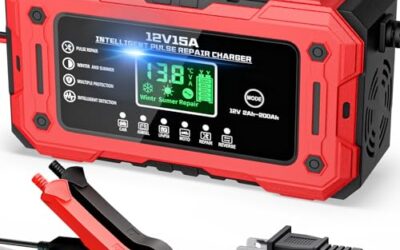
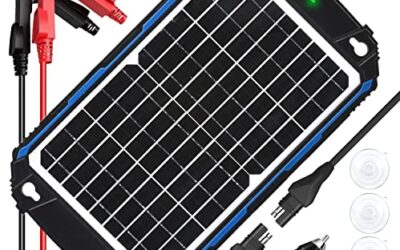
If you need battery chargers and maintainers or battery testers for this job, these picks already appear in our battery chargers and maintainers guides. Check the full guide for fit and who should skip each one.

Pros
- Supports multiple lead-acid battery types, including AGM, Gel, SLA, VRLA, flooded, maintenance-free, and deep-cycle batteries
- Designed for a wide range of vehicles and equipment, including cars, motorcycles, boats, ATVs, tractors, trucks, SUVs, RVs, and lawn mowers
- Includes both battery clamps and integrated eyelet terminals
- Provides automatic maintenance charging with overcharge protection
Cons
- The listing lists support for LiFePO4 batteries specifically, rather than all lithium-ion battery types
- The charger is specified for 6V and 12V batteries only
Specifications
| Color | Black |
|---|---|
| Size | 10A |
| Dimensions | 4.41 x 4.48 x 9.1 inches |
| Weight | 3.99 Pounds |
| Product Group | Automotive Parts and Accessories |
| Binding | Electronics |
Best For / Avoid If
Best for buyers prioritizing
- Supports multiple lead-acid battery types, including AGM, Gel, SLA, VRLA, flooded, maintenance-free, and deep-cycle batteries
- Designed for a wide range of vehicles and equipment, including cars, motorcycles, boats, ATVs, tractors, trucks, SUVs, RVs, and lawn mowers
- Includes both battery clamps and integrated eyelet terminals
Consider another option if
- The listing lists support for LiFePO4 batteries specifically, rather than all lithium-ion battery types
- The charger is specified for 6V and 12V batteries only

Pros
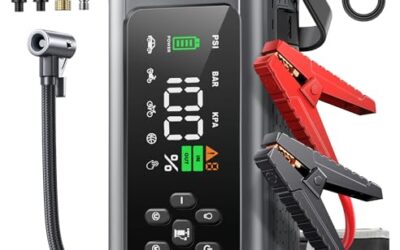
- Supports multiple 6V and 12V battery types
- Combines 15A charging with a maintain/float function
- Provides digital voltage and charge-status information
- Includes reverse hook-up protection
Cons
- The listing does not include dimensions, warranty information, or included accessories
Specifications
| Color | Black |
|---|---|
| Size | Battery Charger and Maintainer |
| Dimensions | 9.96 x 4.29 x 10.03 Inches |
| Weight | 2.7 Pounds |
| Product Group | Automotive Parts and Accessories |
| Binding | Automotive |
Best For / Avoid If
Best for buyers prioritizing
- Supports multiple 6V and 12V battery types
- Combines 15A charging with a maintain/float function
- Provides digital voltage and charge-status information
Consider another option if
- The listing does not include dimensions, warranty information, or included accessories

Pros
- Covers multiple battery condition and vehicle charging-system checks
- Supports several battery types and global rating standards
- Backlit black-and-white display has adjustable contrast
- Compatible with cars, trucks, boats, RVs, ATVs, lawnmowers, golf carts, and motorbikes over 30Ah
Cons
- Not compatible with lithium or non-12V batteries
- Not intended for motorcycles below 30Ah
Specifications
| Color | Red |
|---|---|
| Size | BA101 |
| Dimensions | 9.5 x 7 x 2 inches |
| Weight | 0.3125 Pounds |
| Product Group | Automotive Parts and Accessories |
| Binding | Automotive |
Best For / Avoid If
Best for buyers prioritizing
- Covers multiple battery condition and vehicle charging-system checks
- Supports several battery types and global rating standards
- Backlit black-and-white display has adjustable contrast
Consider another option if
- Not compatible with lithium or non-12V batteries
- Not intended for motorcycles below 30Ah
FAQ
Can a car battery leak without visible fluid?
Yes. Venting or a small leak may leave dried crust before liquid becomes obvious. Swelling, odor, corrosion, and repeated moisture still warrant caution.
Is white powder on a battery dangerous?
It may contain corrosion products and acid residue. Avoid skin contact and airborne dust. White powder alone does not prove case leakage, but damage around it needs inspection.
Can I drive with a slightly leaking battery?
No. A leak can damage cables, paint, and the battery tray. Heat, vibration, and charging can worsen it. Arrange professional handling.
Does low battery voltage prove a leak?
No. Low voltage can result from discharge, age, poor charging, parasitic draw, or internal failure. Voltage testing cannot locate physical leakage.
Where can I learn more about automotive batteries?
Battery Council International provides consumer and industry information through its automotive battery resources.
Sources and further reading
- Battery Council International (Battery Council International): Battery information, safety guidance, and recycling resources.