To test battery voltage drop during cranking, measure battery voltage while the engine starts, then test voltage loss across positive and negative cables. A digital multimeter, safe probe placement, and a fully charged 12-volt battery provide the basic setup.
This test shows how much battery voltage falls under starter load. It also shows whether resistance in battery cables, terminals, or engine grounds blocks current. Results can point toward a weak battery, poor connection, high-resistance cable, starter problem, or normal operation.
Key takeaways
- Measure directly across battery posts during cranking, not only across cable clamps.
- A healthy test result depends on temperature, battery charge, engine oil, and vehicle design.
- Test positive-side and ground-side voltage drop separately.
- Disable fuel or ignition only when the vehicle service information gives a safe method.
- Voltage drop identifies circuit resistance. It does not prove battery capacity or starter condition alone.
- Hybrid and electric vehicles need different procedures. Do not probe high-voltage battery cables.
What battery voltage drop during cranking means
Battery voltage drop during cranking is the reduction in battery voltage caused by the starter’s heavy electrical load. A resting battery may show near 12.6 volts after charging and surface charge dissipates. During cranking, voltage falls because the battery supplies high current through its internal resistance.
The starter circuit also has resistance. Current travels from the battery positive post through a cable, connection, fuse link, solenoid, and starter motor. It returns through the starter case, engine block, ground strap, negative cable, and battery negative post. Every poor connection adds resistance and consumes voltage.
This test applies mainly to conventional 12-volt vehicles with lead-acid, AGM, or similar low-voltage starting batteries. Vehicle model-year, battery chemistry, stop-start hardware, and engine control strategy can change the expected result. Check service information for unusual starting systems.
Tools and preparation
- Digital multimeter with a DC voltage range that covers 0 to 20 volts.
- Sharp probes or back-probe leads with insulated handles.
- Safety glasses and clothing that cannot catch on belts or fans.
- Battery charger if battery state of charge is low.
- Vehicle service information for fuel, ignition, and starter access.
Park on level ground. Select Park or Neutral, apply the parking brake, and keep people away from moving parts. Turn off lights, climate controls, audio equipment, and accessories.
Inspect the battery case, terminals, cables, and visible ground straps. Stop if the battery is swollen, cracked, leaking, frozen, or hot. Battery acid and explosive gas create injury and fire risks. Do not create sparks near a charging battery.
Keep probes away from belts, pulleys, fans, and exhaust parts. A helper can turn the key or press the start button while the person holding probes watches the meter. Do not reach across the engine bay during cranking.
How to test battery voltage drop during cranking
1. Identify battery type and test points
Locate the 12-volt starting battery. Some vehicles place it in the engine bay, trunk, or under a seat. Remote jump posts may connect through long cables and fuse links, so direct battery-post testing gives cleaner battery data.
Use the actual lead and negative posts when testing battery voltage. Cable clamps can hide corrosion between the clamp and post. Clean heavy corrosion before testing, but do not remove cables from a vehicle with model-specific memory or battery-management requirements unless service instructions allow it.
2. Check resting voltage
- Set the multimeter to DC volts.
- Touch the red probe to the battery positive post.
- Touch the black probe to the battery negative post.
- Read voltage with the ignition and accessories off.
A fully charged conventional 12-volt battery often reads around 12.6 volts after sitting. About 12.4 volts suggests partial charge, while a much lower reading calls for charging before diagnosis. Temperature and recent charging can change these numbers.
Resting voltage does not measure battery capacity. A battery can show normal voltage and still lose too much voltage under starter load. Charge the battery before drawing conclusions from a cranking test.
3. Measure voltage while cranking
- Keep probes on the battery posts.
- Have a helper crank the engine for several seconds.
- Watch the lowest displayed voltage during cranking.
- Stop if the starter spins unusually slowly, cables heat quickly, or the engine fails to crank normally.
Many healthy 12-volt starting systems stay above roughly 9.6 volts during a short crank at room temperature. Treat this as a common diagnostic reference, not a universal pass number. Cold weather, engine size, oil viscosity, battery age, and manufacturer limits can change the result.
A reading well below that range suggests low battery charge, weak battery capacity, excessive cable resistance, a starter drawing high current, or an engine that turns too hard. The voltage reading alone cannot separate those causes.
4. Test positive-side voltage drop
This test measures voltage lost between the battery positive post and starter positive terminal while current flows.
- Place the red probe on the battery positive post.
- Place the black probe on the starter’s main positive terminal or solenoid input terminal.
- Crank the engine.
- Record the highest voltage shown during cranking.
A common target for the complete positive side is about 0.2 to 0.5 volts. Vehicle service data may allow a different value. A high reading points toward corrosion, a loose terminal, damaged cable strands, a failing fusible link, or a high-resistance solenoid connection.
Probe location matters. Testing from battery post to cable clamp checks one connection. Testing from battery post to starter terminal checks most of the positive path. Do not confuse a small connection test with the full cable test.
5. Test negative-side voltage drop
This test measures resistance in the return path from the starter case to the battery negative post.
- Place the red probe on the starter housing or clean engine-block metal close to the starter.
- Place the black probe on the battery negative post.
- Crank the engine.
- Record the highest voltage shown.
A common target for the ground side is about 0.2 to 0.3 volts. A higher result suggests a poor negative cable, loose battery connection, corroded engine ground, damaged body ground, or poor starter-to-engine contact.
Paint, rust, grease, and plated surfaces can distort a test. Use clean metal, but avoid piercing insulation or damaging sealed connectors. Some vehicles use several ground straps, so inspect the engine-to-body and battery-to-body paths.
6. Repeat tests when results conflict
Repeat the test with the same probe locations. If voltage changes sharply, a probe may have slipped or contacted contaminated metal. If the starter works after moving a cable, the movement may have changed a poor connection rather than fixed it.
Touch the probes to battery posts, not clamps, for the battery test. Then move one probe at a time for cable tests. This method keeps each result tied to one circuit section.
Voltage drop test reference table
| Test | Probe locations | Common reference | Possible meaning when high |
|---|---|---|---|
| Battery cranking voltage | Battery positive post to negative post | Often above 9.6 volts | Low charge, weak battery, heavy starter load, or difficult engine rotation |
| Positive cable drop | Battery positive post to starter positive terminal | Often about 0.2 to 0.5 volts | Corrosion, loose connection, damaged cable, or solenoid resistance |
| Negative cable drop | Starter case or engine block to battery negative post | Often about 0.2 to 0.3 volts | Bad ground cable, ground strap, connection, or mounting surface |
| Battery terminal connection | Battery post to its cable clamp | Near zero during cranking | Loose or corroded terminal contact |
These figures are diagnostic references, not universal specifications. Follow the vehicle service manual when its limits differ. Some modern vehicles use battery sensors, smart starters, or start-stop systems that change test conditions.
How to interpret combined results
Low cranking voltage with low cable drops
The battery may have low charge or poor capacity. Charge it with a suitable charger, then repeat the test. If voltage still falls too far, a battery conductance or load test can add useful evidence.
A starter can also draw excessive current. A current test by a qualified technician can separate battery weakness from starter drag. Engine oil grade, cold temperature, mechanical seizure, and accessory drive faults can also slow cranking.
Normal battery voltage with high cable drop
The battery may be capable, while the cables or connections restrict current. Inspect each terminal, cable end, ground strap, fuse link, and starter terminal. Look for heat damage, green corrosion, swollen cable insulation, and loose fasteners.
Low battery voltage with normal cable drops
The cables may be sound, but the battery may lack charge or capacity. Check charging history and battery age only as supporting clues. Resting voltage and cranking voltage cannot replace a proper battery test.
Normal battery and cable results with slow cranking
Investigate starter current draw, engine rotation, and mechanical load. A starter motor can wear internally without creating a large cable voltage drop. A technician may need an amp clamp, scan data, compression testing, or mechanical inspection.
Common mistakes
- Testing only resting voltage. This misses battery weakness under load.
- Probing cable clamps instead of battery posts. The clamp may hide contact resistance.
- Using resistance mode while the circuit carries current. Ohms testing on a live circuit can damage the meter.
- Holding probes near moving parts. Probe leads can catch in belts or fans.
- Cranking too long. Long cranking heats the starter and can discharge the battery.
- Assuming 9.6 volts fits every vehicle. Temperature and manufacturer procedures matter.
- Replacing the battery before testing cable voltage drop. A bad ground can damage the replacement battery experience.
- Using a jump pack as proof of battery condition. The pack can mask a weak battery or poor vehicle connection.
- Testing a hybrid or EV high-voltage system with a normal multimeter. High-voltage systems need trained procedures and rated equipment.
When to get professional help
Get professional help when the battery case is damaged, the vehicle has a high-voltage system, or the starter circuit uses access points you cannot safely reach. Stop testing if cables become hot, insulation smokes, sparks appear, or battery gas ignites.
A technician should handle repeated no-start faults after a charged battery and cable tests pass. Professional diagnosis may require a battery load tester, current clamp, scan tool, wiring diagrams, starter testing, or mechanical checks.
Vehicle model-year differences matter. Battery registration, stop-start systems, remote battery posts, and body control modules can make battery replacement or disconnection procedure-specific. Follow the owner’s manual and service information.
Gear that can help
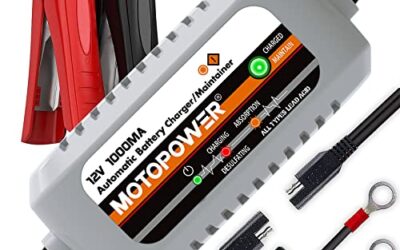
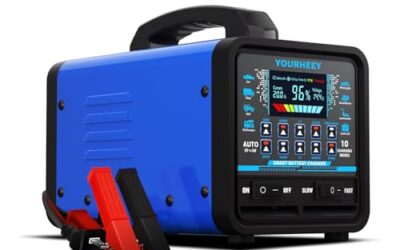
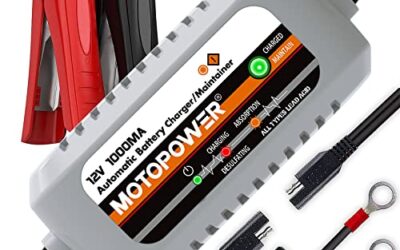
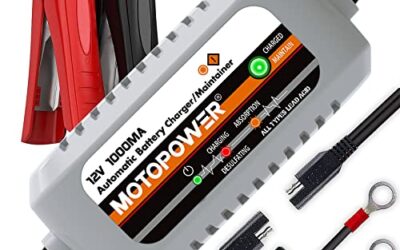
If you need battery chargers and maintainers or battery testers for this job, these picks already appear in our battery chargers and maintainers guides. Check the full guide for fit and who should skip each one.

Pros
- Adjustable charging current supports different charging needs
- Broad compatibility with listed 12V sealed lead-acid battery types
- Includes dedicated desulfation and repair functions
- Offers engine-start assistance and a winter charging mode
- ETL certification is listed in the listing
Cons
- The repair mode cannot repair completely drained batteries
- Only 12V battery applications are specified
Specifications
| Color | 25A |
|---|---|
| Dimensions | 7.68110235437 x 10.0393700685 x 4.9212598375 inches |
| Weight | 5.00008410216 Pounds |
| Product Group | Automotive Parts and Accessories |
| Binding | Electronics |
Best For / Avoid If
Best for buyers prioritizing
- Adjustable charging current supports different charging needs
- Broad compatibility with listed 12V sealed lead-acid battery types
- Includes dedicated desulfation and repair functions
Consider another option if
- The repair mode cannot repair completely drained batteries
- Only 12V battery applications are specified

Pros
- Supports multiple lead-acid battery types, including AGM, Gel, SLA, VRLA, flooded, maintenance-free, and deep-cycle batteries
- Designed for a wide range of vehicles and equipment, including cars, motorcycles, boats, ATVs, tractors, trucks, SUVs, RVs, and lawn mowers
- Includes both battery clamps and integrated eyelet terminals
- Provides automatic maintenance charging with overcharge protection
Cons
- The listing lists support for LiFePO4 batteries specifically, rather than all lithium-ion battery types
- The charger is specified for 6V and 12V batteries only
Specifications
| Color | Black |
|---|---|
| Size | 10A |
| Dimensions | 4.41 x 4.48 x 9.1 inches |
| Weight | 3.99 Pounds |
| Product Group | Automotive Parts and Accessories |
| Binding | Electronics |
Best For / Avoid If
Best for buyers prioritizing
- Supports multiple lead-acid battery types, including AGM, Gel, SLA, VRLA, flooded, maintenance-free, and deep-cycle batteries
- Designed for a wide range of vehicles and equipment, including cars, motorcycles, boats, ATVs, tractors, trucks, SUVs, RVs, and lawn mowers
- Includes both battery clamps and integrated eyelet terminals
Consider another option if
- The listing lists support for LiFePO4 batteries specifically, rather than all lithium-ion battery types
- The charger is specified for 6V and 12V batteries only

Pros
- Combines engine-code scanning with a built-in battery diagnostic feature
- Provides live data and freeze frame information for diagnostic reference
- Does not require batteries and uses plug-and-play operation
- Supports most 1996 and newer US cars and listed 2000 and newer EU and Asian vehicles
Cons
- Does not support new energy or hybrid vehicles
- Limited to engine fault codes and does not support ABS, SRS, or transmission systems
- Vehicle compatibility may vary because the source lists general model-year and protocol support rather than a specific vehicle list
Specifications
| Color | Orange |
|---|---|
| Dimensions | 2.95 x 0.9 x 5.35 inches |
| Weight | 0.4 pounds |
| Product Group | Automotive Parts and Accessories |
Best For / Avoid If
Best for buyers prioritizing
- Combines engine-code scanning with a built-in battery diagnostic feature
- Provides live data and freeze frame information for diagnostic reference
- Does not require batteries and uses plug-and-play operation
Consider another option if
- Does not support new energy or hybrid vehicles
- Limited to engine fault codes and does not support ABS, SRS, or transmission systems
- Vehicle compatibility may vary because the source lists general model-year and protocol support rather than a specific vehicle list
FAQ
Can a multimeter test battery voltage drop?
Yes. A digital multimeter can measure cranking voltage and voltage loss across positive and negative cables. It cannot measure battery reserve capacity or starter current by itself.
What voltage should a car battery show during cranking?
Many 12-volt systems use about 9.6 volts as a room-temperature reference during short cranking. Temperature, battery type, engine load, and vehicle instructions can change the acceptable limit.
Why does battery voltage drop when the starter turns?
The starter demands high current. Battery internal resistance and circuit resistance create voltage loss. A large drop can indicate low charge, weak capacity, poor cables, or a starter problem.
Can voltage drop testing find a bad ground?
Yes. Place one probe on clean starter or engine metal and the other on the battery negative post during cranking. A high reading points toward resistance in the ground path.
Should the engine start during this test?
Usually, the engine only needs to crank long enough for the meter to capture voltage. Disable fuel or ignition only with a safe method from vehicle service information. Do not disconnect random sensors or remove fuses without checking the vehicle procedure.
Sources and further reading
- Battery Council International: Battery industry information and resources for vehicle battery topics.