The reason why a car inverter cannot run a household kettle is usually simple: the kettle needs more continuous power than the inverter, vehicle outlet, wiring, or charging system can safely supply. A kettle may use 1,500 watts or more, while many car power connections are meant for much smaller loads.
- Check the kettle’s wattage and the inverter’s continuous output rating, not just its peak rating.
- A 12-volt system needs very high current to deliver household-appliance power.
- A household plug fitting an inverter outlet does not prove the setup is safe or compatible.
- Do not connect a high-load inverter to a dashboard outlet unless both manuals explicitly allow the load.
A car inverter changes DC power from the vehicle into AC power for household-style appliances. That conversion does not create extra power. The vehicle’s electrical system must supply the energy the kettle uses, plus power lost during conversion.
Many household kettles are rated around 1,500 watts or higher. That rating describes their electrical demand while heating. Compare it with the inverter’s continuous AC output rating. If the kettle’s draw exceeds that rating, the inverter may shut down, overheat, or fail. A peak or surge rating is not a substitute: kettles draw high power for sustained periods, rather than only for a brief startup.
The other limit is on the vehicle side. A 12-volt supply must provide far more current than a 120-volt household outlet to deliver similar power. Cables, connectors, fuses, and the vehicle’s charging system all have limits. A large inverter can have enough AC output on paper but still overload its DC supply or wiring.
How much current does a kettle demand from a 12-volt system?
Use this estimate to see why the DC side becomes demanding. Current in amps is roughly power in watts divided by voltage in volts. This estimate ignores conversion losses, so real input current will be higher.
For a hypothetical 1,500-watt kettle on a 12-volt system, 1,500 divided by 12 equals 125 amps before inverter losses. At an assumed 90% conversion efficiency, the inverter would need about 139 amps from the 12-volt supply. The efficiency figure here is an example assumption, not a rating for any specific inverter.
That current is far beyond what many dashboard accessory outlets are intended to supply. A direct battery connection can support higher loads only when the inverter, cables, fuse, battery, and installation are all rated for the job. It is not a safe workaround to fit a larger fuse or use thinner, longer, or improvised cables.
Which part of the setup may be the limit?
The weakest rated component sets the practical limit. A high-power inverter does not make an undersized outlet, cable, or battery suitable for a kettle.
| Part | What to check | Why it matters |
|---|---|---|
| Kettle | Input wattage on its label | Sets the AC power the inverter must deliver during heating. |
| Inverter | Continuous output rating and required DC input | Must support the kettle’s load for the full heating cycle. |
| Vehicle outlet | Vehicle manual’s outlet limit and fuse rating | Many outlets cannot supply the current a large inverter needs. |
| DC wiring and fuse | Ratings and installation instructions for the specific inverter | Underrated wiring can overheat; fuse size must match the system instructions. |
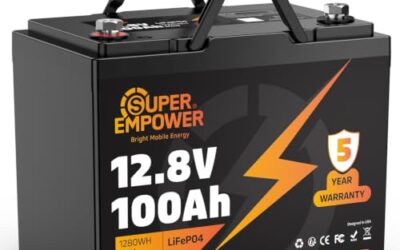
| Battery and charging system | Vehicle-specific limits and operating conditions | The load can drain the battery or exceed the available charging capacity. |
| AC output | Voltage, frequency, and waveform requirements | The inverter output must suit the appliance and its electrical controls. |
Why a dashboard outlet usually is not enough
A dashboard outlet is convenient for low-power accessories, but its permitted load depends on the vehicle, model year, outlet, and fuse. The outlet may have a lower rating than the inverter’s maximum input. In that case, the inverter may cut out when the kettle starts heating, or the circuit may become overloaded.
Read the vehicle manual for the outlet’s limit and the inverter manual for its input current, cable, fuse, and connection requirements. Do not assume every 12-volt outlet has the same rating. Also, an inverter’s advertised wattage may describe its AC output, while its DC input demand is much higher than the wattage number alone suggests.
For background on matching an inverter to an electrical load, see our guide to matching inverter power to an outdoor lighting setup. The same basic rule applies: compare the connected load with the full power path, not only the inverter’s headline rating.
Can a larger inverter solve the problem?
Sometimes a properly installed, high-output inverter can supply a kettle, but replacing the inverter alone does not solve the problem. The vehicle must support the sustained DC demand, and the inverter must connect through wiring and protection rated for that load. The kettle must also suit the inverter’s AC output.
Vehicle capability varies by model year and configuration. Alternator output, battery type, power-management controls, and factory-installed outlets differ. Some vehicles may reduce or shut off accessory power under certain conditions. Electric vehicles also have separate high-voltage and 12-volt systems; a 12-volt outlet does not mean the cabin outlet can draw freely from the traction battery.
Follow the vehicle and inverter manuals for the exact connection and operating limits. Do not treat a running engine as proof that the alternator can sustain the load. Idling, heat, other electrical loads, and vehicle control systems can affect available power.
What happens if you try it anyway?
An undersized inverter may beep, display an overload warning, or shut down. A weak battery or voltage drop in the cables can also trigger a low-voltage shutdown. Those symptoms have different possible causes, so a shutdown alone does not identify a failed inverter or a bad battery.
If a plug, outlet, cable, or inverter becomes hot, smells burnt, sparks, or shows damage, stop using the setup. Disconnect power only if you can do so safely, and do not touch damaged or overheated parts. Keep the kettle and its water away from the inverter, vehicle wiring, and battery connections. Boiling water adds a separate burn and spill hazard in a moving or confined vehicle.
Never leave a high-load inverter operating unattended. Do not run a combustion-engine vehicle in an enclosed space to power an appliance. Exhaust gases can be fatal.
Safer ways to heat water on a trip
For a short stop, use a kettle where a suitable household outlet is available. For travel, consider an appliance made for the vehicle’s power system, but check its actual wattage and the vehicle’s permitted outlet load first. A 12-volt appliance is not automatically low-power or suitable for every vehicle outlet.
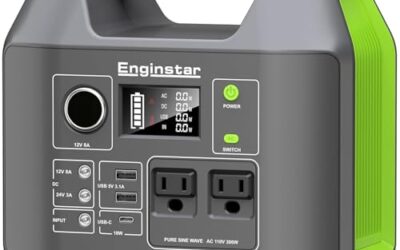
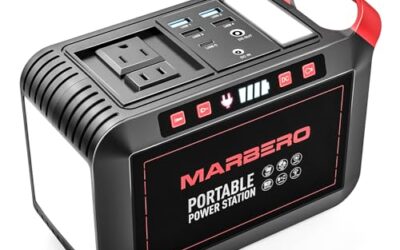
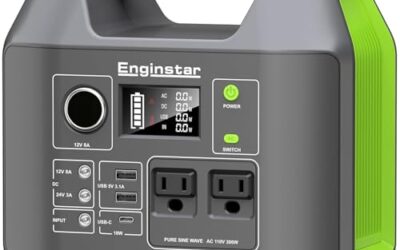
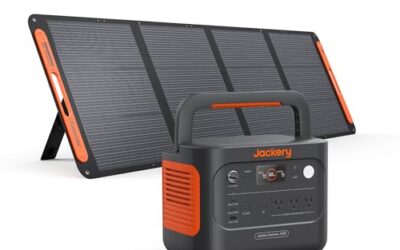
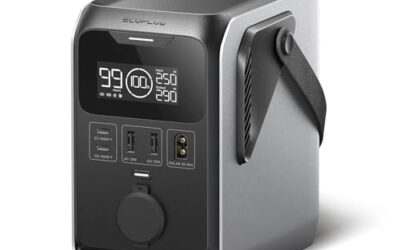
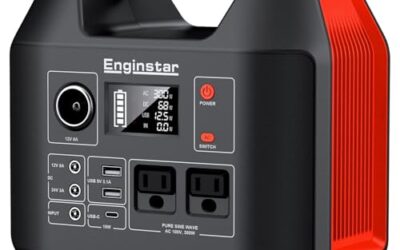
A separate power station may be another option if its continuous AC rating supports the kettle and its battery capacity can supply the full heating cycle. Check the appliance and power-station manuals together. A wattage match alone does not tell you how long the battery will last or whether the output can support repeated boils.
Vehicle refrigerators use a different load pattern from kettles, so their power needs do not establish that a vehicle can run a high-wattage heating appliance. See our guide to car refrigerators with a battery for road trips for that separate use case.
Common mistakes
- Checking only peak watts: Use the inverter’s continuous output rating for a kettle that heats for several minutes.
- Assuming the outlet is rated for the inverter: The vehicle outlet may have a much lower current limit.
- Adding a bigger fuse: A fuse protects wiring and circuits. A larger fuse does not increase their safe capacity.
- Assuming the engine solves battery limits: A running engine does not prove the charging system can sustain the load in that vehicle and condition.
- Judging by the plug shape: A household-style AC socket only describes the connector, not the inverter’s available power.
- Confusing volts and watts: Voltage describes electrical potential; watts describe power. Both the AC output and DC input side need suitable ratings.
When to get professional help
Ask a qualified automotive electrician to assess the setup if you need a high-output inverter, direct battery wiring, or an installation involving factory power-management systems. Get help if a cable or connector overheats, a fuse repeatedly blows, or the inverter shuts down despite ratings that appear suitable. Repeated shutdowns can point to overload, voltage drop, poor connections, or another fault; replacing parts without diagnosis may not fix the cause.
Gear that can help
If you need power inverters for this job, these picks already appear in our power inverters guides. Check the full guide for fit and who should skip each one.
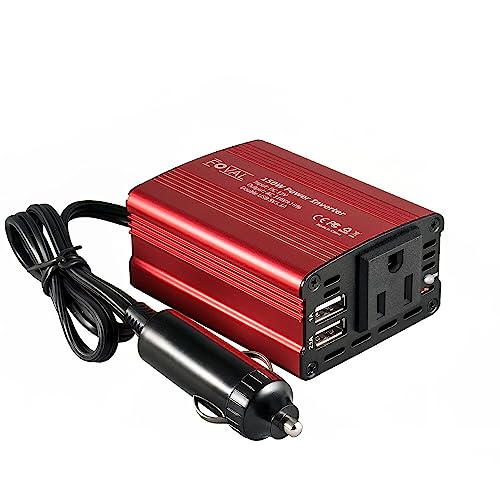
Pros
- Combines one AC outlet with two USB charging ports
- Supports simultaneous charging of most phones and tablets through the USB ports
- Compact and lightweight design at 8 oz+
- Includes multiple stated protection features and a cooling fan
Cons
- The 150W continuous output limits use with devices requiring more power
- Requires a vehicle cigarette lighter or 12V DC power connection
Specifications
| Color | Classic Red |
|---|---|
| Dimensions | 3.7 x 2.5 x 1.5 inches |
| Weight | 0.49824471212 pounds |
| Product Group | Automotive Parts and Accessories |
| Binding | Electronics |
Best For / Avoid If
Best for buyers prioritizing
- Combines one AC outlet with two USB charging ports
- Supports simultaneous charging of most phones and tablets through the USB ports
- Compact and lightweight design at 8 oz+
Consider another option if
- The 150W continuous output limits use with devices requiring more power
- Requires a vehicle cigarette lighter or 12V DC power connection

Pros
- Multiple AC and USB charging options support simultaneous device charging
- 30W PD USB-C port is specified for fast charging compatible phones and some laptops
- Dedicated AC control can help avoid leaving the AC outlets powered when they are not needed
- Supports a range of stated use cases including road trips, camping, outdoor work, and emergency backup
Cons
- The stated 400W output limits use to devices within that power level
Specifications
| Color | Black |
|---|---|
| Size | 400W-PD30BK |
| Product Group | Lawn & Patio |
| Binding | Electronics |
Best For / Avoid If
Best for buyers prioritizing
- Multiple AC and USB charging options support simultaneous device charging
- 30W PD USB-C port is specified for fast charging compatible phones and some laptops
- Dedicated AC control can help avoid leaving the AC outlets powered when they are not needed
Consider another option if
- The stated 400W output limits use to devices within that power level

Pros
- Pure sine wave output is specified for devices requiring careful protection
- Offers both AC outlets and USB charging ports
- Includes a built-in 40-amp fuse and multiple protection functions
- The listing identifies compatibility with Tesla and other new energy vehicles
Cons
- Continuous output is limited to 300W, with 700W available only as peak power
- The listing lists the input range as 12-17V in the title and 11-17V in the feature copy
Specifications
| Color | Black |
|---|---|
| Size | 300W Pure Sine Wave Power Inverter |
| Dimensions | 8.1 x 5.3 x 2.6 inches |
| Weight | 1.4 pounds |
| Product Group | Automotive Parts and Accessories |
| Binding | Electronics |
Best For / Avoid If
Best for buyers prioritizing
- Pure sine wave output is specified for devices requiring careful protection
- Offers both AC outlets and USB charging ports
- Includes a built-in 40-amp fuse and multiple protection functions
Consider another option if
- Continuous output is limited to 300W, with 700W available only as peak power
- The listing lists the input range as 12-17V in the title and 11-17V in the feature copy
FAQ
Can a car inverter run a 1,500-watt kettle?
Only if the inverter can supply at least the kettle’s continuous AC load and the vehicle-side system can safely provide the required DC current. A dashboard outlet commonly cannot support that kind of demand. Check each component’s manual and rating.
Will a 2,000-watt inverter work with a household kettle?
Not by rating alone. The inverter must support the kettle’s continuous draw, and its DC supply, wiring, fuse, battery, and vehicle charging system must also support the load. The inverter’s rating does not establish those other limits.
Can I use a kettle with the engine running?
Engine operation does not guarantee enough available power. Vehicle design, operating conditions, and other electrical loads matter. Follow the vehicle and inverter instructions, and never run an engine in an enclosed area.
Why does the inverter shut off when the kettle starts?
Possible causes include an overload, low input voltage, excessive voltage drop, or a poor connection. Stop if wiring or connectors heat up or show damage. Use the inverter’s fault indicators and manual to identify safe next checks.
Is a 12-volt kettle always safe to use in a car?
No. Its current draw still has to fit the vehicle outlet’s rating, and the outlet may be switched or limited by the vehicle. Check the kettle label and the vehicle manual before use.