What Is EV Charger Load Management
EV charger load management is a technology that controls the electrical load on a home’s power system during electric vehicle charging. This ensures that the charging process does not exceed the capacity of the electrical service or individual circuits, thereby preventing potential overloads, tripped breakers, or utility service disruptions.
The concept has become increasingly important as electric vehicle adoption grows, with many households now relying on Level 2 chargers that can draw significant power, often 240 volts at 30 to 50 amps or more.
By intelligently managing this load, EV charger load management allows for safe, efficient charging while maximizing the use of available electrical capacity.
Key takeaways
- EV charger load management prevents electrical overloads in homes with limited power supply.
- It works by adjusting the charging current in real time based on available power.
- Compatible with most Level 2 chargers and smart home systems.
- Essential for homes with solar power or high EV adoption rates.
- Reduces the need for expensive electrical upgrades.
How EV Charger Load Management Works
At its core, EV charger load management involves monitoring the electrical demand on the home’s service panel and adjusting the power allocated to the EV charger accordingly.
This is achieved through a combination of hardware and software solutions that continuously assess the total load on the electrical system.
Key Components
- Current sensors that measure amperage draw from the charger and other circuits.
- Relays or solid-state switches to control circuit allocation.
- Central controller or software that makes decisions based on predefined thresholds and real-time data.
- Communication protocols like Modbus or Wi-Fi for integration with other devices.
- Optional integration with utility smart meters for time-of-use optimization.
The process starts when the EV is connected. The system evaluates the current total amperage usage. If the sum of all loads exceeds the panel rating, it begins to reduce the amps to the EV charger.
For example, if the panel is rated at 200 amps and other loads are using 120 amps, the remaining 80 amps could support a 48-amp charger, but if another appliance kicks on, the system might drop the charger to 32 amps to keep the total under 200.
This adjustment can happen in milliseconds to seconds, ensuring the system stays within safe limits at all times.
Integration with Smart Homes
Modern EV charger load management systems often connect to smart home platforms like Alexa, Google Home, or Apple HomeKit. Users can set preferences for charging speed or schedule charging during off-peak hours.
Some systems use AI to learn user patterns and optimize automatically.
Where EV Charger Load Management Applies
This technology is particularly relevant in residential settings where homes have older electrical panels rated at 100 or 200 amps, but multiple high-draw devices are present, such as HVAC systems, electric water heaters, and now EVs.
It applies to both single-family homes and multi-unit dwellings with shared metering.
In regions with time-of-use rates, it can shift charging to off-peak hours automatically.
Compatibility is generally high with 240V Level 2 chargers from manufacturers like Tesla, ChargePoint, or Clipper Creek, but always check vehicle-specific requirements and local electrical codes.
For homes with solar panels, load management can prioritize charging during times when solar is producing excess power, feeding it directly to the battery or grid.
Benefits of EV Charger Load Management
One major benefit is safety. It prevents overloading, which could lead to fires or damage to electrical components.
Cost savings: By optimizing usage, it may avoid the need for a new service upgrade, which can cost thousands of dollars.
Environmental benefits: More efficient use of grid power, especially when paired with renewable energy.
Convenience: Faster charging when power is available without manual intervention.
Long-term, it supports the growth of EV infrastructure without straining the electrical grid.
Limitations and Challenges
Limitations include dependency on the home’s electrical infrastructure. If the panel is full or wiring is inadequate, management may be restricted.
Some systems may not work with all EV models due to proprietary communication protocols.
Initial setup can be complex, requiring professional installation.
Uncertainty in performance: In areas with unreliable utility communication, fallback to default modes may occur.
Additionally, in areas with high EV density, the cumulative load from multiple vehicles can exceed what a single home’s management can handle, necessitating utility-level solutions.
Comparison of Load Management Approaches
| Method | Description | Pros | Cons |
|---|---|---|---|
| Passive Load Management | Hardware-based switching of circuits using relays | Simple installation, no software needed | Limited to fixed settings, less flexible |
| Active Load Management | Software-controlled adjustment of charging amps | Dynamic response to changing loads | Requires more advanced hardware and expertise |
| Dynamic Load Balancing | Real-time monitoring and balancing across multiple chargers or circuits | Handles multiple EVs efficiently | Higher cost, more complex setup |
Common Mistakes
A common mistake is assuming that any smart charger automatically manages load. Many basic chargers do not have this feature and may require an add-on module.
Another is ignoring the total home load calculation. Users might think adding an EV charger is simple, but without management, it can cause issues.
Overlooking firmware updates, which are crucial for compatibility and new features.
Believing it replaces the need for proper electrical assessment. Always have a licensed electrician perform a load calculation before installation.
Some homeowners might think load management is only for commercial installations, but it’s equally important for residential use.
When to Get Professional Help
Seek professional help if you experience frequent breaker trips, if your home’s electrical panel is older than 20 years, or if you’re planning a high-amperage charger upgrade.
Professionals can perform a load calculation and install the necessary hardware.
Also, if your utility requires it for net metering or incentives.
They can also advise on whether your specific vehicle and charger combination supports load management features.
Troubleshooting EV Charger Load Management Issues
If you notice your EV is not charging at full speed, check if the load management is active.
- Check for error codes on the charger display.
- Verify that the circuit is not overloaded by monitoring with a clamp meter.
- Ensure all components are updated to latest firmware.
- Consult a professional if the issue persists.
These steps help identify if the issue is related to load management or another factor in the charging setup.
Gear that can help
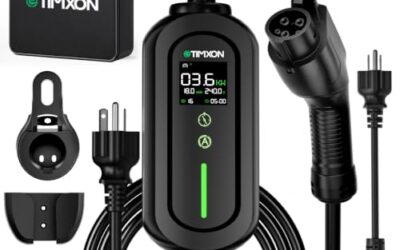
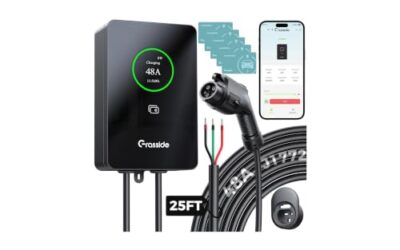
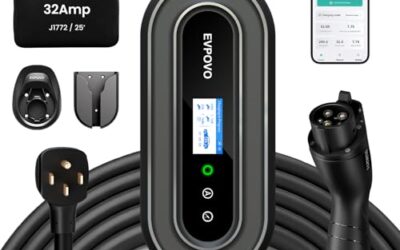
If you need EV chargers for this job, these picks already appear in our EV chargers guides. Check the full guide for fit and who should skip each one.

Pros
- Supports both 240V Level 2 and 120V Level 1 charging
- Five selectable current settings provide charging flexibility
- Long 25-foot cable and delayed charging feature support home-use convenience
- Product description states that over-voltage, over-current, and short-circuit protection are included
Cons
- Full 240V charging requires a dedicated 240V circuit and NEMA 14-50 connection
- Tesla vehicles require an adapter
- The product does not support vehicles using proprietary charging protocols
Specifications
| Color | Black |
|---|---|
| Size | 25FT |
| Dimensions | 15.55 x 13 x 5.9 inches |
| Product Group | Automotive Parts and Accessories |
Best For / Avoid If
Best for buyers prioritizing
- Supports both 240V Level 2 and 120V Level 1 charging
- Five selectable current settings provide charging flexibility
- Long 25-foot cable and delayed charging feature support home-use convenience
Consider another option if
- Full 240V charging requires a dedicated 240V circuit and NEMA 14-50 connection
- Tesla vehicles require an adapter
- The product does not support vehicles using proprietary charging protocols

Pros
- Offers both Level 1 and Level 2 charging options
- Includes NEMA 6-20 and NEMA 5-15 connection options
- Provides up to 3.84kW output in Level 2 mode
- Includes automatic temperature-related power reduction and charging resumption
Cons
- Level 2 charging requires a dedicated NEMA 6-20 outlet
- The NEMA 5-15 connection must be manually adjusted to 12A
- Charging an 87kWh battery is listed as approximately 22.4 hours at Level 2 and over 60 hours at Level 1; actual time depends on the vehicle and circuit
Specifications
| Color | Black |
|---|---|
| Size | 16A J1772 Connector |
| Dimensions | 12 x 16 x 5 inches |
| Product Group | Automotive Parts and Accessories |
| Binding | Electronics |
Best For / Avoid If
Best for buyers prioritizing
- Offers both Level 1 and Level 2 charging options
- Includes NEMA 6-20 and NEMA 5-15 connection options
- Provides up to 3.84kW output in Level 2 mode
Consider another option if
- Level 2 charging requires a dedicated NEMA 6-20 outlet
- The NEMA 5-15 connection must be manually adjusted to 12A
- Charging an 87kWh battery is listed as approximately 22.4 hours at Level 2 and over 60 hours at Level 1; actual time depends on the vehicle and circuit

Pros
- Supports both Level 1 and Level 2 charging
- Includes connections for compatible 120V and 240V outlets
- Provides adjustable current and delayed-charging controls
- Offers J1772 compatibility for listed BEV and PHEV applications
- Includes ETL certification, FCC listing, and a stated two-year warranty
Cons
- Not compatible with Tesla vehicles or NACS connectors
Specifications
| Color | BLACK |
|---|---|
| Size | BLACK,SAE,J1772 |
| Dimensions | 2.2 x 3.03 x 9.17 inches |
| Weight | 7.7 pounds |
| Product Group | Automotive Parts and Accessories |
Best For / Avoid If
Best for buyers prioritizing
- Supports both Level 1 and Level 2 charging
- Includes connections for compatible 120V and 240V outlets
- Provides adjustable current and delayed-charging controls
Consider another option if
- Not compatible with Tesla vehicles or NACS connectors
FAQ
What is the difference between EV charger load management and a smart charger?
A smart charger may have scheduling or app control, but load management specifically focuses on real-time power allocation to prevent overloads.
Is EV charger load management necessary for all EV owners?
No, but it’s highly recommended for homes with limited electrical capacity or those charging multiple EVs.
How does it affect charging speed?
It may reduce the maximum charging speed temporarily to manage load, but overall, it ensures safe charging without interruptions.
Can it work with solar power?
Yes, many systems integrate with solar to prioritize EV charging during daylight hours.