What Is CAN Bus in A Car
CAN bus is a vehicle bus standard designed to allow microcontrollers and devices to communicate with each other within a vehicle without a host computer. This technology is fundamental to the operation of modern automobiles, enabling efficient data exchange between various control units. Understanding what CAN bus is in a car helps you appreciate how your car’s electronics work together seamlessly.
In simple terms, CAN bus acts as the nervous system of your vehicle’s electronic components. It allows the engine control unit to talk to the transmission control unit, the anti-lock braking system to communicate with the stability control, and much more. This interconnected network is what makes advanced features like adaptive cruise control and lane departure warnings possible.
Key Takeaways
- CAN bus is a communication protocol used in vehicles to connect electronic control units.
- It is not the same as OBD2, although OBD2 uses CAN bus in newer vehicles.
- CAN bus is essential for vehicle safety and diagnostics.
- Compatibility depends on vehicle model year and system.
What is CAN Bus?
CAN bus is a serial communication protocol that was originally developed for use in automobiles. It was created by Robert Bosch GmbH in the 1980s to reduce the amount of wiring in vehicles by allowing multiple devices to communicate over a single bus. The protocol is now widely adopted in the automotive industry and is used in cars, trucks, and even some aircraft.
The primary purpose of CAN bus is to provide a high-speed, reliable method for data transmission between electronic control units (ECUs). Each ECU is a small computer that controls a specific function in the vehicle, such as the engine, brakes, or infotainment system. By using CAN bus, these ECUs can share information without needing a central computer to manage all communications.
This design reduces the complexity of the vehicle’s wiring harness, which is a major benefit. Instead of hundreds of individual wires, a few twisted pairs can carry multiple signals. This also improves reliability because there are fewer points of failure.
How Does CAN Bus Work?
CAN bus operates on a message-based protocol where each message has an identifier that determines its priority. Devices on the bus can send messages at any time, and the bus arbitrates which message gets priority if there is a collision. This is known as non-destructive bitwise arbitration.
The physical layer uses differential signaling over a twisted pair of wires. This allows for noise immunity and reliable communication over long distances. The standard cable is a shielded twisted pair, and the maximum speed is 1 Mbps for the original CAN 2.0 specification, though newer versions like CAN FD can go up to 8 Mbps.
Each node on the CAN bus has a unique identifier, and messages are broadcast to all nodes. Nodes can filter messages based on their ID to only process the ones they need. This design makes the system efficient and scalable.
Additional technical details include the use of error detection with CRC, and the ability to handle up to 2032 messages per second in high-speed networks. The bus can be extended with repeaters if needed, but care must be taken with impedance matching.
Where is CAN Bus Used in Vehicles?
CAN bus is used in almost every modern vehicle. In the engine control module, it is used to monitor and control fuel injection, ignition timing, and emissions. The transmission control unit uses it to shift gears based on engine data and driver inputs.
The ABS and stability control systems rely on CAN bus to coordinate braking forces for safety. Sensors send wheel speed data, and the system calculates slip to apply brakes differentially.
Other applications include the airbag system, where sensors send crash data to the control module. The HVAC system for climate control, the body control module for lighting and power windows. Even advanced features like adaptive cruise control and automatic emergency braking use CAN bus to communicate with other systems.
In diagnostic applications, OBD2 ports in newer vehicles use CAN bus to allow mechanics to read error codes from various ECUs. This makes it easier to diagnose problems without invasive testing. Some vehicles have multiple CAN buses, like one for powertrain and another for chassis.
CAN Bus vs OBD2
While often confused, CAN bus and OBD2 are different. CAN bus is the underlying communication protocol used throughout the vehicle. OBD2 is the diagnostic connector and the standards for accessing that data. In vehicles from 2008 onwards, OBD2 typically uses CAN bus for communication, allowing a single port to access data from multiple systems.
Here’s a comparison table:
| Aspect | CAN Bus | OBD2 |
|---|---|---|
| Definition | Vehicle communication protocol | Diagnostic connector and standards |
| Purpose | Internal vehicle data exchange | External diagnostics |
| Usage | Between ECUs | For reading codes |
| Connector | Internal wiring | OBD2 port under dash |
| Speed | Up to 1 Mbps standard | Depends on the bus |
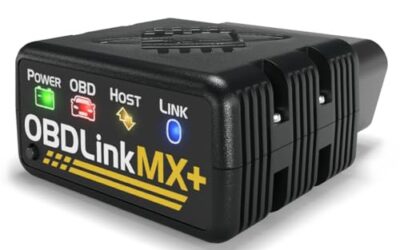
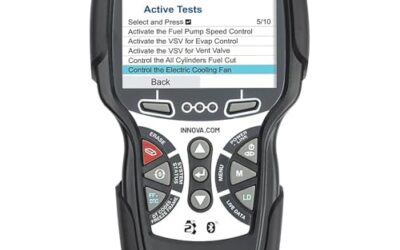
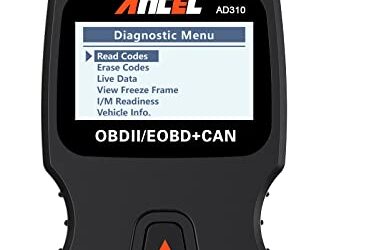
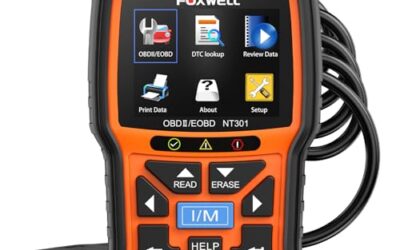
Understanding this distinction is important for anyone working on vehicle diagnostics. A CAN bus scanner can read data from the bus, while an OBD2 scanner plugs into the port to access that data. Some advanced scanners can directly access the CAN bus without the OBD2 port.
Limitations and Compatibility
CAN bus has some limitations. The maximum cable length is typically 40 meters, and the maximum speed is 1 Mbps for standard CAN, though higher speeds are possible with extensions like CAN FD. Not all vehicles use CAN bus; older models may use other protocols like K-Line or LIN bus for lower speed communications.
Compatibility is generally high within the same vehicle network, but mixing different CAN bus versions or baud rates can cause issues. Vehicle model year plays a big role; pre-2000 vehicles may not have CAN bus. Voltage is standard 12V, but some systems use 24V or higher in commercial vehicles.
Phone OS compatibility is not relevant for the bus itself, but diagnostic apps on phones require compatible hardware like OBD2 adapters. Firmware updates can affect how the bus is implemented in some vehicles.
Common Mistakes
- Confusing CAN bus with OBD2 – they are related but distinct.
- Assuming CAN bus is wireless – it is a wired protocol.
- Thinking it is only for diagnostics – it is for all vehicle communication.
- Believing clearing a code repairs the fault – it doesn’t.
- Thinking all cars have it – older cars may not.
When to Get Professional Help
If you are experiencing warning lights, erratic behavior, or trouble codes, it is best to consult a professional mechanic. DIY tools can help read codes, but interpreting them requires expertise. For complex issues like network errors or hardware faults, professional diagnosis is recommended. Always follow safety warnings when working on electrical systems.
FAQ
What is CAN bus in a car?
CAN bus is a communication protocol used in vehicles to connect electronic control units and allow them to exchange data efficiently.
How does CAN bus work?
It uses message-based communication with arbitration to ensure reliable data transmission between multiple devices.
Is CAN bus the same as OBD2?
No, CAN bus is the internal protocol, while OBD2 is the diagnostic standard that often uses CAN bus.
What vehicles use CAN bus?
Most vehicles from the late 1990s and early 2000s onwards use CAN bus, with varying levels of implementation.
Can I use a scanner on CAN bus?
Yes, OBD2 scanners can access CAN bus data in compatible vehicles for diagnostics.