K Band vs Ka Band Radar Detector
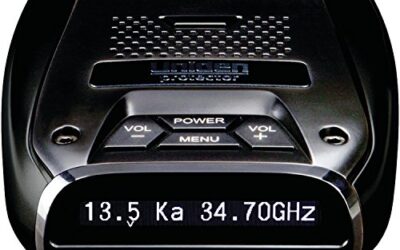
K band and ka band are the primary frequency bands that radar detectors use to identify police radar guns. The K band operates at approximately 24 GHz, while the Ka band uses 34.7 GHz. This fundamental difference in frequency affects detection range, false alert rates, and overall effectiveness in various driving conditions.
- K band provides consistent detection with fewer false positives
- Ka band detects radar earlier but is more susceptible to jamming and false alerts
- Many modern detectors combine both bands for comprehensive coverage
- Choice depends on your typical driving routes and local laws
What is K Band Radar Detection?
K band radar detection refers to the technology in radar detectors that tunes to the K band frequency of 24.125 GHz. Police officers use K band radar guns to measure vehicle speed by calculating the Doppler shift in the reflected radar signal. This band is widely used for both stationary and moving speed traps, particularly in urban and residential areas where speeds are lower.
The K band signal is relatively easy to detect but can be more easily blocked or jammed compared to higher frequencies. Detectors equipped with K band technology provide reliable alerts in city driving scenarios but may miss radar units operating on higher frequencies. The Doppler effect is the change in frequency of a wave in relation to an observer moving relative to the wave source, and in radar detection this shift indicates the speed of the vehicle. Understanding this principle helps explain why K band is effective for shorter range but consistent alerts in stop and go traffic.
What is Ka Band Radar Detection?
Ka band radar detection operates at the higher frequency of 34.7 GHz. This band is commonly used by law enforcement for highway speed enforcement because the higher frequency allows for greater distance detection. The Doppler effect is more pronounced at Ka band, enabling radar guns to identify speeding vehicles from farther away.
However, the higher frequency makes Ka band signals more susceptible to being jammed or blocked by certain materials or devices. Ka band detectors are effective on open highways but can trigger false alerts in areas with other electronic devices emitting similar frequencies. The increased range comes from the physics of wave propagation, where higher frequencies travel farther before attenuating, but this same property makes them easier to interfere with using signal jammers or reflective surfaces.
K Band vs Ka Band: Practical Differences
The main practical difference between K band and Ka band radar detectors lies in their detection capabilities and limitations. K band is the standard for most radar detectors due to its balance of range and reliability, while Ka band extends the detection distance but at the cost of increased false alerts.
| Feature | K Band | Ka Band |
|---|---|---|
| Frequency | 24 GHz | 34.7 GHz |
| Detection Range | Shorter | Longer |
| False Alert Rate | Lower | Higher |
| Best For | City and residential driving | Highway and open road |
| Compatibility | Universal | Universal |
Many radar detectors now offer both K band and Ka band detection to provide the best of both worlds. These hybrid models alert the driver to radar on either frequency, but they still require the driver to understand the nuances of each band. The choice between relying on one band or the other often comes down to the specific environment the vehicle is driven in, with urban commuting favoring K band reliability and long distance highway travel benefiting from Ka band extended warning time. Always consider that performance can vary based on external factors such as weather, vehicle speed, and the presence of radar detectors or jammers in the vicinity.
How Radar Detectors Work
Radar detectors work by receiving radar signals from police guns and alerting the driver through audible tones, visual displays, or both. The detector’s antenna picks up the radar signal, which is then processed by the internal circuitry to determine the frequency and direction. Modern detectors use microprocessor technology to filter out false signals and provide accurate alerts. Some advanced models include GPS integration to alert drivers to known speed trap locations, though this is separate from the band detection.
The processing involves comparing the received signal against known police radar patterns. Different tones or patterns are used to indicate K band versus Ka band alerts, helping drivers quickly identify the source of the warning. This auditory feedback is crucial for maintaining focus on driving while still receiving timely information about potential speed enforcement ahead.
Limitations of K Band and Ka Band Detectors
While effective, radar detectors have limitations. They cannot detect all types of radar, such as LIDAR which uses light instead of radio waves. They also do not provide information on the type of radar being used or the speed of the vehicle. Compatibility is important: Most detectors are designed for 12-volt vehicle electrical systems and plug into the cigarette lighter or hardwire kit. Always check for vehicle-specific models if your car has unique electronics. Regional laws vary, and in some areas, radar detectors are illegal.
Uncertainty in performance: The effectiveness can depend on the specific model, the quality of the antenna, and the presence of signal amplifiers or jammers in the area. Always verify local laws and consider that no detector is foolproof. Vehicle model year and electrical system voltage can affect installation options, with older vehicles sometimes requiring adapters or different mounting solutions. Phone OS compatibility is irrelevant for standalone detectors but may apply to app connected models. Firmware updates are sometimes necessary to maintain optimal performance against evolving police radar technologies.
Common Mistakes
- Assuming Ka band is always superior without considering false alert risks
- Ignoring the need for regular firmware updates in digital models
- Placing the detector in a position that blocks the antenna
- Confusing radar detector alerts with actual speed enforcement
- Not checking local laws before use
- Overreliance on the device without maintaining safe driving habits
When to Get Professional Help
If your radar detector is not alerting properly, first check the power connection and antenna placement. For installation issues, consult a professional installer to avoid damaging vehicle wiring. If you suspect a fault, have it diagnosed by a certified technician rather than attempting repairs yourself. Professional help is recommended for complex vehicle integrations or when dealing with aftermarket modifications that may affect signal reception.
FAQ
What is the difference between K band and Ka band radar detectors?
K band operates at 24 GHz with shorter range but fewer false alerts, while Ka band at 34.7 GHz offers longer range but more false alerts and jamming vulnerability.
Which band is better for highway driving?
Ka band is generally better for highways due to its longer detection range, but many drivers prefer detectors with both bands.
Can radar detectors be illegal?
Yes, in some states and countries, radar detectors are prohibited. Always check local laws before purchasing.
How do I choose between K band and Ka band?
Consider your driving environment: use K band for cities and Ka band for highways, or opt for a dual-band model.
What are the limitations of radar detectors?
They cannot detect LIDAR, are subject to jamming, and do not provide speed information or radar type details.