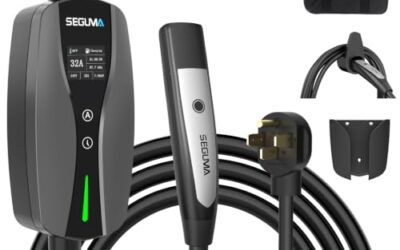
The practical answer to how to use a portable EV charger is to match its connector and power source to your vehicle, then follow both manuals. Check the outlet and cable before connecting, watch for charging faults, and stop if anything gets hot, damaged, or wet where it should not.
- Portable chargers, often called mobile EVSE, need a compatible vehicle connector and power supply.
- A household outlet can charge slowly; a 240-volt circuit may charge faster only if charger, outlet, circuit, and vehicle support it.
- Do not use damaged equipment, loose outlets, extension cords, or adapters unless both charger and vehicle instructions allow them.
- Vehicle model year, connector type, onboard charging limit, and regional electrical standards can affect compatibility.
What to check before using a portable EV charger
A portable EV charger supplies AC power to an electric vehicle. The vehicle’s onboard charger converts that AC power for the battery. The portable unit, also called electric vehicle supply equipment or EVSE, controls the connection and communicates charging limits. It is not the same as a DC fast charger.
Start with the vehicle owner’s manual and charger instructions. Check which connector your vehicle accepts, what input voltage the charger supports, and what outlet or circuit it requires. A plug that fits physically does not prove that its voltage or current is suitable.
In the United States, many vehicles use a J1772 inlet for AC charging, while some use a NACS inlet. Connector use varies by vehicle make, model year, and market. An adapter may work only if the vehicle and charger instructions permit that specific type. Do not assume a DC fast-charging adapter works for AC charging.
Also check the vehicle’s maximum AC charging rate. A higher-capacity charger cannot make a vehicle charge faster than its onboard charger allows. Charging speed can also vary with battery state, temperature, and vehicle settings.
How to use a portable EV charger: step-by-step
- Choose a suitable charging location. Park close enough for the cable to reach without tension, across a walkway, or beneath a tire. Keep the control box and connectors where they will not be crushed, submerged, or exposed to conditions the manuals prohibit. Do not charge in a location where the cable creates a trip hazard.
- Inspect the charger and power source. Look for cuts, crushed sections, bent pins, corrosion, dirt, and loose plug parts. Check the outlet for visible damage or signs of heat. Do not use equipment that is damaged or an outlet that feels loose. Ask a qualified electrician to assess suspect household wiring.
- Match charger input to the outlet. Confirm outlet type, voltage, and circuit requirements from the charger label and manual. A household 120-volt outlet generally provides slower charging than a suitable 240-volt supply, but actual speed depends on the charger, circuit, and car. Do not use a plug adapter to make an incompatible outlet seem suitable.
- Set current only as instructed. Some portable units let users select an amperage setting. Use only a setting allowed by the charger instructions and the circuit. If you do not know the circuit’s capacity or condition, do not guess. Have an electrician check it before charging.
- Connect the charger in the specified order. Some models instruct users to plug into the outlet first, then connect to the car. Others may use a different sequence. Follow the exact instructions for your unit. Keep the connector dry and avoid touching its electrical contacts.
- Connect to the vehicle inlet. Open the charge port and insert the connector fully until it latches or the vehicle indicates a connection. Do not force it. The car or charger should show that charging is ready or active. If it reports a fault, stop and check the displayed message and both manuals.
- Set charging limits if needed. The vehicle may let you set a charge limit or schedule. Use those controls according to your needs and vehicle instructions. A scheduled start can make the charger appear inactive until the selected time.
- Check operation after startup. Confirm that the vehicle reports charging and that the charger shows a normal status. Check again after a short interval. Stop charging if you notice a burning smell, unusual heat, sparking, repeated interruptions, or a fault indicator. Do not touch hot equipment.
- Stop charging before unplugging. Use the vehicle control, charger control, or release method described in the manuals. Wait for the connector to unlock. Remove it by the plug body, not by pulling the cable, then disconnect the supply as instructed.
- Store the unit dry and protected. Follow the charger’s storage and cleaning instructions. Coil the cable without sharp bends, protect the connector cap, and keep the control box away from impact or moisture beyond its rated protection.
Outlet and charging-speed limits
Portable charging speed depends on the power source and the weakest supported part of the system. That can be the outlet, branch circuit, charger, vehicle onboard charger, or vehicle setting. A 240-volt connection does not by itself guarantee a particular charging rate.
Household outlets can be useful when charging time is flexible, but they commonly deliver less power than a properly installed higher-voltage EV circuit. Long charging sessions can expose weak or worn connections to sustained load. Stop using an outlet if the plug or receptacle becomes unusually warm, smells hot, makes crackling sounds, or shows discoloration.
Do not use an extension cord, multi-outlet strip, or travel adapter unless the charger and vehicle manufacturers explicitly allow that exact arrangement. Such items can introduce added resistance, overheating risk, or poor grounding. The safe answer depends on the specific equipment, not on whether the plug fits.
For a permanent or frequent home setup, see the guide to 240-volt EV chargers. For household installation information, consult a licensed electrician familiar with EV charging circuits.
What to do if charging does not start
| Symptom | Safe check | Next action |
|---|---|---|
| Vehicle does not recognize charger | Check that connector is fully seated and the vehicle is unlocked or ready to charge. | Review vehicle and charger messages. Try no repeated forceful insertion. |
| Charger displays a fault | Note the indicator or message, then check manuals for its meaning. | Stop if fault persists. Contact charger support or a qualified technician. |
| Charging starts, then stops | Check scheduled charging settings and whether the vehicle has reached its limit. | If interruptions repeat, discontinue use and have the outlet and charger checked. |
| Breaker trips | Do not repeatedly reset it or lower settings without understanding the circuit. | Stop charging. Have an electrician identify the cause. |
| Plug or outlet becomes hot | Stop charging using the normal control if safe to do so. Avoid handling hot parts. | Do not reuse the outlet until it has been inspected. |
A fault may come from the vehicle, charger, outlet, circuit, or charging schedule. A single symptom does not identify which part failed. Record any displayed message and share it with qualified support rather than guessing at a repair.
Common mistakes with portable EV chargers
- Assuming any outlet will work: Outlet shape alone does not confirm voltage, grounding, or circuit suitability.
- Assuming an adapter makes a match: Connector adapters have limits. Use only combinations allowed by the vehicle and charger makers.
- Expecting a faster charge from a higher-rated unit: The vehicle’s onboard charger and power source still cap AC charging speed.
- Ignoring scheduled charging: A car set to charge later may not start immediately, even when the connection is sound.
- Using damaged or wet equipment: Stop if cable, connector, or control box is damaged. Follow the stated weather and water limits for that charger.
- Pulling the cable to disconnect: Release the connector using the vehicle’s normal method, then remove it by its handle.
When to get professional help
Call a qualified electrician if an outlet is loose, damaged, discolored, hot, or repeatedly trips its breaker. Do not open an outlet or electrical panel to diagnose it unless qualified to do that work. A licensed electrician can assess circuit capacity, grounding, and whether a dedicated EV circuit is appropriate.
Contact the vehicle maker or charger support if a persistent fault appears despite correct connection and settings. Seek service if the charge port is damaged, the connector will not latch or release, or the vehicle reports a charging-system warning. Avoid continued use until the cause is addressed.
Frequently asked questions
Can I use a portable EV charger on a regular household outlet?
Only if the charger supports that outlet and its circuit meets the charger’s requirements. Charging may be slow. Do not use a damaged or loose outlet, and avoid extension cords unless the charger instructions explicitly permit one.
Can I leave a portable charger plugged in?
Follow the charger instructions for connection and storage. Some units are intended to remain connected to a supply between charging sessions; others may have different guidance. Keep the cable and control unit protected as specified by the maker.
Will a portable charger work with every electric vehicle?
No. Vehicle inlet, charger connector, voltage, and regional standards can differ. Model year can matter, especially where a maker changes its charging port or adapter support. Check the vehicle and charger manuals for the exact combination.
Is a portable EV charger the same as a portable power bank?
No. A portable EV charger normally connects a vehicle to an electrical supply. It does not usually store energy like a battery power station. A separate battery-based charging system has its own capacity, output, and vehicle compatibility limits.
Sources and further reading
- Charging Electric Vehicles at Home (Alternative Fuels Data Center): Explains home charging equipment and basic setup considerations.
- Procurement and Installation for EV Charging Infrastructure (Alternative Fuels Data Center): Covers planning and installation considerations for EV charging infrastructure.