To learn how to check if a car outlet stays on when parked, test it after shutting off and locking the vehicle. Use a small, known-working 12-volt accessory or a multimeter, and wait for the vehicle’s shutdown delay before deciding. Outlet behavior varies by vehicle, model year, and socket, so test each outlet you plan to use.
Key takeaways
- Some outlets turn off with the ignition; others stay powered or shut down after a delay.
- Test with the car fully off, key or fob away, and doors closed where practical.
- A powered outlet can drain the vehicle’s battery if an accessory keeps drawing current.
- Use the owner’s manual for outlet limits and vehicle-specific shutdown instructions.
- A multimeter test can show voltage, but it cannot tell you how long the battery can safely support an accessory.
What you need before testing
Start with the owner’s manual. It may identify which sockets remain powered, whether power depends on ignition mode, and the outlet’s voltage and current limit. Some vehicles have more than one 12-volt socket, and those sockets may behave differently. A USB port may also follow separate rules from a 12-volt accessory socket.
Choose one test method. A small accessory that you know works can show whether the outlet supplies usable power. A multimeter set to measure DC voltage can give a more direct indication. Read the meter instructions and use insulated probes. Keep metal probe tips from touching each other or bridging the socket’s center contact and outer shell. A short circuit can damage the socket or its fuse.
Do not use a high-current device, such as an inverter or compressor, as your first test. It may exceed the outlet’s rating, and its load can affect vehicle behavior. If you need an inverter for a particular setup, match its load to the vehicle’s limits; this power inverter guide explains why the intended equipment matters.
How to check if a car outlet stays on when parked
- Check the outlet and its rating. Identify the socket you plan to use. Read any label near it and find the outlet information in the owner’s manual. Do not assume all sockets in the vehicle share one circuit or power mode.
- Confirm your test device works. Try the accessory in another known-working outlet, or check the multimeter and its battery according to its manual. A failed test device can make a live outlet look dead.
- Turn the vehicle off. Switch off the ignition or select the vehicle’s off state as the manual directs. Remove the key if applicable. For a push-button vehicle, follow its normal shutdown steps rather than assuming accessory mode is fully off.
- Close doors and move the key or fob away. Keep the vehicle in the state it would be in while parked. A nearby fob, open door, or active accessory mode may keep some systems awake. Vehicle behavior differs, so this step makes the test closer to your real parking routine.
- Wait for shutdown delay. Check the outlet immediately, then check again after several minutes. Some vehicles keep outlets active briefly after shutdown. There is no single wait time that applies to every make and model, so consult the manual if it describes a delay.
- Test the outlet. Plug in the low-draw accessory and note whether it operates. For a voltage check, use the multimeter’s DC voltage setting and measure at the socket without letting the probes touch each other. Compare results immediately after shutdown and after the wait.
- Repeat for each outlet and driving mode you use. Test other sockets separately. If you regularly park with a different ignition setting, repeat the test using that setting. Record the socket location, vehicle state, and whether power remained after the delay.
- Restore the vehicle to its normal parked state. Remove the test device, shut doors, and lock the vehicle if that is your usual routine. Do not leave a test load connected while you decide whether it is safe for long-term use.
Read your test results
| What you observe | What it may mean | What to check next |
|---|---|---|
| Outlet works with ignition on but not after shutdown | Socket may be switched with the ignition or accessory mode. | Check the manual and test any other socket separately. |
| Outlet works briefly, then stops | Vehicle may use a timed shutdown. | Repeat the test after the vehicle has been off for a longer period. |
| Outlet still works after the vehicle is locked | Socket may remain powered, or the vehicle may not have entered its full sleep state. | Move the fob away, close doors, wait, and test again. |
| Accessory fails, but meter shows voltage | Accessory, plug fit, or contact may be the issue; a voltage reading alone does not prove the outlet can supply the accessory’s required current. | Test the accessory elsewhere and check the manual for outlet limits. |
| Neither accessory nor meter detects power | Outlet may be switched off, or a fuse or circuit fault may be present. | Check the manual’s fuse information. Do not replace a fuse with a higher-rated one. |
These observations are clues, not a diagnosis. A multimeter showing voltage does not establish that an outlet can safely power every device or remain active indefinitely. Some vehicles manage electrical loads to protect the starting battery, but cutoff behavior and warnings vary. Do not rely on a cutoff feature unless the vehicle documentation describes it.
Can a parked outlet drain the battery?
Yes. If an outlet stays powered, a connected accessory can draw energy while the engine is off. The effect depends on the accessory’s actual current draw, how long it runs, battery condition, temperature, and the vehicle’s electrical system. A small device may draw little while active, but its standby draw can continue for hours. A larger load can use more energy and may cause the vehicle to have trouble starting.
Do not treat a powered outlet as a safe overnight power source just because it remains on during a short test. A simple outlet test does not measure battery capacity or predict when the vehicle will shut the circuit down. If you need parked power for a refrigerator, camera, or other equipment, check both the vehicle’s instructions and the accessory’s power requirements. A separate battery setup may be more suitable for extended use; see this guide to car refrigerators with a battery.
Why outlet behavior differs
Automakers can wire and control outlets in different ways. A socket may be live only in ignition-on or accessory mode, remain live after shutdown for a limited period, or stay powered while the vehicle is parked. A vehicle may also use different rules for 12-volt sockets and USB ports. Trim level, model year, and market can affect equipment and instructions.
Some vehicles use electronic power management that changes how accessory circuits behave. Opening a door, using a remote feature, or waking the vehicle may alter its state. A brief test may therefore not match what happens after the vehicle sits for a longer period. Use the manual for your exact vehicle and repeat your check under normal parking conditions.
Common mistakes
- Testing only with ignition on. That proves the socket works in that mode, not that it stays live when parked.
- Checking only once. A timed circuit can appear live at first and switch off later.
- Assuming every socket behaves alike. Test each one you intend to use.
- Leaving a load connected during a long test. The load may drain the battery before you notice.
- Confusing voltage with usable power. A voltage reading does not show whether the outlet can supply a device’s full load.
- Using a metal object to test the socket. This can short the contacts and damage the circuit.
- Assuming an outlet fuse is the only possible fault. Wiring, socket wear, and vehicle control systems can also affect operation.
When to get professional help
Stop testing if the socket is hot, smells burned, sparks, has melted plastic, or repeatedly blows its fuse. Do not probe damaged wiring or replace a fuse with a different rating. A qualified technician can inspect the socket, fuse circuit, and vehicle power controls using the correct service information.
Get help if the outlet behaves unpredictably, other electrical features fail at the same time, or the vehicle has a weak or repeatedly discharged battery. A battery problem and an outlet problem can occur together, but one does not prove the other caused it. Diagnosis may require checking current draw after the vehicle enters its normal parked state.
Gear that can help
If you need power inverters for this job, these picks already appear in our power inverters guides. Check the full guide for fit and who should skip each one.

Pros
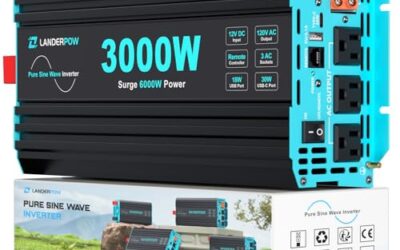
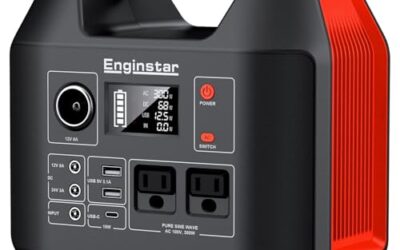
- Pure sine wave output is specified for devices requiring careful protection.
- Offers both AC outlets and USB charging connections.
- Includes multiple stated electrical and thermal protection features.
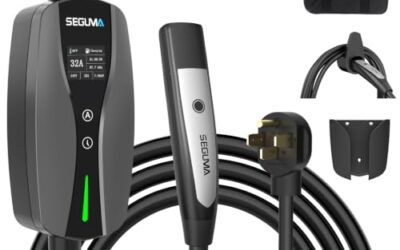
- The listing states compatibility with Tesla and other new-energy vehicles.
Cons
- The listing covered gives conflicting USB-C PD maximums of 20W and 30W.
Specifications
| Color | Black + Red |
|---|---|
| Dimensions | 7 x 5 x 2 Inches |
| Product Group | Automotive Parts and Accessories |
| Binding | Electronics |
Best For / Avoid If
Best for buyers prioritizing
- Pure sine wave output is specified for devices requiring careful protection.
- Offers both AC outlets and USB charging connections.
- Includes multiple stated electrical and thermal protection features.
Consider another option if
- The listing covered gives conflicting USB-C PD maximums of 20W and 30W.
Pros
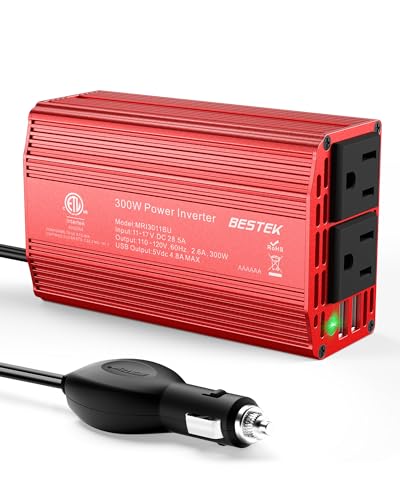
- Two AC outlets and two USB ports provide multiple charging options
- 300W continuous output supports larger devices such as laptops and tablets
- Built-in 40-amp fuse and multiple listed protection features
- Compact, iPhone-sized design with a 32-inch vehicle power cable
Cons
- Continuous output is limited to 300W; 700W is listed as instantaneous power
- Vehicle compatibility is specified for 11-17V input, with no broader vehicle list provided
Specifications
| Color | Red |
|---|---|
| Size | 1 - Power Inverter |
| Dimensions | 4.8 x 3.1 x 1.9 Inches |
| Weight | 0.9 Pounds |
| Product Group | Automotive Parts and Accessories |
| Binding | Electronics |
Best For / Avoid If
Best for buyers prioritizing
- Two AC outlets and two USB ports provide multiple charging options
- 300W continuous output supports larger devices such as laptops and tablets
- Built-in 40-amp fuse and multiple listed protection features
Consider another option if
- Continuous output is limited to 300W; 700W is listed as instantaneous power
- Vehicle compatibility is specified for 11-17V input, with no broader vehicle list provided

Pros
- Combines two 110V AC outlets with USB-C PD and USB-A QC charging ports
- Lists multiple built-in electrical and temperature protection features
- Automatic fan speed adjusts according to power load and temperature
- Compact size and lightweight design support portability
Specifications
| Color | RED |
|---|---|
| Size | 6.7INCH |
| Dimensions | 6.7 x 4.5 x 2.5 inches |
| Weight | 0.881849048 pounds |
| Product Group | Automotive Parts and Accessories |
| Binding | Electronics |
Best For / Avoid If
Best for buyers prioritizing
- Combines two 110V AC outlets with USB-C PD and USB-A QC charging ports
- Lists multiple built-in electrical and temperature protection features
- Automatic fan speed adjusts according to power load and temperature
FAQ
Does a 12-volt outlet always turn off when I remove the key?
No. Some outlets switch off with ignition, some shut down after a delay, and others may remain live. Check the manual and test the specific socket.
Can I leave a phone charger plugged in overnight?
Only if the vehicle and charger instructions support that use. A charger may draw power while parked, and a live socket can contribute to battery drain. Unplug it if you do not know how the socket behaves.
Will a multimeter tell me whether my battery will start the car tomorrow?
No. An outlet voltage check does not measure the battery’s health or predict starting ability. Battery condition, temperature, accessory draw, and vehicle systems all matter.
Why does the outlet shut off while my car is parked?
It may be switched with ignition, controlled by a timer, or shut down by vehicle power management. Check the owner’s manual for that model year and outlet.
Can a USB port stay on when the 12-volt socket turns off?
Yes, behavior can differ by port and vehicle. Test the exact USB port you plan to use, and check the manual for its power mode and limits.