How to Charge a Portable Jump Starter
Charging a portable jump starter is essential for maintaining its readiness for emergency vehicle starts. Most models use a built-in lithium-ion battery that can be recharged using a standard wall charger or a USB connection. Always follow the manufacturer’s guidelines for your specific device to ensure safety and longevity.
Portable jump starters are invaluable tools for roadside emergencies, providing a safe way to jump-start vehicles with dead batteries. Understanding how to properly charge them extends their lifespan and reliability.
Key Takeaways
- Match the charger to your jump starter’s specifications for optimal performance.
- Charge in a well-ventilated area away from flammable materials.
- Monitor the charging process to prevent overcharging.
- Store the jump starter at 50% charge for best longevity.
- Check for damage before each use.
Understanding Portable Jump Starters
Portable jump starters are compact devices that use a rechargeable battery to provide a temporary power boost to a vehicle’s dead battery. They come in various sizes and capacities, typically rated in ampere-hours (Ah) or starting watts (SA). The most common types are lithium-ion, which are lightweight and efficient, and lead-acid, which are more traditional but heavier.
These devices are designed for 12-volt vehicles but some models support higher voltages like 24V for trucks or RVs. Charging them involves connecting to an external power source, usually a wall outlet or a vehicle’s 12V outlet.
Safety Precautions
When charging a portable jump starter, several safety measures are crucial:
- Never charge near water or in damp environments.
- Avoid charging in extreme temperatures; optimal range is 0C to 40C (32F to 104F).
- Do not cover the charger during use.
- Inspect cables and ports for wear before charging.
- If the device gets hot, stop charging immediately.
Li-ion batteries can be prone to swelling or fire if mishandled, so follow all warnings.
Step-by-Step Guide to Charging a Portable Jump Starter
- Prepare your workspace: Ensure the area is clean and free of clutter.
- Identify the charging port on your jump starter. It may be a USB-C, micro-USB, or a specific DC port depending on the model.
- Connect the charger to the jump starter. For many models, this is a simple plug-in; for others, it might require a specific adapter.
- Plug the charger into a standard wall outlet. Use a charger rated for the device’s voltage, typically 12V or 24V input.
- Monitor the charging indicator light. It will usually show charging, full, or error states.
- Allow the device to charge until the light indicates it’s complete, typically 2-4 hours for lithium models.
- Disconnect the charger once full to prevent overcharging.
Note: Some jump starters have built-in smart chargers that automatically adjust to the battery’s state. Always refer to the user manual for exact procedures.
Choosing the Right Charger
Using the incorrect charger can lead to damage or inefficiency. Consider these factors:
- Voltage compatibility: Ensure it matches your jump starter’s rated voltage.
- Connector type: USB, barrel plug, etc.
- Power output: Higher wattage for faster charging.
- Built-in features: Smart charging, overcharge protection.
Many users opt for multi-port chargers that can charge multiple devices, but verify compatibility.
Troubleshooting Charging Problems
If your portable jump starter won’t charge:
- Check the power source: Try a different outlet or charger.
- Inspect connections: Clean ports if dirty.
- Check the battery level: Some models show via app or LED.
- Look for error codes or blinking lights indicating faults.
- Allow it to cool down if recently used.
If issues persist, it may need professional repair or replacement.
Common Mistakes to Avoid
Common errors include:
- Using a charger not designed for the device.
- Charging in hot environments, which can cause damage.
- Ignoring the low battery warning and letting it drain completely.
- Leaving it plugged in after full charge.
- Not reading the manual, leading to improper procedures.
When to Get Professional Help
Seek professional assistance if:
- The device fails to charge after multiple attempts.
- You notice swelling or unusual heat.
- There’s a persistent error code.
- The jump starter is under warranty and needs service.
Manufacturers often have support lines or authorized service centers.
Gear that can help
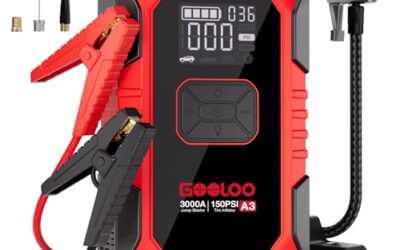
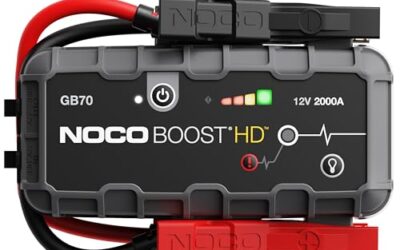
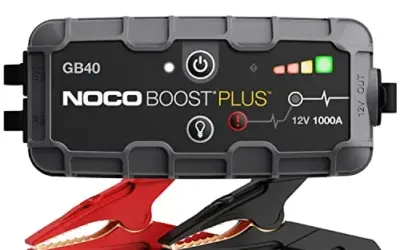
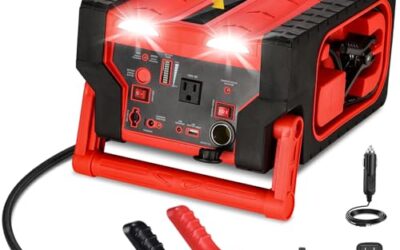
If you need jump starters for this job, these picks already appear in our jump starters guides. Check the full guide for fit and who should skip each one.

Pros
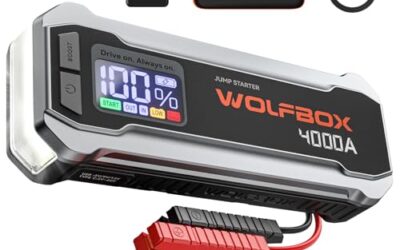
- High listed 7000A peak-current output
- Supports the stated range of gas and 12.0L diesel engines
- Includes forced-start functionality for fully drained batteries
- Combines jump-starting, USB charging, and emergency lighting in one portable unit
- Uses metal clamps and lists 14 safety protections
Cons
- The source data does not identify a separate wall charger or its specifications
Best For / Avoid If
Best for buyers prioritizing
- High listed 7000A peak-current output
- Supports the stated range of gas and 12.0L diesel engines
- Includes forced-start functionality for fully drained batteries
Consider another option if
- The source data does not identify a separate wall charger or its specifications
Pros
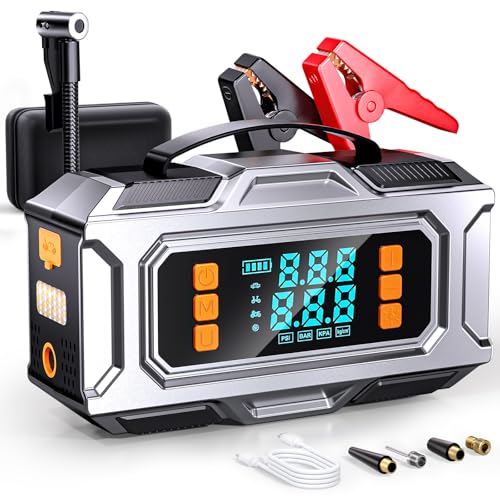
- Combines jump starting, tire inflation, device charging, and 12V accessory power in one unit
- Supports both gas and diesel vehicles within the stated engine-size limits
- Auto-shutoff inflator can be set using PSI, BAR, KPA, or KG/CM² units
- Includes a storage box, USB-C charging cable, air hose, nozzles, and user manual
Cons
- The manufacturer advises waiting two minutes between jump-start attempts and limiting attempts to three consecutively
- The compressor should cool for five minutes after 20 minutes of continuous inflation
- The unit should be recharged every two to three months during storage
Specifications
| Color | Black Silver |
|---|---|
| Dimensions | 4.3 x 7.6 x 2.5 inches |
| Weight | 2.5 Pounds |
| Product Group | Automotive Parts and Accessories |
Best For / Avoid If
Best for buyers prioritizing
- Combines jump starting, tire inflation, device charging, and 12V accessory power in one unit
- Supports both gas and diesel vehicles within the stated engine-size limits
- Auto-shutoff inflator can be set using PSI, BAR, KPA, or KG/CM² units
Consider another option if
- The manufacturer advises waiting two minutes between jump-start attempts and limiting attempts to three consecutively
- The compressor should cool for five minutes after 20 minutes of continuous inflation
- The unit should be recharged every two to three months during storage
Pros
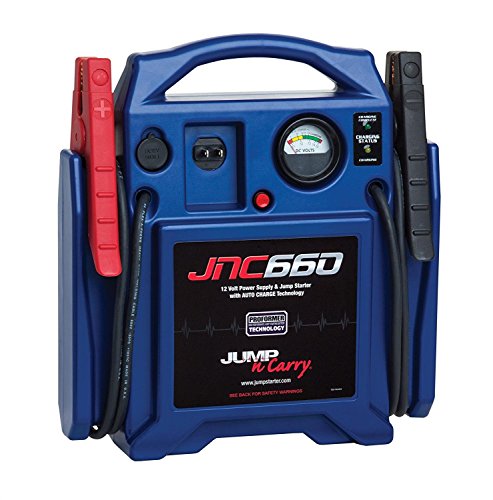
- High 1700-amp peak rating
- Long 46-inch cables with heavy-duty #2 AWG construction
- Built-in voltmeter provides charge-status information
- DC outlet supports powering 12V accessories
Specifications
| Color | Blue |
|---|---|
| Size | One Size |
| Dimensions | 16.3 x 14.1 x 5.1 inches |
| Weight | 18 Pounds |
| Product Group | Automotive Parts and Accessories |
| Binding | Automotive |
Best For / Avoid If
Best for buyers prioritizing
- High 1700-amp peak rating
- Long 46-inch cables with heavy-duty #2 AWG construction
- Built-in voltmeter provides charge-status information
FAQ
How long does it take to charge a portable jump starter?
It typically takes 2 to 6 hours depending on the model and capacity. Lithium-ion models often charge faster than lead-acid ones.
What voltage should I use for charging?
Most are 12V, but confirm with your manual. Using the wrong voltage can damage the battery.
Can I charge it using a car’s 12V outlet?
Some models support this, but it’s slower and not recommended for full charges. Use a dedicated charger for best results.
How do I know when it’s fully charged?
Look for a solid green light or check the display if equipped. Some have a percentage indicator.
Is it safe to charge overnight?
Yes, if using a smart charger, but avoid if not equipped with protection features.
Comparison of Charging Methods
| Charger Type | Advantages | Disadvantages | Best Use Case |
|---|---|---|---|
| Wall Charger | Fast charging, reliable power | Requires outlet access | Home storage |
| Car Charger | Portable, uses vehicle power | Slower charging speed | Traveling or emergencies |
| USB Charger | Versatile, works with power banks | Lower power output | Light use or travel |
| Solar Charger | Off-grid charging | Slower, weather dependent | Remote locations |
Expanding on the guide, it is important to consider the differences between charging methods in various scenarios. For instance, wall chargers provide consistent power suitable for daily maintenance, while car chargers offer flexibility during trips but may take longer due to lower output from vehicle outlets. USB chargers are convenient for on-the-go use but limited by available power sources like power banks. Solar chargers are ideal for off-road or camping situations where electricity is unavailable, though they require more time and are affected by sunlight intensity. Always calculate expected charge time based on the jump starter’s capacity and the charger’s amperage. A typical 2000mAh lithium-ion unit at 2A input might require approximately 4 hours for a full charge, assuming no inefficiencies. Maintenance involves periodic checks for corrosion on ports and ensuring the device is stored in a temperature-controlled environment to maximize cycle life. Compatibility extends to various vehicle types, including sedans, SUVs, trucks, motorcycles, and even marine applications, but always verify the voltage rating to prevent issues like undercharging or overheating. Common misconceptions include believing that jump starters can be charged indefinitely without monitoring or that any USB cable will suffice, which can lead to incompatible connections and potential damage. Decision trees for charging start with identifying the device type, then selecting a charger based on availability, followed by monitoring indicators and disconnecting at completion. This comprehensive approach ensures the portable jump starter remains a dependable tool in automotive emergencies without compromising safety or performance.