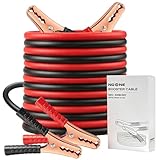
The best jumper cables for most drivers are the TOPDC 4 Gauge 20 Feet Heavy Duty Jumper Cables, because their 20-foot reach gives more flexibility when two vehicles cannot park nose to nose. Their 4-gauge rating and carry bag make them a practical match for routine car and SUV use, though drivers who need a shorter, simpler set may prefer a 16-foot option.






Jumper cable picks by driver and vehicle
CarTechTalk may earn a commission from qualifying purchases made through this page. The recommendations below focus on the cable length, gauge, and extras each product names. Those details help narrow the choice, but they do not establish real-world starting performance across every battery, engine, or temperature.
- Best for most cars and SUVs: TOPDC 4 Gauge 20 Feet Heavy Duty Jumper Cables. The middle-ground length offers more parking flexibility than a 16-foot set.
- Best for a longer reach at a moderate price position: TOPDC 4 Gauge 25 Feet Heavy Duty Jumper Cables. Choose it when vehicle placement is the bigger concern than compact storage.
- Best for a short, familiar emergency kit: Energizer Jumper Cables for Car Battery. Its 16-foot length and 6-gauge rating suit drivers who want a comparatively compact set for ordinary roadside use.
- Best for a long cable with a stated heavy-duty gauge: Heavy Duty Jumper Cables from AutoChat. The 30-foot, 0-gauge specification favors reach, but takes more room to store and costs more than the shorter options.
- Best for a long cable with included accessories: NOONE 0 Gauge 30 FT Heavy Duty Jumper Cables. The product description names gloves and goggles along with its carry bag, but the longest length may be unnecessary for a small-car trunk kit.
How to choose jumper cables for your vehicle
Start with where the vehicles can sit, not with the largest number printed on the package. A cable that reaches between batteries without pulling taut is easier to position than one that only works when the vehicles are close together. Measure the likely distance from battery to battery, allowing slack for routing around the front of the vehicles. Longer cable can help when a disabled vehicle cannot be moved, but it occupies more storage space.
Gauge is another key specification. In American wire gauge, a lower number indicates a thicker conductor. The products here span 6, 4, 2, and 0 gauge, but their advertised gauge alone cannot establish how a particular set performs. Cable construction, clamp contact, battery condition, and the vehicle’s starting demand matter too. Treat a stated gauge as a comparison point, not a promise that a cable will start every vehicle.
Match the cable to the job you actually expect. A commuter keeping an emergency set for a passenger car may value manageable storage and straightforward reach. A driver who may need to help another vehicle parked nearby may value extra length. Owners of trucks or other higher-demand vehicles should consult the vehicle manual and choose equipment appropriate to its instructions rather than assuming any product described for trucks will fit every truck.
For a price-conscious everyday kit, the 4-gauge TOPDC options give shoppers a choice between 20 and 25 feet. The 20-foot version is less cumbersome than the longer alternative; the 25-foot version offers an extra five feet of reach. Neither distinction proves a performance advantage. Choose based on parking layout and storage space.
Recommended jumper cables
TOPDC 4 Gauge 20 Feet Heavy Duty Jumper Cables: Best for most drivers
TOPDC describes this set as 4-gauge, 20 feet long, and intended for cars and SUVs, with a carry bag. That combination is a sensible starting point for a driver who wants more reach than a short emergency cable without stepping up to a 25- or 30-foot set. The bag also gives the cables a defined place in a trunk or roadside kit.
Tradeoff: Twenty feet takes more room than a 16-foot cable, and the product description does not name gloves or other accessories. Skip it if your priority is the shortest, simplest package, or if your vehicle manual calls for equipment beyond what this cable’s stated scope supports.
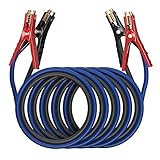
TOPDC 4 Gauge 25 Feet Heavy Duty Jumper Cables: Best for extra reach
This TOPDC version keeps the 4-gauge specification and carry bag, while extending the cable to 25 feet. That additional length can help when battery placement or parking position makes a shorter cable awkward. It is the more practical of these two TOPDC choices when you want the option to assist a vehicle that cannot be parked close by.
Tradeoff: More cable means more bulk to coil and store, and the extra reach may go unused in a small-car emergency kit. Skip it if the vehicles you expect to connect can park close together and compact storage matters more than flexibility.
Energizer Jumper Cables for Car Battery: Best for a compact 16-foot set
Energizer’s set is 16 feet long, uses 6-gauge cable, and includes a carrying bag. It suits drivers who want a shorter kit for a car and do not expect to need a long reach. Compared with the 20- and 25-foot options, the shorter cable is easier to stow, although where the vehicles can park still determines whether it will reach.
Tradeoff: Its 6-gauge rating is a thinner-cable specification than the 4-, 2-, and 0-gauge options in this guide. Skip it if you need a longer run or have a vehicle whose manual calls for a heavier cable; do not choose by length alone when the vehicle has specific requirements.
AutoChat Heavy Duty Jumper Cables: Best for a 30-foot, 0-gauge option
AutoChat describes this set as 0 gauge and 30 feet, with a carrying case, gloves, brushes, and a 1000-amp claim in the product title. The long reach is its clearest distinction for drivers who may need to connect vehicles from farther apart. The included kit items may also appeal to someone assembling a roadside bag in one purchase.
Tradeoff: Thirty feet is substantially longer than the everyday 16- to 25-foot choices, so storage and handling are less convenient. The 1000-amp figure is a product claim, not proof of suitability for every vehicle. Skip it if you do not need a long run or cannot store a bulky cable set easily.
NOONE 0 Gauge 30 FT Heavy Duty Jumper Cables: Best for a long kit with protective accessories
NOONE names a 30-foot length and 0-gauge cable, and its product description includes gloves, goggles, and a carry bag. That package is aimed at drivers who value a long reach and want those protective items stored with the cables. It is a premium-priced choice among the products described here, so its appeal rests mainly on the long format and bundle.
Tradeoff: The 30-foot cable takes more storage space than shorter alternatives, and the available description does not establish that it will meet every vehicle’s requirements. Skip it if a shorter cable would reach your likely setup or if you prefer to select protective gear separately.
Using cables safely and knowing when not to buy them
Jumper cables require a second vehicle with a suitable battery and a safe place to position both vehicles. They are not a standalone power source. Follow the owner’s manuals for both vehicles and the cable maker’s instructions for connection order and grounding points. Battery layouts and approved connection points vary, so do not rely on a generic sequence when a manual gives a different procedure. Keep clamps from touching each other, and stop if a battery is visibly damaged, leaking, swollen, or otherwise appears unsafe.
A dead battery can also point to a charging-system fault, a battery nearing the end of its service life, or an electrical load left on. A successful jump does not diagnose the cause or repair it. If the vehicle repeatedly needs a boost, arrange a battery and charging-system check rather than treating cables as the fix.
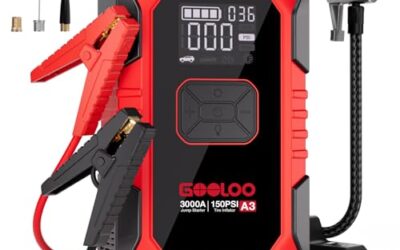
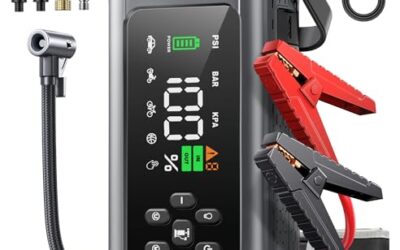
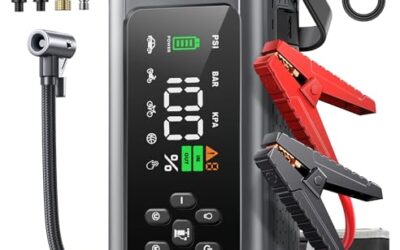
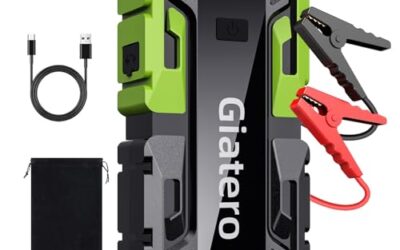
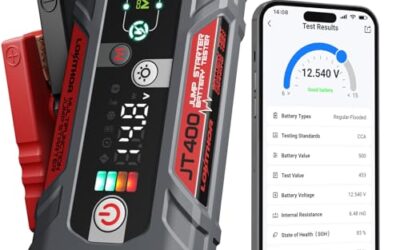
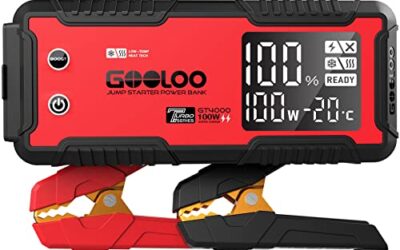
Some drivers should skip every cable recommendation here. If you regularly travel alone, have no reliable donor vehicle nearby, or cannot safely position two vehicles, look instead at a portable jump starter matched to your vehicle’s battery and engine requirements. A jump starter has its own charging, storage, and compatibility needs, so consult the vehicle manual and the device instructions. CarTechTalk’s portable jump starter guide can help with that separate purchase decision.
If your main concern is keeping an emergency kit ready for winter, compare the cable option with a self-contained device rather than assuming cables will be available when needed. Our guides to jump starters for freezing temperatures and compact jump starters for winter commuting cover that alternative.
Which jumper cables should you buy?
For the broadest everyday fit among these choices, start with the TOPDC 4 Gauge 20 Feet set. It balances useful reach with less bulk than the 25- and 30-foot cables, and its stated car and SUV scope suits many routine roadside situations. Choose the 25-foot TOPDC if added reach matters more than storage, or the Energizer set if a shorter 16-foot cable is a better match for your trunk and vehicle.
Drivers who specifically need a long cable can consider the 0-gauge 30-foot AutoChat or NOONE options, but should weigh their storage demands and check vehicle requirements. No gauge, length, or amperage claim replaces the instructions for the car being jump-started. Buy for the likely parking situation, then keep the cables accessible and follow the vehicle manuals when they are needed.