The best headlight restoration kit for most drivers is the 3M Ultra Headlight Restoration Kit, because its listed contents include masking tape, sanding discs, and a wax protectant for plastic lenses. It is a practical fit for cloudy or yellowed plastic headlights when you are willing to sand and protect the lens by hand. If you prefer a wipe-on process or want a ceramic-protection claim, the CERAKOTE® kit is a different route.






What matters when choosing a headlight restoration kit
Headlight haze on an exposed plastic lens is often approached with abrasion: sanding or polishing removes the weathered outer surface, then a protectant helps shield the renewed surface. A wipe, polish, or spray kit may take a different route. The product names here describe those methods, but the available details do not establish that every kit uses the same process or has the same contents.
Start by matching the kit’s stated method to the work you are prepared to do. Sanding requires care around paint and trim, so masking tape and deliberate, even work matter. A no-power-tool kit can suit a driveway repair, while a product that says it works by hand or machine gives the user a choice. A ceramic or UV-protection claim is relevant to the protection step, not proof of a particular service life.
These kits are described for plastic lenses or for headlight restoration, but no vehicle-specific fitment details are included. They should not be treated as a repair for cracked lenses, internal moisture, damaged reflectors, or failed bulbs. Those problems are different from surface haze and may call for replacement or professional diagnosis.
Recommended headlight restoration kits
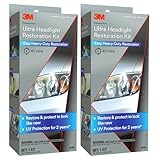
Best balance of sanding steps and protection: 3M Ultra Headlight Restoration Kit
3M describes this kit for plastic lenses and lists masking tape, light sanding discs, and wax protectant among its contents. That combination gives a buyer a clear sequence: protect the surrounding area, work the lens, then apply protection. It is the strongest general-purpose choice here for a driver comfortable with a sanding-based restoration.
The tradeoff is that sanding takes more care than a wipe-only process, and the stated protectant is wax rather than a ceramic product. Skip it if you want to avoid abrasives or specifically want a wipe-on ceramic system.
Best no-power-tool option: CERAKOTE® Ceramic Headlight Restoration Kit
CERAKOTE describes a three-step wipe system with ceramic UV protection and says no power tools are needed. That makes it a reasonable choice for a driver who wants a hand-applied process rather than a machine-assisted one. The ten-wipe kit format also gives a clear sense of the application style before purchase.
Its stated method is wipe-based, so it is not the obvious choice for someone who wants a kit centered on sanding discs and a mechanical polishing step. Skip it if you prefer a disc-based restoration process or need a tool-driven approach.
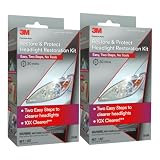
Best lower-cost 3M option: 3M Auto Restore and Protect Headlight Restoration
3M lists sanding discs, clear-coat wipes, a foam pad, and a glove. The product is described for plastic headlights, taillights, and fog lights, which makes it a useful choice if you want one restoration kit for more than the main headlights. Its combination of sanding and wipe-on clear coat fits a buyer who wants those steps in a single package.
The sanding process still calls for careful handling, and the kit’s stated protection is a clear-coat wipe rather than wax or ceramic. Skip it if you do not want to sand, or if your priority is a kit specifically described with ceramic protection.
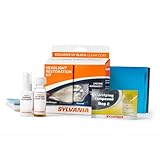
Best for a durable UV-protection claim: SYLVANIA Headlight Restoration Kit
SYLVANIA describes its kit as an at-home restoration option with a durable, long-lasting UV-protective coating. That claim may appeal to drivers who place protection after restoration high on their list. The product is also presented as a way to restore headlights, rather than as a liquid-only polish.
The available description does not spell out the kit’s individual tools or steps, so buyers who want to compare a precise sanding sequence may prefer a kit with named discs and applicators. Skip it if you require a clearly specified set of sanding stages before you buy.
Best two-kit purchase: 3M Ultra Headlight Restoration Kit 39195
This two-pack contains two kits, and the product description names 500, 800, and 3000 grit sanding discs plus clear coat for plastic lenses. That detail helps a buyer who wants a defined progression and a second kit on hand, whether for another vehicle or a later repair.
A two-pack is more than a one-car buyer may need, and the sanding process is not a fit for someone seeking a quick wipe-only method. Skip it if you want just one kit or do not plan to work through sanding stages.
Best for hand or machine application: Chemical Guys Headlight Restoration and Ceramic
Chemical Guys says this kit can be used by hand or machine and pairs restoration with HydroCharge ceramic. The choice of application method is useful if you already have a suitable machine or prefer manual work. Its ceramic step may also interest drivers who want a coating-oriented finish.
The machine option does not mean every buyer needs a machine, but it may add a tool decision that simpler kits avoid. Skip it if you want a clearly specified sanding-disc sequence or do not want a ceramic-based kit.
Best for a wax-protectant approach: Turtle Wax Headlight Restoration Kit
Turtle Wax describes its kit as a way to remove oxidation and yellowing and restore headlight clarity. It is a straightforward option for a driver comparing a familiar restoration product with kits that emphasize ceramic coatings or multiple sanding stages.
The description does not name specific abrasives or a UV-protection coating, so it is harder to choose on those features alone. Skip it if your decision depends on knowing the grit sequence or selecting a clearly identified ceramic protectant.
Best liquid-focused alternative: Pmbqifay Headlight Restoration Kit
Pmbqifay identifies a 200 ml repair liquid and names yellowing, haze, oxidation, and scratches among the concerns it targets. The volume is a useful differentiator for a buyer comparing liquid-based products, rather than kits whose stated contents center on sanding discs or wipes.
The description does not identify a sanding sequence or a named protective coating, so buyers seeking those steps may find the 3M or CERAKOTE options easier to assess. Skip it if you want a kit with clearly named abrasives and a distinct finishing protectant.
Best smaller-volume liquid option: Ghguole Headlight Restoration Car Headlight Lens Scratch
Ghguole describes a 100 ml restoration liquid and a UV block coat, with yellowing, haze, oxidation, and scratches in its stated scope. That makes it a liquid-focused alternative for someone who wants a UV-coat claim alongside the restoration product.
The stated liquid volume is smaller than Pmbqifay’s 200 ml, and the available description does not name sanding discs or a step-by-step abrasive method. Skip it if you need a disc-based process or want a larger stated liquid quantity.
Best spray-format choice: PQWESIT Car Headlight Restoration Kit
PQWESIT describes a restoration spray and says no power tools are required. This is a distinct option for someone who prefers a spray-format product and wants to work without powered equipment. Its listed purpose is restoring yellowed and oxidized headlights.
The description does not identify sanding materials or a separate coating, so it offers fewer decision details than kits naming those components. Skip it if you want a defined abrasive progression or a specific ceramic or clear-coat step.
Best for a repair-liquid kit format: Car Headlight Lens Scratch Repair Polish Tool
Ghguole’s product is described with 100 ml of restoration liquid and a UV block coat. Its stated target conditions include yellowing, scratches, haze, and oxidation. It is an alternative to the wipe and sanding kits for a buyer comparing liquid-based restoration approaches.
The description does not clarify a sanding sequence or the role of a separate tool, so it is less straightforward to compare with kits that name each restoration stage. Skip it if you want a clearly described set of abrasives and application steps.
How to choose by lens condition and work style
For a lens with visible surface clouding or yellowing, a sanding kit is the clearest match among these options when you are prepared for careful surface work. The 3M Ultra kit names tape, sanding discs, and wax protectant; its two-pack counterpart names three disc grits and clear coat. Compare those stated finishing steps rather than assuming wax, clear coat, and ceramic coatings are interchangeable.
If you would rather avoid powered equipment, the CERAKOTE® kit explicitly says no power tools are needed. The 3M Auto Restore and Protect kit also includes hand-use components, while the PQWESIT spray is described as requiring no power tools. These statements do not establish that application takes the same time or effort, so choose by method rather than by an assumed speed advantage.
For a liquid-based option, compare Pmbqifay’s stated 200 ml with Ghguole’s 100 ml and UV block coat. Volume alone does not establish how much area a kit covers or how many applications it supports. The product descriptions do not give a reliable coverage comparison, so do not use milliliters as a promise of results on a particular vehicle.
For a coating-focused choice, CERAKOTE, Chemical Guys, and SYLVANIA each describe UV or ceramic protection in different terms. Those are manufacturer claims, not a shared durability standard. If longevity is the deciding factor, review the specific product instructions and preparation steps before choosing, since a protectant applied over an unsuitable or poorly prepared surface may not deliver the intended finish.
Limits, preparation, and when to skip a kit
Surface restoration cannot correct every headlight problem. A lens with cracks, deep physical damage, internal condensation, or a damaged lamp assembly may need a replacement part or professional attention instead of polishing. Do not sand a lens just because the light looks dim; first make sure the problem is actually on the outer surface.
Follow the product’s own instructions for preparation, application, drying, and any safety precautions. Mask painted panels and trim when using abrasives, and avoid letting sanding debris or polishing compounds reach surfaces the manufacturer does not identify as suitable. The descriptions here do not establish compatibility with every headlight material, replacement lens, or vehicle finish.
Drivers who should skip every kit in this guide are those with cracked lenses, moisture inside the assembly, damaged reflectors, or a headlight that remains dim despite a clear outer lens. Look for the correct replacement assembly or ask a qualified repair shop to diagnose the fault. A surface-restoration product is not a substitute for repairing an electrical or internal lamp problem.
Final recommendation
For a typical plastic lens with surface haze, the 3M Ultra Headlight Restoration Kit is the most balanced starting point because it names the masking, sanding, and protection parts of the job. Choose CERAKOTE® instead if the no-power-tool wipe process and ceramic UV-protection claim fit your preference. The 3M two-pack makes more sense when you want two kits and a named three-grit sequence, while liquid and spray choices suit buyers who prefer those formats. Match the method to the lens condition, and do not expect any surface kit to fix internal or structural damage.