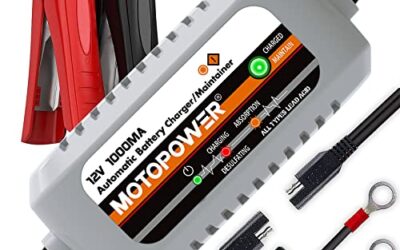
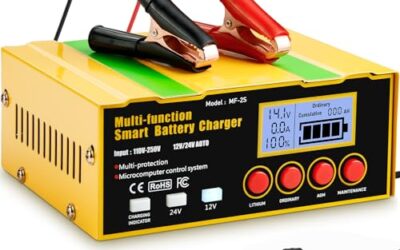
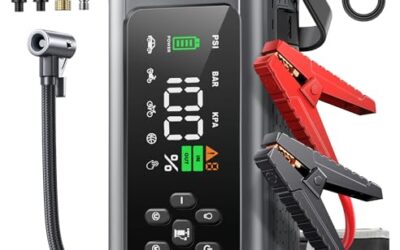
For maintaining standard 12-volt deep-cycle marine, RV, and solar batteries, the NOCO GENIUS5: 5A 6V/12V Smart Battery Charger represents the most balanced choice because its 5-amp output provides enough current to top off mid-sized storage banks without overheating delicate plates, while its integrated thermal sensor automatically adjusts charge levels to prevent seasonal overcharging. Owners who manage large banks over 100Ah or require fast recharge speeds alongside long-term float monitoring will find higher amperage units such as the NOCO GENIUS10: 10A 6V/12V Smart Battery Charger or TowerTop 2/10/25 Amp 12V Smart Car Battery more suited to heavy demands. Matching the maintainer to your specific chemistry, whether flooded lead-acid, absorbent glass mat (AGM), or lithium iron phosphate (LiFePO4), ensures long-term service without cell degradation.

Pros
- Supports both lead-acid and lithium-ion battery types
- Works with 6V and 12V batteries
- Provides a Force Mode for batteries with very low voltage
- Includes temperature compensation and automatic maintenance features
Cons
- The listing does not include detailed electrical or physical specifications
- The source listing shows 0 customer reviews
Best For / Avoid If
Best for buyers prioritizing
- Supports both lead-acid and lithium-ion battery types
- Works with 6V and 12V batteries
- Provides a Force Mode for batteries with very low voltage
Consider another option if
- The listing does not include detailed electrical or physical specifications
- The source listing shows 0 customer reviews

Pros
- Supports multiple 6V and 12V battery types
- Combines 15A charging with a maintain/float function
- Provides digital voltage and charge-status information
- Includes reverse hook-up protection
Cons
- The listing does not include dimensions, warranty information, or included accessories
Specifications
| Color | Black |
|---|---|
| Size | Battery Charger and Maintainer |
| Dimensions | 9.96 x 4.29 x 10.03 Inches |
| Weight | 2.7 Pounds |
| Product Group | Automotive Parts and Accessories |
| Binding | Automotive |
Best For / Avoid If
Best for buyers prioritizing
- Supports multiple 6V and 12V battery types
- Combines 15A charging with a maintain/float function
- Provides digital voltage and charge-status information
Consider another option if
- The listing does not include dimensions, warranty information, or included accessories

Pros
- Adjustable charging current supports different charging needs
- Broad compatibility with listed 12V sealed lead-acid battery types
- Includes dedicated desulfation and repair functions
- Offers engine-start assistance and a winter charging mode
- ETL certification is listed in the listing
Cons
- The repair mode cannot repair completely drained batteries
- Only 12V battery applications are specified
Specifications
| Color | 25A |
|---|---|
| Dimensions | 7.68110235437 x 10.0393700685 x 4.9212598375 inches |
| Weight | 5.00008410216 Pounds |
| Product Group | Automotive Parts and Accessories |
| Binding | Electronics |
Best For / Avoid If
Best for buyers prioritizing
- Adjustable charging current supports different charging needs
- Broad compatibility with listed 12V sealed lead-acid battery types
- Includes dedicated desulfation and repair functions
Consider another option if
- The repair mode cannot repair completely drained batteries
- Only 12V battery applications are specified
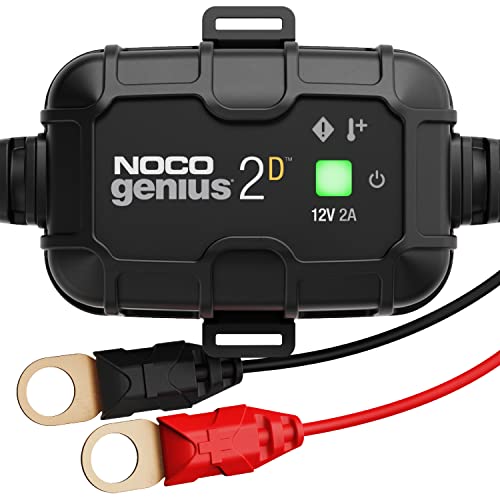
Pros
- Compatible with multiple 12V lead-acid battery types.
- Temperature compensation is designed to help prevent overcharging in hot weather and undercharging in cold weather.
- Direct-mount format supports an onboard, under-the-hood charging setup.
- Includes a Force Mode for charging completely discharged batteries down to zero volts.
Cons
- Designed for 12V lead-acid batteries; other battery chemistries are not identified in the listing.
- The 2A charging rate is specified for this model.
- Installation requires securing the mounting bracket with self-tapping screws.
Specifications
| Color | Black |
|---|---|
| Size | 2A |
| Dimensions | 5 x 2.3 x 1.5 inches |
| Weight | 0.73 Pounds |
| Product Group | Automotive Parts and Accessories |
| Binding | Electronics |
Best For / Avoid If
Best for buyers prioritizing
- Compatible with multiple 12V lead-acid battery types.
- Temperature compensation is designed to help prevent overcharging in hot weather and undercharging in cold weather.
- Direct-mount format supports an onboard, under-the-hood charging setup.
Consider another option if
- Designed for 12V lead-acid batteries; other battery chemistries are not identified in the listing.
- The 2A charging rate is specified for this model.
- Installation requires securing the mounting bracket with self-tapping screws.

Pros
- Two-bank design allows simultaneous charging of two 12V batteries
- Multiple charging modes support SLA/AGM, lithium, and calcium batteries
- IP68-rated sealed housing is specified for marine and onboard use
- Manual charging start is available for batteries below 1V
- Includes a stated three-year charger warranty
Cons
- Output is limited to 5A per bank, or 10A total
- The listing specifies support for 12V batteries only
Specifications
| Size | 2 Bank |
|---|---|
| Dimensions | 6.5 x 6.5 x 2 inches |
| Product Group | Electronics |
| Binding | Electronics |
Best For / Avoid If
Best for buyers prioritizing
- Two-bank design allows simultaneous charging of two 12V batteries
- Multiple charging modes support SLA/AGM, lithium, and calcium batteries
- IP68-rated sealed housing is specified for marine and onboard use
Consider another option if
- Output is limited to 5A per bank, or 10A total
- The listing specifies support for 12V batteries only

Pros
- Supports multiple lead-acid battery types, including AGM, Gel, SLA, VRLA, flooded, maintenance-free, and deep-cycle batteries
- Designed for a wide range of vehicles and equipment, including cars, motorcycles, boats, ATVs, tractors, trucks, SUVs, RVs, and lawn mowers
- Includes both battery clamps and integrated eyelet terminals
- Provides automatic maintenance charging with overcharge protection
Cons
- The listing lists support for LiFePO4 batteries specifically, rather than all lithium-ion battery types
- The charger is specified for 6V and 12V batteries only
Specifications
| Color | Black |
|---|---|
| Size | 10A |
| Dimensions | 4.41 x 4.48 x 9.1 inches |
| Weight | 3.99 Pounds |
| Product Group | Automotive Parts and Accessories |
| Binding | Electronics |
Best For / Avoid If
Best for buyers prioritizing
- Supports multiple lead-acid battery types, including AGM, Gel, SLA, VRLA, flooded, maintenance-free, and deep-cycle batteries
- Designed for a wide range of vehicles and equipment, including cars, motorcycles, boats, ATVs, tractors, trucks, SUVs, RVs, and lawn mowers
- Includes both battery clamps and integrated eyelet terminals
Consider another option if
- The listing lists support for LiFePO4 batteries specifically, rather than all lithium-ion battery types
- The charger is specified for 6V and 12V batteries only
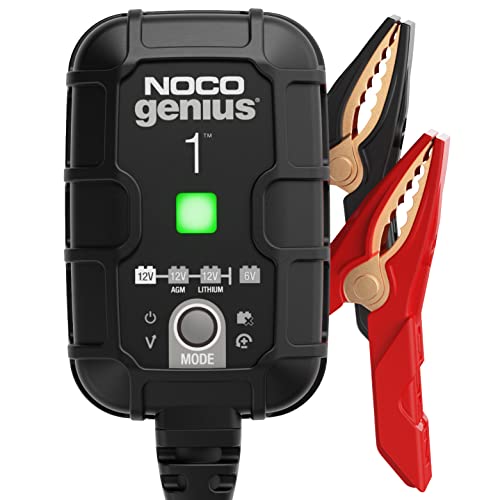
Pros
- Compatible with flooded, maintenance-free, AGM, Gel, SLA, VRLA, deep-cycle, marine, and powersport batteries
- Supports cars, motorcycles, lawn equipment, ATVs, boats, RVs, tractors, and other listed vehicle types
- Designed for indefinite connection while monitoring the battery to help prevent overcharging
- Includes both battery clamps and integrated eyelet terminals
Cons
- Supports 6V and 12V batteries; other voltage systems are not listed
- Force Mode is required to charge batteries down to 0V
- The listing does not include battery capacity limits
Specifications
| Color | Black |
|---|---|
| Size | 1A |
| Dimensions | 3.5 x 2.3 x 1.3 inches |
| Weight | 0.95 Pounds |
| Product Group | Automotive Parts and Accessories |
| Binding | Automotive |
Best For / Avoid If
Best for buyers prioritizing
- Compatible with flooded, maintenance-free, AGM, Gel, SLA, VRLA, deep-cycle, marine, and powersport batteries
- Supports cars, motorcycles, lawn equipment, ATVs, boats, RVs, tractors, and other listed vehicle types
- Designed for indefinite connection while monitoring the battery to help prevent overcharging
Consider another option if
- Supports 6V and 12V batteries; other voltage systems are not listed
- Force Mode is required to charge batteries down to 0V
- The listing does not include battery capacity limits

Pros
- Supports multiple lead-acid battery types, including AGM, Gel, SLA, VRLA, flooded, maintenance-free, deep-cycle, marine, and powersport batteries
- Compatible with LiFePO4 lithium-ion batteries
- Designed for use with cars, motorcycles, lawn mowers, ATVs, UTVs, tractors, trucks, SUVs, RVs, boats, and other listed vehicles
Cons
- Only 6V and 12V battery support is specified
- Force Mode is required to charge batteries that have reached zero volts
Specifications
| Color | Black |
|---|---|
| Size | 5A |
| Dimensions | 4.61 x 3.43 x 7.95 inches |
| Weight | 1.59 pounds |
| Product Group | Automotive Parts and Accessories |
| Binding | Electronics |
Best For / Avoid If
Best for buyers prioritizing
- Supports multiple lead-acid battery types, including AGM, Gel, SLA, VRLA, flooded, maintenance-free, deep-cycle, marine, and powersport batteries
- Compatible with LiFePO4 lithium-ion batteries
- Designed for use with cars, motorcycles, lawn mowers, ATVs, UTVs, tractors, trucks, SUVs, RVs, boats, and other listed vehicles
Consider another option if
- Only 6V and 12V battery support is specified
- Force Mode is required to charge batteries that have reached zero volts

Pros
- Supports both LiFePO4 and several 12V lead-acid battery types
- Automatic charging and trickle-charge operation reduce the need for manual monitoring
- Wide 100V-240V AC input range is specified
- Multiple built-in protection functions are listed
- Includes both M8 terminals and battery clamps
Cons
- The listing claims IP65 water resistance, but no independent verification is provided
Best For / Avoid If
Best for buyers prioritizing
- Supports both LiFePO4 and several 12V lead-acid battery types
- Automatic charging and trickle-charge operation reduce the need for manual monitoring
- Wide 100V-240V AC input range is specified
Consider another option if
- The listing claims IP65 water resistance, but no independent verification is provided
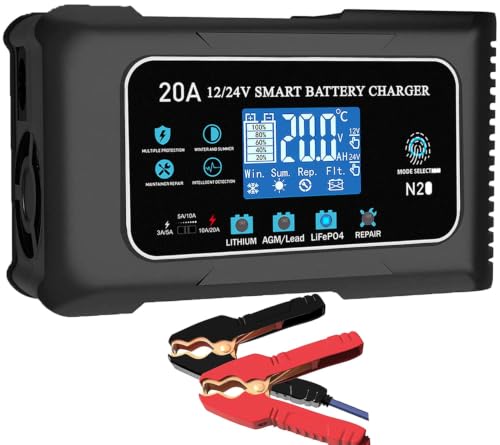
Pros
- Covers both 12V and 24V battery systems
- Provides adjustable charging currents based on the listed battery requirements
- Supports automotive, powersports, marine, lawn and agricultural applications
- Includes overvoltage, low-voltage, overcurrent, short-circuit and temperature protection claims
Cons
- The listed operating-temperature information includes an inconsistent Fahrenheit conversion
Specifications
| Color | navy |
|---|---|
| Size | 20A |
| Dimensions | 7.87401574 x 1.968503935 x 4.724409444 inches |
| Product Group | Electronics |
Best For / Avoid If
Best for buyers prioritizing
- Covers both 12V and 24V battery systems
- Provides adjustable charging currents based on the listed battery requirements
- Supports automotive, powersports, marine, lawn and agricultural applications
Consider another option if
- The listed operating-temperature information includes an inconsistent Fahrenheit conversion
CarTechTalk earns affiliate commissions from qualifying purchases made through links on this page. Observed retail prices can fluctuate over time, so please check the merchant page to confirm current pricing.
Understanding Deep Cycle Maintenance Requirements
Deep-cycle batteries differ fundamentally from standard automotive starting batteries. While starting batteries deliver sudden bursts of hundreds of cranking amps for a few seconds, deep-cycle units feature thicker solid lead or advanced lithium plates engineered to deliver steady, sustained electrical draw over extended periods. Because deep-cycle units routinely experience deep discharges down to 50 percent capacity or lower, their maintenance charging protocols require multi-stage regulation to prevent permanent cell damage.
Leaving a conventional unregulated trickle charger hooked up indefinitely to a deep-cycle battery often leads to thermal runaway, electrolyte boil-off, or severe positive grid corrosion. Smart maintainers prevent this by progressing through dedicated stages: an initial bulk stage that brings the battery to roughly 80 percent charge, an absorption phase that meters lower current at higher voltage to saturate the plates, and a final float or pulse stage that hovers slightly above natural standing voltage to counteract self-discharge.
Temperature compensation serves as another critical factor for deep-cycle longevity. Cold electrolyte increases internal resistance, necessitating higher charge voltages to achieve full saturation, while extreme summer heat lowers resistance, risking overcharging at normal thresholds. Chargers with ambient sensors safeguard expensive deep-cycle banks from degrading while stored in unconditioned garages, barns, or boat docks.
Comparing the Top Deep Cycle Maintainers
The following table compares manufacturer specifications across current models suitable for deep-cycle maintenance tasks, including supported voltages, maximum charging current, and baseline chemistry profiles.
| Model | Voltage Support | Max Current | Chemistries Supported |
|---|---|---|---|
| NOCO GENIUS1: 1A 6V/12V Smart Battery Charger | 6V, 12V | 1 Amp | Lead-Acid, AGM, Gel, Lithium |
| NOCO GENIUS2: 2A 6V/12V Smart Battery Charger | 6V, 12V | 2 Amps | Lead-Acid, AGM, Gel, Lithium |
| NOCO GENIUS2D: 2A 12V Smart Onboard Battery | 12V | 2 Amps | Lead-Acid, AGM, Gel |
| NOCO GENIUS5: 5A 6V/12V Smart Battery Charger | 6V, 12V | 5 Amps | Lead-Acid, AGM, Gel, Lithium |
| NOCO GENIUS10: 10A 6V/12V Smart Battery Charger | 6V, 12V | 10 Amps | Lead-Acid, AGM, Gel, Lithium |
| Schumacher Electric Car Battery Charger 12V/6V | 6V, 12V | 15 Amps | Standard, AGM, Gel, Deep-Cycle |
| TowerTop 2/10/25 Amp 12V Smart Car Battery | 12V | 25 Amps | STD, AGM, Gel, Deep-Cycle, Calcium |
| 12V 10A Lithium Battery Charger | 12V | 10 Amps | LiFePO4, Lead-Acid, AGM, Gel |
| 12V/24V 20A Car Battery Charger Maintainer Trickle | 12V, 24V | 20 Amps | Lead-Acid, AGM, Gel, LiFePO4 |
| smart 2 Bank Marine Battery Charger | 12V | 10 Amps (5A/Bank) | SLA, AGM, Calcium, Lithium |
Detailed Reviews of Deep Cycle Maintainers
NOCO GENIUS5: 5A 6V/12V Smart Battery Charger
The NOCO GENIUS5: 5A 6V/12V Smart Battery Charger balances maintenance charging with moderate replenishment capability. The manufacturer indicates that this unit handles 6-volt and 12-volt lead-acid formulations alongside lithium-ion (LiFePO4) chemistries. An integrated thermal sensor dynamically alters charging voltage according to ambient temperatures, preventing undercharging in sub-freezing garages or overcharging in heated environments. It incorporates a low-voltage detection system that functions down to 1 volt, backed by a manual Force Mode designed to push current into completely flat batteries reading zero volts.
Drawback: With a 5-amp peak output, recharging an empty 100Ah deep-cycle marine battery will take close to 20 hours before the unit transitions into float maintenance mode.
Avoid if: You need rapid overnight turnaround on large, depleted commercial battery banks.
NOCO GENIUS10: 10A 6V/12V Smart Battery Charger
For users who maintain large dual-purpose or auxiliary banks in recreational vehicles and boats, the NOCO GENIUS10: 10A 6V/12V Smart Battery Charger delivers 10 amps of charging output. The manufacturer notes that it handles lead-acid, AGM, gel, and lithium batteries while offering automatic desulfation and acid stratification recovery routines. It includes 80-inch DC output cables and 72-inch AC cords, allowing flexible mounting on workbench shelves or garage walls near parked equipment. Like other units in the line, it features Force Mode for manual zero-volt recovery.
Avoid if: You only need a low-amperage seasonal storage tender for single smaller batteries.
NOCO GENIUS2: 2A 6V/12V Smart Battery Charger
The NOCO GENIUS2: 2A 6V/12V Smart Battery Charger serves as a compact tender optimized for seasonal preservation of batteries up to mid-range capacities. Delivering 2 amps of continuous current, the manufacturer highlights its automatic 24-hour cycle reconditioning to combat internal plate sulfation without manual intervention. It supports flooded, AGM, gel, and lithium types across both 6-volt and 12-volt configurations, utilizing ambient temperature monitoring to keep float voltages stable.
Drawback: The 2-amp output provides very slow bulk recovery, making it ineffective if you intend to regularly recharge depleted high-capacity deep-cycle banks from a discharged state.
Avoid if: You require a multi-purpose tool that regularly doubles as an active recharge station for depleted RV house banks.
NOCO GENIUS1: 1A 6V/12V Smart Battery Charger
The NOCO GENIUS1: 1A 6V/12V Smart Battery Charger is an ultra-compact, wall-plug design intended strictly for low-draw maintenance and long-term storage. Operating at a single amp, the manufacturer states it is compatible with 6V and 12V wet, AGM, gel, and lithium options. It includes a 110-inch DC cable with integrated eyelet terminals, allowing users to hard-wire permanent quick-connects directly to deep-cycle terminals on stored machinery.
Drawback: A 1-amp current limit cannot realistically overcome high parasitic drains from active vehicle electronics, meaning connected accessories can discharge the battery faster than this unit can replenish it.
Avoid if: The deep-cycle battery remains connected to an RV or boat that has phantom loads or active security devices running.
NOCO GENIUS2D: 2A 12V Smart Onboard Battery
The NOCO GENIUS2D: 2A 12V Smart Onboard Battery addresses permanent installation scenarios where dragging out an external charger is inconvenient. The manufacturer specifies that this unit mounts directly under vehicle hoods or inside marine battery compartments using a snap-fit bracket and self-tapping screws. Outputting 2 amps at 12 volts, it provides pulse desulfation and thermal compensation for lead-acid, AGM, gel, and deep-cycle configurations.
Drawback: Unlike portable models in the family, the GENIUS2D lacks 6-volt compatibility and does not support lithium chemistries according to manufacturer data.
Avoid if: You use LiFePO4 batteries or need a flexible charger to carry between multiple freestanding equipment banks.
Schumacher Electric Car Battery Charger 12V/6V
The Schumacher Electric Car Battery Charger 12V/6V combines high-rate recovery with automatic maintenance. Manufacturer documentation details a 15-amp rapid charging phase controlled by a microprocessor, alongside automatic voltage detection for 6-volt and 12-volt batteries. A built-in digital display presents real-time terminal voltage and percentage of charge at a glance, transitioning into a float-maintain mode once saturation is reached to prevent overcharging.
Drawback: The manufacturer lists compatibility for standard, AGM, gel, and deep-cycle lead-acid units, but omits dedicated charging algorithms for lithium (LiFePO4) cells.
Avoid if: Your deep-cycle equipment operates on modern lithium iron phosphate technology.
TowerTop 2/10/25 Amp 12V Smart Car Battery
The TowerTop 2/10/25 Amp 12V Smart Car Battery delivers extensive charging flexibility with selectable current settings of 2A, 10A, 25A, and fully automatic adjustment. The manufacturer lists an 8-stage intelligent charging sequence covering desulfurization, soft start, bulk, absorption, analysis, repair, float, and pulse maintenance. It also incorporates an auxiliary 100A engine start function for activating weak starting setups and a dedicated Winter Mode that adds 0.2 volts to charging thresholds in low temperatures.
Drawback: The manufacturer specifically states this charger cannot repair completely drained dead batteries, and the unit lacks native support for 6-volt or 24-volt systems.
Avoid if: You maintain 6-volt golf cart series pairs or require automated recovery for batteries resting at zero volts.
smart 2 Bank Marine Battery Charger
The smart 2 Bank Marine Battery Charger from Zrfmib solves the dilemma of managing dual isolated batteries simultaneously. The manufacturer indicates that this onboard unit delivers 10 amps total, split evenly into 5 amps per isolated bank across 12-volt circuits. It carries an IP68 waterproof rating for marine hulls and features independent mode selection on each channel, allowing an owner to maintain an AGM battery on Bank 1 while floating a LiFePO4 battery on Bank 2. It utilizes 9-stage charging with low-voltage activation down to 1 volt.
Drawback: Because each bank is capped at 5 amps maximum, bulk charging large depleted marine batteries simultaneously will require prolonged shore power connections.
Avoid if: You maintain a single centralized battery bank requiring fast, high-amperage turnaround.
12V/24V 20A Car Battery Charger Maintainer Trickle
The 12V/24V 20A Car Battery Charger Maintainer Trickle from Haisito supports dual system voltages, delivering up to 20 amps on 12-volt systems or 10 amps on 24-volt arrays. The manufacturer provides three selectable current rates (12V at 5A, 10A, or 20A; 24V at 3A, 5A, or 10A), backed by a 7-stage charging algorithm. It accommodates lead-acid (calcium, gel, AGM, wet) as well as LiFePO4 chemistry. A manual forced charging mode allows users to override automatic recognition if a deeply discharged 24-volt battery is mistakenly read as 12 volts.
Drawback: The manual forced charging mode requires careful user verification to avoid sending high-voltage current to an incompatible battery bank.
Avoid if: You prefer an entirely fool-proof tender where voltage selection cannot be accidentally misconfigured.
12V 10A Lithium Battery Charger
The 12V 10A Lithium Battery Charger from PowerUrus is tuned specifically for 12V (12.8V) lithium iron phosphate (LiFePO4) storage while maintaining backward compatibility with 12V lead-acid, AGM, and gel types. The manufacturer details a fixed 14.4V constant voltage output delivering up to 10 amps, transitioning automatically into a trickle-maintenance stage at full saturation. It adopts a fanless, fully sealed IP65 waterproof housing for quiet garage operation and includes wake-up circuitry to revive batteries whose internal BMS has entered low-voltage cutoff.
Drawback: It does not offer lower current maintenance settings or 6V compatibility, and it lacks an LCD parameter screen to display exact voltage readouts.
Avoid if: You need an analytical display for monitoring exact float voltages or maintain 6V vintage configurations.
Selecting Maintainers by Battery Chemistry
Choosing an incorrect charger profile can cause lasting damage to deep-cycle investments. Each major battery category requires distinct voltage thresholds during absorption and float stages.
Flooded and Sealed Lead-Acid (SLA)
Standard flooded deep-cycle batteries tolerate mild bubbling during absorption, which helps prevent acid stratification. However, prolonged float voltages above 13.8 volts will boil away water, leading to exposed plates and internal shorts. Maintainers for flooded banks must drop to a stable float voltage between 13.2V and 13.6V once full charge is attained.
Absorbent Glass Mat (AGM) and Gel
AGM batteries pack electrolyte tightly into fiberglass mats, while gel units suspend acid in a silica matrix. Gel cells are especially sensitive to over-voltage; exceeding 14.2 to 14.4 volts during absorption can dry out the gel pockets permanently. Modern maintainers with dedicated AGM and Gel settings restrict maximum charging voltage while delivering pulse maintenance cycles to curb sulfate crystal buildup.
Lithium Iron Phosphate (LiFePO4)
Unlike lead-acid variations, LiFePO4 cells do not suffer from sulfation and do not require float trickle charging in the traditional sense. In fact, holding lithium at high float voltages indefinitely can degrade internal cell chemistry. A dedicated lithium maintainer charges to roughly 14.4V to 14.6V to allow internal cell-balancing boards to equalize cells, then shuts off or drops to a benign resting standby mode until terminal voltage naturally drifts down.
Sizing Amperage for Deep Cycle Storage Banks
A frequent error among equipment owners is mismatching charger amperage to total battery capacity (amp-hours, or Ah). Deep-cycle batteries generally thrive when charged at 10 to 20 percent of their rated capacity during bulk replenishment.
If you maintain a standard 100Ah marine deep-cycle battery that is routinely discharged to 50 percent capacity, a 1-amp maintainer such as the NOCO GENIUS1 would require over 50 hours of continuous charging just to restore the baseline capacity before entering maintenance mode. In this scenario, a 10-amp unit such as the NOCO GENIUS10 or PowerUrus 12V 10A model completes bulk charging within five to six hours, freeing the charger to manage maintenance pulses safely.
Conversely, for continuous off-season storage where the battery is already fully charged prior to parking, low-amperage tenders rated between 1 and 2 amps provide more than enough current to counteract natural internal self-discharge rates of 1 to 5 percent per month without introducing excess heat.
Installation, Safety, and Long-Term Storage
When connecting deep-cycle maintainers for unsupervised storage over several weeks or months, following safe wiring practices avoids fire hazards and battery damage.
- Connect Terminals First: Always clamp or bolt maintainer leads to the battery terminals before plugging the AC power cord into the wall outlet. This minimizes spark risks near vented hydrogen gas.
- Use Eyelet Harnesses: For seasonal equipment like boats and campers, replace temporary alligator clamps with bolted ring-terminal harness leads. Alligator clamps can corrode, slip off, or short out against metal brackets.
- Ensure Ventilation: Flooded lead-acid batteries emit hydrogen gas during final charging phases. Never seal a maintaining lead-acid battery inside an airtight storage container or unventilated plastic locker.
- Verify Auto-Restart: Ensure your chosen charger remembers its operational profile after a municipal power loss. Units like the TowerTop model automatically resume programmed maintenance once power returns.
Who Should Not Buy a Battery Maintainer
If your deep-cycle battery bank has collapsed completely with shorted internal cells, swollen casing walls, severe physical leakage, or an internal open circuit, do not purchase a maintenance charger expecting a miracle recovery. While several smart chargers include pulse desulfation or forced-charge modes, they cannot repair physical structural damage or replenish evaporated electrolyte in sealed AGM or gel casings. In those circumstances, money is better spent replacing the depleted battery bank entirely before adding a maintainer to protect the new investment.
For a closer look at a related choice, see Best Battery Maintainer for Car Batteries, Battery Maintainer For Sealed Agm Batteries and Best Battery Maintainer Under $100 for Garage and Seasonal Storage.