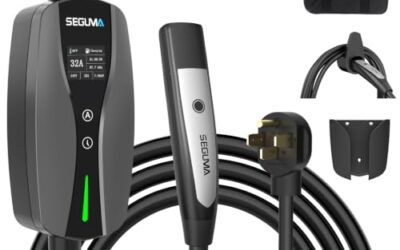
The number of amps an EV charger needs is determined by your vehicle’s charging specifications, the charger’s capabilities, and your electrical infrastructure. Generally, for home use, Level 2 chargers range from 30 to 80 amps, but this varies widely based on the vehicle and desired charging speed. Understanding these factors allows you to select a charger that delivers efficient, safe, and effective power delivery without overloading your home’s electrical system or exceeding the vehicle’s limits.
Key takeaways
- Check your vehicle’s manual for max amps
- Calculate using voltage and kW
- Consider installation limits
- Ensure compatibility with your port type
Understanding Amperage in EV Charging
Amperage, measured in amps, represents the electrical current flowing through a circuit. In EV charging, the charger’s amp rating specifies the maximum current it can supply to the vehicle’s battery. This directly influences the charging speed and power output. Power in kilowatts is calculated as voltage multiplied by amps multiplied by efficiency factor, which is typically around 90 percent for most systems. For instance, a 240-volt charger delivering 40 amps provides approximately 9.6 kilowatts of usable power after accounting for losses.
Choosing the right amps ensures the charger matches the vehicle’s onboard charger capacity, which varies by model year and design. Older vehicles might have smaller onboard chargers limiting AC input to 32 amps, while newer models support higher ratings for faster charging. DC fast chargers operate differently, with ratings often given in kilowatts rather than amps, as they use higher voltages and deliver power directly to the battery.
Factors That Determine the Required Amps
Several elements influence how many amps an EV charger needs. The vehicle’s onboard charger size is the primary factor, as it determines the maximum AC current the battery management system can accept. Desired charging speed also plays a role, with higher amps enabling quicker sessions to add more miles per hour. Voltage supply from your home’s electrical panel is critical, as most residential setups provide 240 volts for Level 2 charging.
Charger type adds another layer of consideration. Portable chargers are limited to lower amps due to standard outlet constraints, while hardwired units can support higher ratings for dedicated circuits. Electrical panel capacity must accommodate the chosen amps without requiring excessive upgrades. Local electrical codes and utility requirements further dictate safe amperage levels to prevent hazards like overheating or tripped breakers.
Calculating the Right Amps for Your Charger
To determine the appropriate amps, first select the desired kilowatt output based on your vehicle’s needs and available time for charging. Use the formula amps equals desired kilowatts multiplied by 1000 divided by voltage. For a standard 240-volt home setup, this simplifies to amps equals kilowatts divided by 0.24.
Examples include a 7.2 kilowatt charger requiring 30 amps, a 9.6 kilowatt unit needing 40 amps, and a 19.2 kilowatt charger demanding 80 amps. These calculations assume ideal conditions, but real-world efficiency losses mean selecting a slightly higher-rated charger may be prudent for consistent performance. Always verify the vehicle’s maximum AC charging amps to avoid exceeding its limits, which could result in reduced charging speed or potential damage.
EV Charger Types and Their Amp Ratings
EV chargers fall into distinct categories with specific amp ranges suited to different applications. Level 1 chargers operate on 120 volts and provide a maximum of 12 amps, delivering about 1.4 kilowatts. These are ideal for slow top-off charging or as a backup option, though they require several hours for a full charge from empty. They plug into standard household outlets and are portable, making them convenient for occasional use.
Level 2 chargers use 240 volts and commonly range from 30 to 80 amps, corresponding to 7 to 19 kilowatts. This category is the most popular for residential installations due to its balance of speed and cost. A 30-amp Level 2 charger can add approximately 10 to 20 miles of range per hour, depending on the vehicle. Hardwired Level 2 units are preferred for daily commuting as they offer consistent power without relying on outlets.
DC fast chargers provide much higher power outputs from 50 to 350 kilowatts. Amp ratings for these vary based on voltage, such as a 150 kilowatt unit at 400 volts requiring 375 amps. They are typically installed at public stations rather than homes due to their high current demands and are not suitable for standard residential circuits without specialized equipment.
Vehicle Compatibility and Model Year Considerations
Vehicle model year significantly affects the amps an EV charger needs because onboard charger technology has evolved. Earlier models often support lower AC charging amps, such as 32 amps for basic Level 2 input, while newer designs incorporate larger chargers capable of handling 48 or 80 amps for accelerated sessions. The charging port type, whether J1772 for AC-only or CCS for combined AC and DC, also influences compatibility and required infrastructure.
Always consult the owner’s manual or manufacturer’s specifications for the exact maximum amps the vehicle can accept. This prevents inefficient charging or safety issues. Regional factors like voltage standards in different countries can further alter requirements, though the United States primarily uses 120 and 240 volts for residential charging.
Home Installation and Electrical Requirements
Installing an EV charger requires assessing your home’s electrical panel to ensure it can support the selected amps. A 30-amp charger typically needs a 40-amp circuit, while an 80-amp unit demands a 100-amp circuit. Proper wiring, such as using appropriately sized cables like 6-gauge for higher amps, is essential to handle the current safely. A dedicated circuit separate from other household loads is strongly recommended to maintain stability.
Additional considerations include the need for a main disconnect switch and compliance with National Electrical Code standards. Professional assessment is vital if your panel lacks sufficient capacity, as upgrades can involve significant costs. Portable chargers offer a simpler alternative by plugging into existing outlets but may limit performance to lower amps.
Common Mistakes When Choosing EV Charger Amps
One frequent error is assuming higher amps always result in faster charging without considering the vehicle’s onboard limits. This can lead to wasted investment and potential inefficiencies. Another mistake involves overlooking the home’s electrical panel capacity, resulting in the need for costly panel upgrades or circuit additions after purchase.
Ignoring local codes or utility requirements can cause installation delays or safety violations. Failing to match the charger to the vehicle’s port type may also create compatibility issues. Over-relying on portable chargers for primary use often proves inadequate for daily needs due to their lower amp ratings and slower charging times.
When to Get Professional Help
Professional assistance is recommended when your electrical panel cannot support the required amps or when planning a hardwired installation. Licensed electricians can evaluate your setup, perform necessary upgrades, and ensure compliance with safety standards. They also provide guidance on selecting compatible chargers tailored to your specific vehicle and location.
Seek expert help if you experience frequent tripping of breakers or inconsistent charging performance. For complex scenarios involving multiple vehicles or high-power demands, consulting specialists prevents long-term problems and optimizes the charging experience.
FAQ
How many amps does a typical EV charger have?
For most home installations, a Level 2 charger with 30 to 80 amps is suitable, depending on the vehicle’s requirements and desired charging speed.
What is the formula for calculating EV charger amps?
Amps equals desired kilowatts multiplied by 1000 divided by voltage. For 240 volts, divide kilowatts by 0.24.
Is more amps always better for an EV charger?
Not necessarily, as it depends on your vehicle’s limits and home electrical capacity. Matching the amps to your needs prevents overloads and ensures optimal performance.
What affects the amps an EV charger can provide?
The charger’s design, the vehicle’s onboard charger, voltage supply, and installation quality all play roles in determining effective amperage delivery.
Can I use a higher amp charger than my vehicle supports?
Yes, but it may not charge faster than the vehicle can accept, and could lead to inefficient or unsafe operation if not managed properly.