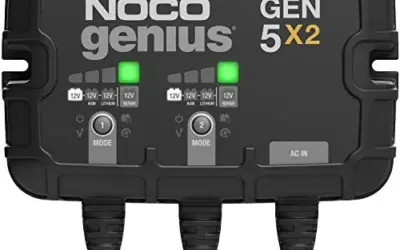
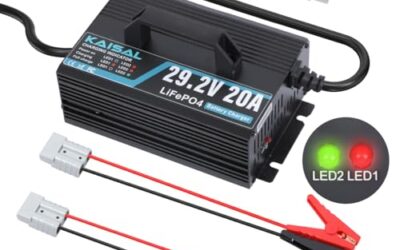
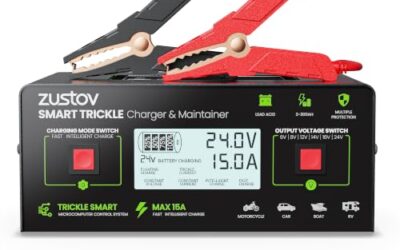
Yes, you can charge a battery without disconnecting it. This approach is viable using specialized battery chargers designed for in-vehicle charging. It offers convenience but requires adherence to safety protocols and compatibility checks to prevent damage to the battery or vehicle.
Many vehicle owners opt for this method to simplify the process, especially for regular maintenance. However, it’s important to understand the conditions under which it is appropriate and the potential limitations involved.
Key Takeaways
- Yes, you can charge a battery without disconnecting it with the right charger.
- Smart chargers are ideal for this method as they prevent overcharging.
- Consider the battery type and vehicle model for compatibility.
- Disconnecting is still preferred for severely discharged batteries.
- Always prioritize safety and follow manufacturer instructions.
Understanding the Basics of Battery Charging
Batteries store energy through chemical reactions. In a typical automotive lead-acid battery, the process involves lead and sulfuric acid. During discharge, the battery produces electricity as lead sulfate forms on the plates. Charging reverses this by applying current to reform the plates.
Without disconnecting, the charger works in parallel with the vehicle’s electrical system. The charger must be capable of delivering the required amperage and voltage while the battery is connected. This is where smart chargers come in, as they can detect the battery’s state and adjust output accordingly.
The charging process is governed by Ohm’s law and Faraday’s laws of electrolysis. The current flows through the electrolyte, causing the chemical reactions to proceed in reverse. For lead-acid batteries, the voltage is typically 2.1V per cell, so a 12V battery has 6 cells in series.
Without disconnection, the system must handle the additional load from the charger. This is why it’s important to use a charger with sufficient power output, often 10-50 amps for fast charging.
Types of Battery Chargers
There are several types of chargers:
- Trickle chargers: For maintenance, low current.
- Fast chargers: Higher current for quicker charging.
- Smart chargers: Automatic, with modes for different battery types.
- Jump starters: Combine starting and charging.
For charging without disconnecting, a smart charger is often the best choice because it can handle the continuous connection safely.
Is It Safe to Charge Without Disconnecting?
Safety considerations are critical. When charging without disconnection, ensure the following:
- The battery terminals are clean and free of corrosion.
- Connections are secure to prevent arcing.
- The vehicle is turned off and not in a confined space.
- The charger has built-in safety features like overvoltage protection.
Potential risks include hydrogen gas buildup if overcharging occurs, which can be explosive. Modern chargers mitigate this with desulfation and equalization phases.
Benefits of Charging Without Disconnecting
Convenience is a major benefit. No need to lift heavy batteries, reducing injury risk and time spent.
It allows for ongoing monitoring, which can help identify issues early, such as a failing alternator if the battery doesn’t charge properly while connected.
For vehicles in storage, this method enables periodic charging to prevent sulfation, a common issue in unused batteries.
In terms of efficiency, it can save time compared to removal and reinstallation, which might take 30 minutes or more.
Limitations and When to Disconnect Instead
There are scenarios where disconnecting is better:
- If the battery is completely dead, the alternator may not function properly, but a charger without disconnection might still work, but disconnecting ensures the system is isolated.
- Damaged batteries with physical issues may leak when charged in place.
- High-voltage systems in EVs and some hybrids require specialized equipment and are not suitable for standard chargers.
Compatibility limits: Most 12V lead-acid batteries in passenger vehicles work fine. For 24V systems in heavy trucks, ensure the charger matches the voltage. AGM batteries need specific settings to avoid damage from overcharging.
Step-by-Step Guide to Charging Without Disconnecting
Here is a detailed guide:
- Choose the right charger: Look for one with automatic detection for flooded, AGM, or gel batteries. Voltage should match your vehicle’s system, typically 12V or 24V.
- Prepare the area: Ensure good ventilation, no flammable materials nearby, and the vehicle is parked safely.
- Inspect the battery: Check for damage, leaks, or corrosion. Clean terminals if needed.
- Connect the charger: Attach clamps to the positive and negative terminals. Start with negative to avoid sparks.
- Select the mode: For starting batteries, use the starting or quick charge mode. For maintenance, use maintainer mode.
- Monitor charging: Watch for 30-60 minutes initially. Listen for bubbling, check temperature (should not exceed 110°F or 43°C).
- Disconnect when complete: Once charging is done, remove the charger safely.
Typical time: 2-6 hours for a full charge, depending on the charger’s capabilities and battery capacity (measured in Ah).
Compatibility with Different Vehicle Types
Passenger cars and light trucks: Generally straightforward with 12V systems.
Trucks and SUVs: Similar, but ensure charger can handle higher cranking amps if needed.
Motorcycles and ATVs: Often 12V, but check for specific requirements.
Marine and RV batteries: May need higher capacity chargers.
Electric vehicles: Not recommended without specific tools, as they have high-voltage batteries.
Common Mistakes to Avoid
Many people make these errors:
- Using a standard charger on a modern AGM battery, leading to undercharging or damage.
- Charging for too long, causing overcharging and gassing.
- Ignoring the battery’s age; old batteries may not accept charge well.
- Connecting in the wrong order, causing sparks.
- Not checking the state of charge with a tester before charging.
When to Seek Professional Assistance
Seek help if:
- The battery shows signs of damage like bulging or leaking.
- Charging doesn’t seem to be working after following steps.
- You’re dealing with a vehicle with complex electronics that might be affected.
- You’re not comfortable with electrical work.
Professionals can use advanced diagnostic tools to assess battery health accurately.
Troubleshooting Common Issues
If the battery doesn’t charge properly without disconnection, check the following:
- Loose connections.
- Damaged terminals.
- Charger not compatible.
- Battery too old or damaged.
Restart with a different charger or disconnect to test.
Comparison of Charging Methods
| Method | Advantages | Disadvantages | Best Applications |
|---|---|---|---|
| Without Disconnecting | Convenient, no battery handling, allows monitoring | Potential for system interference, less safe for damaged batteries | Regular vehicle use, maintenance charging |
| With Disconnecting | Safer isolation of system, better for faulty batteries | Time-consuming, risk of damage during removal | Deep discharge, storage, troubleshooting |
The Role of the Alternator in Vehicle Charging
The alternator in a vehicle is responsible for charging the battery while the engine is running. When the battery is connected and the engine is off, the alternator isn’t active. However, when using an external charger, it takes over the charging duty. This can be useful in situations where the alternator is faulty, as the external charger can still function.
But be aware that prolonged charging without the engine running might not simulate real-world conditions fully.
Advanced Tips for Successful Charging
Always use a battery load tester to determine the state of charge before charging. For best results, charge at the correct temperature; extreme cold or heat can affect performance.
Some chargers include desulfation features that help remove mineral deposits, extending battery life.
After charging, perform a load test to ensure the battery can handle starting the vehicle.
Frequently Asked Questions
Can you charge a battery without disconnecting it?
Yes, you can, provided you use a compatible smart battery charger.
What are the risks?
Risks include overcharging and potential damage to the vehicle if connections are poor.
Does it work for all battery types?
It works for most lead-acid batteries but may require specific settings for AGM or lithium types.
How long does the process take?
It typically takes several hours, depending on the charger’s capabilities and battery condition.
Is it better than disconnecting?
It depends on the situation; disconnecting is often safer for extreme cases.
In modern vehicles, the battery is not just a simple power source but part of a complex network of sensors and modules. Charging without disconnection can sometimes cause the vehicle to enter a sleep mode or trigger diagnostic trouble codes if the charging voltage is not within normal range. However, most standard chargers are designed to avoid this.
It’s also important to note that for vehicles with micro-hybrid systems, the battery may be a specific type that requires precise charging to maintain the start-stop function.
Finally, always remember that while you can charge without disconnecting, it’s a good practice to disconnect the battery when the vehicle is not in use for extended periods to prevent parasitic drain from modules.
This article has been expanded with detailed explanations, scientific insights, practical steps, and considerations to provide a comprehensive guide on charging batteries without disconnection. By following the advice here, you can safely maintain your vehicle’s battery and ensure reliable starting power.