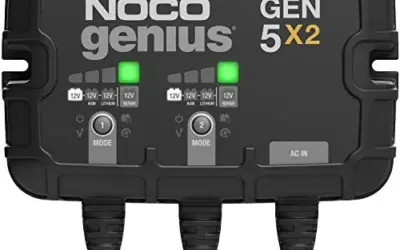
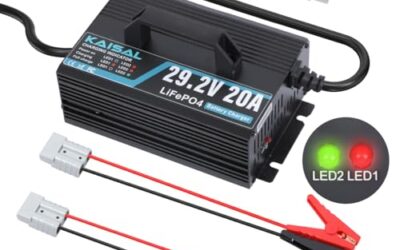
Battery desulfation mode is a specialized charging function found in certain battery chargers and testers that helps to counteract the effects of sulfation on lead-acid batteries. Sulfation is the buildup of lead sulfate crystals on the battery plates, which reduces the battery’s ability to store and deliver electrical power. Battery desulfation mode works by applying a series of high-frequency electrical pulses to the battery, which helps to break apart these crystals and restore the battery’s performance to a greater extent than regular charging alone.
This mode is particularly useful for vehicles that do not get driven regularly, as it can help prevent or reverse minor sulfation. However, it is not effective for all types of batteries and has specific limitations that users should understand before use.
- Battery desulfation mode is designed for lead-acid batteries only.
- It applies electrical pulses to help dissolve sulfate crystals.
- Best results are achieved with mild to moderate sulfation.
- Compatibility with vehicle battery voltage and type is essential.
- It should be used as part of a maintenance routine.
Understanding Battery Sulfation
Lead-acid batteries are the most common type used in automobiles, motorcycles, boats, and recreational vehicles. The battery’s operation relies on a chemical reaction between sulfuric acid and lead plates. When the battery is discharged, the acid is consumed and lead sulfate is formed. If this process is not reversed by regular charging, the lead sulfate can crystallize and adhere to the plates.
This crystallization increases the internal resistance of the battery and reduces the available surface area for the chemical reactions. Over time, this leads to decreased capacity and performance. In extreme cases, the battery may not hold any charge at all. Sulfation is accelerated by factors such as high temperatures, which can cause the electrolyte to lose water through evaporation, and by leaving the battery discharged for extended periods.
In hot climates or in vehicles that sit unused for weeks or months, the risk of sulfation is higher. Regular driving helps by keeping the battery charged and cycling the chemical reactions. However, for those situations where regular driving is not possible, battery desulfation mode can be a helpful tool.
How Battery Desulfation Mode Works
Battery desulfation mode uses a charger that sends out a series of short, high-voltage pulses at a frequency typically between 1 kHz and 10 kHz. These pulses create an alternating electric field that exerts a force on the sulfate crystals, causing them to vibrate and eventually break apart. The crystals then dissolve back into the electrolyte, restoring the battery’s ability to accept and deliver charge.
Some chargers combine this with a reverse charging pulse to further aid in the desulfation process. The entire cycle usually takes 30 minutes to a few hours, depending on the severity of the sulfation and the charger’s settings. It is important to note that this mode is not intended to completely overhaul a heavily sulfated battery but rather to restore performance in cases where sulfation is not too advanced.
The process is relatively safe when used as directed because it does not involve high currents or temperatures that could damage the battery. Users should ensure the battery is connected correctly and monitor it during the process to stop if any unusual behavior is observed, such as excessive gassing or heating.
Applications in Automotive and Marine Settings
Battery desulfation mode is applicable in a wide range of vehicles and equipment that use lead-acid batteries. In cars and trucks, it can help maintain battery health in vehicles that are driven infrequently, such as classic cars or those used for commuting only a few days a week. Motorcycles and scooters also benefit, especially in areas with cold winters where batteries may sit for long periods.
In marine applications, boats and yachts often have batteries that are used intermittently or stored for extended times. Desulfation mode can help keep these batteries in good condition. Recreational vehicles and campers use it to prepare for the next season or to maintain batteries during storage.
The mode is not suitable for lithium-ion batteries, which use different chemistries and require different charging methods. It is also not recommended for deep-cycle batteries that are designed for frequent full discharges without the need for desulfation.
Limitations and Compatibility Considerations
While battery desulfation mode can be effective, it has several limitations. It works best on batteries with mild to moderate sulfation. If the sulfate crystals have hardened significantly, the mode may not be able to fully restore the battery’s capacity. In such cases, the battery may need professional reconditioning or replacement altogether.
Compatibility is important. The mode is designed for 12-volt and 24-volt lead-acid batteries. Ensure that the charger supports the correct voltage and has desulfation settings for your battery type. Some chargers may have different modes for flooded lead-acid batteries versus sealed or AGM batteries, so it is essential to check the manufacturer’s instructions.
There can be uncertainty in the results. Factors such as the age of the battery, its usage history, and the environmental conditions can affect how well the mode works. What may work for one battery may not work for another. It is always advisable to perform a standard charge first if the battery is low on charge to provide enough power for the desulfation pulses to function.
Common Misconceptions About Battery Desulfation Mode
One common misconception is that battery desulfation mode can fix any battery problem. In reality, it is a targeted solution for sulfation and will not address issues such as a faulty alternator, loose connections, or internal battery faults.
Another myth is that it can bring a completely dead battery back to life. Desulfation mode requires some residual charge to operate effectively. If the battery is fully discharged, it may need a standard charging cycle first to provide enough power for the pulses to be effective.
Some users believe that desulfation mode is a permanent solution for all batteries. However, it is best used for maintenance and should be combined with proper charging habits to prevent future sulfation from occurring.
Common Mistakes to Avoid
One mistake is using the desulfation mode on batteries that are not lead-acid. Doing so can cause damage or ineffective results. Always verify the battery chemistry before using the mode.
Another error is running the process for too long or too frequently. Overuse can lead to overcharging and potential battery damage. Stick to the recommended time and frequency as per the charger’s instructions.
Ignoring the underlying cause of sulfation is also common. If the battery is sulfating rapidly, there may be an issue with the charging system or alternator that needs to be addressed separately.
When to Get Professional Help
If after using battery desulfation mode the battery still does not perform as expected, or if you notice any unusual behavior during the process, seek professional help. A mechanic or battery specialist can perform a load test to determine the battery’s health and recommend appropriate actions.
Professional assistance is especially important for vehicles with high-performance batteries or those used in extreme conditions where sulfation may occur more quickly. If the battery shows signs of physical damage, such as a cracked case or leaking electrolyte, professional evaluation is necessary.
Checklist for Determining If Desulfation Mode Is Needed
| Symptom | Possible Cause | Recommended Action |
|---|---|---|
| Slow cranking or dim lights | Mild sulfation | Try desulfation mode after standard charge |
| Battery drains quickly after charging | Sulfation or other issues | Check for sulfation and use desulfation mode |
| Vehicle sits unused for weeks | High risk of sulfation | Use desulfation mode periodically |
| Battery is old or has been deeply discharged | Severe sulfation | Consult professional for testing |
Science Behind Sulfation and Desulfation
The science behind battery sulfation and desulfation involves the electrochemical reactions within the battery. Sulfation occurs due to the irreversible formation of lead sulfate when the battery is discharged. Desulfation mode uses high-frequency AC signals to apply a force that can cause the sulfate crystals to break apart and dissolve back into the electrolyte.
Research has shown that specific frequencies can be effective in desulfating batteries without causing excessive gassing or heating. The process is gentle and helps to restore the battery’s performance without the need for disassembly or chemical treatments.
Preventing Sulfation in Your Battery
To prevent sulfation, it is important to maintain your battery with regular driving or use a smart charger with desulfation mode. Keep the battery terminals clean and connections tight to ensure proper charging. Avoid leaving the battery in a discharged state for extended periods, as this increases the risk of sulfation.
In addition, using a battery maintainer or trickle charger can help keep the battery charged and prevent sulfation from setting in. Regular inspections for signs of sulfation, such as white deposits on the terminals, can help catch the issue early.
FAQ
What is battery desulfation mode?
Battery desulfation mode is a charging technique that uses electrical pulses to help reverse the effects of sulfation in lead-acid batteries.
How does it work?
It works by applying high-frequency pulses to the battery to break apart lead sulfate crystals and dissolve them back into the electrolyte.
Where is it used?
It is used in automotive, marine, and RV applications where lead-acid batteries are prone to sulfation due to infrequent use.
Is it safe?
Yes, it is generally safe when used as directed on compatible lead-acid batteries. Monitor the process and stop if any issues arise.
Can it fix a dead battery?
It can help if there is some residual charge, but a completely dead battery may need a standard charge first.