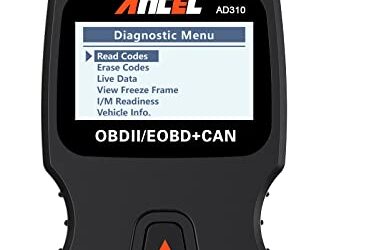
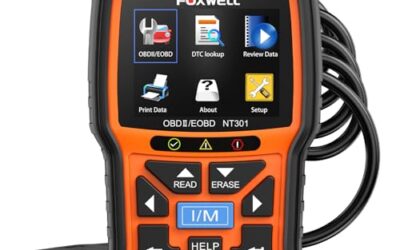
An OBD2 scanner connects to a vehicle’s diagnostic port to read supported diagnostic information, such as emissions-related trouble codes and live data. Reading a code does not identify a failed part by itself. Access to ABS, airbags, service functions and manufacturer-specific modules depends on the scanner and vehicle.
Key Takeaways
- OBD2 stands for On-Board Diagnostics II, a standardized diagnostic system in vehicles.
- Scanners read codes, clear them, view live data, and more.
- Essential for emissions testing, basic repairs, and understanding vehicle performance.
- Compatibility varies by vehicle model year, make, and model.
What Does OBD2 Stand For?
OBD2 is the second generation of the On-Board Diagnostics system. It was mandated by the U.S. Environmental Protection Agency (EPA) and the California Air Resources Board (CARB) starting in 1996 for most vehicles sold in the United States. Before OBD2, vehicles had OBD1, which had less standardized diagnostic capabilities. OBD2 requires vehicles to have a standardized diagnostic connector and a set of protocols for accessing diagnostic information from the vehicle’s electronic control units.
The system was created to help reduce vehicle emissions and improve reliability by allowing the vehicle’s computer to detect and report faults in real time. Over the years, the standard has evolved to include more systems and greater detail in the codes it can store and retrieve.
How Does an OBD2 Scanner Work?
An OBD2 scanner plugs into the OBD2 port, which is typically located under the dashboard on the driver’s side of the vehicle. The exact location can vary by make and model, so it is best to consult your vehicle’s manual or look for the OBD2 symbol near the port. The connector is a 16-pin standardized plug that allows the scanner to communicate with the vehicle’s Electronic Control Unit (ECU) and other modules.
The scanner communicates with the vehicle’s Electronic Control Unit (ECU) through the OBD2 protocol. Common protocols include CAN (Controller Area Network), which is used in most modern vehicles, as well as older protocols like KWP2000 and J1850. Once connected, the scanner sends requests to the vehicle’s modules and receives data back. It then processes this data and displays it in a user-friendly format on the scanner’s screen or through an app.
Basic scanners focus on reading and clearing codes, while more advanced models can provide live data from sensors, perform functional tests, and even access manufacturer-specific information. The communication happens at 12 volts, which is the standard vehicle battery voltage, making it safe for most users when used properly.
Types of OBD2 Scanners
There are several categories of OBD2 scanners, each suited to different needs:
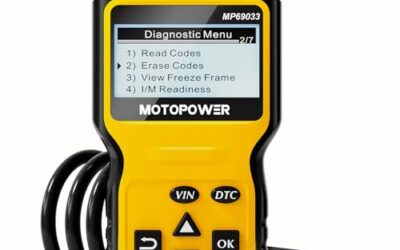
- Basic Code Readers: These are the most affordable options. They can read and clear diagnostic trouble codes and sometimes view pending codes. They are ideal for quick checks when the check engine light is on.
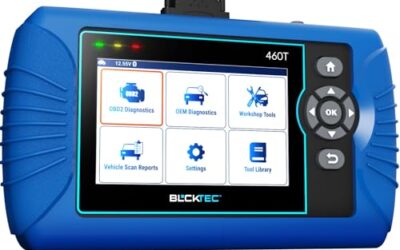
- Advanced Scanners: These offer more features such as live data monitoring, graphing of sensor values, freeze frame data (information captured when a code is set), and access to more vehicle systems. They are suitable for deeper diagnostics.
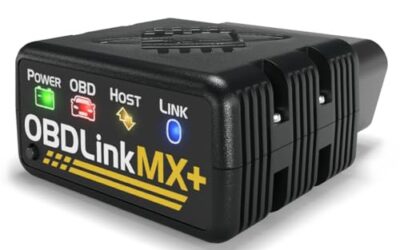
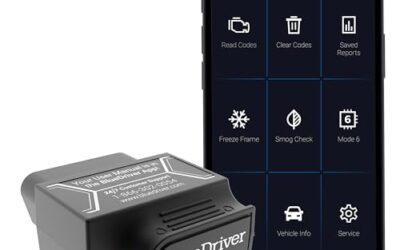
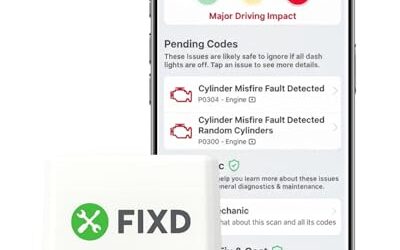
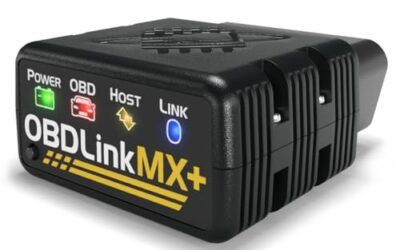
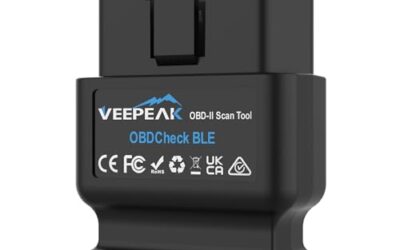
- App-Based Scanners: These use a smartphone or tablet connected via Bluetooth or Wi-Fi. They provide similar functionality to handheld advanced scanners but with the convenience of a mobile device.
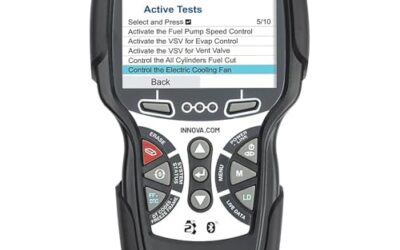
- Professional Scanners: Used by automotive repair shops, these often have bidirectional control, meaning they can send commands to the vehicle to perform tests or reset systems. They are more expensive and provide the most comprehensive diagnostics.
Each type has different capabilities and price points, but all must comply with OBD2 standards for basic functionality. The choice depends on your level of technical expertise and the complexity of the issues you want to diagnose. App-based options require a compatible phone operating system such as Android or iOS and may have limitations based on the app’s development.
What Can an OBD2 Scanner Do?
OBD2 scanners offer a range of diagnostic capabilities:
- Reading Diagnostic Trouble Codes (DTCs): The primary function is to read stored codes that indicate a problem in the vehicle. Codes are usually four characters, like P0300 for a misfire.
- Clearing Codes: After repairs, codes can be cleared to reset the check engine light. However, this does not fix the underlying issue.
- Viewing Live Data: Monitor real-time information from sensors such as engine temperature, oxygen levels, and throttle position.
- Freeze Frame Data: When a code is triggered, the system stores data from around that time, helping to recreate the conditions that caused the fault.
- Performing System Tests: Some scanners can run tests on systems like the EVAP (evaporative emissions) system or idle control.
- Monitoring Readiness Monitors: Check if the vehicle’s computer has completed self-tests for various systems, which is important for emissions testing.
These functions help identify issues like check engine light illumination, poor fuel efficiency, or failed emissions tests. However, interpreting the results requires knowledge of the vehicle and common fault patterns. For instance, a code may point to a specific sensor or component, but additional testing is often needed to confirm the root cause.
OBD2 Scanner Compatibility and Limitations
Compatibility is a key consideration when choosing an OBD2 scanner. Not all scanners work with all vehicles, and even those that claim broad compatibility may have limitations. Factors affecting compatibility include vehicle model year, make and model, region and emissions standards, and scanner features.
The OBD2 standard was introduced in 1996 for passenger cars and light trucks in the United States. For 2004 and newer vehicles, it typically uses the CAN protocol. Older vehicles may require different adapters or may not have OBD2 at all. Different manufacturers may use slightly different implementations of the OBD2 standard or have additional proprietary modules that require specific scanner support. While the US has a standardized OBD2, other countries may have variations or additional requirements. Some basic scanners may not read all codes or support all protocols. Advanced features like bidirectional control are not available on all models. Always check the scanner’s compatibility list or specifications before purchasing. There can be uncertainty because some scanners may not work with all systems or may not read all codes. For example, a scanner might read engine codes but not those from the ABS module.
Common Mistakes When Using OBD2 Scanners
Many people misunderstand how OBD2 scanners work, leading to incorrect conclusions. Here are some common mistakes:
- Clearing Codes Fixes the Problem: Clearing a code resets the ECU but does not repair the fault. The code may return if the underlying issue persists.
- Assuming All Codes Are Equal: Some codes are manufacturer-specific and may not affect drivability. Others indicate serious issues that require immediate attention.
- Interpreting Codes Without Context: Codes should be viewed alongside freeze frame data and live data for accurate diagnosis.
- Using the Wrong Scanner: A basic scanner may not provide enough information for complex issues.
- Neglecting Safety Systems: Issues with airbags or ABS may require specialized tools beyond standard OBD2 scanners.
Avoiding these mistakes ensures you get the most out of your OBD2 scanner and make informed decisions about repairs. It is also important to note that using a scanner while the vehicle is in motion can be unsafe and is not recommended.
When to Get Professional Help
While OBD2 scanners are powerful tools for DIY diagnostics, there are situations where professional help is necessary:
- You have multiple codes or unknown codes that the scanner cannot interpret.
- The issue persists after clearing codes or after repairs.
- You are not comfortable interpreting the results or performing the necessary tests.
- The problem involves safety systems such as the ABS, airbags, or stability control.
- You suspect a complex electrical or software issue that requires specialized equipment.
Professional mechanics have the training and tools to accurately diagnose and repair vehicle issues, ensuring safety and proper function. They can also perform tests that go beyond what a standard OBD2 scanner can provide.
OBD2 and Emissions Testing
In the United States, OBD2 scanners are often used during emissions inspections. The inspection checks for readiness monitors, which indicate if the vehicle’s computer has completed self-diagnostic tests for various systems. If the readiness monitors are not complete, the vehicle may fail the emissions test. An OBD2 scanner can help identify which monitors need to be run and whether there are any stored codes that could cause failure. Understanding OBD2 diagnostics can help you prepare for and pass emissions testing without unnecessary repairs. This process is part of the vehicle’s ongoing compliance with environmental regulations.
Choosing the Right OBD2 Scanner
When selecting an OBD2 scanner, consider your needs and the features you require. For basic code reading and clearing, a simple scanner is sufficient. For more detailed diagnostics, an advanced model with live data and graphing capabilities is recommended. Look for a scanner that supports your vehicle’s protocols and has good compatibility with your make and model. Read user reviews to understand real-world performance and any reported issues. Remember that the OBD2 scanner is a tool to aid in diagnosis, not a replacement for mechanical knowledge or professional service. Always follow safe procedures when using any diagnostic equipment.
FAQ
What does OBD2 stand for?
OBD2 stands for On-Board Diagnostics II. It is the second generation of the On-Board Diagnostics system, which was mandated by the U.S. Environmental Protection Agency starting in 1996.
Can I use an OBD2 scanner on any car?
No, compatibility depends on the vehicle model year, make, and model. Most vehicles from 1996 onward have OBD2, but some may require specific adapters or may not support all scanner features.
How do I read OBD2 codes?
You can read OBD2 codes using a compatible scanner or an app-based scanner connected to your vehicle. Plug the device into the OBD2 port, turn on the ignition, and follow the prompts to read and interpret the codes.
What is the difference between a basic and advanced OBD2 scanner?
A basic scanner typically reads and clears codes, while an advanced scanner adds features like live data monitoring, freeze frame data, and system tests. The choice depends on the depth of diagnostics you need.
When should I clear OBD2 codes?
You should clear codes after making repairs to reset the check engine light and prepare for the next drive cycle. However, only clear codes if you have fixed the underlying issue, as clearing without repair will cause the code to return.