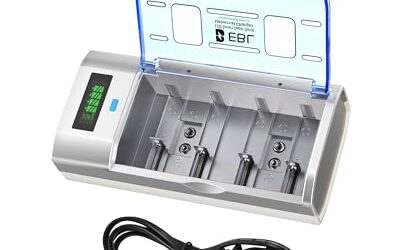

When buyers search for the best universal battery charger for non rechargeable batteries, they are almost always looking for a solution to two distinct dilemmas: either hoping to revive standard single-use alkaline cells to cut household waste, or searching for a foolproof universal charging station that will not overheat, leak, or catch fire if a non-rechargeable battery is inserted by mistake.
Here is the critical technical and safety reality: standard primary cells, including alkaline, carbon-zinc, and primary lithium batteries, are chemically non-rechargeable. Subjecting disposable primary batteries to charging current generates hydrogen gas, causes internal pressure spikes, breaks chemical seals, and risks hazardous caustic potassium hydroxide leaks or explosive cell rupture. Legitimate manufacturers do not design chargers to restore disposable batteries. Instead, the most capable modern universal smart chargers provide advanced microcontroller (MCU) circuitry that actively detects non-rechargeable cells, immediately stops the circuit, and safely manages rechargeable nickel-metal hydride (Ni-MH), nickel-cadmium (Ni-CD), and lithium-ion (Li-ion) replacements.
In this guide, we evaluate 10 universal chargers spanning multi-bay household docks, workshop stations, and multi-chemistry units. We analyze manufacturer-documented detection capabilities, charging bays, power inputs, and practical limitations so you can maintain your battery fleet safely.
Editorial note: CarTechTalk may earn an affiliate commission from qualifying purchases made through links on this page, at no additional cost to you. Observed prices were recorded at the time of writing and may fluctuate over time.

Pros
- Supports multiple rechargeable battery sizes, including 9V
- Allows single-battery or mixed-battery charging
- Offers both Micro USB and USB Type C input options
- Provides individual NiMH battery charging-status information on the LCD
Cons
- The charger is USB powered, and an AC adapter is not listed in the listing
- Compatibility is specified for rechargeable NiMH and NiCD batteries
Specifications
| Color | Black |
|---|---|
| Size | 5-Bay Charger without Batteries |
| Dimensions | 5.2 x 2.2 x 7.5 inches |
| Weight | 0.6 pounds |
| Product Group | Electronics |
| Binding | Electronics |
Best For / Avoid If
Best for buyers prioritizing
- Supports multiple rechargeable battery sizes, including 9V
- Allows single-battery or mixed-battery charging
- Offers both Micro USB and USB Type C input options
Consider another option if
- The charger is USB powered, and an AC adapter is not listed in the listing
- Compatibility is specified for rechargeable NiMH and NiCD batteries

Pros
- Supports multiple rechargeable battery sizes in one charger
- Independent charging slots allow mixed-size battery combinations
- Includes a discharge function for Ni-MH and Ni-Cd batteries
- Provides LCD status information and automatic safety shutoff features
Cons
- Compatibility is specified for Ni-MH and Ni-Cd batteries; other rechargeable chemistries are not listed
- Charging times are listed as up to 3 hours for AA/AAA and up to 10 hours for C/D/9V batteries
- Battery polarity must be aligned with the charger markings for proper operation
Specifications
| Dimensions | 7.88 x 2.32 x 5.52 inches |
|---|---|
| Product Group | Wireless |
Best For / Avoid If
Best for buyers prioritizing
- Supports multiple rechargeable battery sizes in one charger
- Independent charging slots allow mixed-size battery combinations
- Includes a discharge function for Ni-MH and Ni-Cd batteries
Consider another option if
- Compatibility is specified for Ni-MH and Ni-Cd batteries; other rechargeable chemistries are not listed
- Charging times are listed as up to 3 hours for AA/AAA and up to 10 hours for C/D/9V batteries
- Battery polarity must be aligned with the charger markings for proper operation

Pros
- Independent charging channels support flexible battery combinations
- Compatible with four common rechargeable Ni-MH battery sizes
- LCD display provides charging and error indications
- Safety controls include non-rechargeable and defective battery detection
Cons
- 2.0A power adapter is required and not included
- Not compatible with flat-top batteries
- Not compatible with non-rechargeable batteries
Specifications
| Color | Black |
|---|---|
| Size | 8 Bay |
| Dimensions | 5.78 x 1.69 x 5.03 inches |
| Product Group | Camera |
Best For / Avoid If
Best for buyers prioritizing
- Independent charging channels support flexible battery combinations
- Compatible with four common rechargeable Ni-MH battery sizes
- LCD display provides charging and error indications
Consider another option if
- 2.0A power adapter is required and not included
- Not compatible with flat-top batteries
- Not compatible with non-rechargeable batteries

Pros
- Charges up to 16 AA or AAA NiMH batteries independently
- Allows AA and AAA batteries to be mixed during charging
- Uses individual LED indicators to show charging status
- Includes multiple listed electrical and safety protections
Cons
- Only supports NiMH rechargeable batteries; alkaline and lithium batteries are not supported
- Batteries are not included
- Charging takes longer when more batteries are charged
Specifications
| Color | Black,Green |
|---|---|
| Size | 16 Bay |
| Dimensions | 4 x 9.8 x 1.2 inches |
| Weight | 0.8 Pounds |
| Product Group | Electronics |
Best For / Avoid If
Best for buyers prioritizing
- Charges up to 16 AA or AAA NiMH batteries independently
- Allows AA and AAA batteries to be mixed during charging
- Uses individual LED indicators to show charging status
Consider another option if
- Only supports NiMH rechargeable batteries; alkaline and lithium batteries are not supported
- Batteries are not included
- Charging takes longer when more batteries are charged

Pros
- Supports five standard rechargeable battery sizes
- Offers automatic shutoff after charging
- Provides a charging-status LED indicator
- Includes a built-in adapter and detachable cord
Cons
- Compatible with NiMH batteries only
- Charging times may vary depending on the NiMH battery
- Charging capacity is limited to 1 or 2 9V batteries or 2 or 4 AA, AAA, C, or D batteries at a time
Specifications
| Color | silver |
|---|---|
| Size | 1 COUNT |
| Dimensions | 2.84 x 5.08 x 11.58 inches |
| Weight | 0.06 pounds |
| Product Group | Electronics |
| Binding | Electronics |
Best For / Avoid If
Best for buyers prioritizing
- Supports five standard rechargeable battery sizes
- Offers automatic shutoff after charging
- Provides a charging-status LED indicator
Consider another option if
- Compatible with NiMH batteries only
- Charging times may vary depending on the NiMH battery
- Charging capacity is limited to 1 or 2 9V batteries or 2 or 4 AA, AAA, C, or D batteries at a time
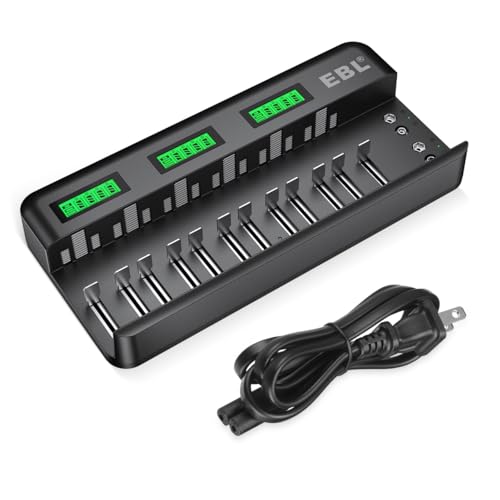
Pros
- Charges multiple supported battery sizes at the same time
- Does not require AA, AAA, C or D batteries to be charged in pairs
- Provides separate status displays for standard rechargeable batteries and 9V batteries
- Includes several listed protection and battery-detection functions
Cons
- The listing identifies support for Ni-MH and Ni-CD rechargeable batteries only
- The LCD display coverage is specified for AA, AAA, C and D batteries, while 9V status uses LEDs
Specifications
| Color | Neutral |
|---|---|
| Size | 12+2 Bay |
| Dimensions | 10.62 x 1.88 x 5.19 inches |
| Product Group | Wireless |
Best For / Avoid If
Best for buyers prioritizing
- Charges multiple supported battery sizes at the same time
- Does not require AA, AAA, C or D batteries to be charged in pairs
- Provides separate status displays for standard rechargeable batteries and 9V batteries
Consider another option if
- The listing identifies support for Ni-MH and Ni-CD rechargeable batteries only
- The LCD display coverage is specified for AA, AAA, C and D batteries, while 9V status uses LEDs
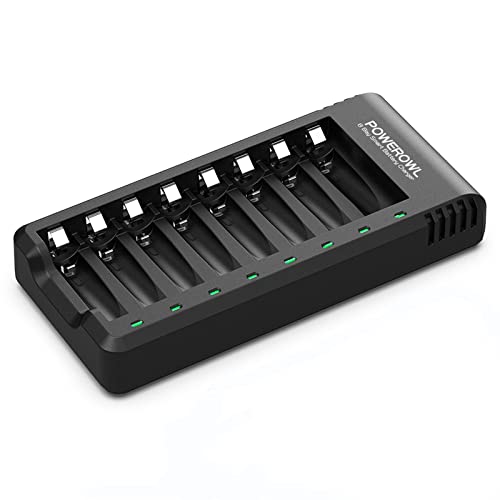
Pros
- Supports both AA and AAA rechargeable battery sizes
- Independent slots allow flexible charging quantities
- USB input provides multiple charging-source options
- Includes automatic charging stop and LED indication
Cons
- Compatible only with Ni-MH or Ni-CD rechargeable batteries
- A power adapter is not included
- A 5V/2A plug is recommended for use
Specifications
| Color | Black |
|---|---|
| Size | 1 Pack |
| Dimensions | 3.09842519369 x 5.99999999388 x 1.09842519573 inches |
| Weight | 0.35 pounds |
| Product Group | Electronics |
| Binding | Electronics |
Best For / Avoid If
Best for buyers prioritizing
- Supports both AA and AAA rechargeable battery sizes
- Independent slots allow flexible charging quantities
- USB input provides multiple charging-source options
Consider another option if
- Compatible only with Ni-MH or Ni-CD rechargeable batteries
- A power adapter is not included
- A 5V/2A plug is recommended for use

Pros
- Broad battery compatibility across several chemistries and sizes
- Four independent bays can monitor each battery separately
- LCD display provides voltage, current, and time information for each slot
- Offers two charge current settings: 500mA and 1000mA
- Lists multiple safety protections, including short circuit and reverse polarity protection
Cons
- Specifications field is not listed beyond the listed feature summary
Best For / Avoid If
Best for buyers prioritizing
- Broad battery compatibility across several chemistries and sizes
- Four independent bays can monitor each battery separately
- LCD display provides voltage, current, and time information for each slot
Consider another option if
- Specifications field is not listed beyond the listed feature summary

Pros
- High capacity for charging up to 12 AA/AAA batteries at once
- Independent charging channels support mixed AA and AAA charging
- Includes multiple safety protections and automatic fault detection
- Provides separate LCD and LED charging-status displays
Cons
- The specifications field does not include detailed dimensions beyond a listed 228 mm height
Best For / Avoid If
Best for buyers prioritizing
- High capacity for charging up to 12 AA/AAA batteries at once
- Independent charging channels support mixed AA and AAA charging
- Includes multiple safety protections and automatic fault detection
Consider another option if
- The specifications field does not include detailed dimensions beyond a listed 228 mm height

Pros
- Broad compatibility across listed lithium-ion, Ni-MH, and Ni-CD battery sizes
- LCD display provides real-time charge-status information
- Multiple listed protections include over-heat, over-current, over-voltage, short-circuit, and over-charge protection
- Includes non-rechargeable and defective battery detection
Specifications
| Color | Black |
|---|---|
| Dimensions | 5.58 x 1.18 x 4.04 inches |
| Product Group | Automotive Parts and Accessories |
Best For / Avoid If
Best for buyers prioritizing
- Broad compatibility across listed lithium-ion, Ni-MH, and Ni-CD battery sizes
- LCD display provides real-time charge-status information
- Multiple listed protections include over-heat, over-current, over-voltage, short-circuit, and over-charge protection
Related reading: Car Battery Charger Buying Guide, Best Rechargeable Battery Charger for 12V Batteries and Best Battery Charger For AA Rechargeable Batteries.
Quick Verdict: Finding the Right Universal Smart Charger
If your primary concern is active safety shutoff to prevent damage when non-rechargeable batteries are mistakenly inserted, the EBL Universal Smart Battery Charger with Discharge and the POWXS 12-Bay AA AAA 9V Ni-MH/Ni-CD Smart Battery stand out. Both models feature explicit hardware-level non-rechargeable cell detection that automatically cuts current to prevent cell rupture.
For heavy-duty battery rotations requiring support for C, D, AA, AAA, and 9V sizes, the 14-channel EBL 12+2 Bay Universal Rechargeable Battery offers the largest mixed-bay capacity with built-in AC power. If you regularly handle advanced 3.7V cylindrical lithium cells (such as 18650s or 26650s) alongside standard household cells, the Keenstone 18650 Battery Charger provides independent multi-chemistry voltage regulation across four slots.
How We Chose These Chargers
Our editorial evaluation examined manufacturer specifications, safety documentation, input requirements, and physical slot engineering across 10 prominent universal battery chargers ranging in price from $11.99 to $51.99. We evaluated products against the following criteria:
- Primary Cell Detection & Safety Circuitry: Documentation of intelligent MCU monitoring, negative delta voltage (-∆V) cutoff, and dedicated mechanisms that identify and terminate charging on non-rechargeable alkaline or primary lithium cells.
- Chemistry Flexibility: Verified support for Ni-MH, Ni-CD, Li-ion, and LiFePO4 cells without cross-voltage contamination.
- Form Factor Versatility: Capability to house multiple cylindrical sizes (AA, AAA, C, D, 18650, 26650) and rectangular 9V blocks in independent channels.
- Power Input & Portability: Direct AC power cord convenience versus USB-C or Micro-USB mobility suitable for vehicle or field use.
- Monitoring Transparency: Clarity of visual feedback, whether via multi-segment LCD parameter screens or distinct multi-color LED alert indicators.
Universal Battery Charger Comparison
The following table compares key manufacturer specifications across all 10 evaluated universal chargers. Please verify current pricing prior to purchase, as retail prices fluctuate.
| Charger Model | Supported Chemistries | Supported Form Factors | Power Input Type | Safety Shutoff / Primary Cell Protection | Observed Price |
|---|---|---|---|---|---|
| EBL Universal Smart Battery Charger with Discharge | Ni-MH, Ni-CD | AA, AAA, C, D, 9V | AC / Micro-USB | Auto-terminates on non-rechargeable cells & shorts | $18.99 |
| POWXS 12-Bay AA AAA 9V Ni-MH/Ni-CD Smart Battery | Ni-MH, Ni-CD, 9V Li-ion | AA, AAA, 9V | 100-240V AC Cable | Auto-stop detection for alkaline & non-rechargeable cells | $18.99 |
| EBL 12+2 Bay Universal Rechargeable Battery | Ni-MH, Ni-CD | AA, AAA, C, D, 9V | AC Power Cable | MCU & -∆V non-rechargeable & defective detection | $51.99 |
| EBL LCD 8 Bay Battery Charger | Ni-MH | AA, AAA, C, D | USB Type-C (5V/2A) | MCU non-rechargeable & defective cell detection | $24.99 |
| Tenergy TN486U 5-Bay Universal Battery Charger | Ni-MH, Ni-CD | AA, AAA, C, D, 9V | Micro-USB / USB-C | Overcharge protection & timer shutoff | $32.99 |
| EBL Universal 18650 Battery Charger for 3.7V | 3.7V Li-ion, Ni-MH, Ni-CD | 18650, 26650, AA, AAA, C | Micro-USB | MCU & -∆V non-rechargeable cell detection | $11.99 |
| Keenstone 18650 Battery Charger | Li-ion, LiFePO4, Ni-MH, Ni-CD | 10440-26650, AA, AAA, C | AC / DC Intelligent | Overcharge, over-discharge & reverse polarity cutoff | $29.99 |
| BONAI AA AAA Battery Charger 16 Bay for NiMH | Ni-MH | AA, AAA | 110-240V AC Cable | Flashing red alert on unsupported/defective cells | $29.44 |
| POWEROWL 8 Bay AA AAA Battery Charger | Ni-MH, Ni-CD | AA, AAA | USB (5V/2A recommended) | Automatic chip control shutoff | $13.98 |
| Energizer Recharge Universal Charger for NiMH | Ni-MH | AA, AAA, C, D, 9V | Detachable AC Cord | Automatic full-charge shutoff | $41.41 |
Compatibility and Buying Advice: The Science of Non-Rechargeable Cells
To avoid safety hazards and equipment damage, it is vital to understand why universal battery chargers behave the way they do around non-rechargeable batteries:
Primary vs. Secondary Battery Chemistries
Every standard household battery falls into one of two electrochemical categories:
- Primary (Disposable / Non-Rechargeable): Alkaline (zinc-manganese dioxide, Zn/MnO2), heavy-duty zinc-carbon, and primary lithium iron disulfide (Li-FeS2). These chemical reactions are designed to flow in one direction only. Forcing current backwards into a primary cell decomposes the aqueous electrolyte, generating caustic potassium hydroxide and hydrogen gas. Under pressure, the safety vent ruptures, causing leaks that corrode electronics or cause fires.
- Secondary (Rechargeable): Nickel-Metal Hydride (Ni-MH), Nickel-Cadmium (Ni-CD), Lithium-Ion (Li-ion), and Lithium Iron Phosphate (LiFePO4). These chemistries feature reversible chemical reactions designed to absorb electrical current repeatedly without dangerous gas buildup when managed properly.
How Smart Chargers Detect Non-Rechargeable Batteries
Modern smart chargers, such as the MCU-equipped units from EBL, POWXS, and Keenstone, employ sophisticated voltage-slope and impedance algorithms:
- Negative Delta Voltage (-∆V) Sensing: As a Ni-MH cell reaches saturation, its internal voltage exhibits a characteristic slight drop. A non-rechargeable cell exhibits erratic, sharp voltage spikes that prompt the MCU to flag an “ERROR” and cut power.
- Internal Resistance / Impedance Checks: When a depleted alkaline battery is placed in an intelligent bay, its elevated internal resistance causes an immediate abnormal voltage response under load. The charger identifies this signature as an unsupported or defective cell.
- Safety Timers and Thermal Probes: If unusual heat or prolonged out-of-spec voltage occurs, the charger automatically disconnects the channel before thermal runaway can develop.
How to Choose the Right Universal Charger
Selecting the best universal charger depends on your household or workshop inventory:
- Identify Your Battery Chemistries: If you only manage household AA, AAA, C, and D cells, a dedicated Ni-MH/Ni-CD station like the EBL Universal Smart Battery Charger with Discharge or EBL 12+2 Bay Universal Rechargeable Battery is ideal. If you also use modern high-drain LED flashlights or vape gear running 18650 or 26650 cells, step up to a multi-chemistry slider charger like the Keenstone 18650 Battery Charger.
- Independent Slots vs. Paired Charging: Always look for independent channel control. Budget or older chargers (such as the Energizer Recharge Universal Charger for NiMH) require charging cylindrical cells in pairs of 2 or 4. Independent slots allow you to charge a single battery or mix sizes freely.
- Power Input Requirements: Units with standard AC power cords require no extra hardware and plug directly into wall outlets. USB-powered units (Micro-USB or USB-C) offer portability for vehicles and battery banks, but require an external USB wall adapter (usually 5V/2A) that is often not included in the box.
- Display and Monitoring: LCD screens provide precise real-time diagnostic feedback, showing charging stage, slot errors, and voltage. LED-only chargers use color transitions (such as red to green or flashing red for error), which are simpler but offer less insight into battery health.
Frequently Asked Questions
Can a universal battery charger recharge standard alkaline batteries?
No. Standard alkaline batteries are non-rechargeable primary cells. Attempting to charge them in any standard battery charger is hazardous. The charging current causes chemical breakdown, leading to internal gas pressure, caustic liquid leakage, equipment destruction, and potential fire or explosion. Chargers advertising non-rechargeable detection are designed to shut off safely when these batteries are inserted, not to recharge them.
What should I do if my charger shows “ERROR” or flashes red?
An error warning typically indicates one of three things: a non-rechargeable alkaline battery was inserted by mistake, the battery was inserted with reversed polarity (+/- ends flipped), or the rechargeable battery has suffered internal damage or extreme discharge that prevents safe charging. Remove the battery immediately and verify its chemistry markings.
Why did some older products claim to charge alkaline batteries?
In the past, specialized “alkaline regenerators” attempted to pulse tiny micro-currents into slightly drained alkaline cells. However, these devices only worked on minimally depleted cells, offered very few partial cycles, carried persistent leak risks, and have been largely phased out in favor of cost-effective, high-capacity Ni-MH rechargeable batteries.
What is the safest way to replace non-rechargeable household batteries?
The safest approach is to transition your devices to pre-charged Ni-MH rechargeable batteries (such as low self-discharge AA and AAA cells) and pair them with an intelligent smart charger featuring automatic shutoff and negative delta voltage termination.
Final Verdict
There is no legitimate, safe universal charger that converts single-use disposable batteries into reusable cells. The true best universal battery charger for non rechargeable batteries is one equipped with robust internal microcontrollers that detect non-rechargeable cells, abort the charging cycle immediately, and provide safe, efficient charging for secondary rechargeable replacements.
For everyday household safety and mixed-size flexibility, the EBL Universal Smart Battery Charger with Discharge delivers the most balanced mix of alkaline auto-termination, discharge conditioning, and multi-bay convenience. For high-volume AA/AAA setups, the POWXS 12-Bay AA AAA 9V Ni-MH/Ni-CD Smart Battery provides rapid charging with clear alkaline detection. If your gear spans everything from 9V blocks to 18650 lithium cells, pairing dedicated multi-bay stations like the EBL 12+2 Bay Universal Rechargeable Battery or Keenstone 18650 Battery Charger ensures maximum safety and performance across your entire battery inventory.