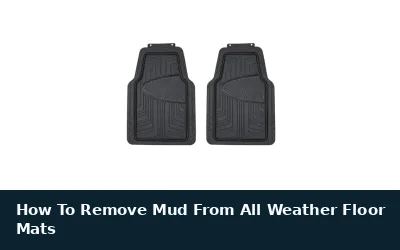
To stop rubber floor mats from smelling, remove them from the vehicle, wash them with mild soap and water, then dry them fully before reinstalling. First check whether odor comes from the mats or damp carpet underneath; cleaning the wrong source will not fix it.
- Take mats out of the vehicle before washing or airing them.
- Use mild soap, a soft brush, and clean water; avoid harsh solvents and strong cleaners.
- Dry both sides completely before putting mats back.
- Keep the driver’s mat secured with its factory retainers, and never stack mats.
- Investigate a persistent fuel, chemical, or musty smell instead of covering it with fragrance.
Why rubber floor mats smell
Odor can come from the mat material, substances trapped on its surface, or moisture and debris underneath. These causes need different fixes. A new mat may have a material odor that fades with airing. A sour, musty smell can point to damp dirt or wet carpet. A strong fuel-like or chemical odor may come from a spill or another vehicle problem.
Smell alone cannot identify the exact source. Check whether the odor follows a mat when you move it away from the vehicle. If it stays in the cabin, inspect the floor covering and nearby areas for dampness, spills, or debris.
| What you notice | Plausible source | First useful check |
|---|---|---|
| New rubber or plastic odor | Material odor from a new or recently stored mat | Air the mat outdoors in a shaded, ventilated spot |
| Musty or sour odor | Moisture, dirt, or organic residue on or below the mat | Check both mat surfaces and carpet beneath it |
| Odor returns after washing | Residue remains in grooves, or mat has not dried fully | Rinse grooves and dry both sides again |
| Strong fuel or chemical odor | Possible spill or source elsewhere in cabin | Stop using fragrance; inspect for a spill and seek help if needed |
How to stop rubber floor mats from smelling
1. Remove mats and check the floor
Park in a safe place, turn off the vehicle, and remove the mats. Look for wet carpet, leaves, food, mud, or spilled liquid. Check the underside of each mat too. Raised channels and deep grooves can hold grime after the visible surface looks clean.
Do not wash mats inside the vehicle. Water and cleaner can run into carpet or electrical areas, while damp mats can trap moisture against the floor. If carpet feels wet, dry and investigate it rather than putting a clean mat over it.
2. Brush off loose dirt
Shake each mat outdoors and brush away loose grit. Use a soft or medium-soft brush on textured areas. A stiff brush or sharp tool can scratch or damage some surfaces, so test a small area first if the material or finish is unfamiliar.
3. Wash with mild soap and water
Rinse the mat, apply a small amount of mild soap, and scrub both sides. Work into grooves and around molded edges, where dirt and residue can collect. Rinse until no suds or visible cleaner remain. Follow care instructions supplied with the mat if available; rubber compounds and surface coatings can differ.
Skip gasoline, paint thinner, bleach, and strong degreasers. These products can damage a mat, leave their own fumes, or create a hazard. Do not mix cleaning products. Avoid soaking a mat in a cleaner unless its care directions allow that method.
4. Dry every surface fully
Shake off excess water, then stand the mat upright or lay it flat in a ventilated place. Let both sides dry. Keep it away from open flames, hot exhaust parts, and intense direct heat. High heat can deform some mats. Do not reinstall a mat that feels damp or smells strongly of cleaner.
Drying time varies with mat thickness, weather, airflow, and how much water remains. Use touch and smell as checks rather than relying on a fixed number of hours. Grooves and raised edges can stay wet after the broad surface dries.
5. Air new mats before use
If a clean, dry new mat has a mild rubber or plastic smell, leave it outdoors in a shaded, ventilated area. Airing may help the odor fade. Keep mats out of direct sun and away from heat, which can affect some materials. Avoid adding scented sprays to mask the odor; fragrance can combine with the original smell and make the cabin less pleasant.
If the odor remains strong or causes irritation, stop using the mat and contact its seller or maker for care guidance. Odor intensity and sensitivity differ, so there is no reliable universal airing period.
6. Reinstall mats correctly
Once the mat and floor are dry, place each mat in its intended footwell. Use the vehicle’s retainers where fitted. Check that the driver’s mat cannot slide forward or interfere with the pedals. Never place one mat on top of another. If a mat does not fit or stay in place, remove it until you can use a correctly fitting replacement.
If the smell keeps coming back
A returning odor often means the source remains under the mat or inside its grooves. Wash and rinse those areas again, then inspect the carpet and floor for moisture. If carpet is wet, drying only the mat will not solve the problem. Water may have entered from a spill, wet footwear, a leak, or another source.
For a musty odor, look for dampness and visible residue rather than covering the smell. If you cannot locate the source or the odor persists after the area dries, an automotive detailer or repair shop can inspect the interior. Persistent moisture may need more than surface cleaning.
Treat a strong fuel-like or chemical smell differently. Do not use an air freshener to conceal it. If you suspect a fuel or hazardous chemical spill, avoid contact, ventilate the area when safe, and seek qualified help. If the odor is strong inside the cabin or you feel unwell, leave the vehicle and get assistance.
Common mistakes
- Putting a damp mat back: Trapped moisture can bring back musty odors and keep carpet wet.
- Cleaning only the top: The underside and grooves can hold residue that continues to smell.
- Using harsh chemicals: Solvents, bleach, and strong cleaners can damage materials or leave fumes.
- Masking odor with fragrance: Scent does not remove dirt, moisture, or a spill.
- Using heat to speed drying: Excessive heat can deform some mats.
- Driving without a secure driver’s mat: A loose or stacked mat can interfere with pedal movement.
- Ignoring damp carpet: A clean mat cannot fix an odor source below it.
When to get professional help
Ask an automotive detailer or repair shop for help when carpet remains wet, odor returns after careful cleaning, or you find a spill you cannot safely handle. Seek prompt assistance for a strong fuel or chemical smell, especially if it affects the cabin or causes symptoms. Do not keep driving if you suspect a hazardous leak or cannot operate the pedals safely.
A professional can inspect the carpet and nearby interior areas for moisture or residue. If odor points to a vehicle leak or mechanical issue, a repair shop can investigate that source. Cleaning the mat alone will not correct a leak.
Gear that can help
If you need all-weather floor mats and liners for this job, these picks already appear in our all-weather floor mats and liners guides. Check the full guide for fit and who should skip each one.

Pros
- Trim-to-fit design supports customization for most vehicles
- Heavy-duty rubber construction is designed for durability
- Waterproof, all-weather design helps protect vehicle interiors
- Soap-and-water cleaning is straightforward
Cons
- Universal fit may require trimming to match a specific vehicle
Best For / Avoid If
Best for buyers prioritizing
- Trim-to-fit design supports customization for most vehicles
- Heavy-duty rubber construction is designed for durability
- Waterproof, all-weather design helps protect vehicle interiors
Consider another option if
- Universal fit may require trimming to match a specific vehicle

Pros
- Complete four-piece set covers the front and rear seating areas
- Anti-slip rubberized nibs are included on the bottom of each mat
- Padded heel rest and ergonomic grooves add comfort and traction
- Fits most cars, trucks, vans, and SUVs according to the listing
Cons
- Semi-universal sizing may not fit every vehicle
- The listing does not include detailed vehicle-specific compatibility information
Specifications
| Color | Black |
|---|---|
| Size | 25"L x 17.5"W (Front), 13"L x 17.5"W(Rear) |
| Dimensions | 26.1811 x 17.9133 x 0.7874 Inches |
| Weight | 3.77 Pounds |
| Product Group | Automotive Parts and Accessories |
| Binding | Automotive |
Best For / Avoid If
Best for buyers prioritizing
- Complete four-piece set covers the front and rear seating areas
- Anti-slip rubberized nibs are included on the bottom of each mat
- Padded heel rest and ergonomic grooves add comfort and traction
Consider another option if
- Semi-universal sizing may not fit every vehicle
- The listing does not include detailed vehicle-specific compatibility information

Pros
- All-weather design is intended to help protect vehicle carpets from spills, dirt, and snow
- Front and rear mats can be cut to the desired size
- Specified dimensions are provided for both front and rear mats
Cons
- Universal fit may require trimming for a suitable vehicle-specific fit
- Mats may have slight creases after packaging that need tidying or exposure to sunlight to disappear
Specifications
| Color | BLack Red |
|---|---|
| Dimensions | 27.2 x 17.3 x 2 inches |
| Product Group | Automotive Parts and Accessories |
Best For / Avoid If
Best for buyers prioritizing
- All-weather design is intended to help protect vehicle carpets from spills, dirt, and snow
- Front and rear mats can be cut to the desired size
- Specified dimensions are provided for both front and rear mats
Consider another option if
- Universal fit may require trimming for a suitable vehicle-specific fit
- Mats may have slight creases after packaging that need tidying or exposure to sunlight to disappear
If you are still comparing options, see How To Clean Under Car Floor Mats and How To Remove Mildew Smell From Car Floor Mats.
FAQ
Can baking soda remove rubber mat odor?
It may absorb some surface odor, but it will not remove a spill or moisture trapped below the mat. Use cleaning and complete drying first. Avoid leaving powder in grooves where it can become residue.
Can I use vinegar on rubber floor mats?
Mat materials and coatings vary, so vinegar is not a universal safe cleaner. Mild soap and water are a safer starting point. Follow the mat’s care directions and do not mix vinegar with bleach or other cleaners.
How long should new rubber mats air out?
There is no fixed time that applies to every mat. Airing depends on material, airflow, and odor strength. Keep the mat shaded and ventilated, and do not use it if odor remains strong or causes irritation.
Why does my car still smell after I cleaned the mats?
The odor may come from damp carpet, a spill, or residue elsewhere in the cabin. Remove the mats and check the floor. If the source is not clear or the odor persists, get the interior inspected.